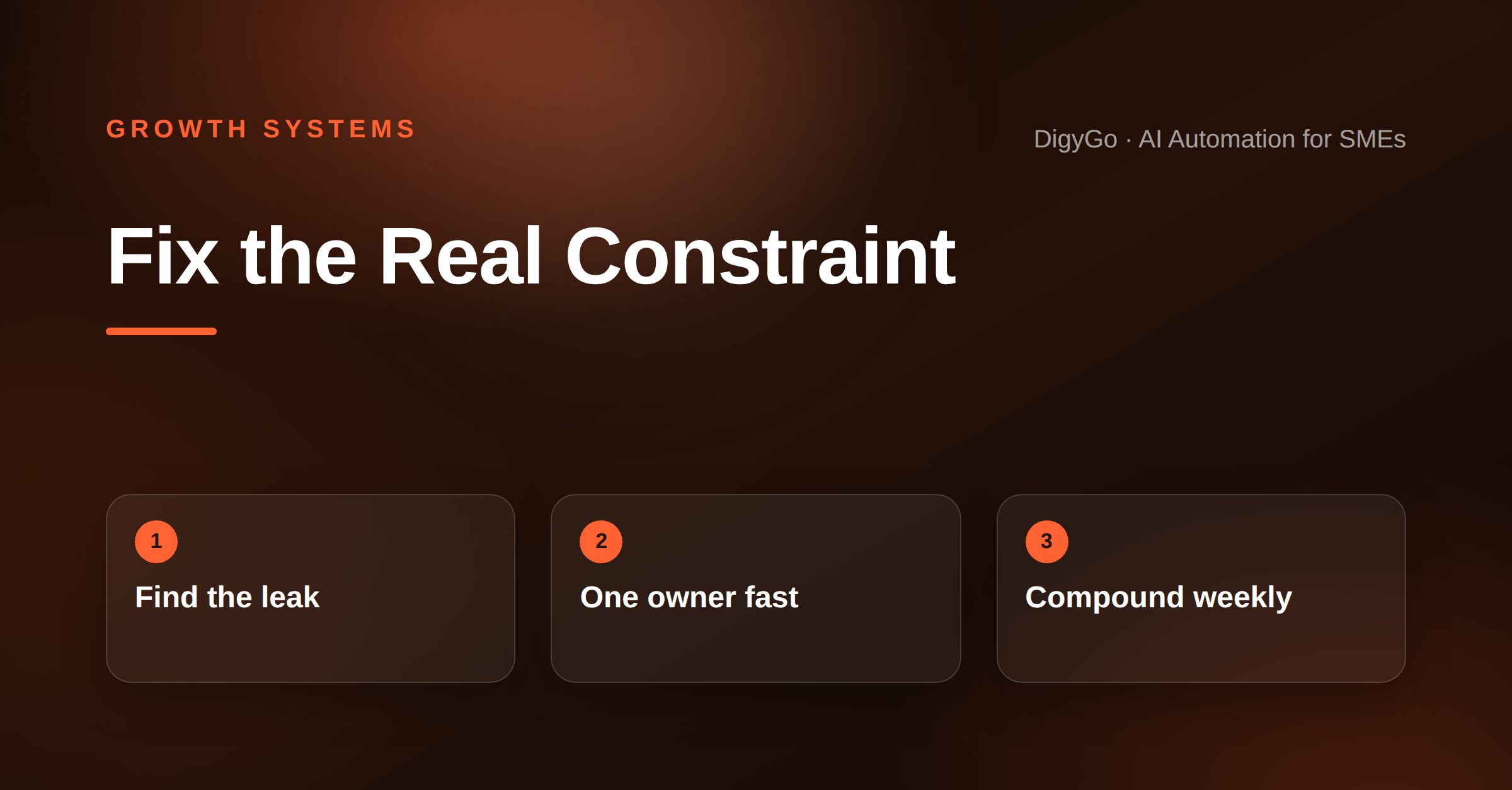
Most SMEs do not have a growth problem. They have a visibility problem. Revenue feels uneven because one part of the system is quietly leaking while the rest of the team keeps pushing more volume through the same weak spots. A growth bottleneck map helps you find those leaks fast, assign ownership, and fix the right constraint before another week slips by.
A practical guide for SME founders on mapping the real bottleneck in their growth system so they can stop the right leak, assign ownership, and compound results faster.
Why a bottleneck map matters before you scale harder
When growth slows, teams usually add more activity: more posting, more follow-ups, more outreach, more meetings. That only works when the bottleneck is volume. If the real issue is slow response, weak handoff, poor retention, or delivery drag, more activity just creates more mess.
A bottleneck map gives founders a simple way to ask one question: what is stopping the next stage from moving forward? That could be lead intake, qualification, quoting, onboarding, delivery, renewal, or referrals. Once the blockage is visible, the fix becomes much easier to own.
The first bottleneck is usually not where you think
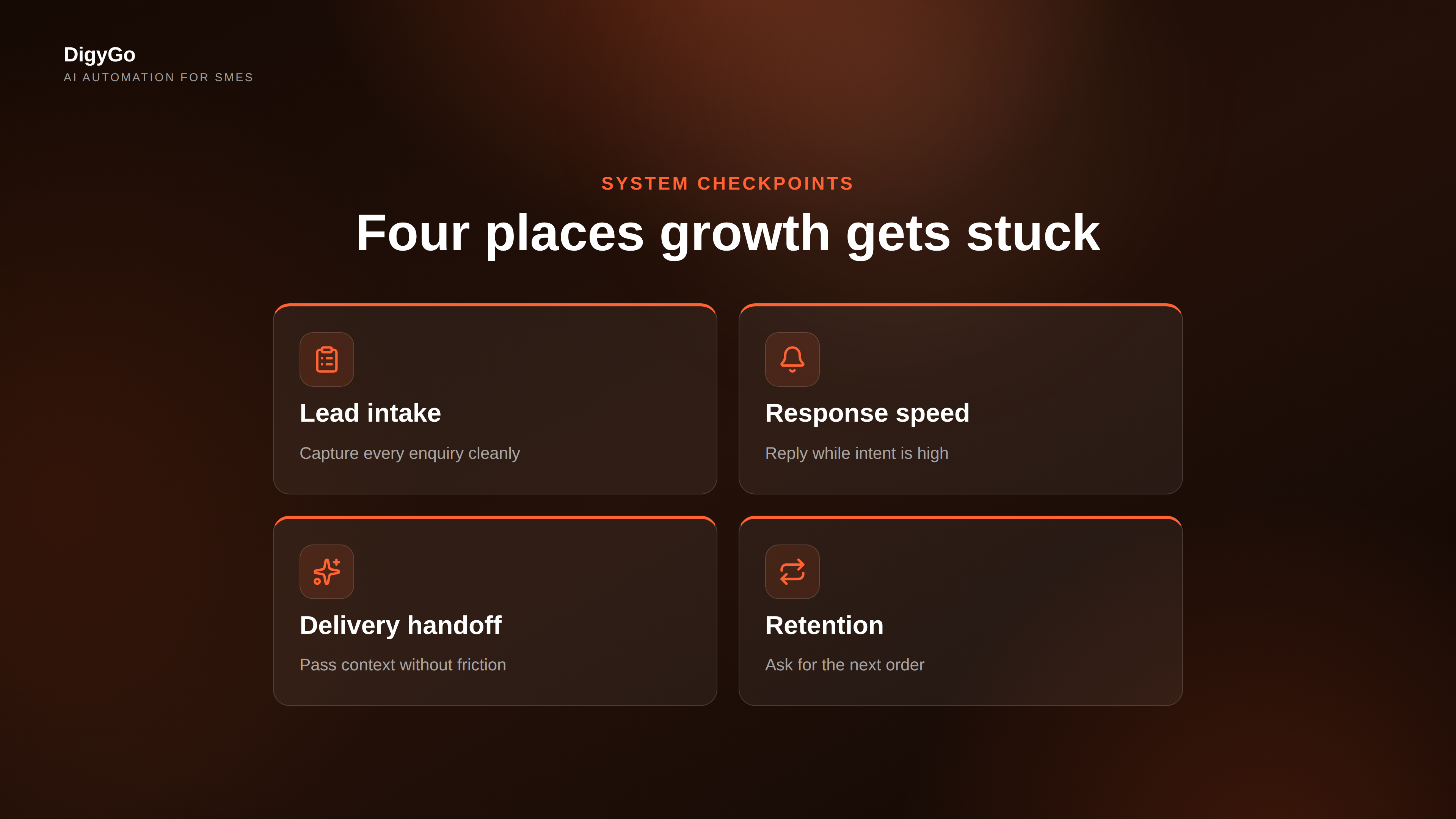
Many founders assume the issue is lack of leads. In practice, the leak often sits one step earlier or later:
- Lead intake: enquiries arrive but never get logged cleanly.
- Response speed: the first reply is too slow to keep momentum.
- Qualification: sales spends time on the wrong prospects.
- Delivery handoff: the job is sold, but the team is unclear on next steps.
- Retention: repeat business is not systematically requested.
The best growth teams do not guess. They inspect the journey from enquiry to repeat sale and look for the point where work piles up, context disappears, or customers lose confidence.
How to map the leak in one working session
Do this with the people who actually touch the work, not only the leadership team. Keep the session short and practical.
- List the stages from first enquiry to repeat revenue.
- Mark where work waits, handoffs fail, or people chase updates.
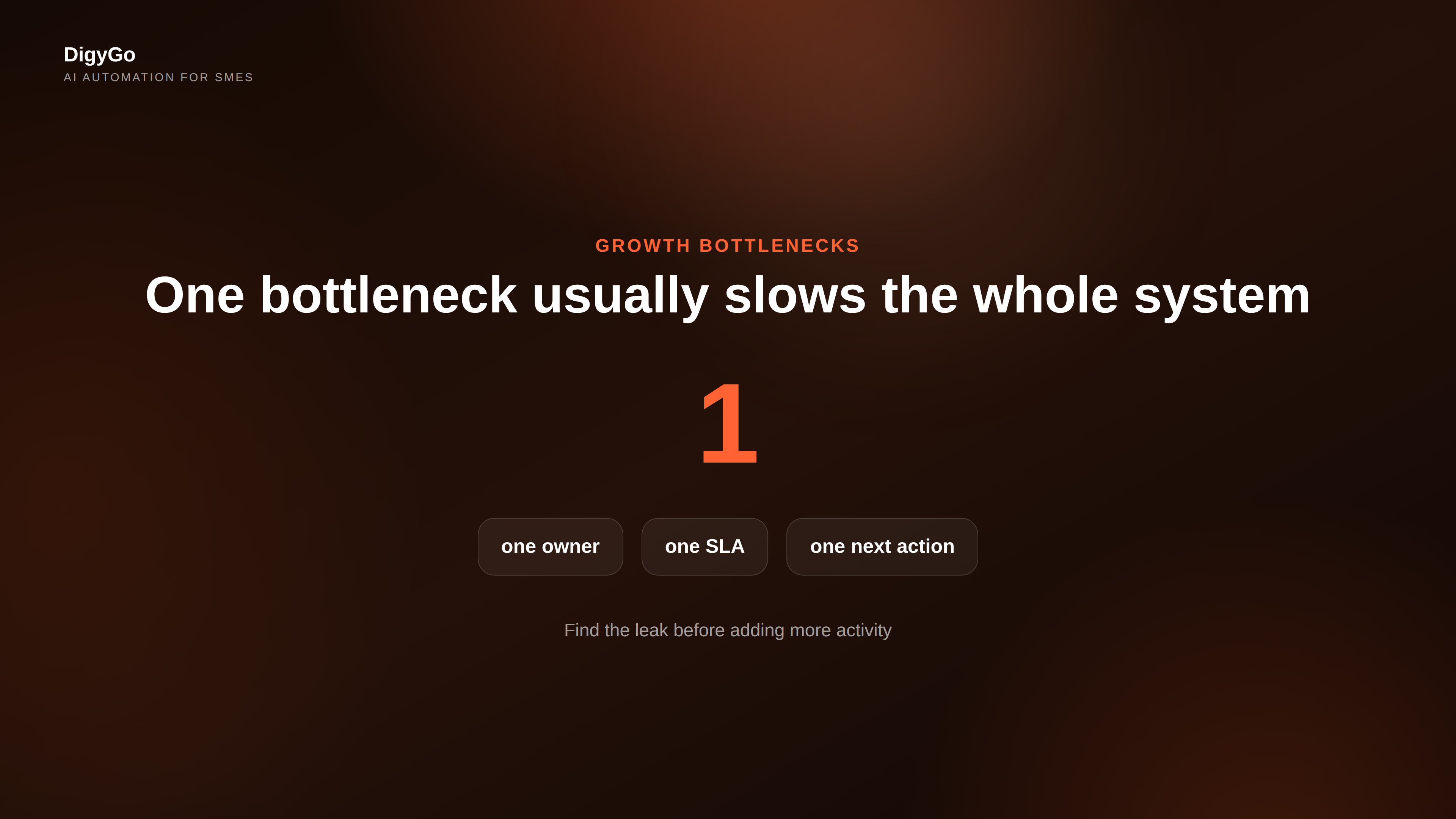
- Choose the one stage that causes the biggest slowdown.
- Assign a single owner to that stage.
- Set a simple rule for what happens next every time.
That last step matters. A bottleneck map is not a strategy poster. It is a working tool. If the map does not change ownership or the next action, it will not change performance.
Use visible rules instead of hidden assumptions
Growth systems break when teams rely on memory. People forget who owns the next step, which leads to silent delays and repeated follow-ups. Visible rules fix that.
Once those rules are in place, the bottleneck becomes easier to monitor. You are no longer asking whether the system is working in general. You are checking whether one specific stage is holding things back.
What to fix first when growth is uneven
Start with the constraint that affects the most revenue with the least effort. For many SMEs, that means fixing the stage that touches both speed and quality. A faster first reply, a cleaner handoff, or a tighter qualification step can unlock more growth than a new campaign.
Do not try to remove every issue at once. Fix one bottleneck, then watch where the next constraint appears. That is how growth systems compound: not through heroic bursts, but through repeated removal of friction.
A simple weekly rhythm keeps the map useful
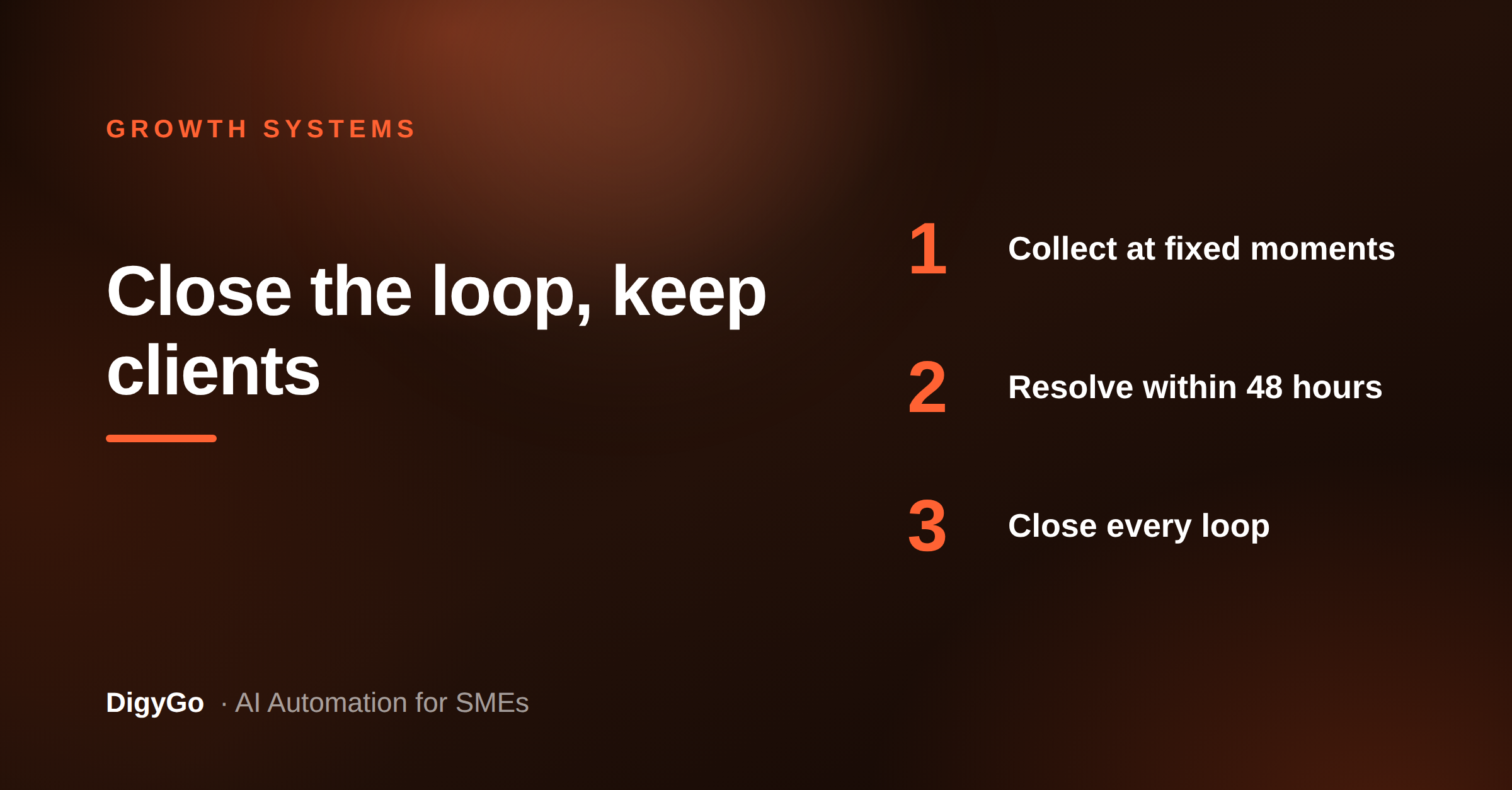
Use a short weekly review to keep the map alive. Ask three questions every week:
- What stage slowed down?
- What was the cause?
- What is the one fix for this week?
This rhythm prevents the business from drifting back into vague updates and reactive work. It keeps the team focused on the constraint that matters right now.
When growth feels stuck, look for the handoff
In many SMEs, the real bottleneck is not the campaign or the salesperson. It is the handoff between stages. A lead is captured but not followed up. A sale is closed but not passed cleanly to delivery. A customer is happy but never asked for the next order.
Those handoffs are where compounding either happens or disappears. If you want steadier growth, make the handoff visible, owned, and timed.
FAQ
What is a growth bottleneck map?
It is a simple view of the stages in your growth flow, showing where work slows down, breaks, or loses momentum.
How often should SMEs review bottlenecks?
Weekly is ideal for most teams. It is frequent enough to catch leaks early without creating extra management overhead.
What should I fix first?
Fix the constraint that causes the biggest slowdown in revenue movement, usually the stage where leads, handoffs, or delivery wait the longest.
If you want help turning a scattered process into a repeatable growth system, talk to DigyGo.