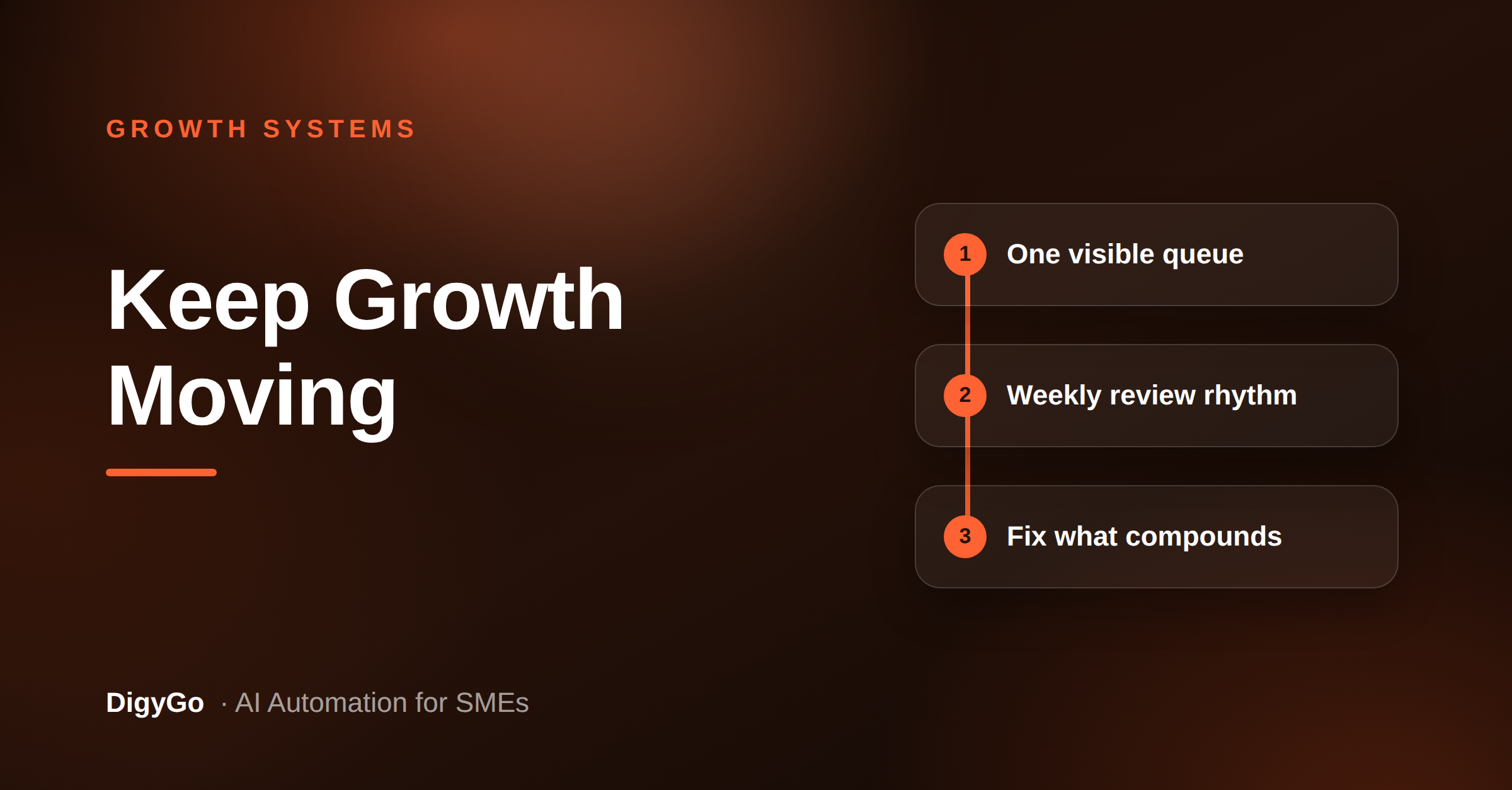
Most SMEs do not lose growth because the team stops working. They lose it because the useful work is scattered across inboxes, calls, follow-ups, and half-finished improvements. A growth backlog fixes that by turning good ideas into one visible queue the team can actually finish.
A practical guide for SME founders on turning scattered improvement ideas into one growth backlog that keeps ownership clear, weekly reviews focused, and revenue systems compounding.
- Put every growth idea in one queue instead of chasing it from chat to chat.
- Review the backlog on a fixed rhythm so the team ships the right work.
- Use backlog items to protect retention, not just to chase more leads.
Why a growth backlog matters
In a busy SME, the biggest problem is rarely a lack of ideas. It is the gap between idea and execution. A founder notices a slow response, a team member spots a churn risk, or a marketer sees a campaign leak, but nobody owns the next step. A growth backlog solves that by making the work visible, prioritised, and easy to review.
That matters because growth systems only compound when the business keeps fixing the same leaks in a repeatable way. If the fix stays inside a message thread, the lesson gets lost. If it sits in a backlog with an owner, due date, and outcome, the business can revisit it, improve it, and use it again.
How to set it up without creating more admin
Keep the backlog simple. The goal is not a perfect project system. The goal is to create one clear place for growth work that is easy enough for the team to keep using.
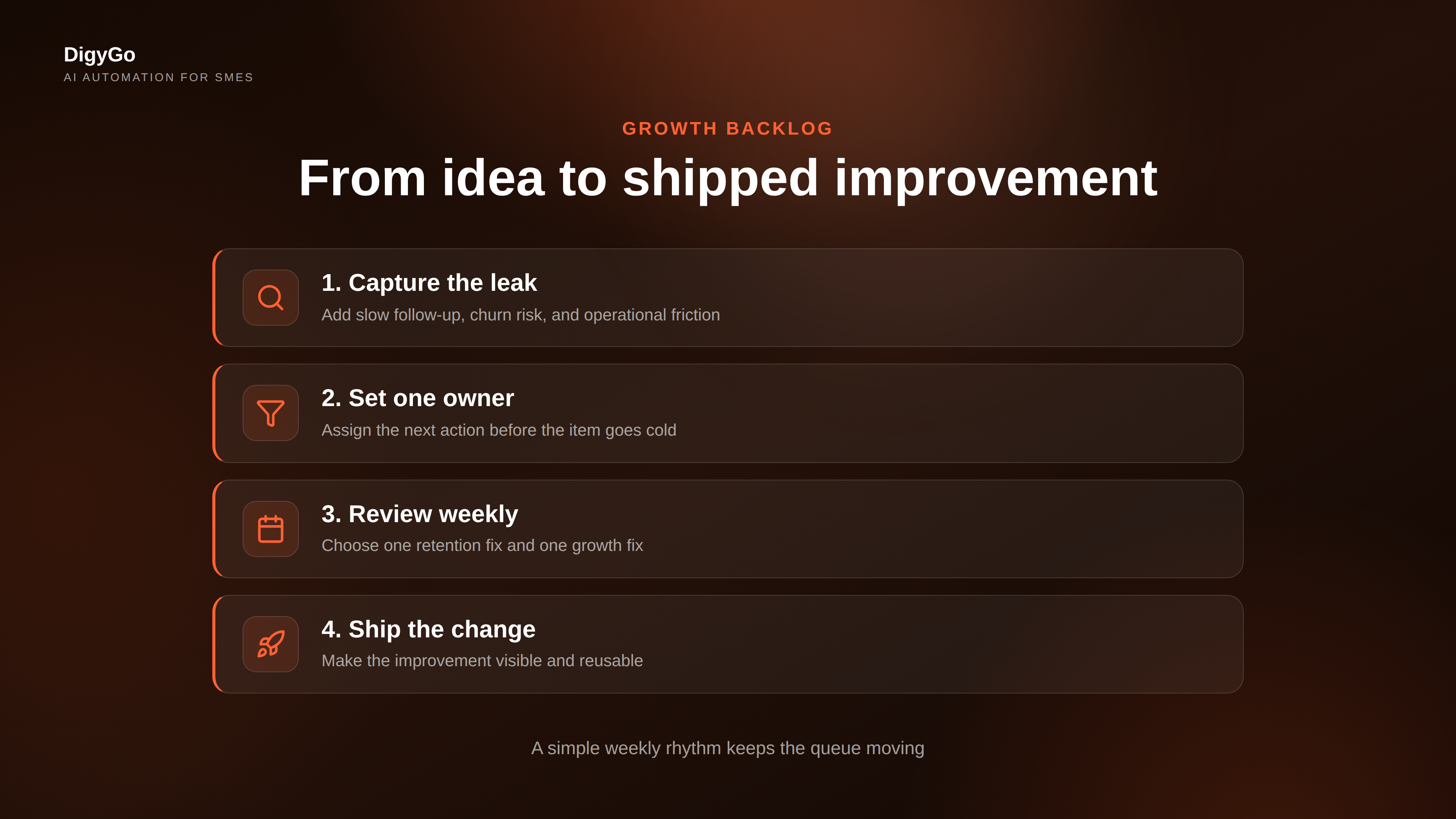
- Capture: add every useful growth idea, blocker, and recurring leak.
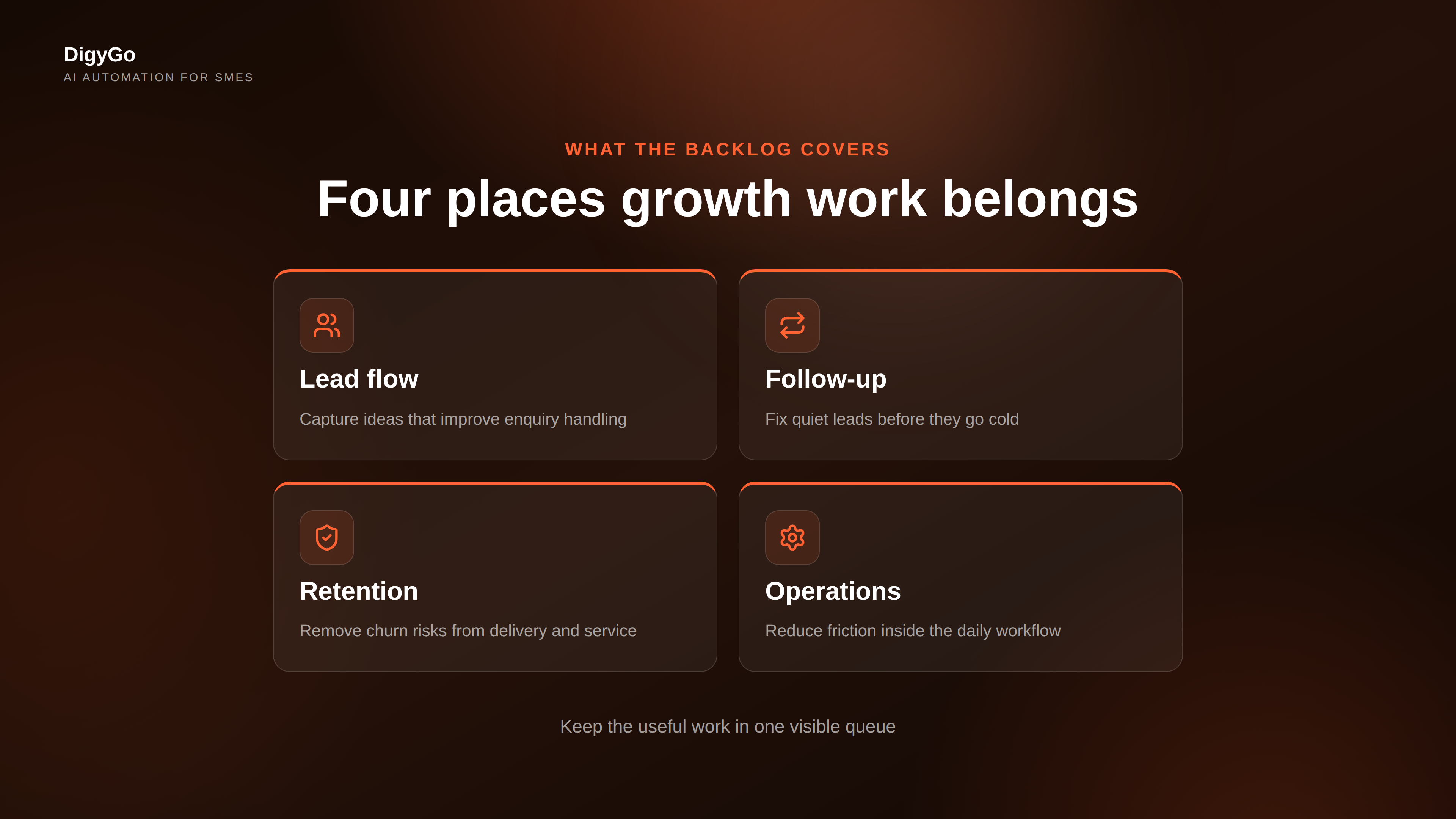
- Label: mark each item as lead flow, retention, operations, or follow-up.
- Prioritise: choose the few items that will improve the next 30 days.
- Assign: give every item one owner and one next action.
When the backlog is small enough to scan in a minute, the team will actually use it. That is more valuable than a larger system that looks organised but gets ignored after the first busy week.
The weekly review rhythm that keeps it alive
Backlogs fail when they are treated like storage. They work when they are treated like a decision tool. That is why the weekly review matters more than the list itself.
Use the same short rhythm every week:
- Review what was completed last week.
- Check which backlog items are still causing friction.
- Pick one retention fix and one growth fix.
- Assign clear owners before the meeting ends.
This keeps the team focused on compounding progress instead of random activity. A small fix to a slow follow-up process, a broken handoff, or a repeat customer issue can produce more revenue than another week of scattered execution.
Why backlog work protects retention as well as growth
Many teams use the word growth when they really mean new enquiries. But real growth systems also protect revenue already earned. That includes onboarding gaps, delayed service delivery, missed follow-ups, and weak renewal conversations.
When those issues appear in the backlog, they stop being invisible. The team can see the pattern, assign the fix, and track whether the change reduced churn or improved repeat business. Over time, that is what makes the system compound. The business does not just sell more. It keeps more of what it already wins.
Final thought
If your SME is growing in bursts and then stalling, the issue is often not effort. It is a missing system for deciding what to improve next. A growth backlog gives you that system. It keeps the useful work visible, keeps owners accountable, and helps small wins turn into cleaner operations and steadier revenue.
Talk to DigyGo about building repeatable growth systems that compound over time.
FAQ
What is a growth backlog?
A growth backlog is a single list of improvements, blockers, and repeatable actions that your team reviews and prioritises on a regular rhythm.
How is it different from a task list?
A task list tracks daily work. A growth backlog tracks work that improves the business itself, such as retention fixes, follow-up improvements, and better handoffs.
How often should SMEs review it?
Once a week is enough for most SMEs. The important part is to review it consistently and assign clear owners before the meeting ends.
Does a growth backlog only help operations?
No. It helps marketing, sales, delivery, and retention because all of those functions create repeatable improvements worth tracking.