Most hot enquiries do not go cold because the prospect changed their mind. They go quiet because the business replied too late, left the owner unclear, or asked for too much effort in the first message. A five-minute lead response system fixes that by making the first reply fast, simple, and consistent.
A practical guide for SMEs on capturing enquiries fast, assigning ownership clearly, and using a simple five-minute response system to keep more leads warm.
- Speed matters most in the first few minutes after an enquiry arrives.
- Every lead needs one owner, one next step, and one response rule.
- Automation should handle the first reply and the handoff, not replace sales judgement.
- Track response time and reply-to-booking rate so the system keeps improving.
Why the first five minutes decide the lead
For SMEs, the real competition is not usually the closest competitor. It is the business that responds first. When an enquiry waits in a shared inbox or lands with no owner, the lead starts to cool before anyone speaks to it.
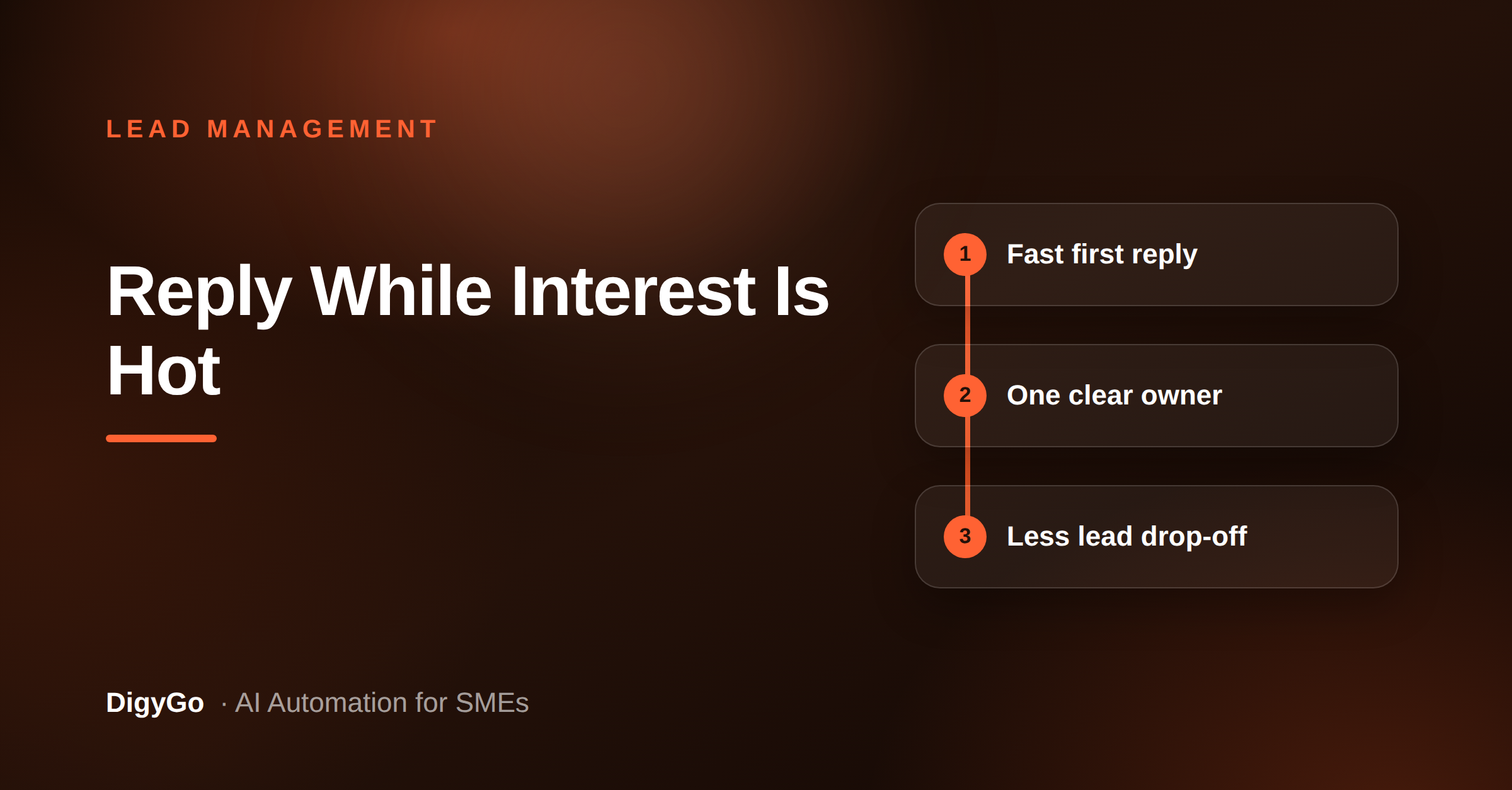
A five-minute response system does three jobs at once: it acknowledges the enquiry immediately, routes it to the right person, and keeps the prospect engaged while the team prepares the proper follow-up. That small window is often the difference between a booked conversation and a dead thread.
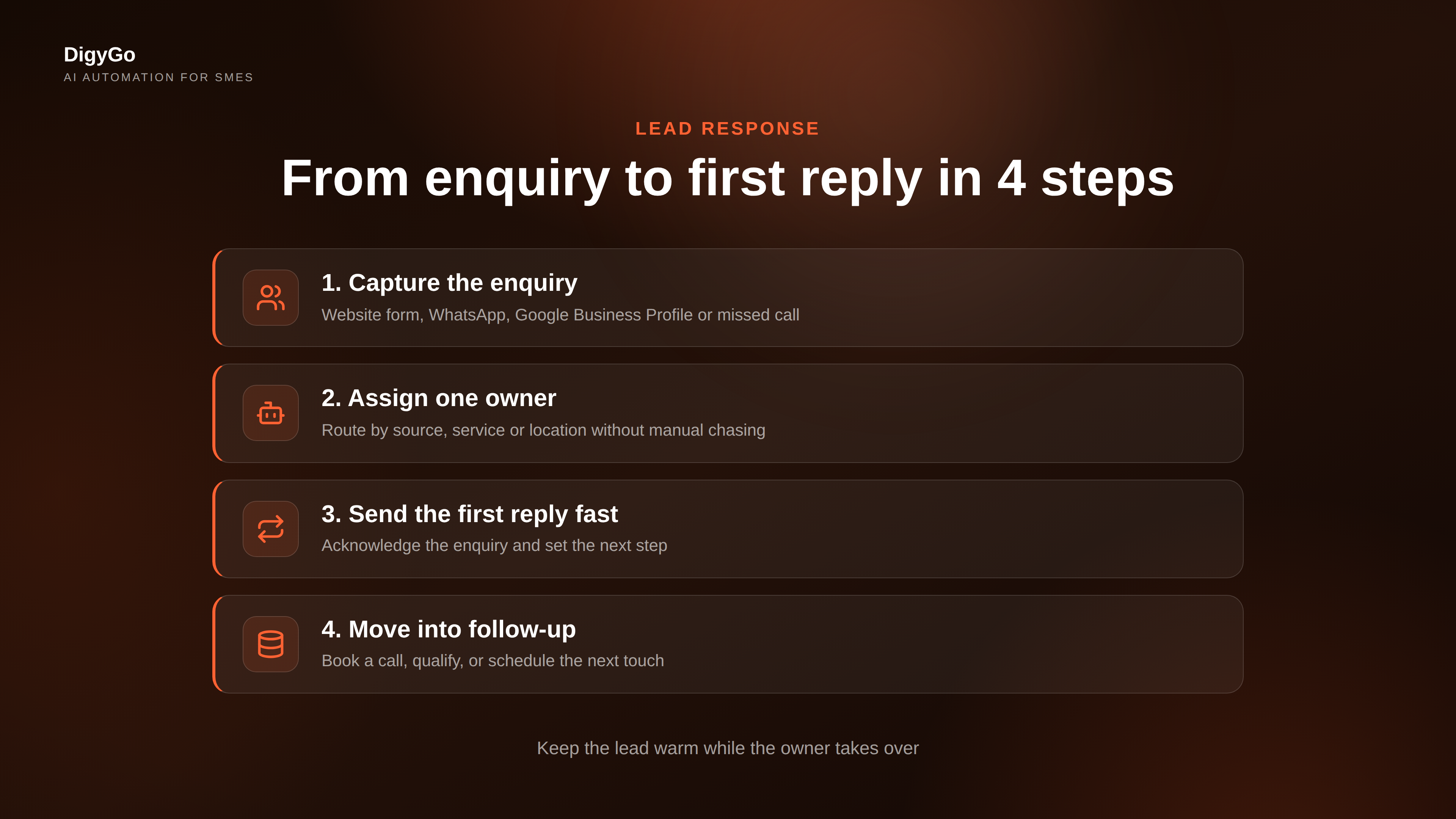
Build the response system in four steps
Keep the system light enough for the team to trust and repeat. The goal is not a complicated automation stack. The goal is a reliable path from enquiry to human follow-up.
1. Capture the enquiry instantly
Whether the lead arrives from a website form, WhatsApp, Google Business Profile, or a missed call, it should land in one place. If the team has to check three different inboxes, response speed will always suffer.
2. Assign one owner automatically
Every enquiry needs a clear owner. That can be based on service type, location, source, or team availability. Without ownership, people assume someone else replied.
3. Send the first reply fast
The first reply should confirm receipt, set expectations, and make the next step easy. A simple line like “Thanks, we got your enquiry and will share the next step shortly” buys time without losing momentum.
4. Move the lead into the right follow-up path
Some leads are ready for a call. Some need qualification. Some need a later follow-up. The system should separate those paths immediately so the sales team spends time where it matters most.
What the first reply should include
A strong first reply is short, useful, and specific. It should do three things well:
- confirm that the enquiry was received
- tell the prospect what happens next
- reduce friction for the next action
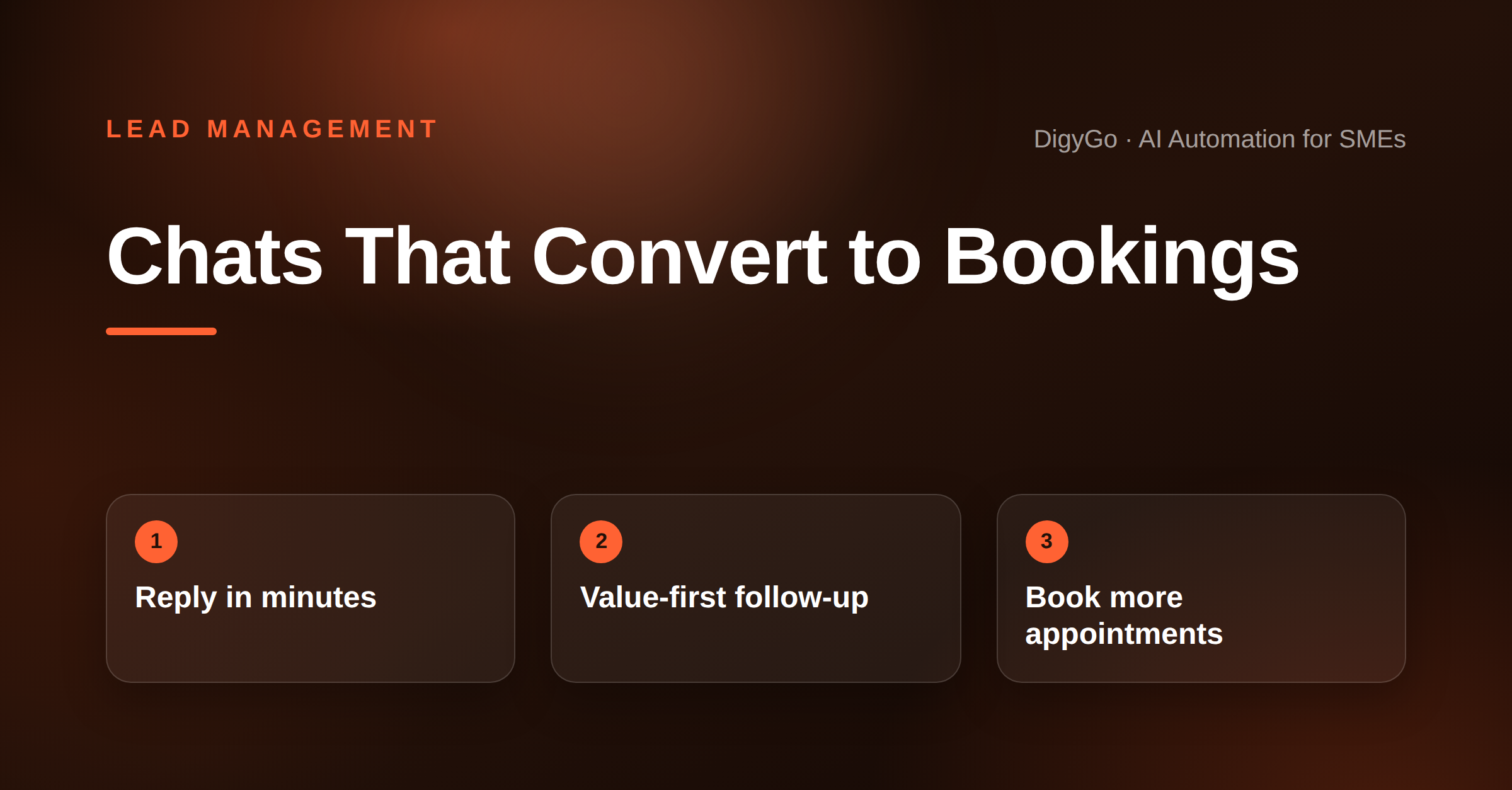
That might mean a booking link, a short qualification question, or a promise that a human will follow up with a proper answer. The point is to keep the conversation moving while the lead is still warm.
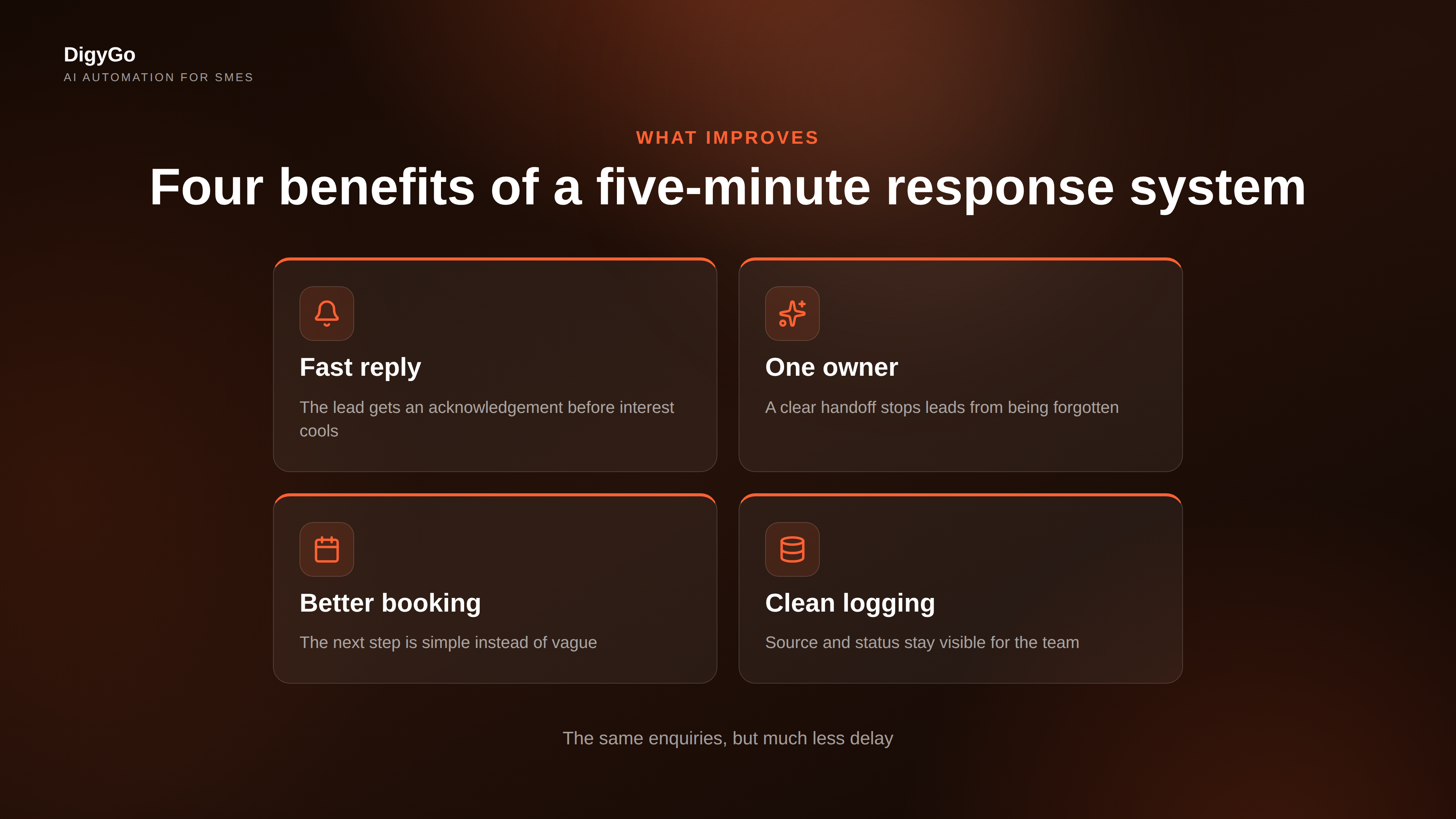
Measure the right metrics
If you want the system to improve, measure the behaviour that drives results. The most useful numbers are usually simple:
- average first-response time
- percentage of leads answered within five minutes
- reply-to-booking rate
- follow-up completion rate
These numbers show where the process is working and where leads are slipping. If response time is strong but bookings are low, the first message may be too vague. If bookings are good but follow-up is weak, the handoff needs cleaner ownership.
Where SMEs usually lose leads
The biggest failure is not lack of interest. It is operational drag. A lead arrives, the team gets busy, someone assumes another person replied, and the enquiry sits untouched until the prospect has already moved on.
The second failure is over-automation. If the first message feels generic or robotic, the lead still goes cold. Automation should create speed and consistency, then hand the conversation to a real person at the right moment.
What to automate and what to keep human
Good lead management automation should handle the repetitive parts:
- capturing the enquiry
- sending the first acknowledgement
- assigning the owner
- logging the source and status
Keep the human part for anything that needs judgment: pricing nuance, service fit, objections, and final closing. That balance gives you speed without losing trust.
FAQ
Is five minutes always the right target?
It is a strong target for hot inbound leads because it keeps the enquiry warm. If your team cannot answer fully in five minutes, at least acknowledge it and set the next step quickly.
Do small teams really need automation?
Yes. Small teams need it more because every missed enquiry hurts more. Even a simple automation for capture, ownership, and first reply can make the process far more reliable.
What is the simplest place to start?
Start with one intake point, one owner rule, and one fast acknowledgement message. Once that works, add qualification and follow-up paths.
If you want help setting up a fast lead response system for your business, talk to DigyGo.