Most SMEs do not need more software. They need a simple AI ops layer that catches routine work, moves data between tools, and keeps follow-up moving without a human nudging every step.
A practical guide for SMEs on building a thin AI ops layer that captures routine work, routes the right action, and keeps follow-up moving without constant manual nudging.
Why an AI ops layer matters
When a founder says, “We already use WhatsApp, email, a CRM, and a spreadsheet,” the real problem is not the tools. It is the gaps between them. Leads arrive, messages get missed, notes stay in inboxes, and simple tasks wait for someone to remember them.
An AI ops layer fixes that by doing three things well: capture the task, route it to the right place, and follow through until it is done. For a small business, that can mean the difference between a lead going cold and a lead booking a call.
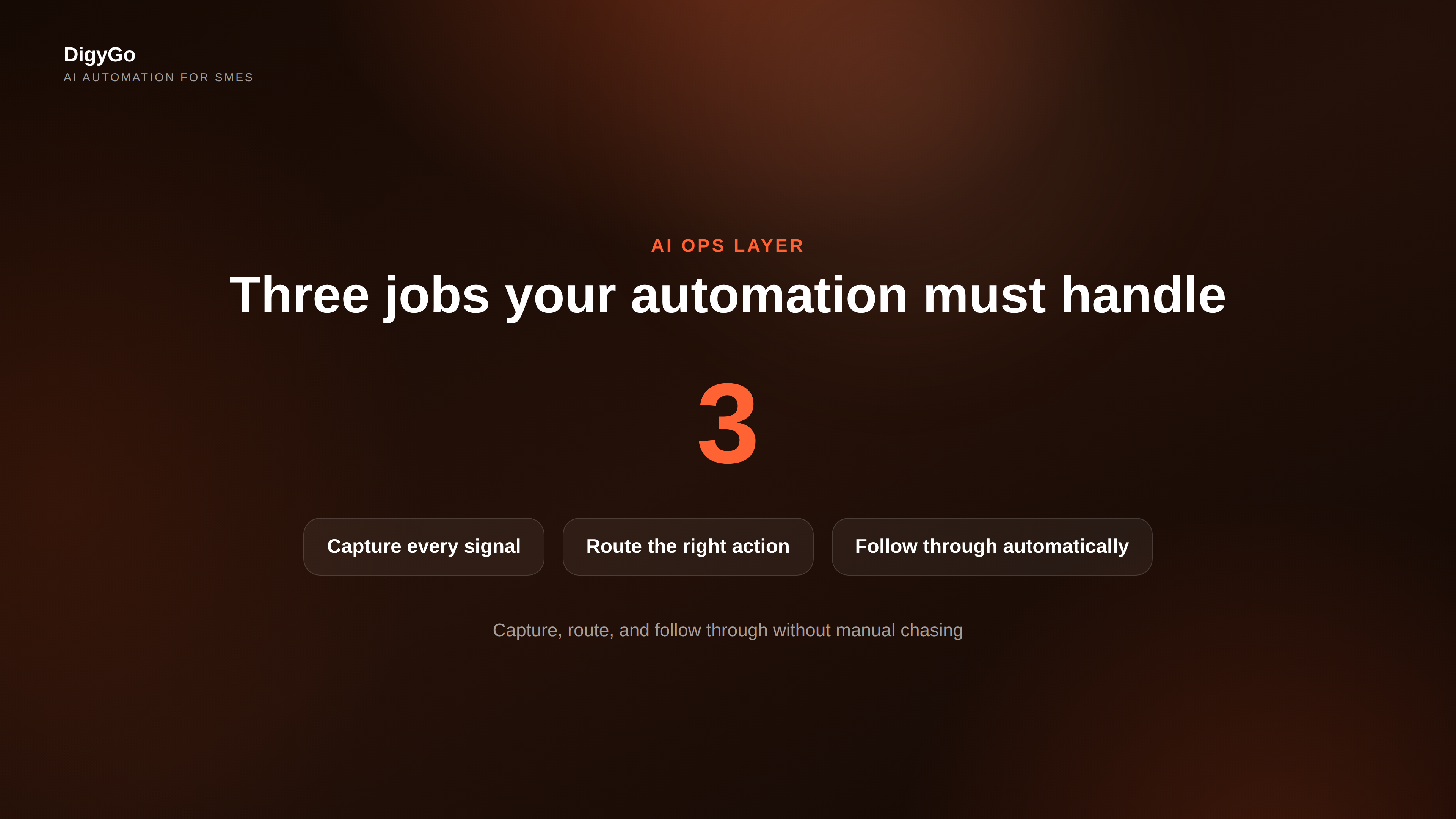
The three core jobs your AI ops layer should handle
Keep the system narrow. The best AI systems for SMEs do not try to replace the whole team. They handle the repetitive work that slows everyone down.
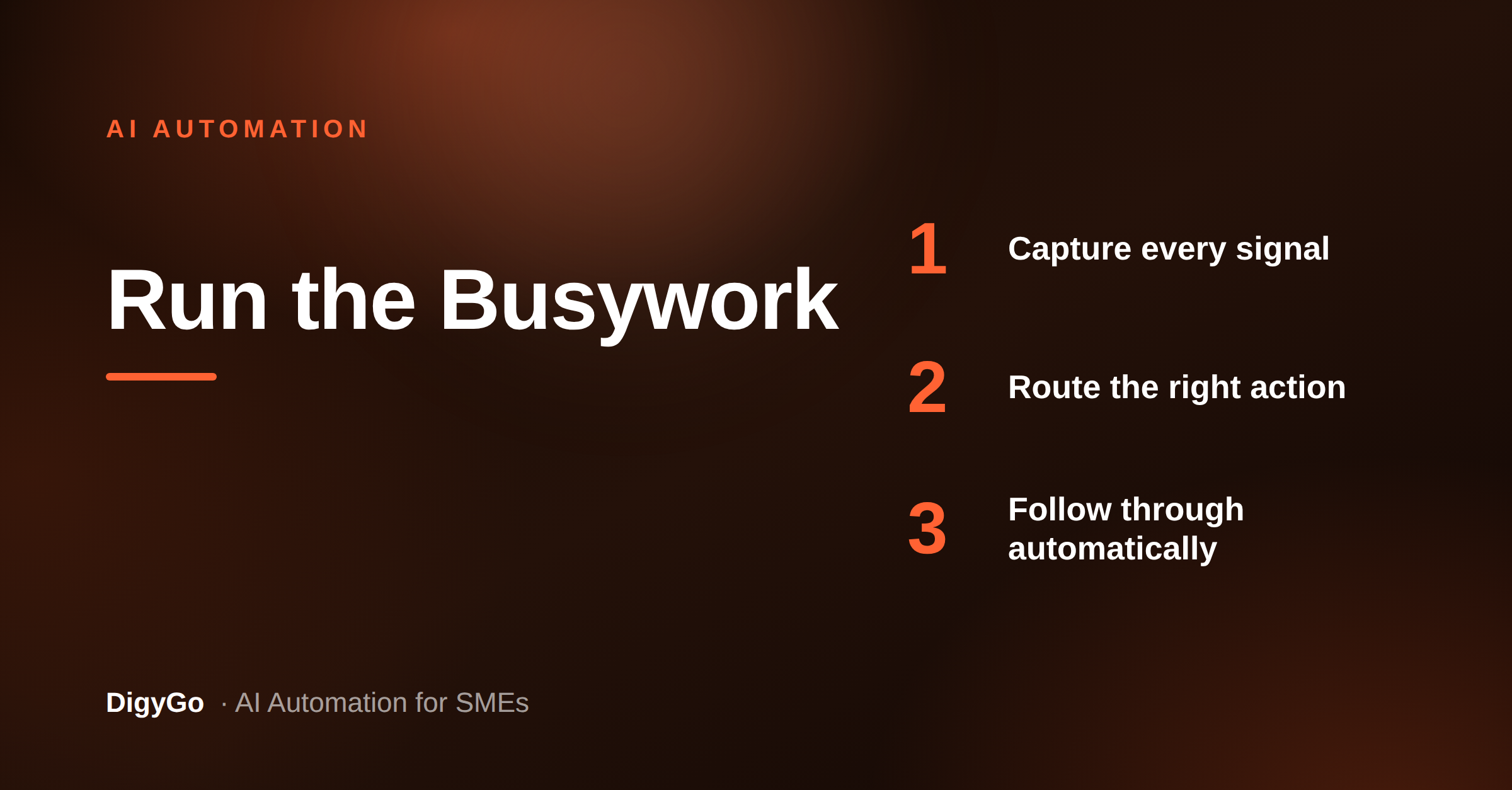
1. Capture every signal
New leads can come from forms, missed calls, Instagram DMs, referral messages, and website chats. An AI layer should collect those signals in one place so nothing depends on memory.
2. Route the right action
Once the signal is captured, the next step is simple: assign the lead, notify the owner, create the follow-up task, or push the record into the CRM. The value is not in sounding smart. The value is in removing the delay.
3. Follow until closure
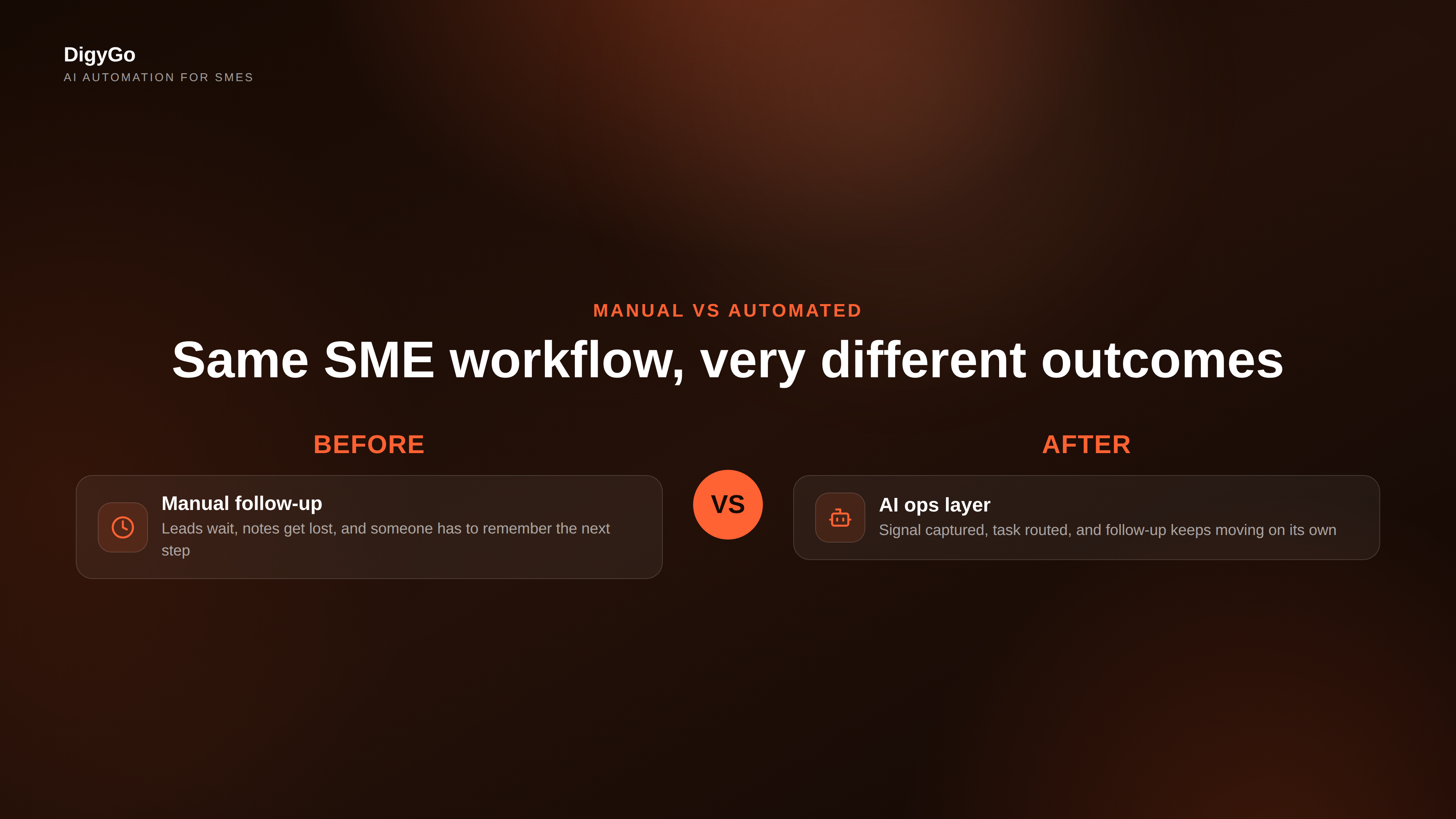
Most revenue leaks happen after the first response. AI follow-up should send the reminder, ask for the missing detail, book the next step, and keep the trail visible. That is how operational discipline starts to feel automatic.
What it looks like in practice
For an SME, the stack can stay simple: a front door, an automation layer, and a system of record. The front door might be a lead form or inbox. The automation layer can classify the enquiry, draft the reply, or create a task. The system of record is the CRM where all the activity lands.
When this is working, the team sees fewer “Did anyone reply?” messages. Sales gets cleaner context. Operations gets fewer dropped handoffs. Management gets visibility without chasing updates.
How to start small without overbuilding
Do not begin with a big AI transformation project. Start with one painful workflow and measure the before and after.
- Pick one recurring task that steals time every day.
- Define the trigger, the action, and the owner.
- Connect only the tools that are already in use.
- Keep a manual fallback so the team trusts the workflow.
- Review the results weekly and tighten the logic.
If the workflow saves time, reduces mistakes, or helps a lead move faster, expand it. If it creates confusion, simplify it. AI systems become useful when they are boring, dependable, and easy to maintain.
Common mistakes that make AI automation fail
The biggest mistake is automating a messy process. If the handoff is unclear today, AI will only make the confusion faster. Clean the process first, then automate it.
The second mistake is trying to automate everything at once. A good AI ops layer starts with one high-value workflow, then grows through proof. The third mistake is building without visibility. If the team cannot see what the AI did, trust breaks quickly.
For SMEs, the goal is not fancy automation. The goal is a calmer operating system where lead handling, internal follow-up, and task movement keep running even when the team is busy.
FAQ
What is an AI ops layer?
It is a thin automation layer that captures routine work, routes it to the right person or system, and keeps the next step moving without manual chasing.
Do SMEs need custom AI software?
Usually no. Most SMEs get better results by connecting existing tools with focused automations rather than building a large custom platform.
What workflow should be automated first?
Start with the workflow that loses the most time or leads today. For many businesses, that is lead capture and follow-up.
Want help mapping your first AI ops layer? Talk to DigyGo about a workflow that fits your SME.