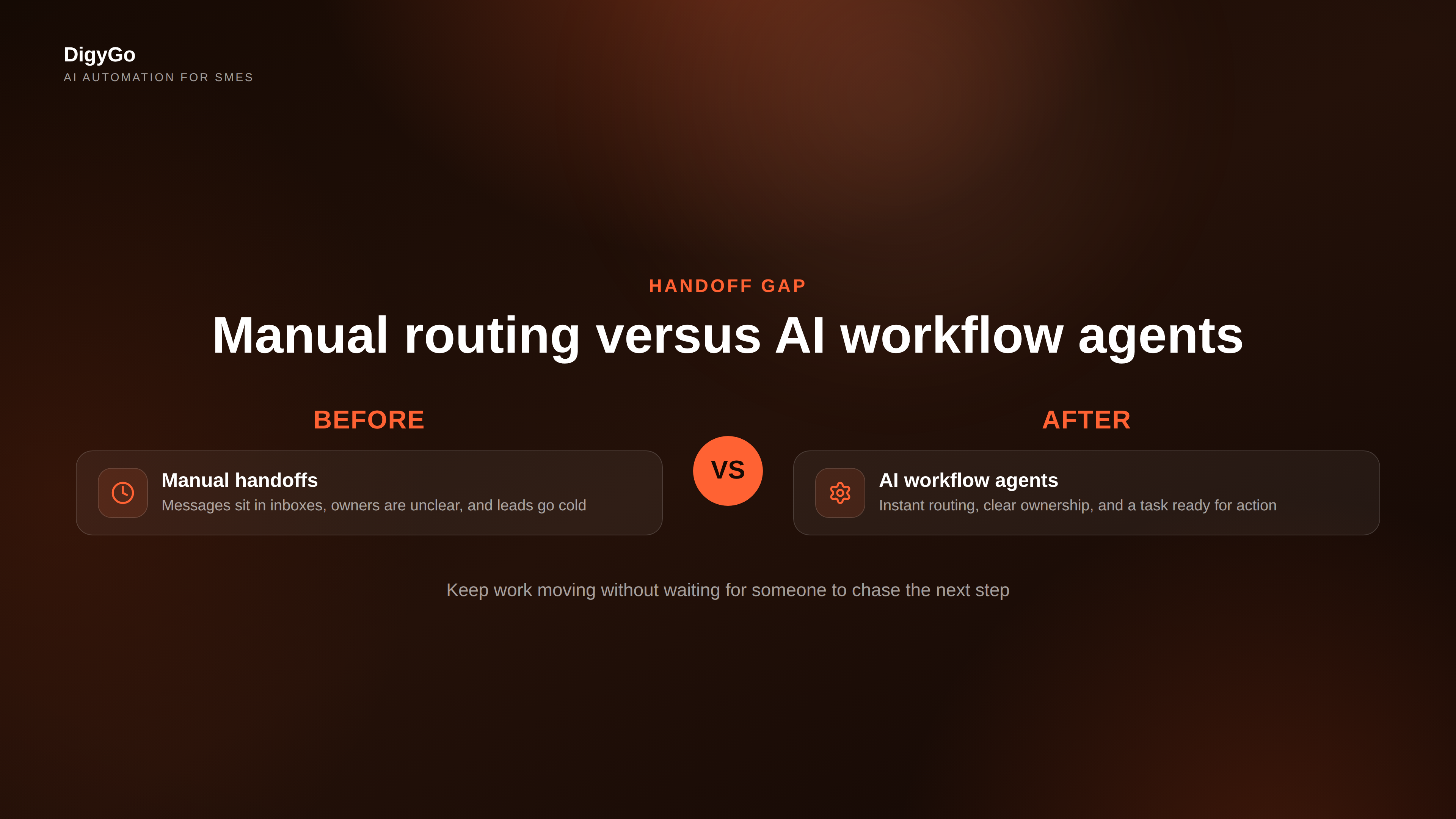
Most SME teams do not lose momentum because they lack leads or tools. They lose it in the handoff gap, when a form is filled, a message is received, or a task is promised, but nobody owns the next move. AI workflow agents close that gap by routing work, nudging owners, and keeping operations moving without waiting for someone to notice.
A practical guide for SME founders on using AI workflow agents to route tasks, reduce manual handoffs, and keep operations moving without bottlenecks.
Why manual handoffs slow every department
In a small business, the same person often handles sales, support, operations, and follow-up. That makes the business fast when things are simple and fragile when volume grows. A lead gets captured, but it sits in inboxes. A client asks for an update, but the reply waits until the end of the day. A delivery issue appears, but the next step depends on a human remembering to copy the right person.
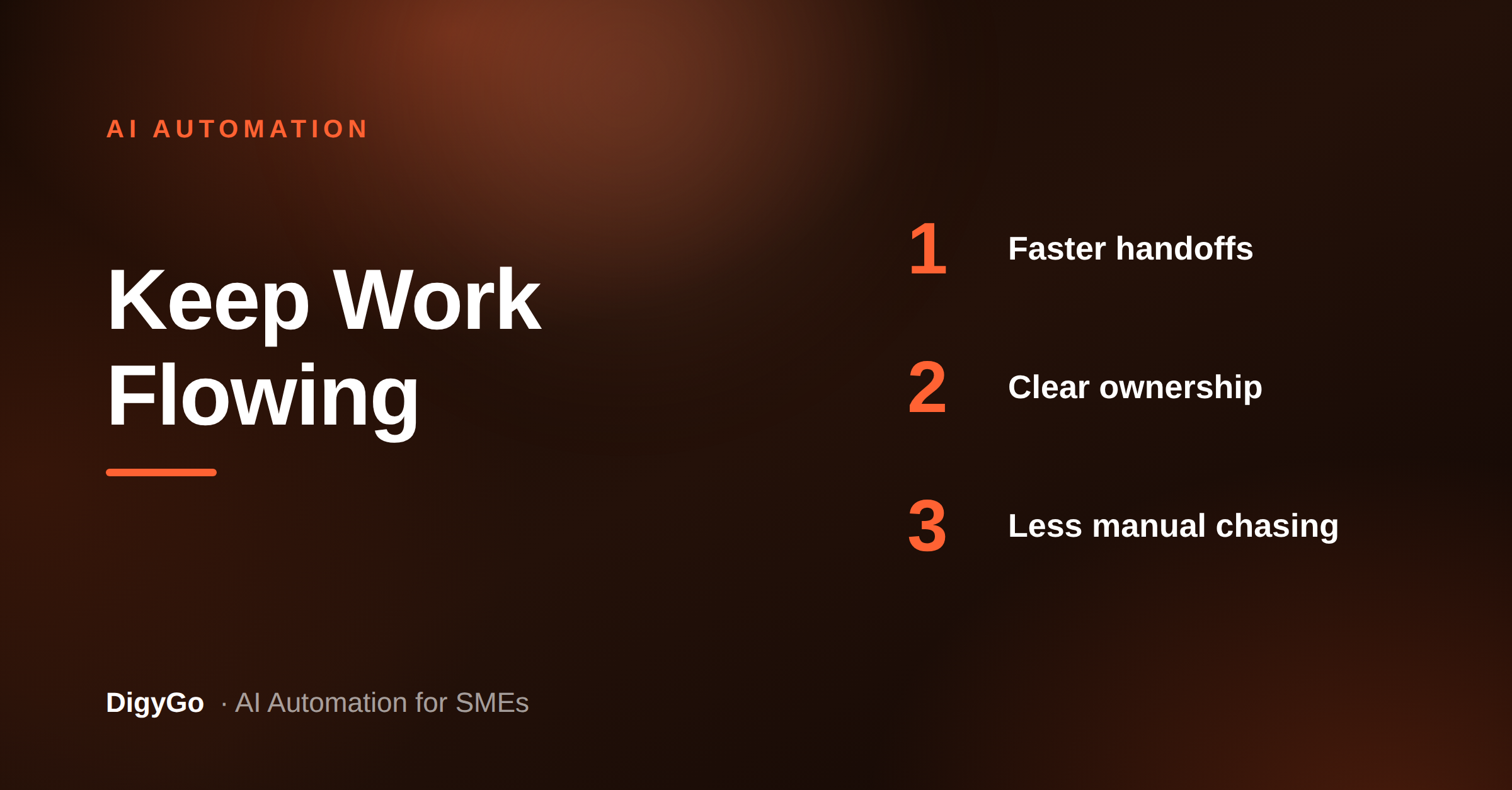
An AI workflow agent does not replace the team. It becomes the invisible coordinator that assigns the next action instantly, based on the trigger and the rules you define. That is the real win: fewer stalls, fewer dropped tasks, and less dependence on memory.
Where an SME workflow agent actually helps
The best place to start is not a giant automation map. It is the handful of moments where work gets stuck every day.
- Lead routing: Send new enquiries to the right owner by service, location, or priority.
- Follow-up timing: Trigger reminders when a lead or customer has been silent for too long.
- Task handoff: Move work from sales to delivery with all the context attached.
- Exception alerts: Flag urgent cases so a human steps in only when needed.
That is why workflow agents are so useful for SMEs. They reduce the number of decisions people must make manually, while keeping the business moving in the background.
Build the agent around one outcome
The fastest mistake is trying to automate everything at once. Start with one outcome that matters to revenue or service quality. For many businesses, that outcome is simple: every new enquiry gets an owner in under a minute.
From there, define three things clearly:
- What event should trigger the agent.
- Who should receive the next task or alert.
- What happens if nobody responds on time.
When those rules are clear, the workflow becomes dependable. The team stops asking, “Who is handling this?” and starts trusting the system to route the work correctly.
Make the system feel human, not robotic
Good AI automation should not sound like a machine shouting instructions. It should feel like a well-run office: calm, timely, and specific. Use short messages, clear ownership, and one action per notification. If the agent sends too many updates, people start ignoring it.
That is why the strongest workflows are often the simplest. A lead comes in, the agent assigns it, the owner gets a reminder, and the dashboard records the result. No drama, no delay, no missed handoff.
What to measure after launch
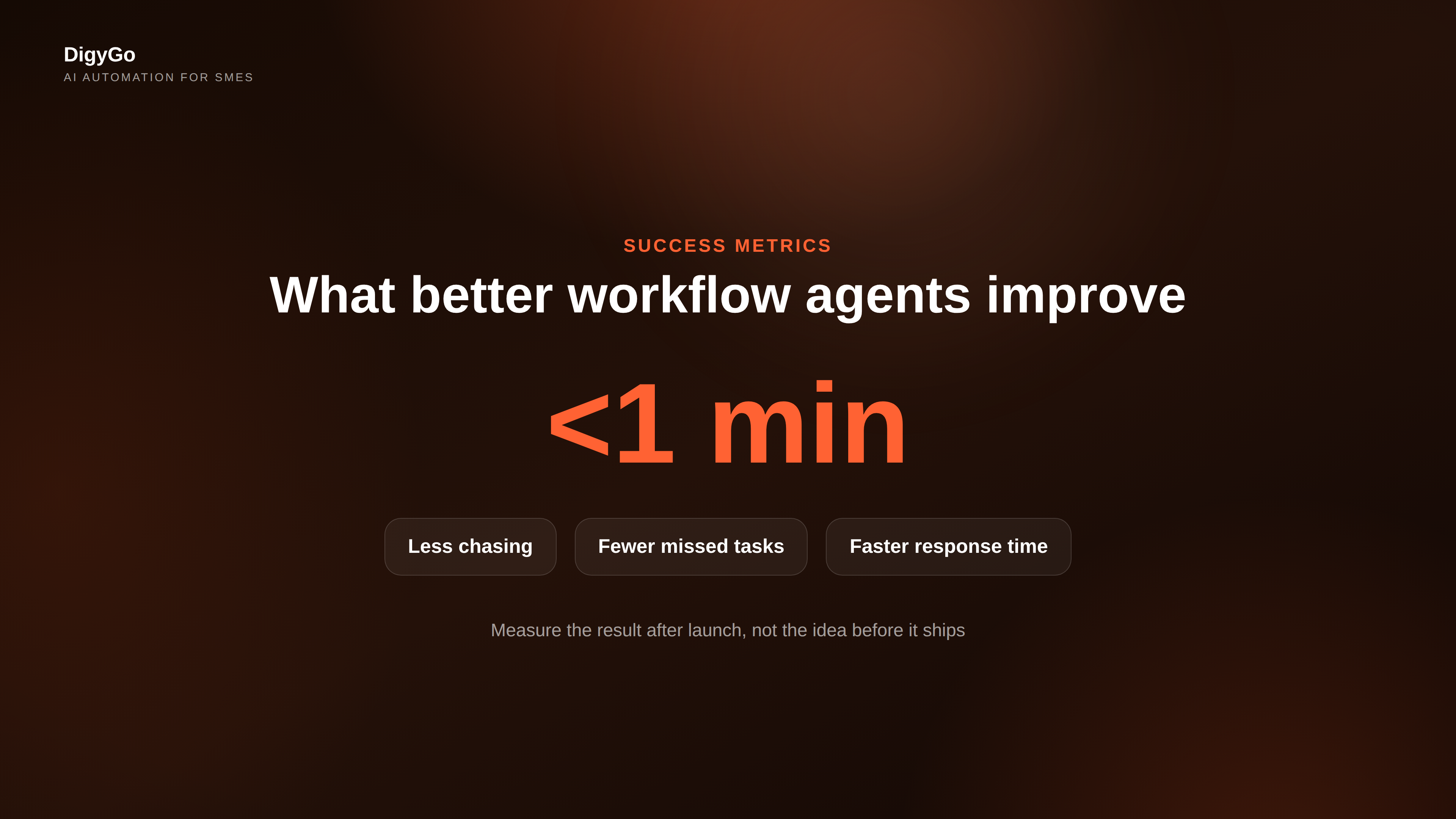
Once the workflow is live, measure whether it is removing friction. The right metrics are easy to understand and hard to argue with:
- Time from trigger to ownership
- Number of manual follow-ups saved
- Missed task rate before and after automation
- Lead-to-response time for new enquiries
If those numbers improve, the agent is doing real work. If they do not, the workflow probably needs a better trigger, a cleaner rule, or a narrower scope.
The SME advantage is consistency
Large teams can absorb a few missed handoffs. Small teams cannot. That is why AI workflow agents matter so much for founders and SME operators. They create consistency in the places where human attention is most likely to slip.
When the business grows, the agent grows with it. The process stays the same, even if the number of leads, requests, and internal tasks doubles. That is how automation becomes a real operating advantage instead of another tool nobody opens.
Talk to DigyGo about building a workflow agent that keeps your operations moving.