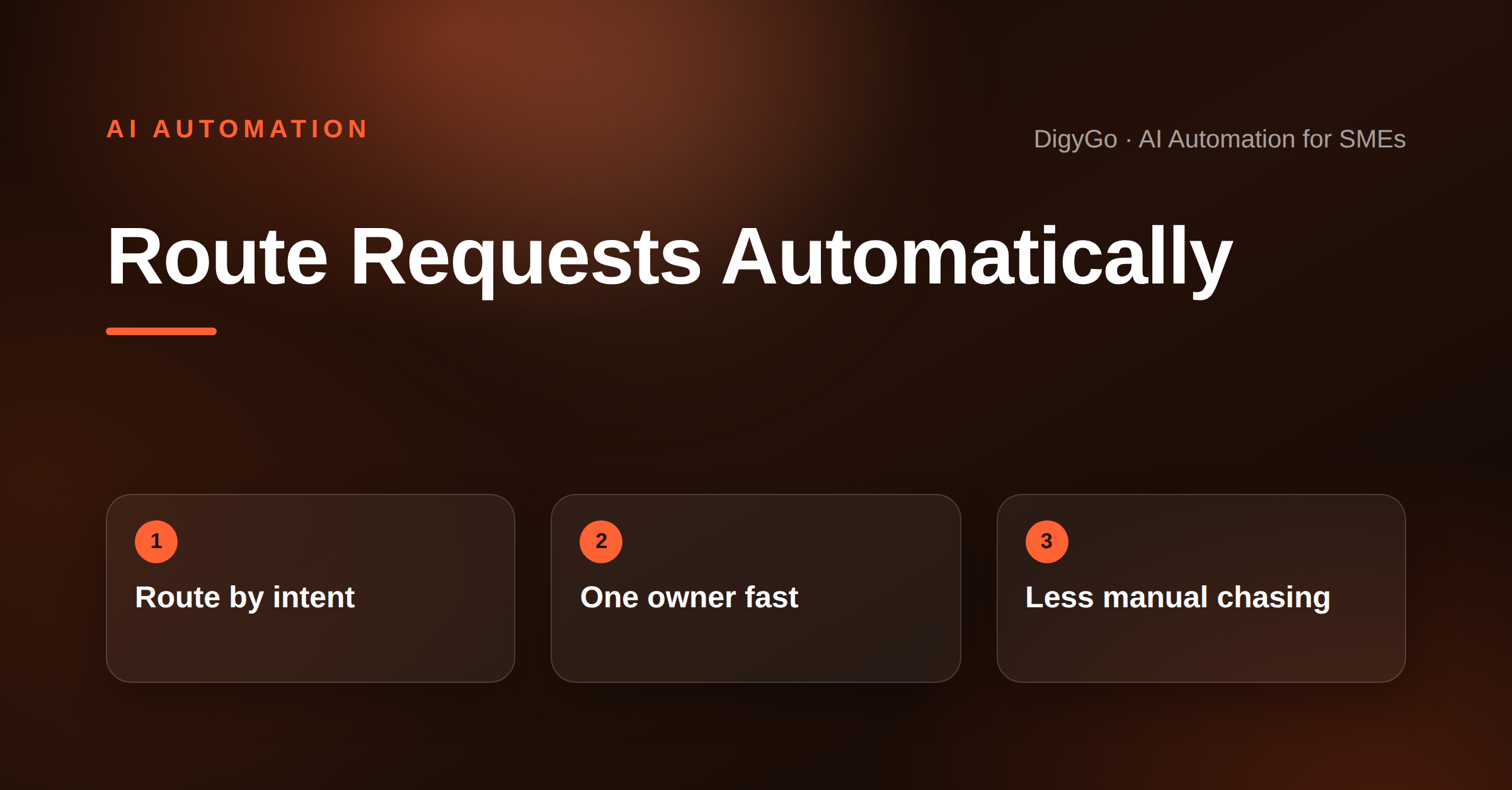
Most SMEs do not have a workload problem — they have a routing problem. Sales enquiries, support questions, vendor issues, and internal requests all land in the same place, then someone has to notice, sort, and hand them off. An AI request routing system fixes that by deciding what each message is, who should own it, and what happens next.
A practical guide for SMEs on using AI to triage incoming requests, assign the right owner, and keep operations moving without manual chasing.
Why request routing breaks down in SMEs
When a small team is busy, every incoming request competes for attention. The result is predictable: faster teams keep re-reading the same message, slower teams forget the follow-up, and urgent items hide inside general inbox noise.
The goal is not to automate away judgment. The goal is to remove the manual sorting work so the right person sees the right request at the right time.
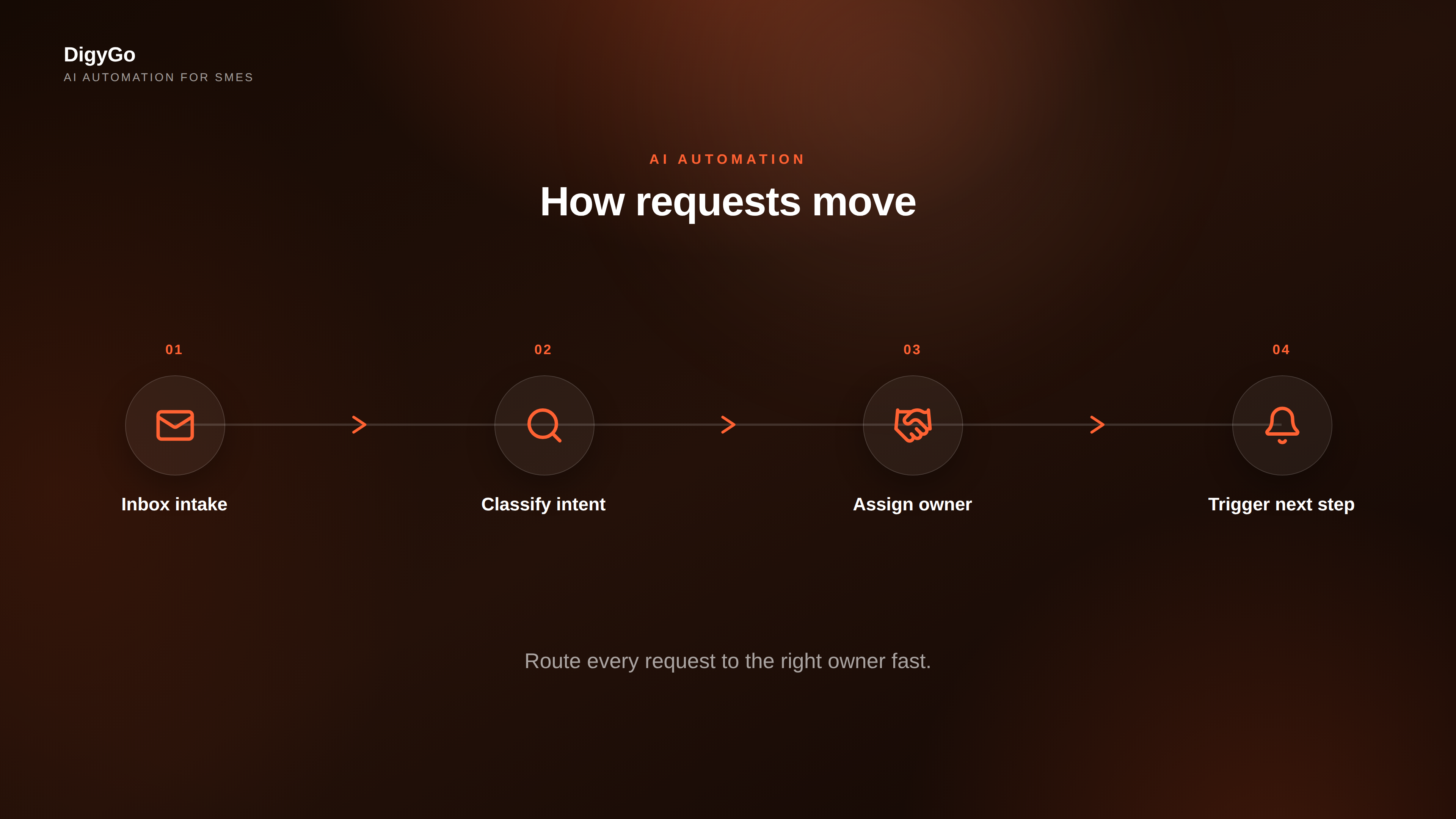
What an AI routing system should do
A useful SME routing flow is simple. The AI reads the request, classifies the intent, checks a few rules, and sends it to the right queue. If the request is urgent, it escalates. If it is routine, it gets logged and assigned. If it needs a human decision, it gets flagged with context.
- Classify intent: sales, support, billing, operations, or internal.
- Check priority: urgent, normal, or low-touch.
- Assign ownership: one person or one team queue.
- Send context: customer details, source, and the original message.
- Trigger the next action: reply, reminder, task, or handoff.
The best places to start
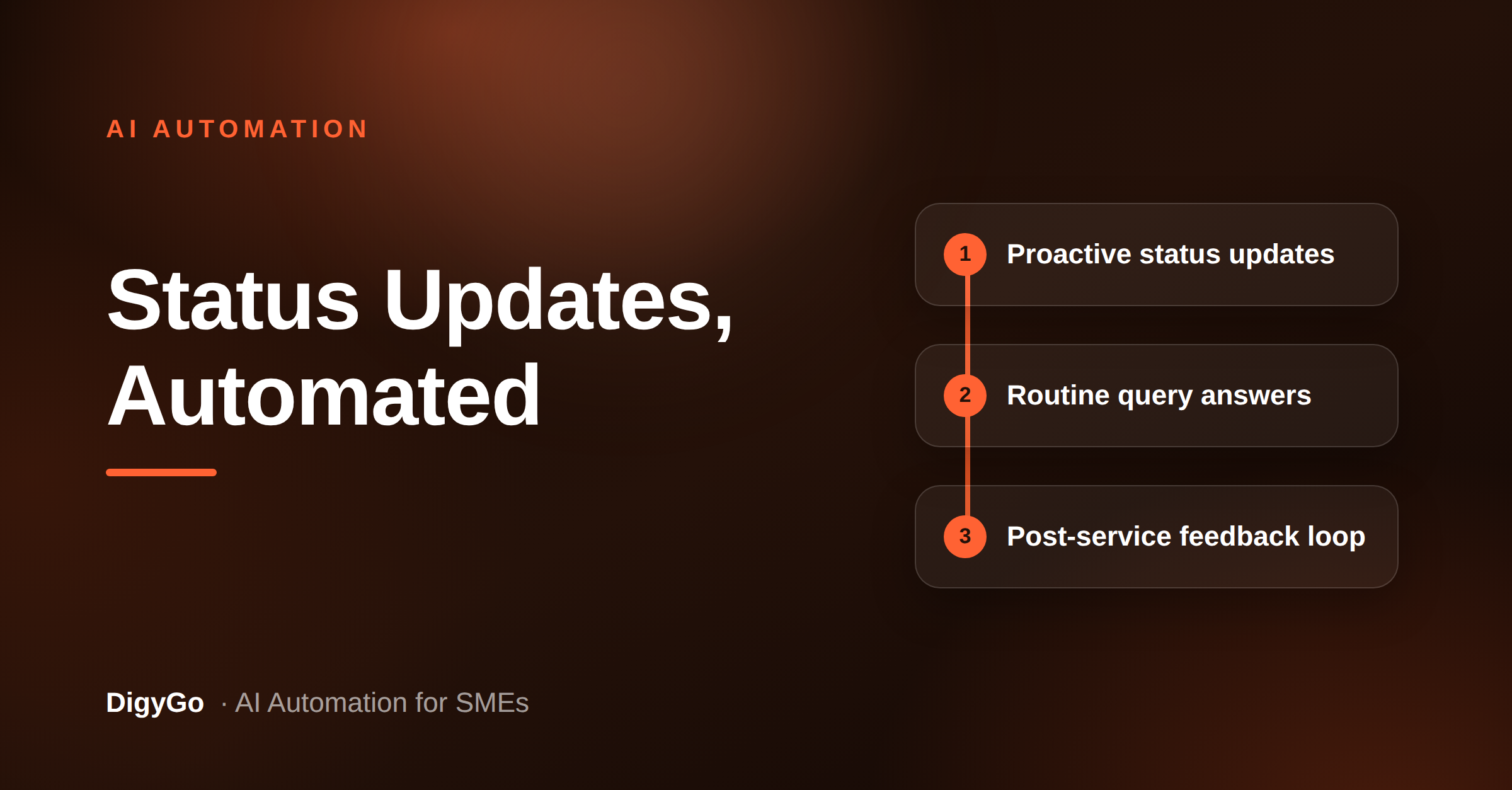
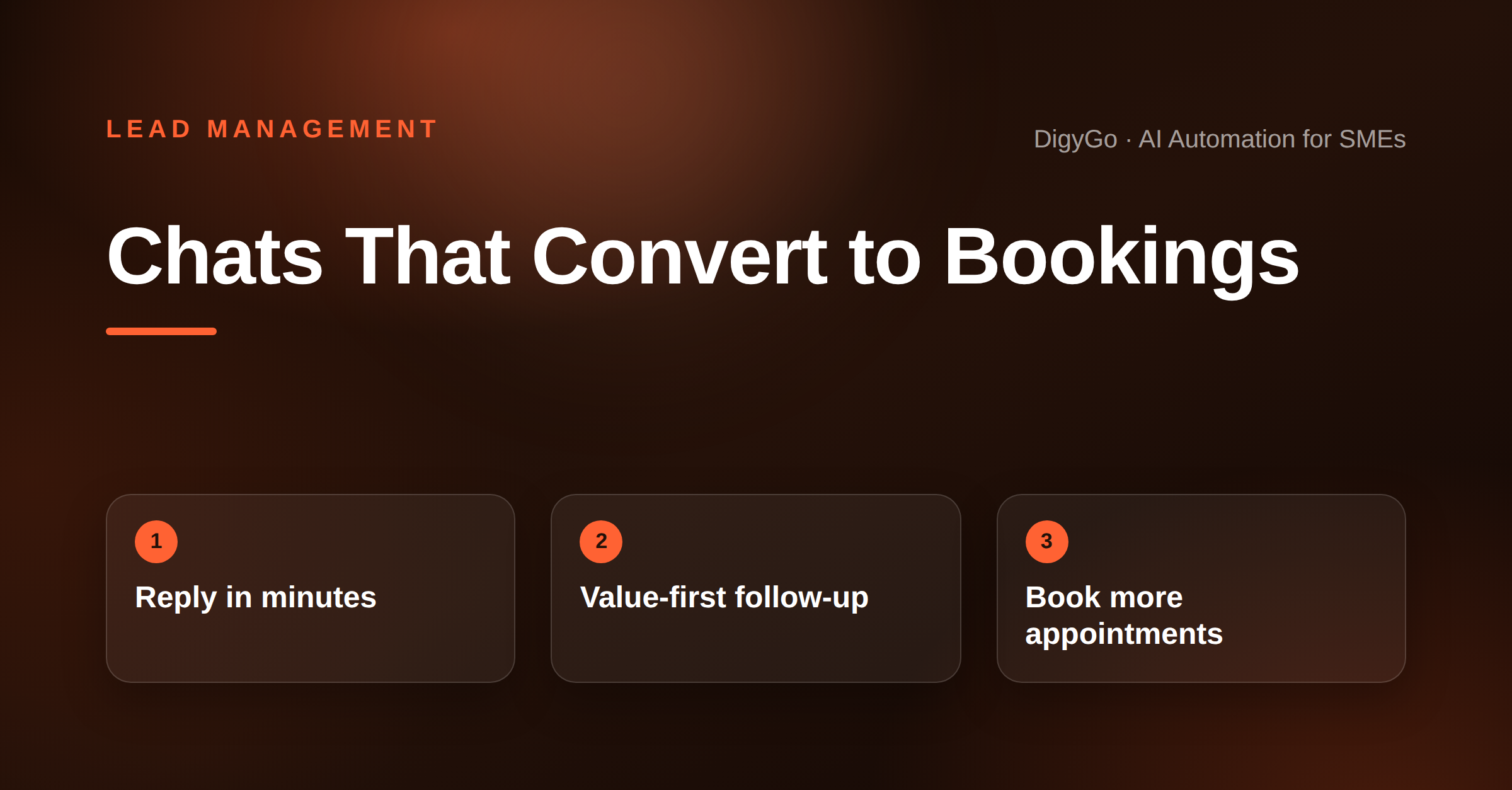
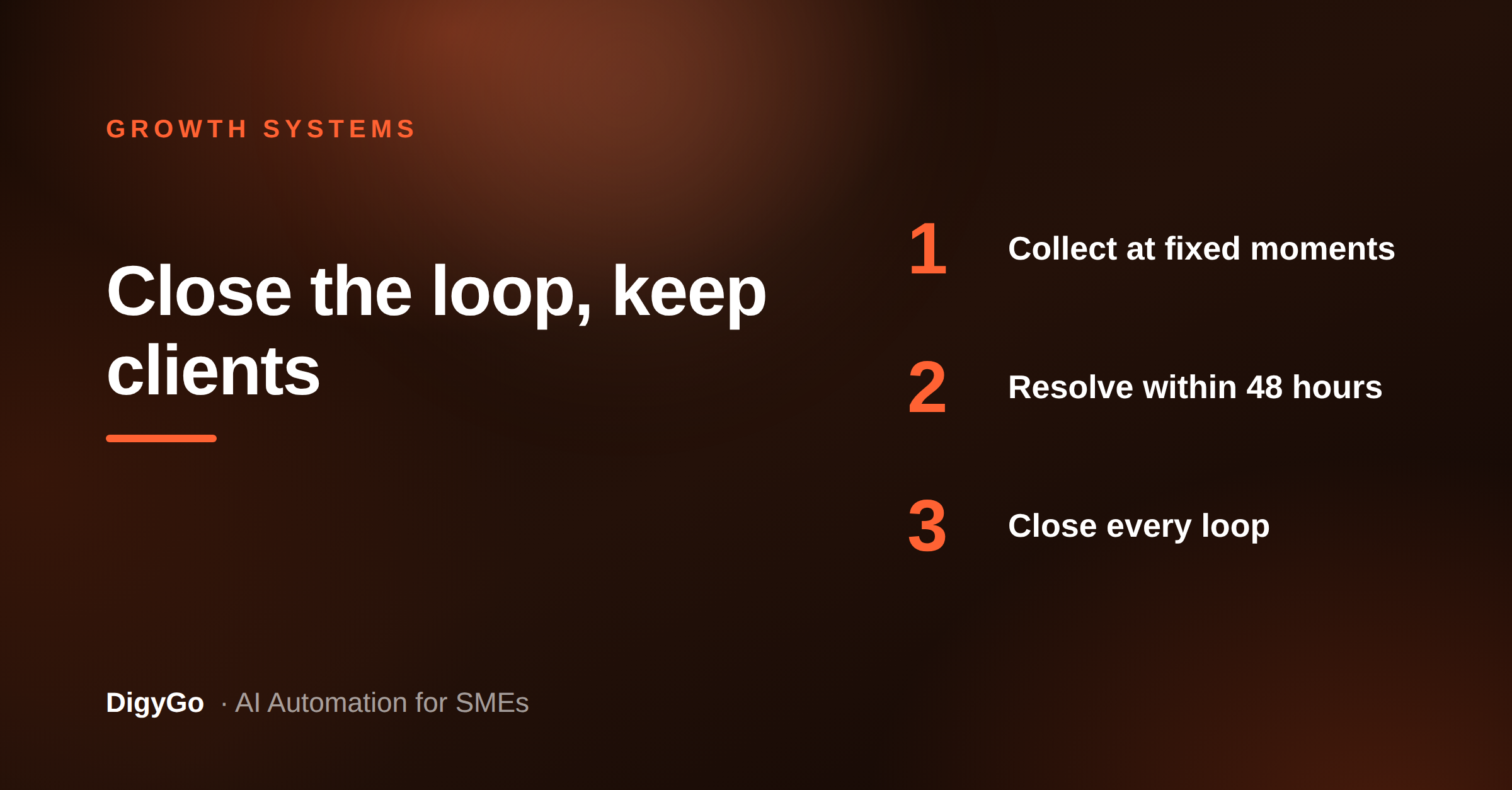
SMEs usually get the quickest win by automating three high-volume request types first. These are the moments where delay and inconsistency cost the most.
How to design the routing rules
Good routing rules are based on business logic, not clever prompts. Start with clear if-then decisions that reflect how your team already works.
- If it is a lead, capture the source, product interest, and response priority.
- If it is support, classify the issue type and send it to the right owner.
- If it is a repeat customer, surface account history before anyone replies.
- If it is unclear, ask one clarifying question and hold the handoff.
The cleaner the rules, the less often your team has to correct the AI later.
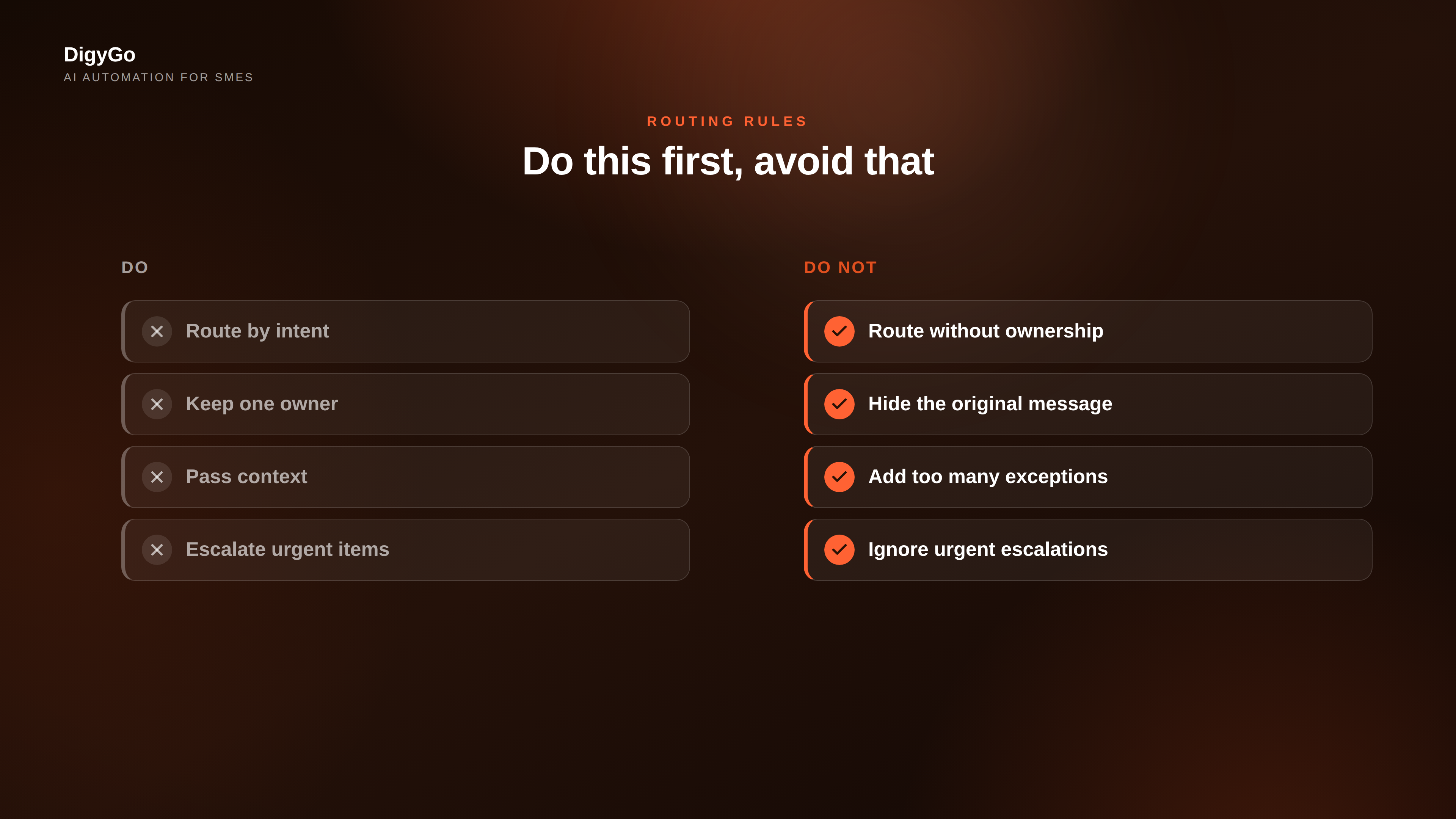
What to avoid when you automate routing
Routing breaks when teams try to solve everything at once. Keep the first version narrow and measurable.
- Do not route without ownership.
- Do not hide the original message.
- Do not create ten different exceptions on day one.
- Do not skip escalation rules for urgent items.
- Do not automate a process your team cannot explain simply.
What success looks like
When routing works, the team feels the difference quickly. Requests stop bouncing around, leaders stop asking who owns what, and follow-up becomes more reliable because every task has a clear next step. The real payoff is not just speed — it is fewer dropped balls and cleaner operations.
If your team spends too much time sorting messages before doing the actual work, an AI routing system is one of the fastest ways to reclaim that time.
FAQ
Is AI routing only for big teams?
No. SMEs often benefit more because they have fewer people and less time to waste on manual sorting.
What should be automated first?
Start with the highest-volume, lowest-ambiguity request types: leads, support, and internal task routing.
Can this work with WhatsApp and email?
Yes. The routing logic can sit on top of either channel as long as the incoming requests are captured consistently.
Talk to DigyGo about AI routing systems that save your team hours each week.