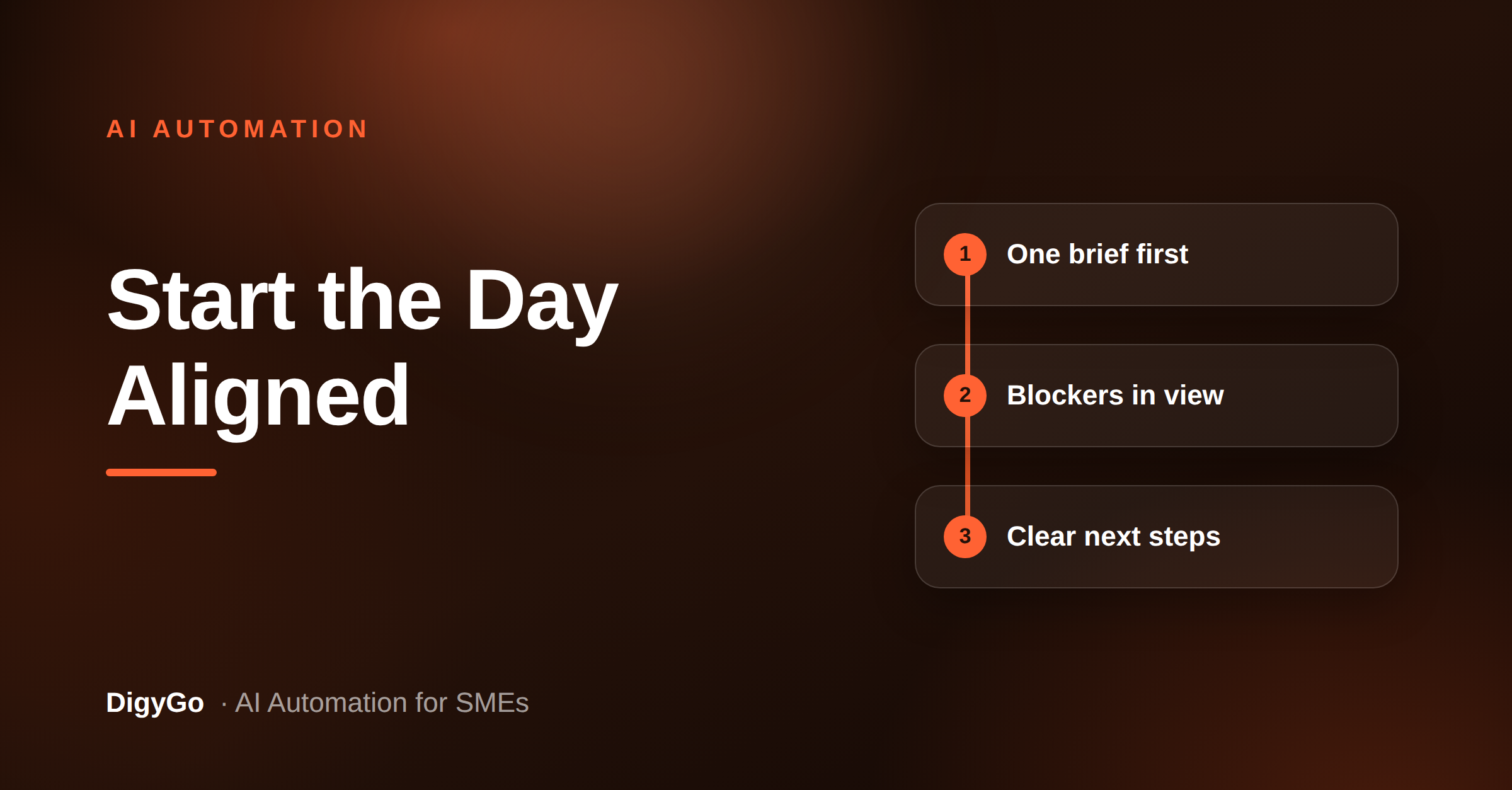
Most SME teams do not need a bigger morning meeting. They need a cleaner start: one system that collects updates, spots blockers, and sends the right people a short brief before the day gets noisy.
An AI morning ops brief helps SMEs collect overnight updates, surface blockers, and give every team member a clear next step before work begins.
Why the first hour matters
The first hour sets the pace for the rest of the day. If owners, sales, and operations begin by checking three different chats, one inbox, and a spreadsheet, the team spends the best part of the morning reconnecting the dots. An AI morning ops brief replaces that scramble with a single summary that says what changed, what needs attention, and what can wait.
- Use one brief to reduce morning noise.
- Surface urgent items before people start chasing them.
- Route each update to the right owner automatically.
- Keep the message short enough that busy founders actually read it.
What the brief should gather
A useful morning brief is not a motivational newsletter. It is a small operations layer that collects the signals your team already produces and turns them into a readable update. For most SMEs, that means four inputs:
- Sales: new enquiries, replies waiting, deals at risk.
- Operations: jobs delayed, approvals pending, delivery blockers.
- Support: unresolved tickets, repeat complaints, urgent escalations.
- Finance or admin: payments due, documents missing, reminders to send.
When these are pulled together automatically, the brief stops being a manual status chase and becomes a practical management tool.
Build the flow in three simple steps
Start small. The best AI systems for SMEs are the ones that solve one recurring problem very well before they try to solve everything.
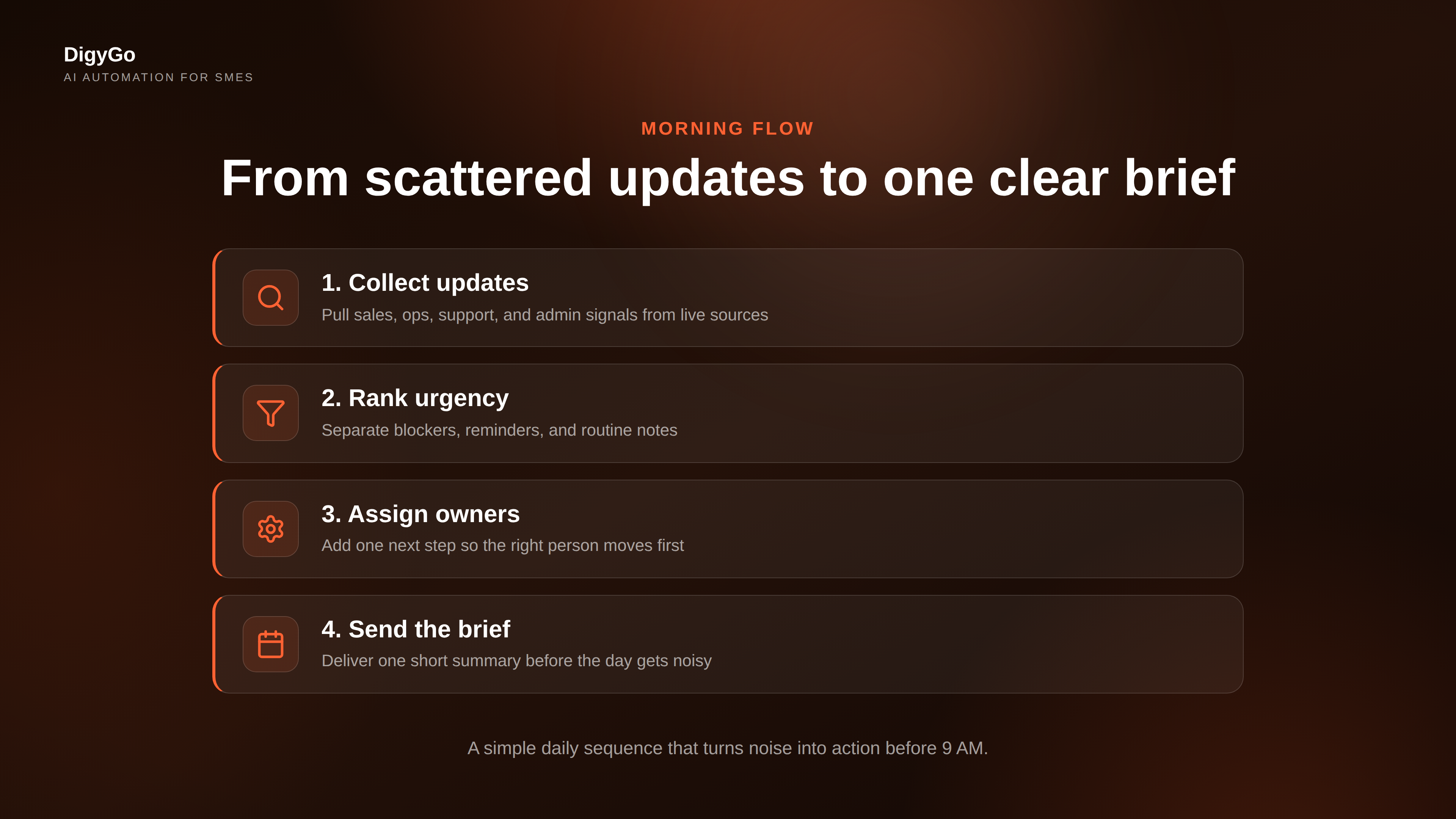
- 1. Collect updates from live sources. Pull from CRM notes, WhatsApp replies, shared inboxes, forms, or task tools.
- 2. Rank by urgency. Separate blockers, time-sensitive items, and routine updates so the team sees the right order.
- 3. Send one clean brief. Deliver a short message to founders or team leads before 9 AM with clear next actions.
The goal is not to automate judgment. The goal is to remove the friction that delays it.
Keep the format tight
A good brief usually fits on one screen. If it is too long, people skim it and the whole system loses value. Use short sections like urgent, waiting, and today. Add a single owner next to each item where possible. That one detail often saves the most time because nobody has to ask, “Who is handling this?”
What it looks like when it works
When the morning brief is set up properly, the team starts the day with fewer interruptions and faster decisions. Sales knows which leads need immediate follow-up. Operations sees which job is stuck. The founder gets a quick view of the day without opening five apps.
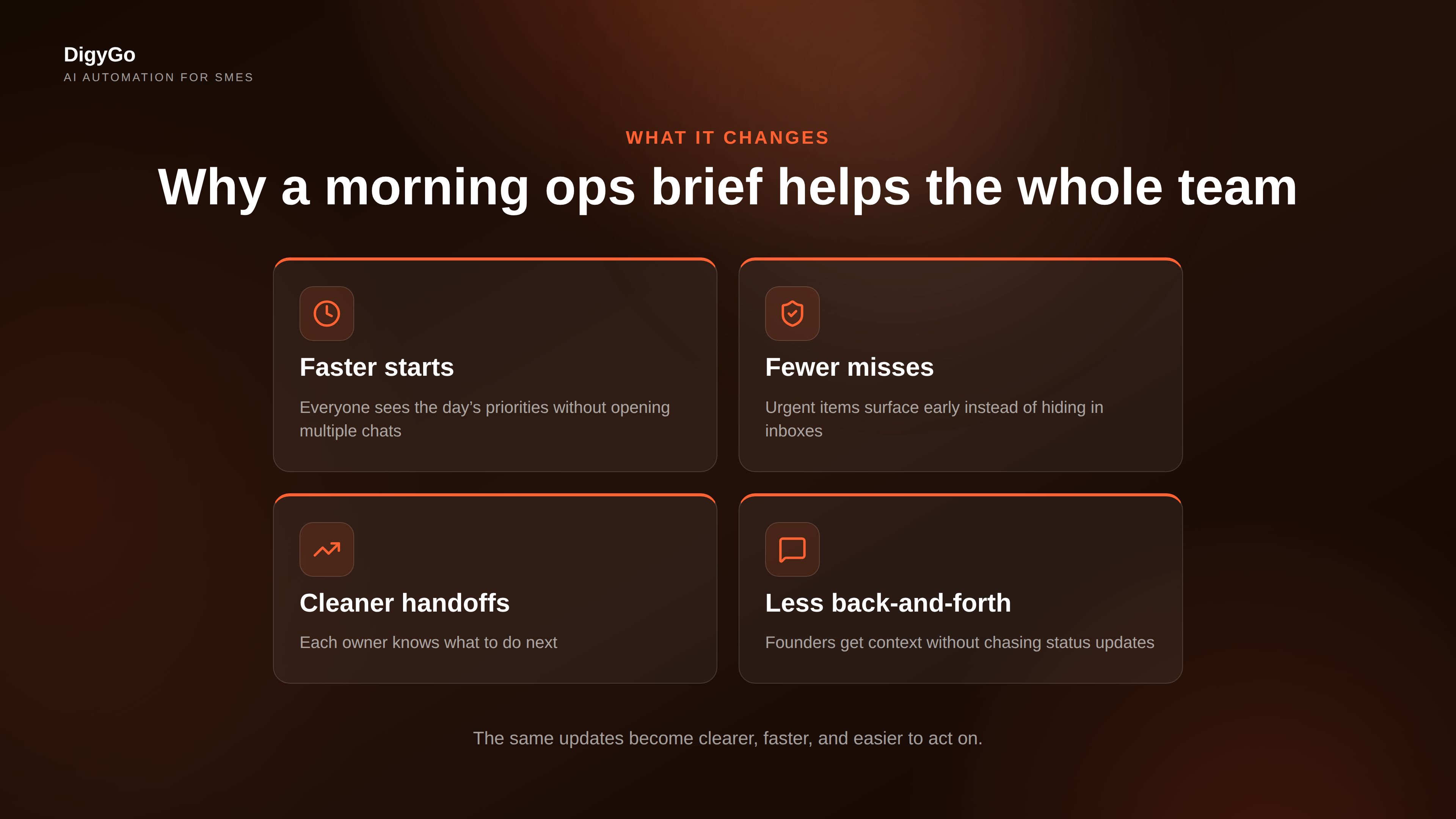
| Morning chaos | AI morning ops brief |
|---|---|
| Teams check multiple chats | One summary lands first |
| Urgent items get missed | Blockers are flagged early |
| Owners are unclear | Each item has a next step |
| Founders start with noise | Founders start with context |
Where SMEs usually overbuild
The biggest mistake is trying to make the brief feel like a full dashboard. It does not need charts, heavy scoring, or ten approval rules. It needs trust. If the output is consistent, accurate, and short, people will use it. If it feels bloated, they will ignore it and go back to manual checks.
That is why we recommend starting with one daily brief and one owner for each major function. Once the routine is stable, you can expand it to afternoon check-ins, sales reminders, or exception alerts.
FAQ
Who should receive the morning brief?
Usually founders, team leads, sales heads, and operations owners. Keep the audience small enough that the message stays relevant.
Does this replace daily standups?
No. It reduces the amount of repetitive checking before the standup. The team still discusses exceptions and decisions, but they start from a better baseline.
What is the best starting point for SMEs?
Start with one source of truth, such as your CRM or inbox, and one daily delivery time. Add more sources only after the first version is reliable.
If you want DigyGo to design an AI morning brief for your team, start the conversation here.