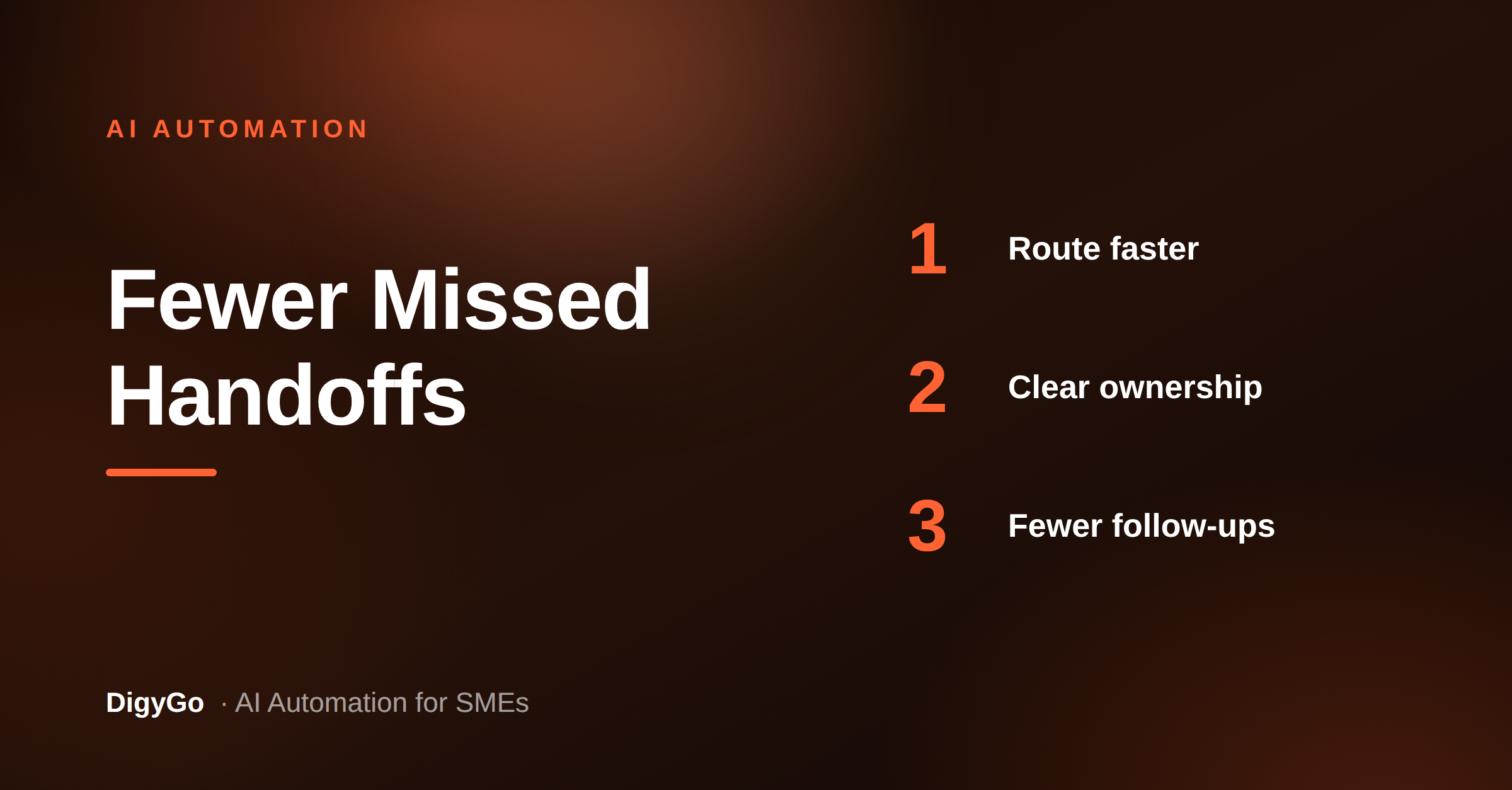
When work arrives through WhatsApp, email, forms, and calls, the real bottleneck is often not volume. It is handoff. An AI handoff system gives every request a clear path: capture it, classify it, assign it, and follow it until the right person acts.
An AI handoff system helps SMEs route incoming requests to the right owner, add context, and stop tasks from slipping between channels.
Key takeaways
- AI should not replace ownership, it should route work faster.
- Every request needs one clear next owner and one clear next action.
- The best systems reduce chasing by combining triage, reminders, and escalation.
Why handoffs break in SMEs
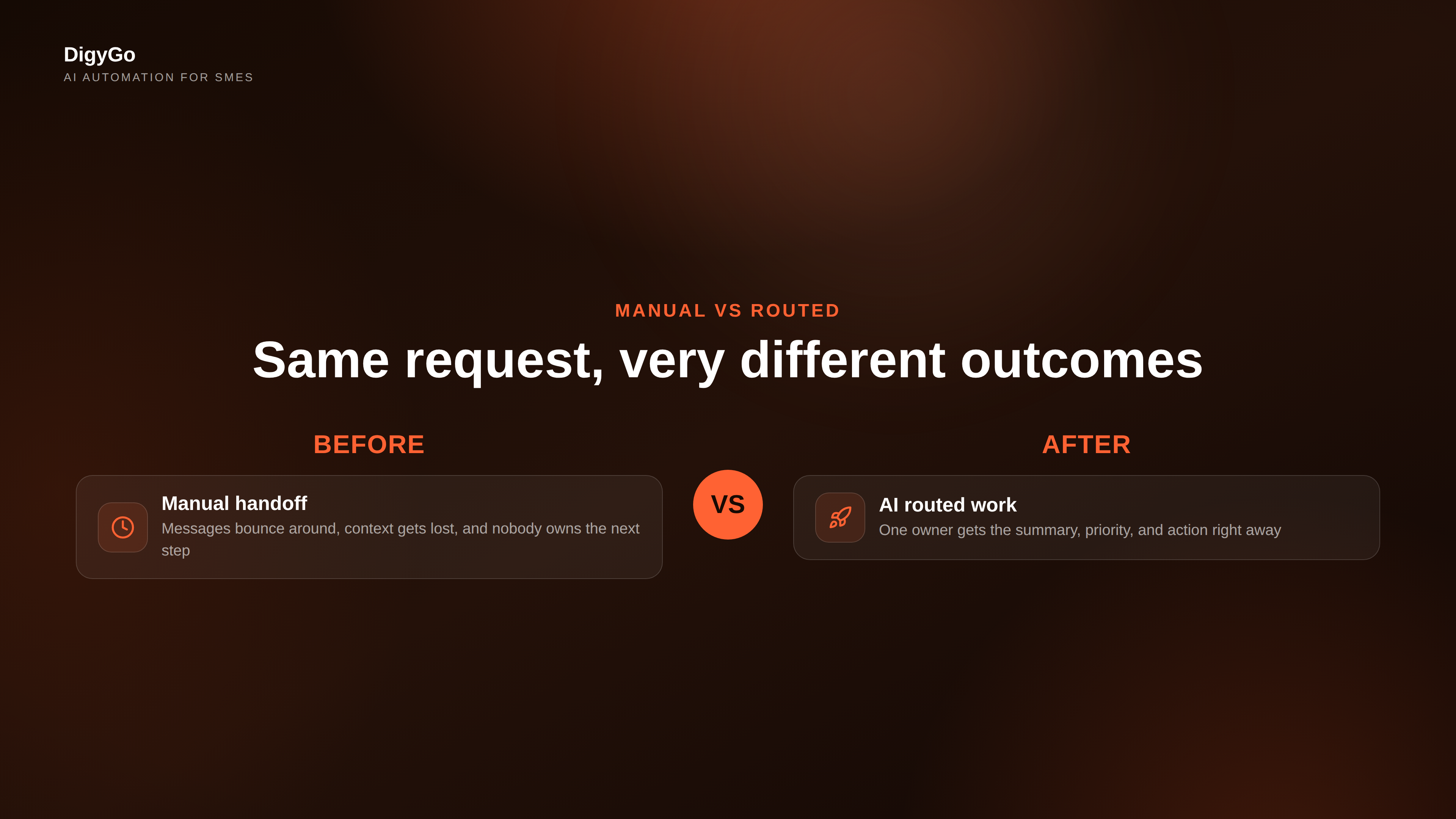
Most teams do not lose work because they are lazy. They lose work because the request starts in one place and the responsibility sits in another. A customer message lands in the inbox, the sales rep reads it later, the ops team waits for context, and the task slips into a gap.
That gap gets wider as the business grows. More channels mean more copying, more reminders, and more “Did anyone pick this up?” messages. An AI handoff system closes that gap by turning every incoming request into a tracked object with a clear owner, priority, and status.
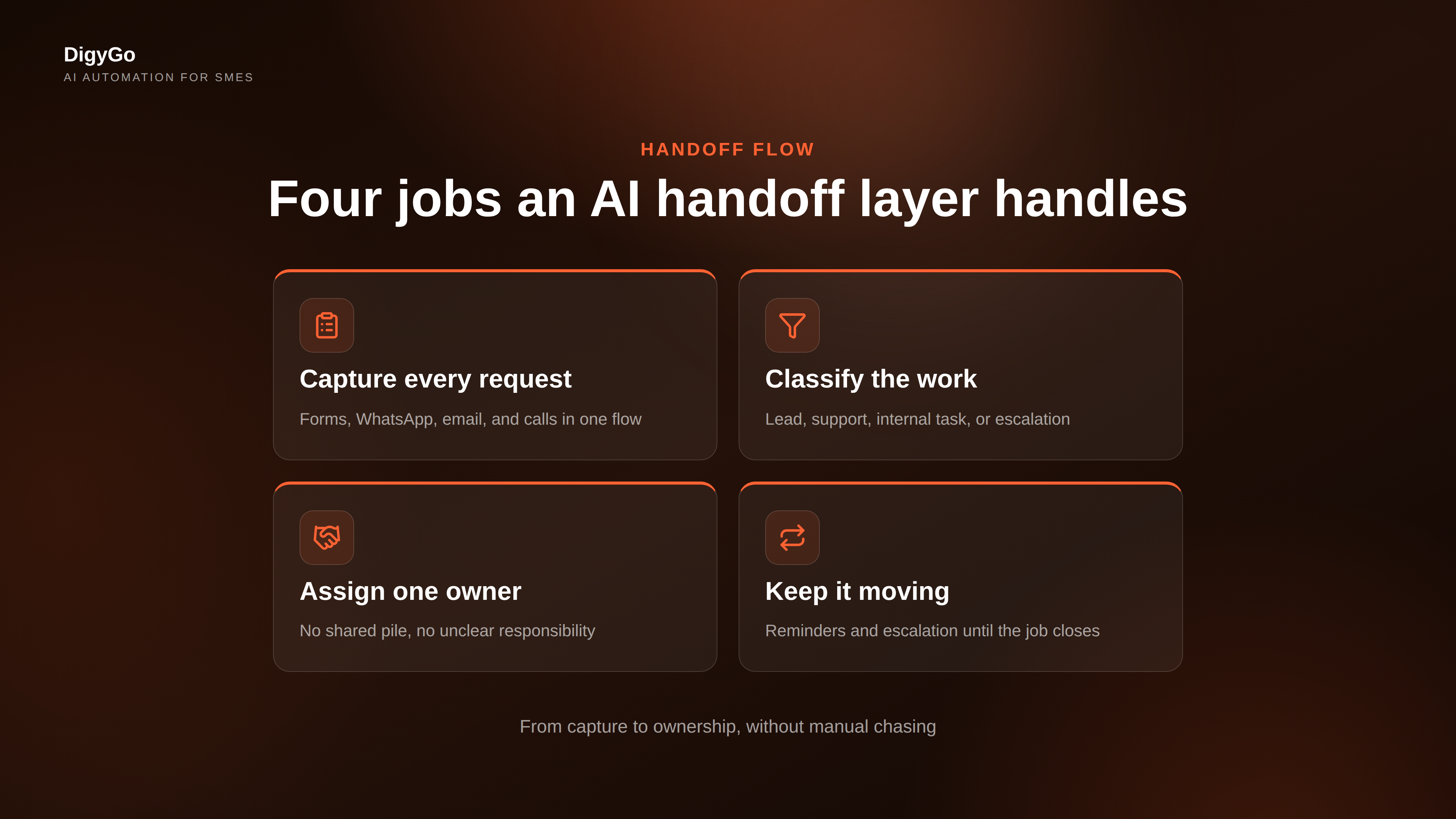
What the AI handoff system does
The goal is not fancy automation for its own sake. The goal is a cleaner operating rhythm. When the system catches a request, it should decide whether it is a lead, support issue, internal task, or escalation. Then it should route that work to the right queue with the right context attached.
That means the person receiving the task does not start from scratch. They see the source, the summary, the urgency, and the next step. For SMEs, that alone can save hours every week because the team stops asking for the same details twice.
- Capture: Pull requests from forms, WhatsApp, email, and missed calls.
- Classify: Decide whether it is sales, support, ops, or urgent escalation.
- Assign: Send it to one owner instead of a shared pile.
- Follow: Remind, escalate, and log until the job is done.
How to build the flow
Start with one high-friction workflow. For many SMEs, that is new enquiries. For others, it is support tickets or internal approvals. Map the current path first: where the request comes in, who reads it, where it stalls, and who finally acts.
Then define three rules. First, every request gets a category. Second, every category has one default owner. Third, anything untouched after a set time gets an automatic reminder or escalation. Keep the first version simple enough that the team will actually use it.
Once the basic routing works, add context enrichment. That can include customer name, location, service interest, budget range, or urgency. The more context the AI attaches up front, the fewer manual replies the team needs before action starts.
Mistakes to avoid
The first mistake is automating chaos. If the team has no clear owner today, AI will only make the confusion faster. Fix ownership before you add automation.
The second mistake is overcomplicating the rules. If the routing logic is too detailed, people will stop trusting it. Simple category, owner, and escalation rules usually outperform a clever but fragile setup.
The third mistake is hiding the system from the team. Everyone should know where tasks go, how reminders work, and when escalation happens. Transparency makes adoption easier and prevents “I thought someone else had it” moments.
FAQ
Is this only for large teams?
No. Small teams often benefit the most because every missed handoff hurts more when there are fewer people to catch it.
Do we need a full CRM first?
Not necessarily. You need one reliable place to track the request and one clear owner. A CRM helps, but the workflow matters more than the tool.
What should we automate first?
Start with the first response, routing, and reminder logic. Those three steps remove most of the visible friction.
Talk to DigyGo about setting up an AI handoff system for your team