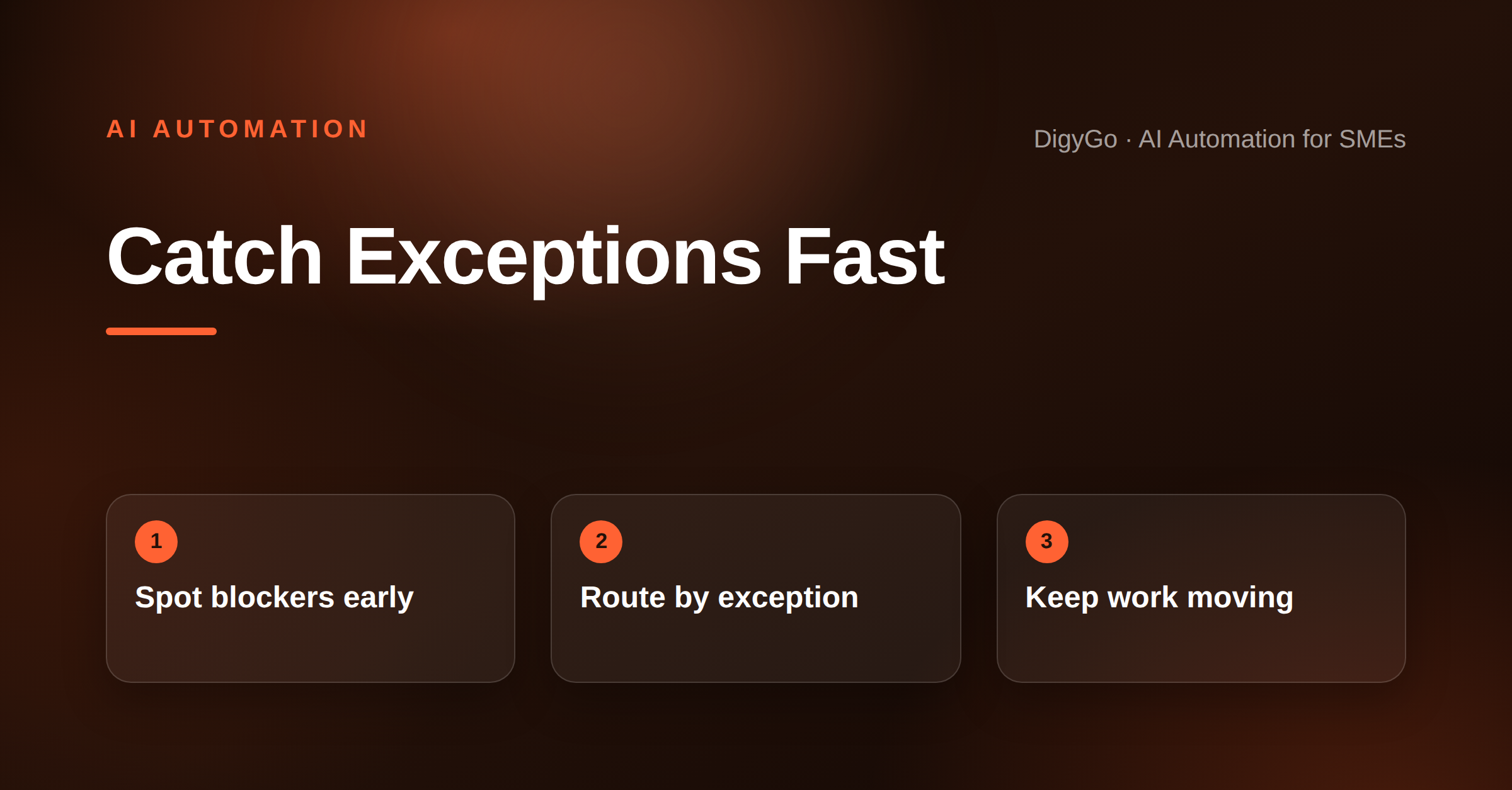
Most SME teams do not lose momentum because of big failures. They lose it when one blocker sits in an inbox, one request waits for a reply, or one approval gets missed after lunch. An AI exception-handling queue fixes that by turning every exception into a visible next action.
A practical guide for SMEs on using an AI exception-handling queue to surface blockers, assign ownership, and keep recurring work moving without manual chasing.
Why exceptions matter more than the happy path
Standard work is easy to automate. The real operational drag appears when something falls outside the normal flow: a lead needs manual review, a payment does not match, a delivery issue needs escalation, or a customer asks for a special handoff. Without a clear exception path, teams start asking around, forwarding messages, and waiting for someone who may not even see the problem in time.
The better pattern is simple: capture the exception once, classify it quickly, assign one owner, and keep the rest of the team out of the chase. That is what makes the queue useful. It does not try to solve everything automatically. It makes the unusual visible.
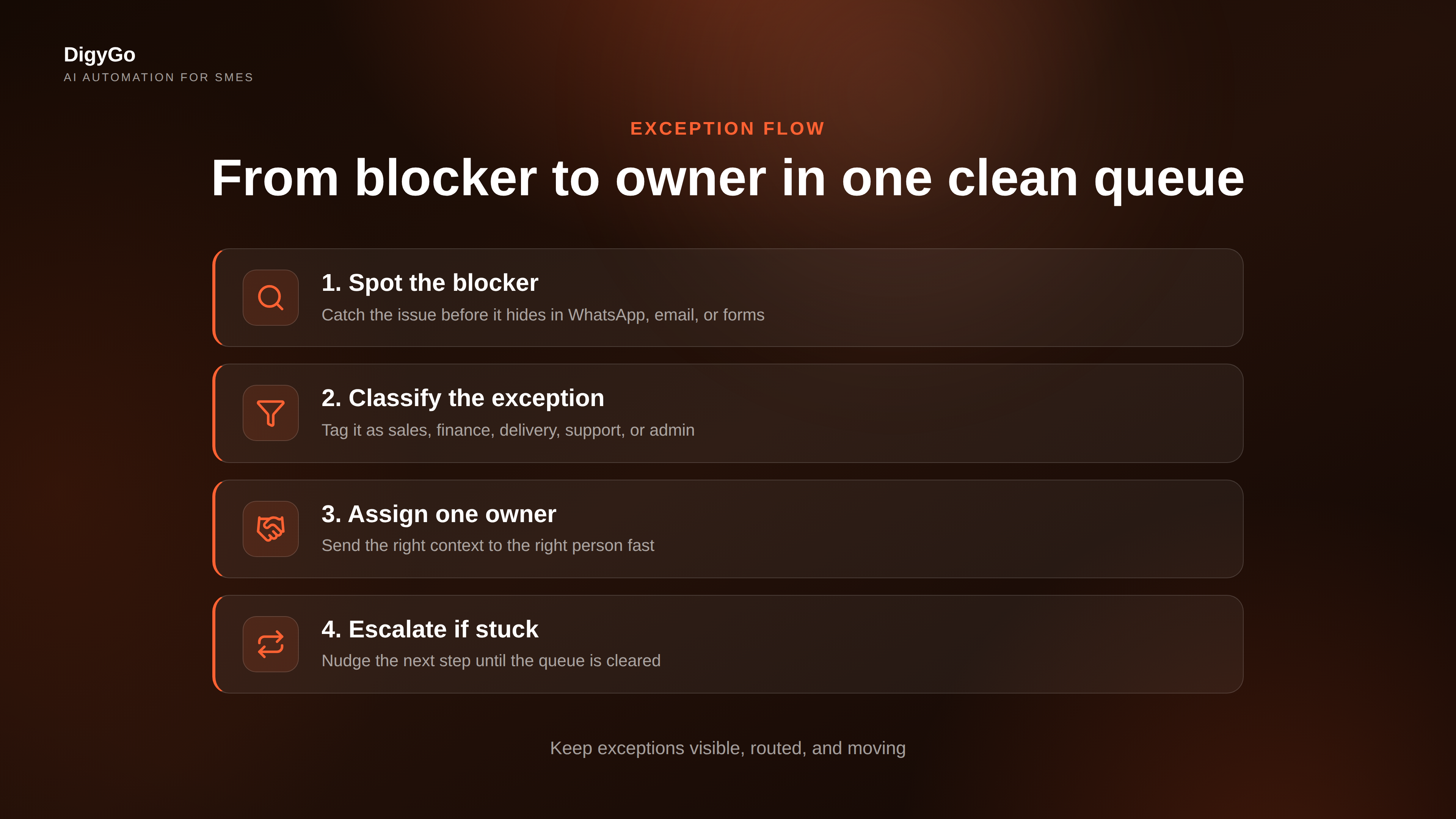
A practical AI exception-handling flow
For DigyGo-style SME operations, the flow can stay lightweight:
- Capture: every exception lands in one queue from WhatsApp, email, forms, or an internal tool.
- Classify: AI tags it as finance, sales, delivery, support, or admin.
- Prioritise: urgent items get flagged by impact and time sensitivity.
- Assign: the right owner gets a clear handoff with the context attached.
- Escalate: if nothing moves, the queue nudges the next person automatically.
This keeps your team from treating every exception like a fresh fire drill. The goal is not more alerts. The goal is one reliable system that tells people what is blocked, who owns it, and what needs to happen next.
What AI should do, and what it should not
AI is best used as a routing and summarising layer. It can read the message, infer intent, add context, and suggest an owner. It should not make high-risk business decisions on its own. A refund over a threshold, an important customer complaint, or a legal issue should still go to a human for confirmation.
That balance matters. When SMEs over-automate exceptions, they create new risk. When they under-automate, they create delay. A good queue sits in the middle: fast enough to reduce drag, careful enough to stay accountable.
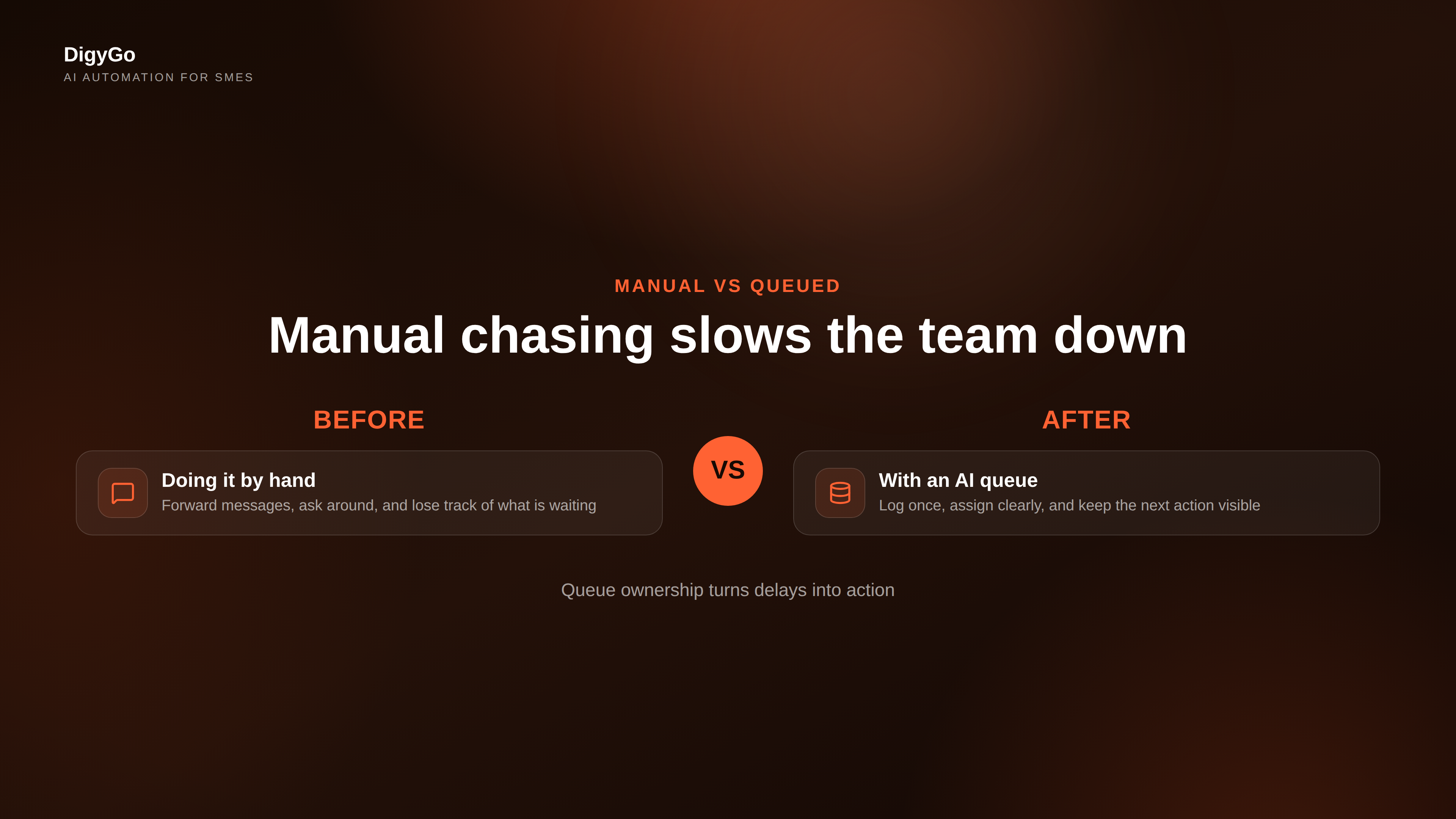
Manual chasing vs queued ownership
Here is the real difference. In a manual setup, people forward messages, ask for updates, and lose track of what is waiting. In a queued setup, the exception is logged once, the owner is visible, and the next action is clear. That means fewer dropped requests, fewer status pings, and faster resolution times.
For founders, the value is also strategic. Once exceptions become measurable, you can see patterns: the same issue appearing every week, the same handoff failing, or the same queue sitting too long. That is where process improvement starts.
- Recurring exceptions show where the process is weak.
- Slow queues show where ownership is unclear.
- Repeated escalations show where a rule or template is missing.
How to start small
You do not need a huge AI rollout to begin. Start with one queue, one exception type, and one owner. For example, route only after-hours sales enquiries or only unpaid invoice issues. Once that flow works, expand to the next category.
That is usually the safest way for SMEs to build AI systems that stick. Small wins prove the workflow, the team learns the handoff, and the business gets a visible improvement without operational chaos.
FAQ
What is an AI exception-handling queue?
It is a shared workflow that captures blockers, classifies them, assigns ownership, and tracks resolution so exceptions do not disappear inside inboxes and chats.
Which SME teams benefit most?
Sales, operations, support, finance, and admin teams benefit the most because they handle repeatable work where a few exceptions can slow down the entire day.
Can AI resolve exceptions automatically?
Sometimes it can route or summarise them, but the safest approach is to let AI triage and humans approve anything sensitive, high-value, or unusual.
Talk to DigyGo about turning your manual blockers into a cleaner AI workflow