AI automation works best when it knows what to do with the messy cases, not just the easy ones. For SMEs, exception handling is the difference between a workflow that runs quietly in the background and one that still needs a human to rescue every odd request, delay, or mismatch.
A practical guide for SME founders on designing AI workflows that detect exceptions, route the right next action, and escalate cleanly when work falls outside the normal path.
Key takeaways
- Exception handling keeps AI workflows useful when inputs are incomplete, urgent, or unusual.
- The goal is not full autonomy; it is fast routing, clear escalation, and fewer stalls.
- Good exception design protects customer experience, operations time, and team trust.
Why exception handling matters in SME automation
Most automation wins come from repeating the same action with the same structure. But day-to-day SME work is rarely that clean. A lead may arrive without a phone number, a supplier update may conflict with a planned schedule, or a customer request may need approval before anyone can act. If the system has no exception path, the work stops.
That is why AI systems should be designed to classify issues, request missing details, and hand off only the right cases to the right person. The win is not just speed. It is consistency under pressure.
What AI exception handling should do
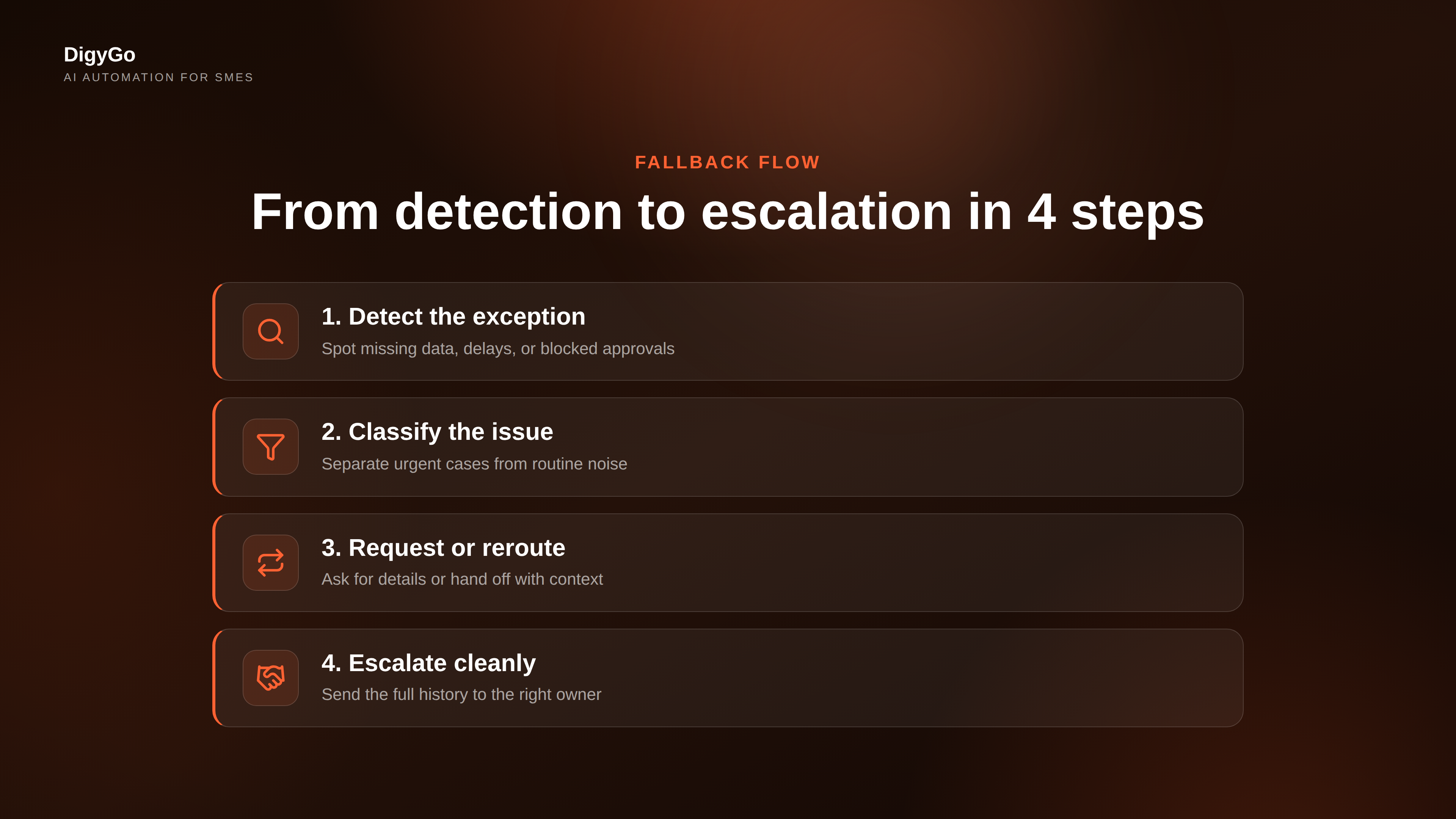
In a practical SME setup, an AI workflow should do four things when something breaks the normal pattern:
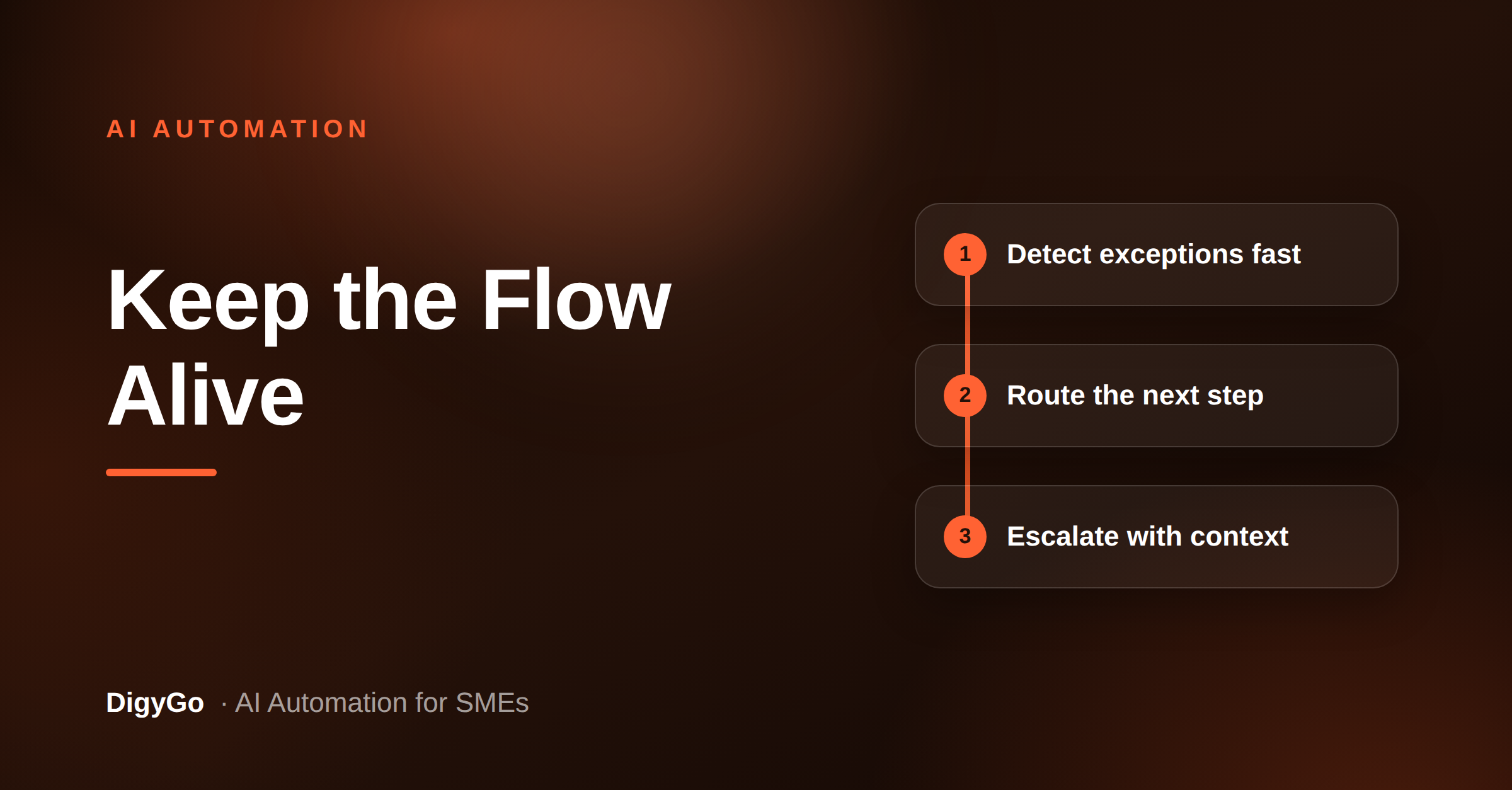
- Detect the exception — missing data, conflicting information, no response, or a blocked approval.
- Classify the issue — is it urgent, low risk, customer-facing, or internal?
- Take the next best action — ask for the missing detail, reroute the item, or create a task.
- Escalate with context — pass the full history to a human only when judgment is needed.
This is what keeps the workflow from becoming another inbox full of warnings. The system should move work forward, not just point out what went wrong.
Designing the fallback path before the workflow goes live
The biggest mistake is building the happy path first and leaving exceptions for later. In reality, the fallback path is what determines whether the automation survives real usage.
Start with three questions:
- What inputs can be missing or wrong?
- Who should own the item when AI cannot continue?
- What message should the customer or team receive while the issue is being handled?
If you answer those three questions early, your AI system becomes easier to trust. Teams stop worrying about edge cases because the workflow already knows what to do when the edge case arrives.
Common exceptions SMEs should automate first
Some exceptions appear again and again across sales, operations, and support. These are the best places to start because they give quick operational wins.
1. Missing details
If a lead, request, or job ticket arrives incomplete, AI should ask for the missing fields automatically instead of sending it to a human in a half-finished state.
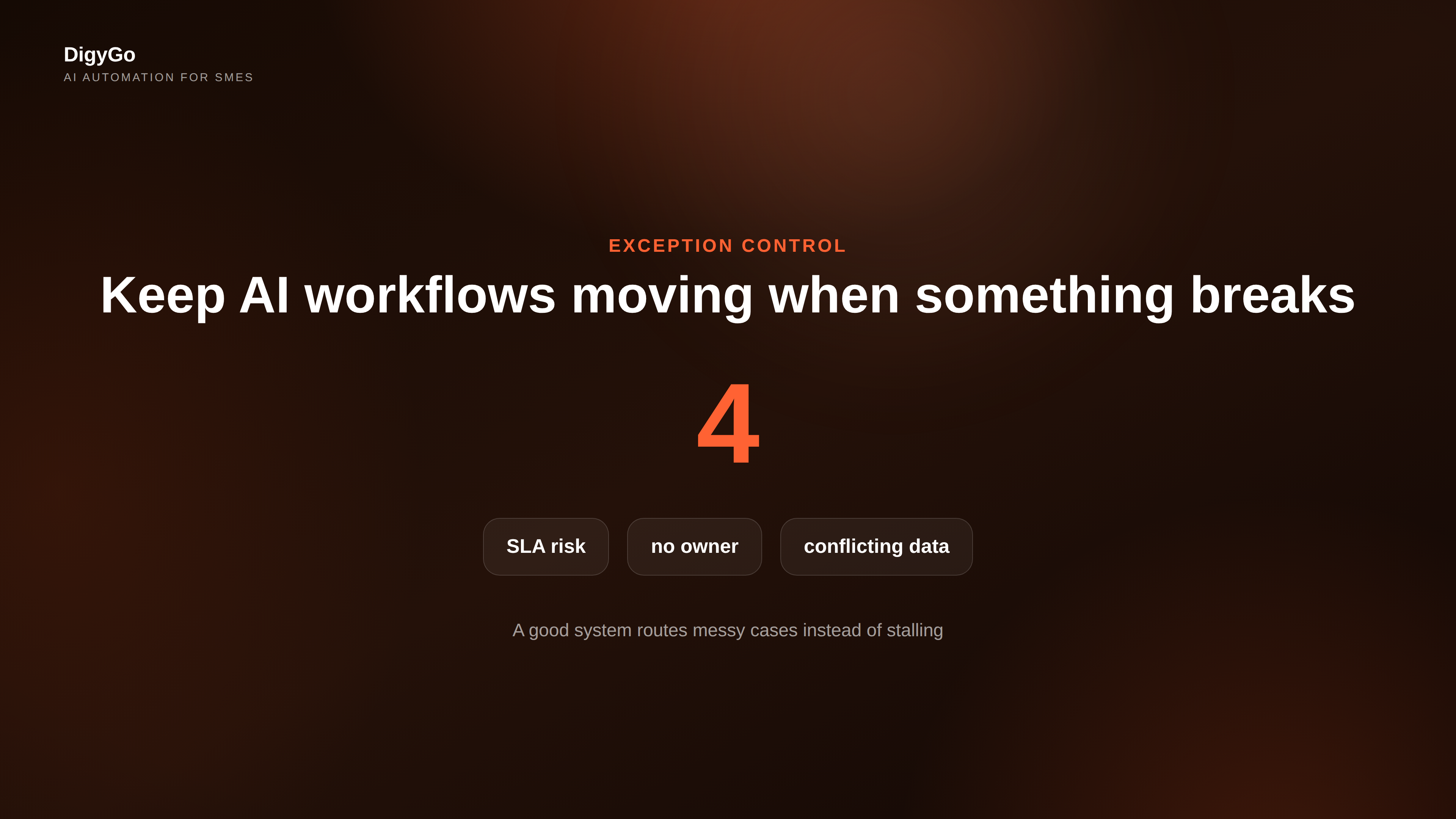
2. SLA risk
If a response is overdue, the workflow should escalate the item, not wait for someone to notice it later.
3. Conflicting data
If two systems disagree, the AI should flag the mismatch and freeze the action until the conflict is resolved.
4. No owner assigned
If no team member is available, the workflow should route the item to a backup owner or shared queue with the context attached.
How to keep exception handling simple
Do not try to automate every possible failure mode on day one. Build a small set of rules, watch what breaks, and expand the system from real cases. The best SME automations usually begin with just a few exception branches that solve the most expensive delays.
Keep the logic visible, keep the handoff clear, and keep the escalation threshold strict. That way, the AI does not hide problems — it surfaces them early and with enough context to act fast.
What this delivers for the business
When exception handling is designed well, teams spend less time chasing missing information and more time closing work. Customers get faster responses. Managers get cleaner visibility. And the automation becomes something the business can rely on instead of something it has to babysit.
That is the real value of AI systems in an SME: not perfection, but resilience.
FAQ
Is exception handling the same as error handling?
Not exactly. Error handling usually covers technical failures. Exception handling in SME workflows also covers business cases like missing fields, approval delays, and ownership gaps.
Should every exception be automated?
No. Some exceptions should be escalated immediately. The goal is to automate the routing and context, not force every decision through AI.
What is the best first use case?
Start with the exception that causes the most delay today — incomplete enquiries, missed SLA risks, or unassigned tasks are usually the fastest wins.