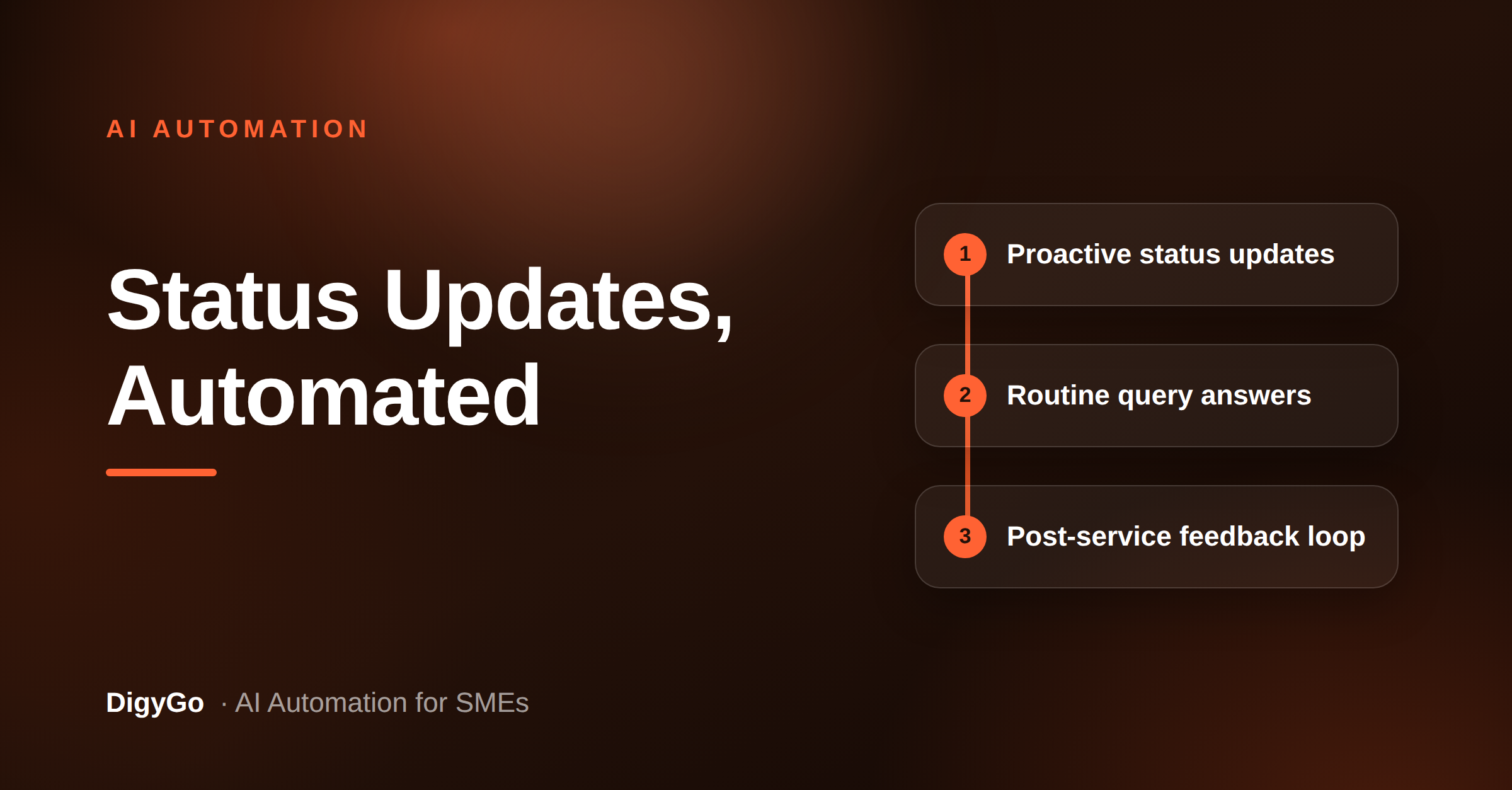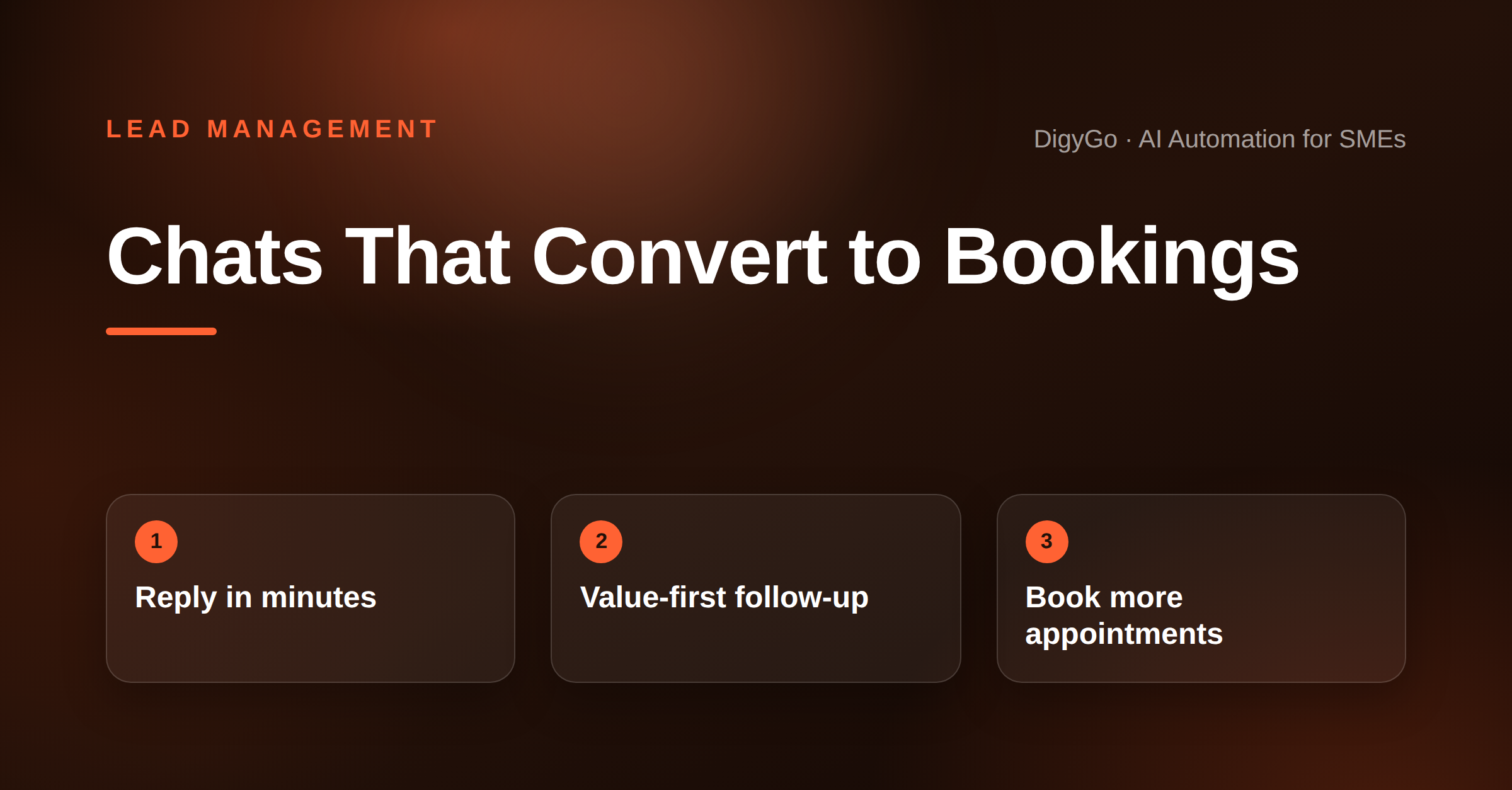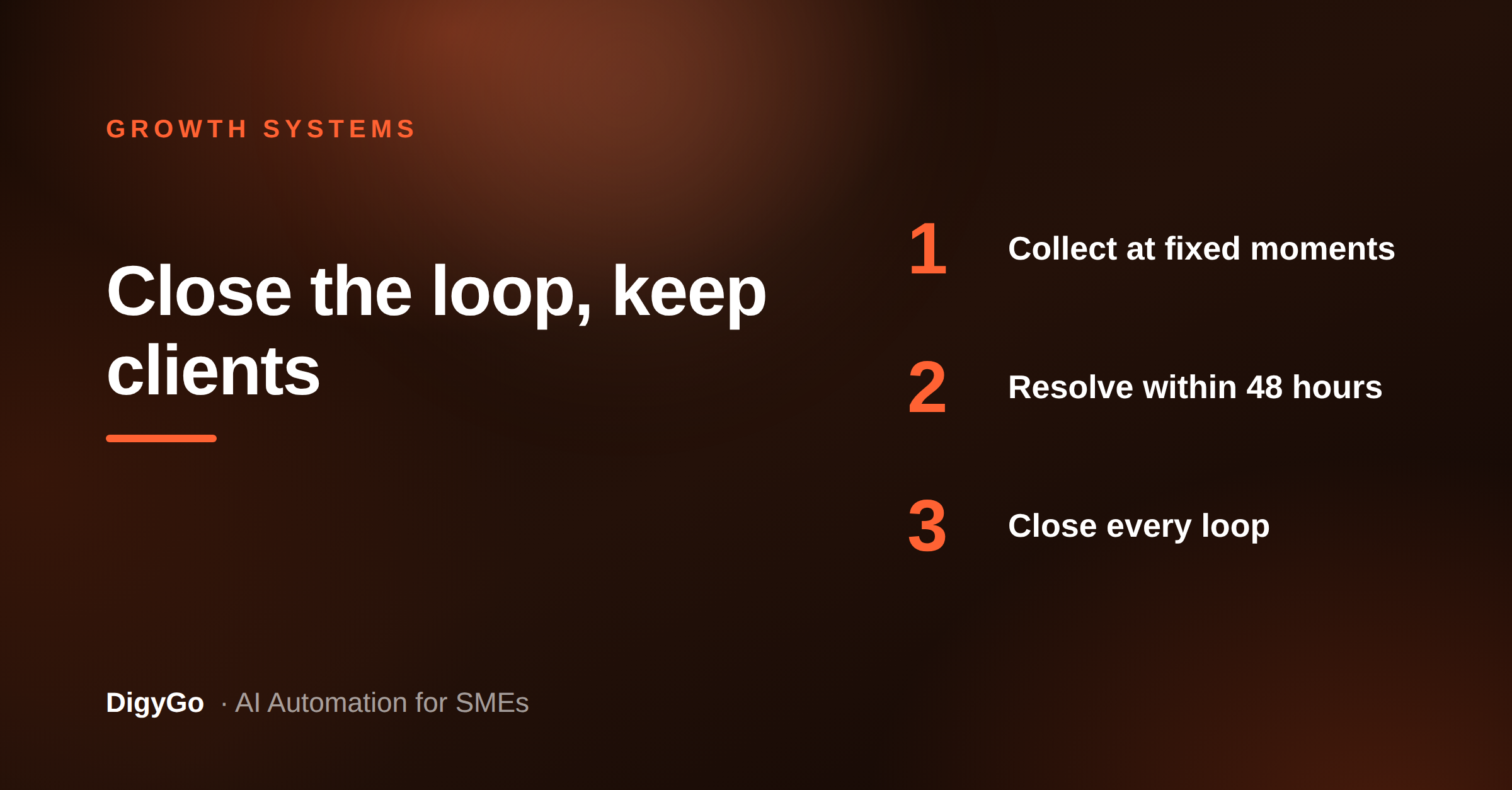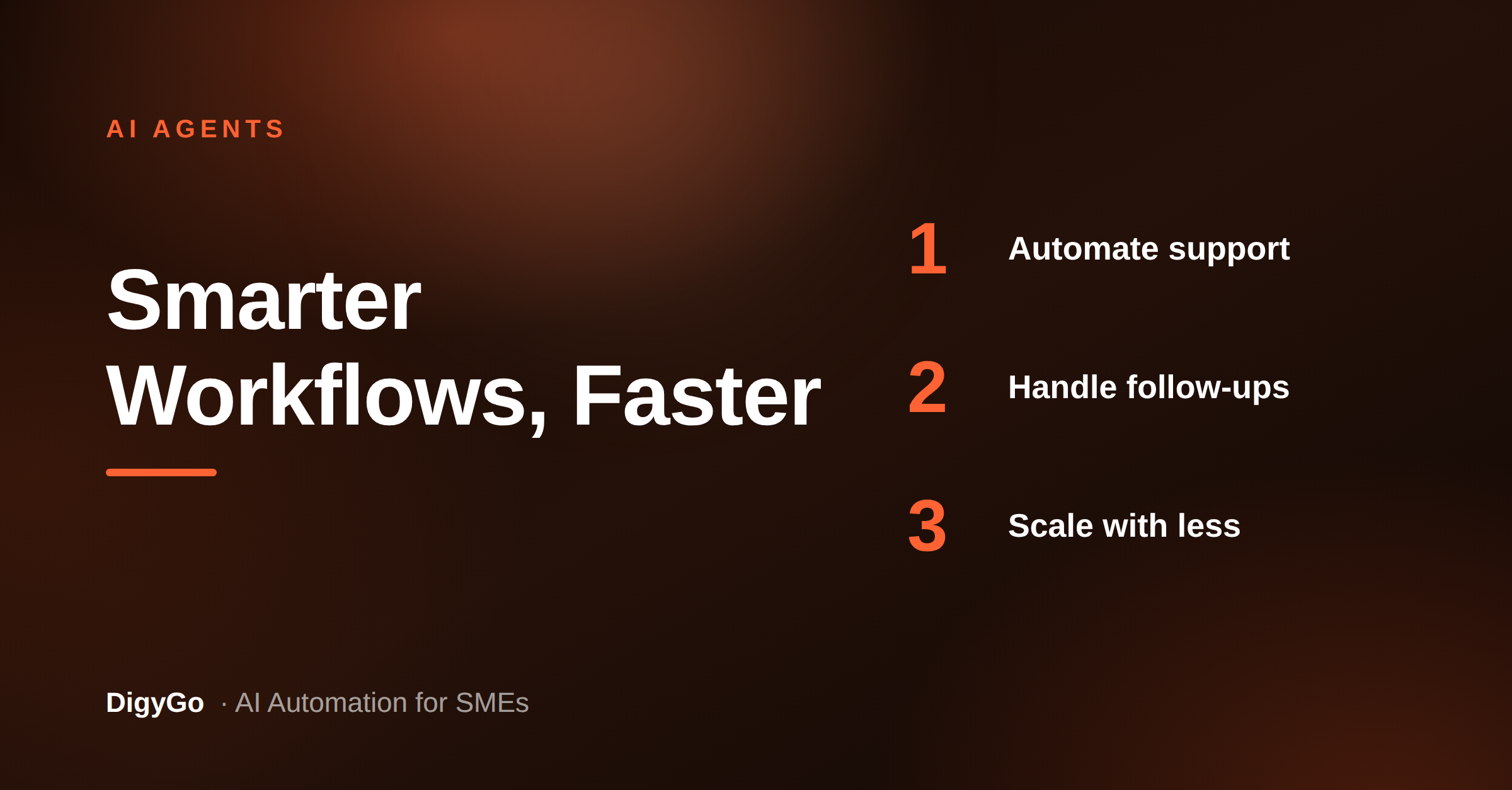
AI agents are becoming a practical advantage for SMEs. They help small businesses respond faster, reduce repetitive work, and keep sales and support moving without adding more manual load.
Learn how AI agents help SMEs automate support, sales, follow-ups, and operations with practical use cases and a simple way to start.
Key takeaways
- AI agents can handle repeated tasks with limited human input
- SMEs can use them for support, leads, follow-ups, and admin
- Start with one workflow instead of trying to automate everything
- Good guardrails matter more than complex setup
What AI agents actually do
AI agents are software systems that can understand a task, decide on the next step, and complete parts of the work automatically. They are more capable than a basic chatbot because they can act on context, follow rules, and support a workflow instead of only answering a question.
For SMEs, that can mean handling inquiries, qualifying leads, sending reminders, creating summaries, or routing requests to the right person. The goal is not to replace the team. The goal is to remove repetitive work so the team can move faster.
Simple definition
An AI agent is like a digital assistant that does not just talk. It can read, decide, and act within the limits you set.
Why AI agents matter for SMEs
Small businesses usually run lean. The founder or a small team handles sales, support, operations, and follow-up at the same time. That creates bottlenecks, especially when inquiries start growing.
AI agents help SMEs in a few important ways:
- Faster replies so leads do not go cold
- Better consistency across customer interactions
- Less missed follow-up on sales conversations
- More time for higher-value work
- More scalable operations without immediate hiring pressure
Best AI agent use cases for SMEs
1. Customer support
An AI agent can answer common questions about services, pricing, hours, delivery, booking, and policy details. If the request becomes complex, it can escalate to a human.
2. Lead qualification
Not every enquiry is a good fit. An AI agent can ask a few basic questions, collect context, and help the sales team focus on qualified prospects.
3. Sales follow-ups
Following up manually is where many deals stall. AI agents can remind prospects, send nudges, and keep the conversation active without letting it disappear.
4. Appointment booking
AI agents can help schedule meetings, confirm available slots, and reduce back-and-forth messages.
5. Internal admin work
They can also help with meeting summaries, task reminders, CRM updates, and daily activity notes.
A simple example
Imagine a small service business that receives enquiries through its website and WhatsApp. A lead comes in after working hours. Instead of waiting until morning, the AI agent sends an immediate reply, asks a few qualification questions, logs the details, and alerts the team with a short summary.
That means the business stays responsive, the lead feels attended to, and the team starts the next day with better context.
What to automate first
The smartest way to start is by picking one repetitive task. Do not try to automate the whole business in one shot.
- Choose one workflow such as FAQs, lead capture, or follow-up.
- Map the current process so you know what happens now.
- Set rules for what the AI can handle and when it should stop.
- Test with real cases before expanding.
- Improve based on results rather than assumptions.
Common mistakes SMEs should avoid
- Automating a broken process
- Giving the agent too much responsibility too soon
- Skipping human review on important actions
- Not defining escalation rules
- Measuring activity instead of actual business results
The first version of an AI agent should be narrow, safe, and easy to review. Once it proves useful, you can expand it carefully.
Why this matters for DigyGo readers
For SMEs, AI agents are not a future trend. They are a practical way to improve speed, consistency, and service quality today. Businesses that start with one clear use case often see quick value, especially in lead handling and customer support.
The real advantage comes from doing less manual work and spending more time on work that actually moves the business forward.
FAQ
Are AI agents the same as chatbots?
No. Chatbots usually answer questions. AI agents can also take actions, follow workflows, and support tasks within rules.
Do SMEs need a technical team to use AI agents?
Not always. Many AI agent tools are now easier to use for common workflows, though more advanced setups may need technical support.
What should a small business automate first?
Start with repetitive, low-risk tasks such as FAQs, lead qualification, or appointment booking.
Can AI agents replace employees?
No. They are best used to support employees by handling repetitive tasks and speeding up work.
If you want help mapping the right AI agent workflow for your business, book a call with DigyGo.