Most SMEs do not need more software. They need fewer manual handoffs. AI agents can handle the repetitive work around enquiries, follow-ups, reporting, and task routing so owners and teams can focus on work that actually moves revenue.
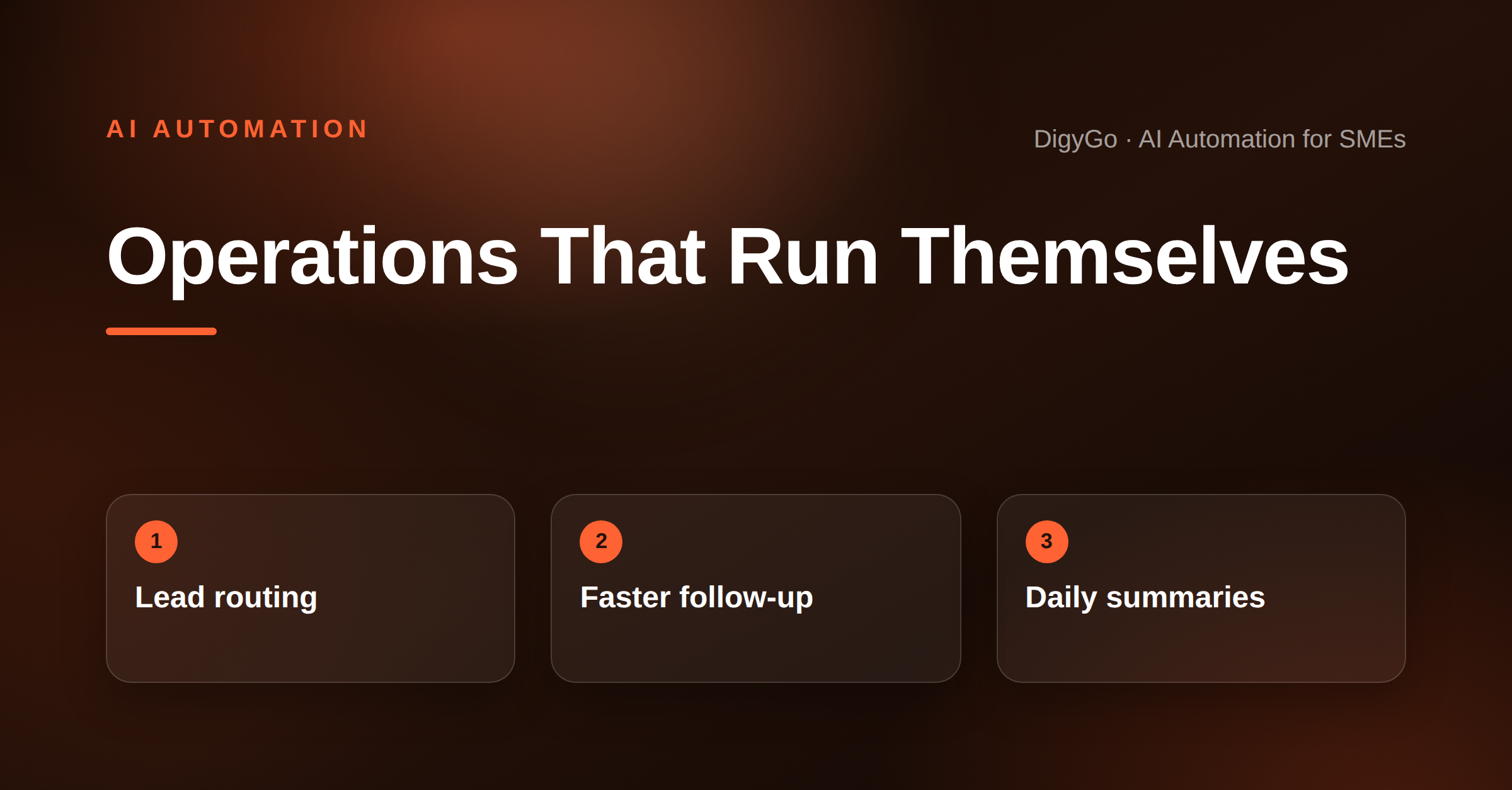
AI agents can handle repeatable SME tasks like lead routing, follow-up reminders, and daily summaries so teams save time and respond faster.
Why AI agents matter for SMEs right now
AI agents are useful when a business process follows a pattern. If a task starts with a message, a form, a spreadsheet row, or a calendar event, an agent can often take the first pass automatically. That matters for SMEs because speed and consistency usually beat complexity.
In practice, this means an agent can read incoming leads, classify intent, draft a reply, create a task, or update a record without waiting for someone to remember the next step. The result is not just saved time. It is fewer missed opportunities.
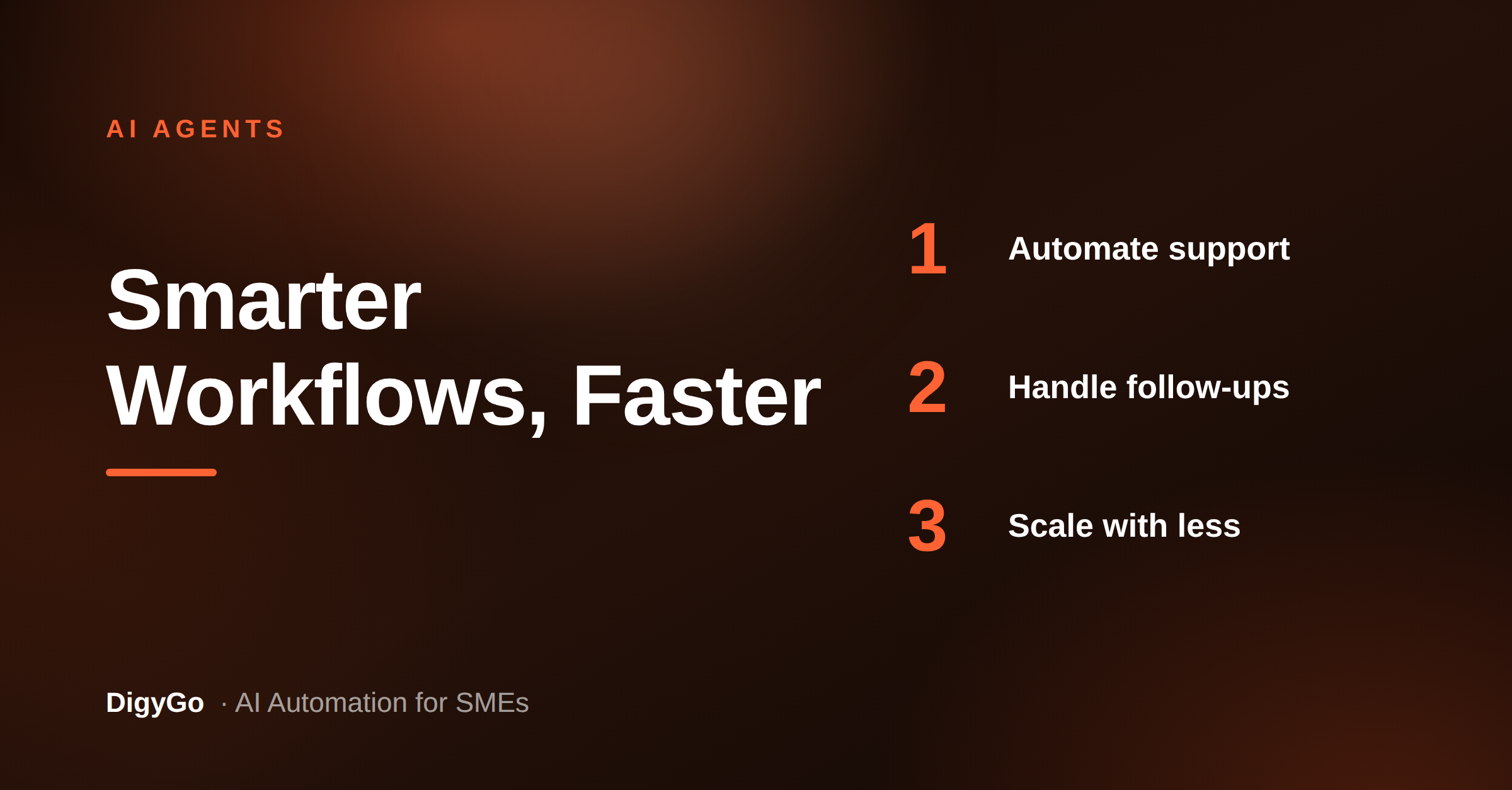
Three daily workflows an AI agent can improve
- Lead handling: capture the enquiry, classify the service request, and route it to the right person fast.
- Follow-up: send reminder messages, pull context from CRM notes, and keep warm leads moving.
- Operations: update sheets, create internal tasks, and summarize what changed since yesterday.
1. Lead handling without delays
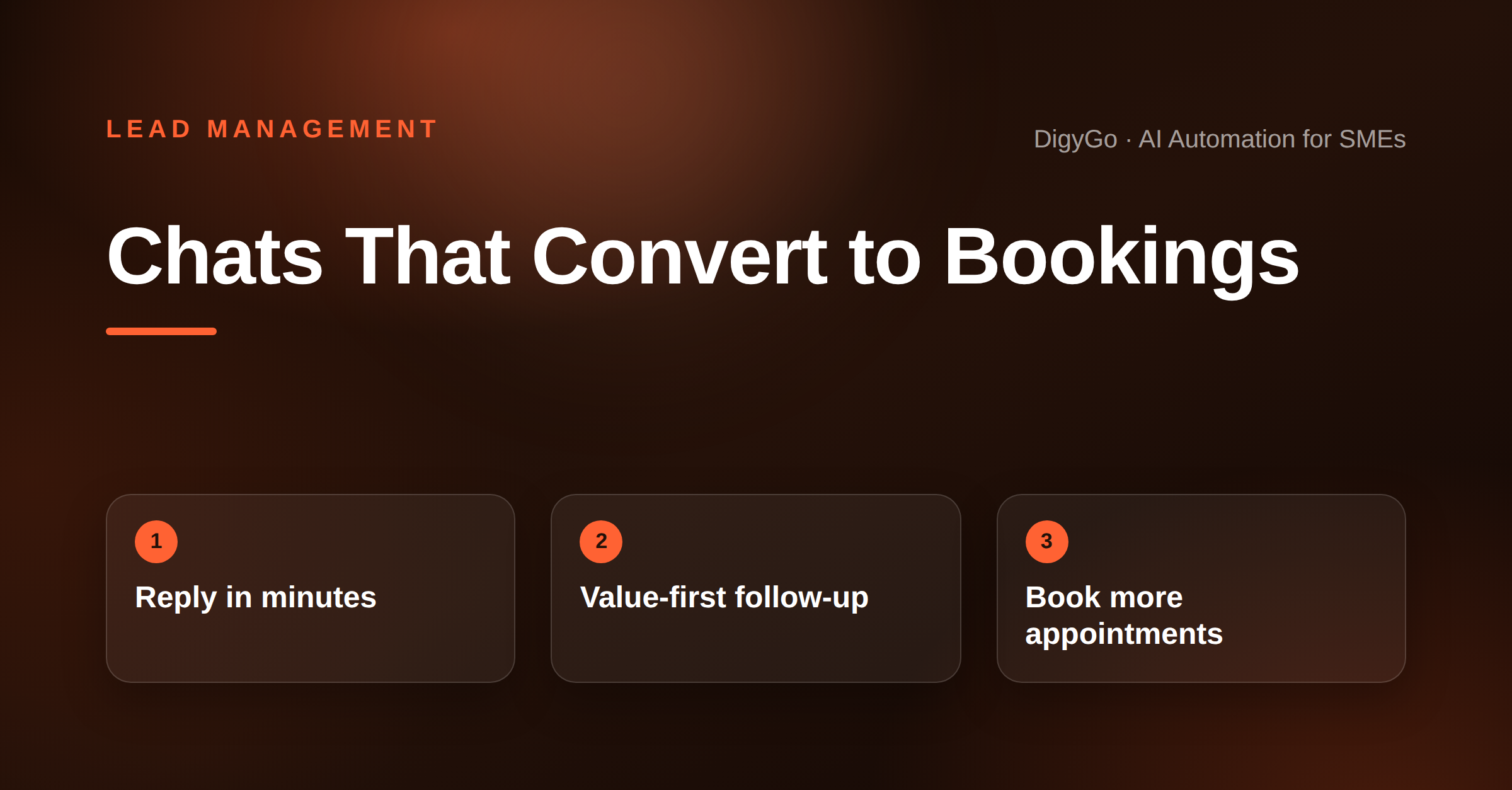
Many SME losses happen before a real conversation starts. A lead comes in, nobody replies quickly, and the prospect moves on. An AI agent can reduce that gap by acknowledging the enquiry instantly, tagging the lead by service type, and preparing the next action for the sales team.
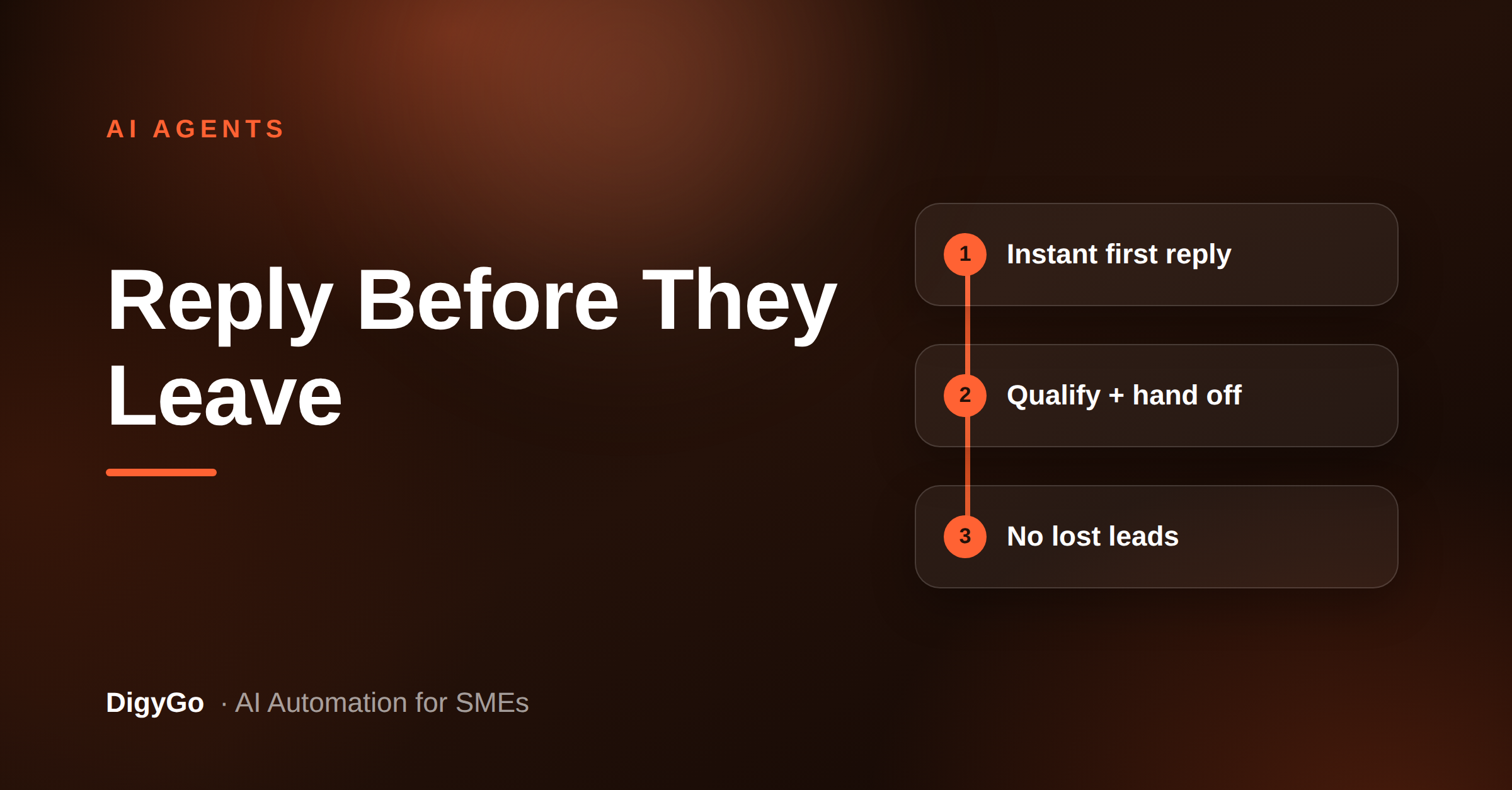
2. Follow-up that stays consistent
Follow-up often fails because it depends on memory. An agent can watch for stale leads, trigger a reminder, and draft a message based on the original enquiry. That keeps your pipeline warm without forcing the team to manually chase every contact.
3. Reporting that does not eat the morning
Owners usually want a quick answer to simple questions: how many leads came in, which channel performed best, and what needs attention today. An AI agent can collect that data from your tools and turn it into a short summary instead of a messy spreadsheet hunt.
A practical SME agent stack
You do not need a giant automation platform to start. A useful setup is usually just four parts:
When these pieces are connected well, the agent becomes a reliable assistant instead of a flashy demo. That is the difference between an automation that gets used and one that gets ignored.
Where SMEs should not automate blindly
Not every process should be handed over to an agent. Anything involving pricing exceptions, legal commitments, sensitive customer issues, or unusual edge cases should still have human oversight. The goal is to remove routine work, not remove judgment.
A good rule is simple: automate the first pass, not the final decision, unless the task is low risk and well defined.
How to start small and still see value
- Pick one repeated task that wastes time every day.
- Write down the exact trigger, the expected output, and the person responsible.
- Test the workflow on a small volume first.
- Add approval steps only where risk is real.
- Track one outcome, such as faster replies, fewer missed leads, or less admin time.
Simple test: if a workflow can be explained in one page and measured in one metric, it is a good candidate for an AI agent pilot.
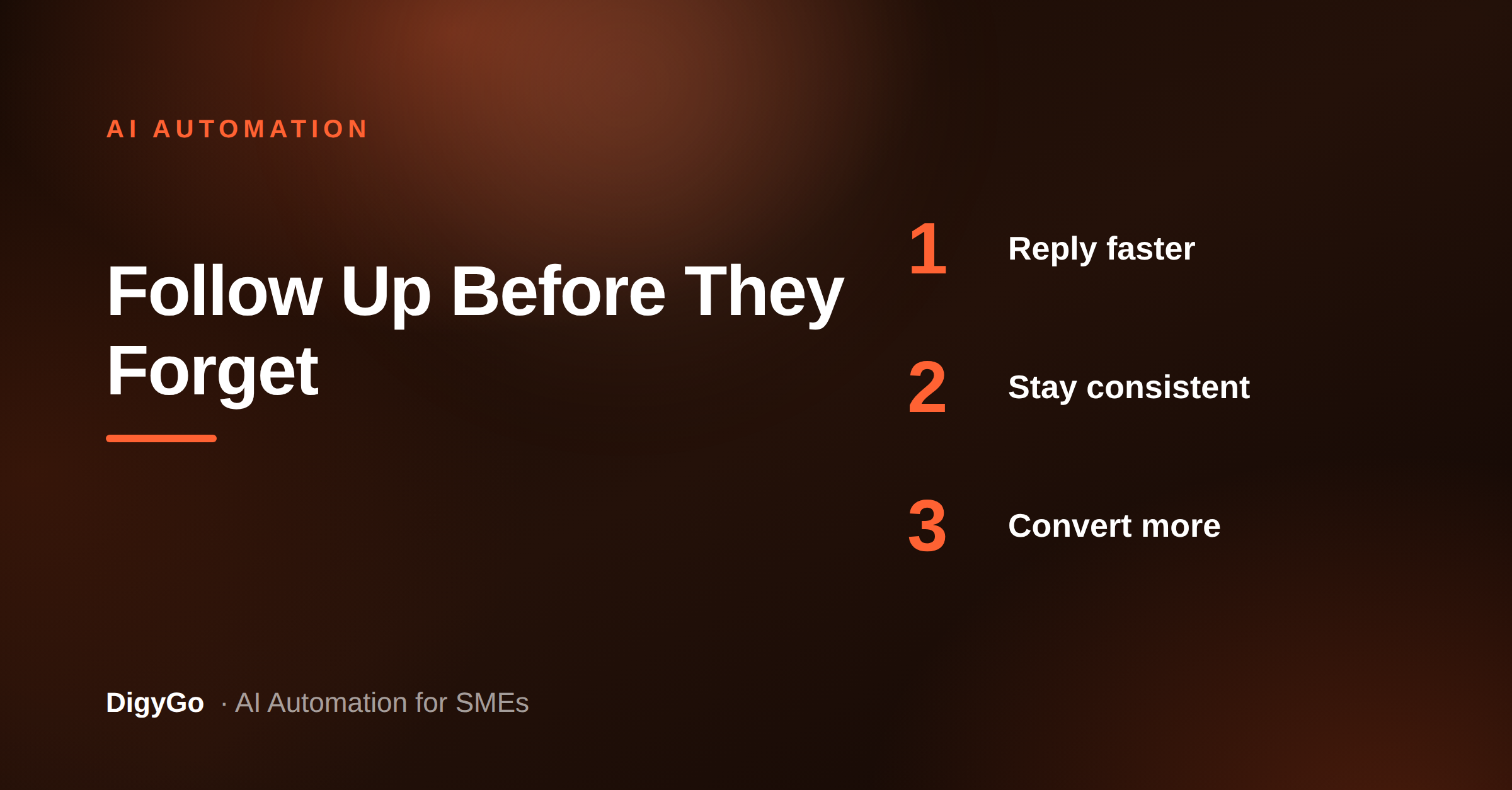
What success looks like
The best AI agent projects do not feel like technology projects for long. They feel like calmer operations. Messages get answered faster. Leads move sooner. Teams spend less time switching between tools. And owners get a clearer view of what is happening without asking for manual updates.
That is why AI agents are becoming a practical advantage for SMEs. They do not replace the business. They help the business run on time.
FAQ
What is the easiest AI agent use case for an SME?
Lead acknowledgement and routing are usually the easiest because the trigger and the output are both clear.
Do AI agents need to run fully automatically?
No. Many of the best systems use human approval for sensitive steps and automation for routine ones.
How do I know if a task is a good agent candidate?
If the task repeats often, follows a pattern, and has a measurable result, it is usually a strong candidate.
Talk to DigyGo about building an AI agent workflow for your SME