Most SME growth systems do not fail because the idea is wrong. They fail because nobody reviews them often enough. A weekly growth review turns scattered activity into a repeatable operating rhythm, so leads, delivery, retention, and handoffs improve together instead of drifting apart.
A practical guide for SME founders on using a weekly review rhythm to catch leaks early, fix bottlenecks fast, and let growth systems compound over time.
Why weekly reviews matter more than big planning sessions
Founders often set goals at the start of the month, then get pulled into execution. By the time they notice a problem, the team has already repeated the same mistake for weeks. A weekly review is the smallest useful rhythm because it catches leaks early while the numbers are still easy to fix.
For SMEs, this is where compounding starts. You are not trying to redesign the business every Friday. You are checking whether the systems that support growth are still doing their job.
Key takeaways
- Weekly reviews expose leaks before they become expensive
- Growth compounds when the same system is improved every week
- Focus on lead flow, delivery, retention, and ownership
- A short rhythm beats a long strategy session that nobody follows
What a weekly growth review should cover
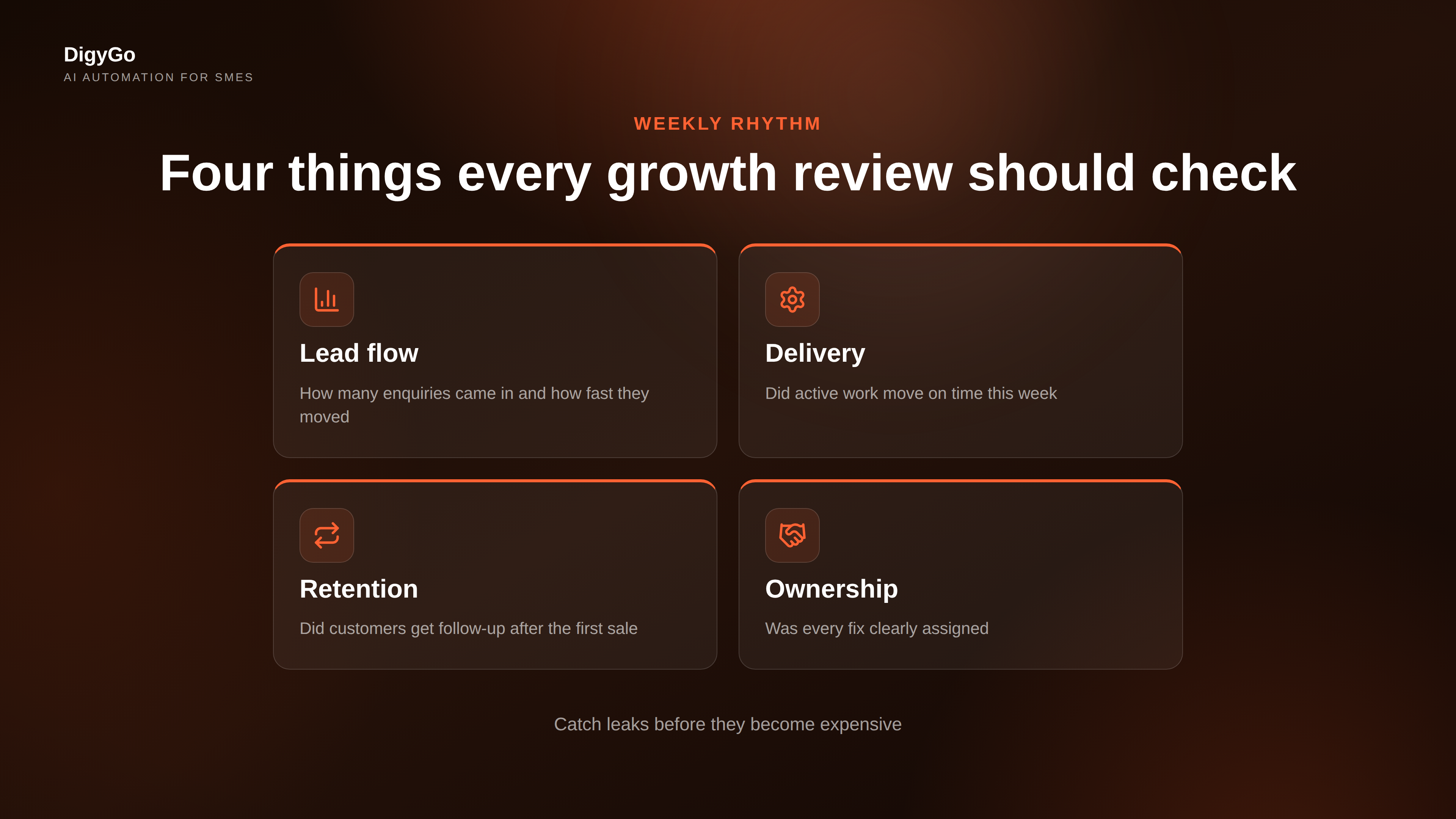
A good review is not a report dump. It is a decision session. The team should leave with answers to four questions: what changed, what broke, what improved, and what needs a fix before next week.
How many enquiries came in, and how fast were they handled?
Did active work move on time, or did tasks stall?
Did any customer get ignored after the first sale?
Was every important task clearly assigned?
The review rhythm that keeps growth moving
Keep the meeting short and consistent. The rhythm matters more than the slide deck. If the same people show up, look at the same numbers, and make the same decisions every week, the business gets calmer and faster at the same time.
Simple rule: if a metric changes for two weeks in a row, it needs a system fix, not a reminder message.
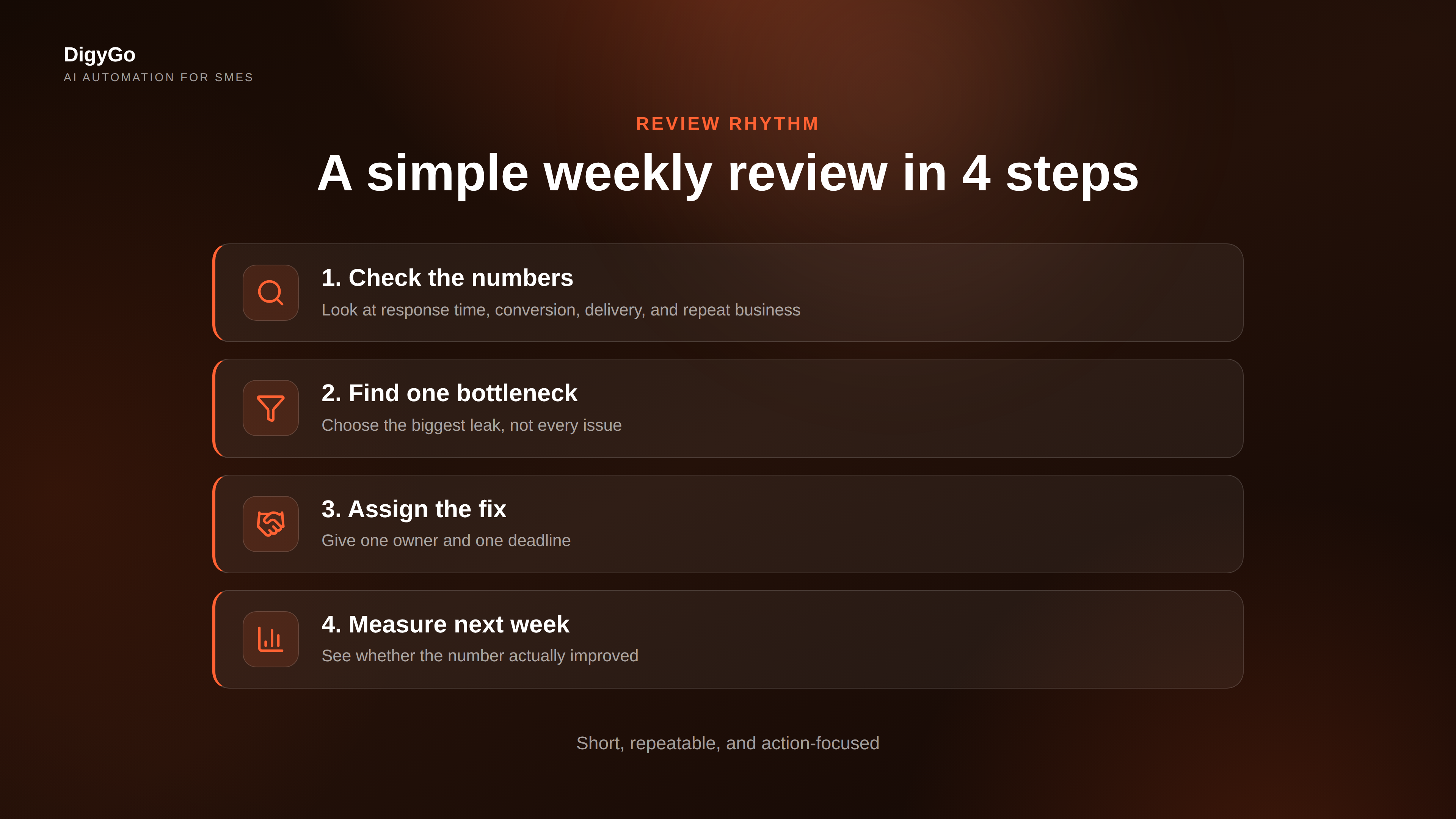
1. Check the numbers that affect revenue
Start with the numbers that reveal whether growth is healthy. For most SMEs that means enquiry response time, conversion rate, delivery delays, and repeat business.
2. Look for one bottleneck only
A weekly review should identify the biggest leak, not every leak. If you try to fix too many things, nothing gets fixed well.
3. Assign the next action immediately
Every issue needs one owner and one deadline. If the team leaves without ownership, the review becomes another conversation instead of a system.
4. Track whether the fix worked
Next week, check the same number again. If it moved in the right direction, keep going. If not, change the approach rather than blaming the team.
How weekly reviews compound over time
The real value is not in one meeting. It is in the improvements that stack up because the business keeps learning from itself. Faster response times lead to more qualified leads. Cleaner delivery leads to better reviews. Better retention leads to more repeat revenue. Each week feeds the next one.
That is why growth systems need operating rhythms. Without them, the business only remembers problems when they become urgent. With them, the business gets better in small, measurable steps.
FAQ
How long should a weekly growth review be?
Usually 20 to 30 minutes is enough if the team reviews only the numbers that matter and ends with clear actions.
Who should attend the review?
Only the people who own the numbers or the fixes. Keep it small so decisions happen quickly.
What if the team does not have good data yet?
Start with a simple manual scorecard. The goal is consistency first, then better reporting later.
When you are ready to turn weekly reviews into a real operating rhythm, book a free call with DigyGo.