If your business spends too much time on repetitive work, missed follow-ups, or slow replies, AI automation is one of the most practical ways to save time and grow — without hiring more people to do the same manual tasks.
AI automation helps SMEs save time, respond faster, and build repeatable systems for lead handling, sales, and operations. A practical guide for founders.
Over the last year we've helped more than two dozen Tamil Nadu SMEs replace the "I'll get to it later" pile with systems that just run. This guide explains, in plain language, what AI automation actually is, where it helps most, and how a founder can start without a technical team.
In this guide
- What AI automation means in practice
- Why it matters specifically for small teams
- The workflows most SMEs should automate first
- A simple, low-risk way to get started
What is AI automation?
AI automation is using artificial intelligence to handle tasks that normally need repeated human effort. Instead of a person doing everything manually, parts of the workflow happen automatically — faster, more consistently, and without getting forgotten.
For example, an AI system can reply to a new lead instantly, ask a few qualifying questions, send reminders, and hand the lead to your sales team only when it's ready. Less delay, fewer missed opportunities.
"We didn't need another dashboard. We needed something to actually finish the task."
— A DigyGo client, on why reminders and spreadsheets stopped workingWhy AI automation matters for SMEs
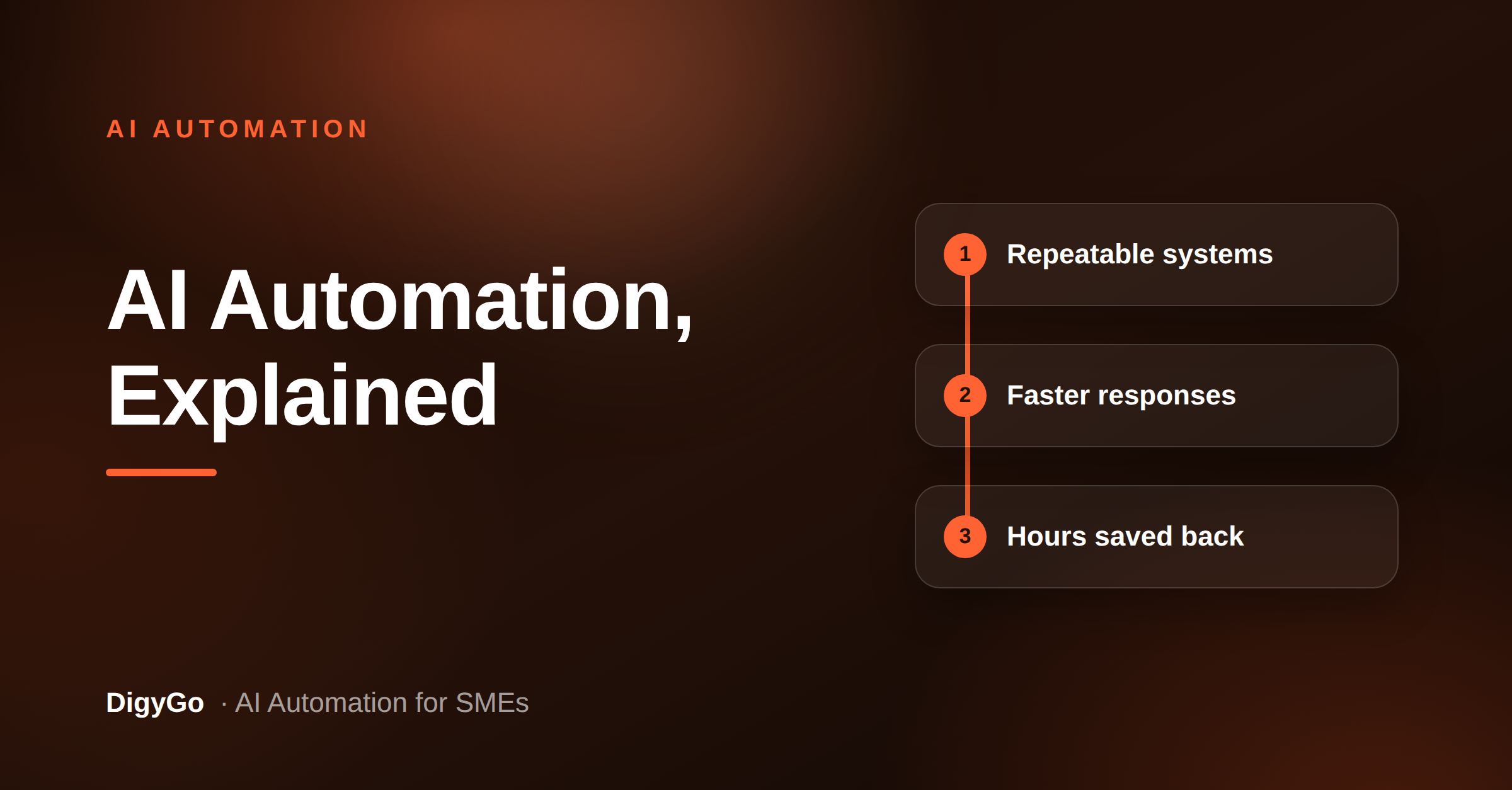
SMEs usually run lean. The founder often handles sales, operations, marketing, and customer messages at once — which makes manual work hard to scale. AI automation helps by taking the repetitive load off the team.
- Saves time on repetitive, predictable tasks
- Improves response speed so leads don't go cold
- Reduces missed follow-ups and dropped conversations
- Creates consistency in how customers are handled
- Frees founders to focus on growth instead of routine work
Less manual work. Faster replies. Nothing forgotten.
Common AI automation use cases for SMEs
1. Lead follow-up
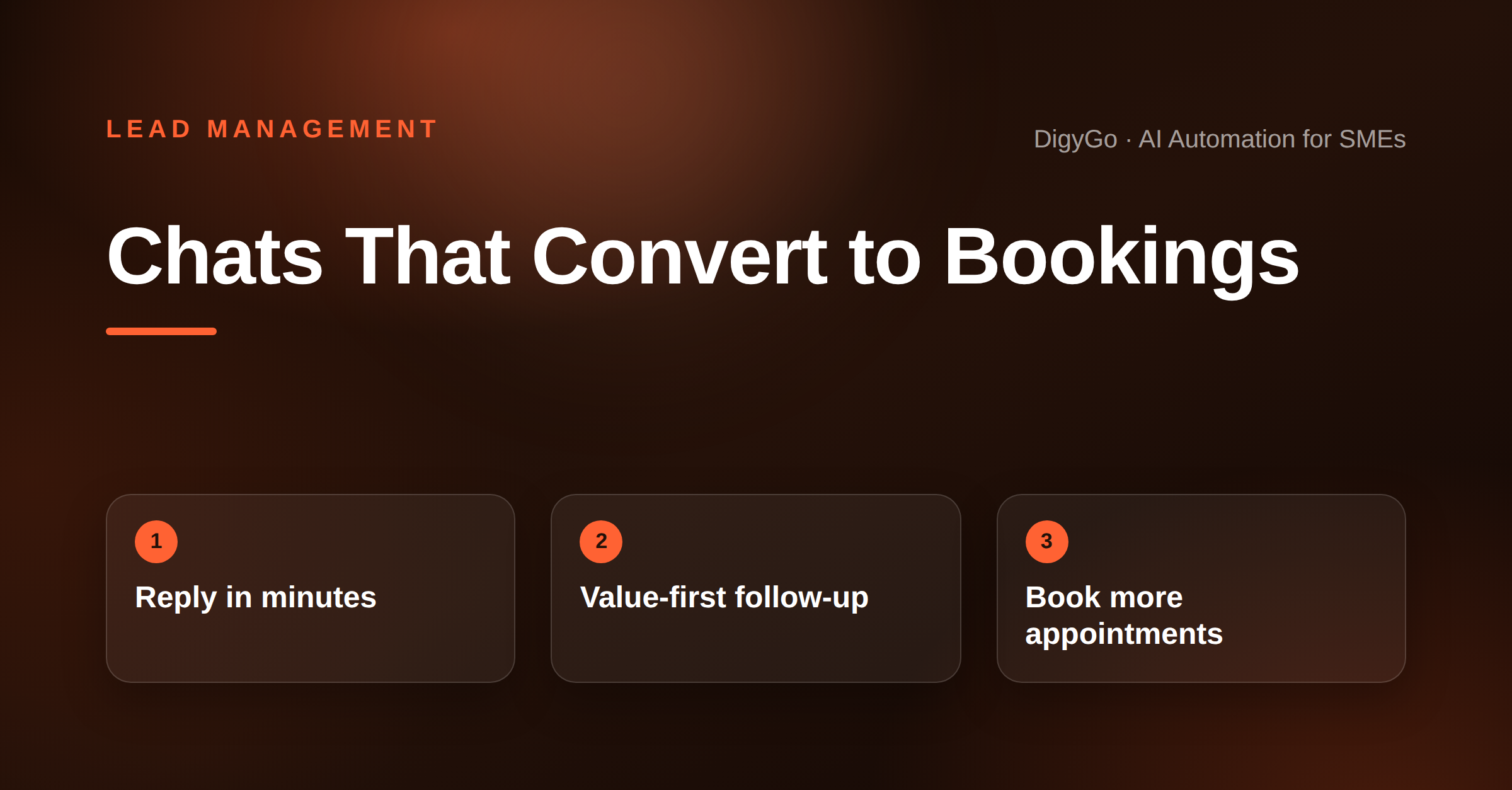
When a lead arrives from a website form, ad, or WhatsApp message, AI can respond instantly, collect the basics, and notify your team when the prospect is ready to talk.
2. WhatsApp automation
Many SMEs live on WhatsApp. AI can handle auto-replies, FAQs, appointment reminders, and gentle follow-up messages — around the clock.
3. Customer support
AI chatbots answer the common questions about pricing, services, timing, bookings, and order status, reducing the support load on your team.
4. Sales pipeline support
AI can track lead stages, send reminders, and keep the CRM tidy so opportunities don't quietly go cold.
"Our WhatsApp agent now handles the first reply on every lead. Nobody waits hours for a response anymore — and our close rate went up."
AI automation vs manual work
Manual systems work for a while, but they get harder to manage as the business grows. Response times slow, follow-ups slip, and the team repeats the same tasks all day.
AI automation improves speed and consistency. It doesn't replace human judgment — it removes the repetitive work so people can focus on selling, serving, and deciding.
How SMEs can start
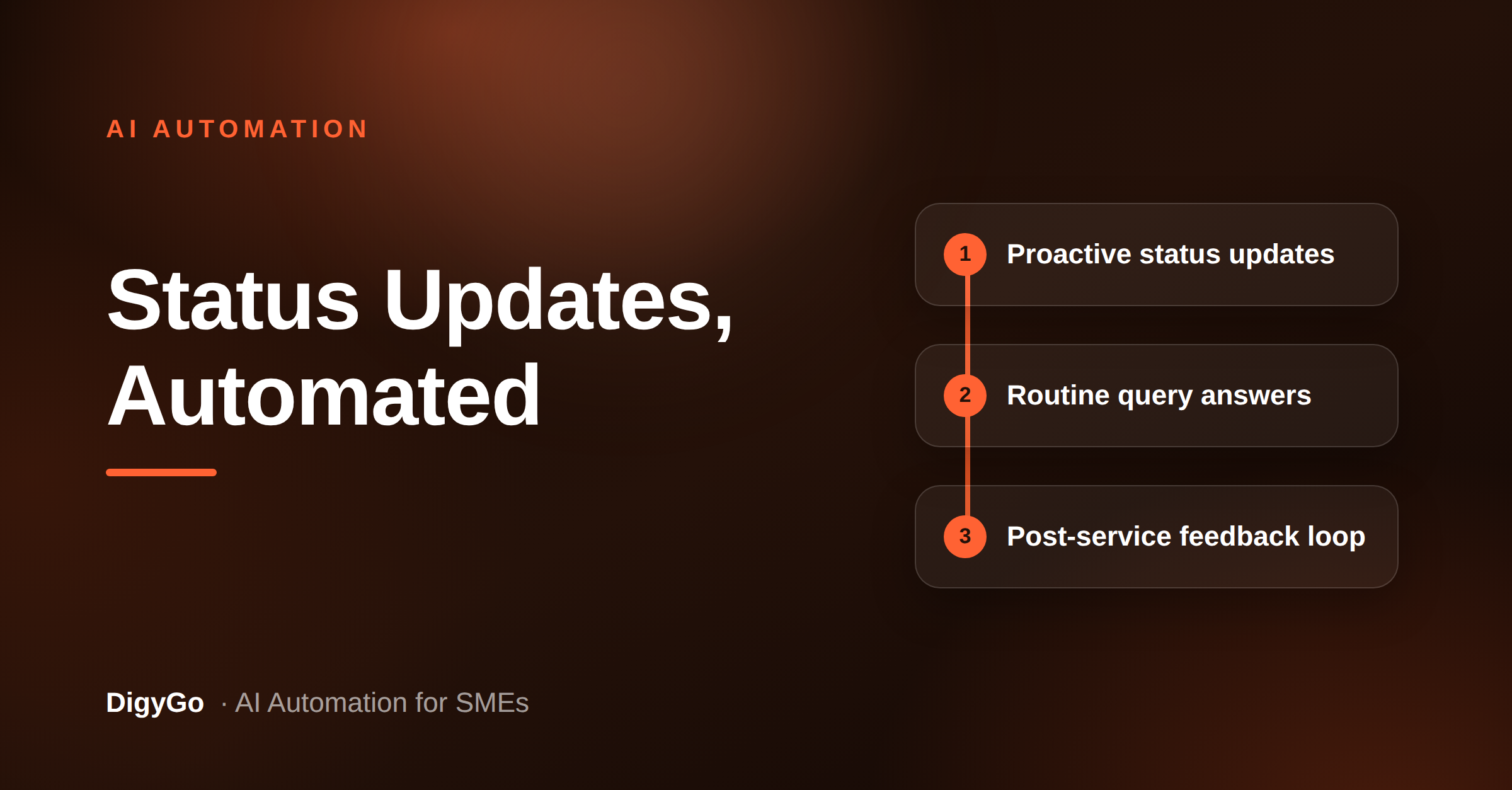
- Identify repetitive tasks — the work that happens often and follows the same pattern.
- Pick the highest-impact one — for most businesses, that's lead follow-up.
- Map the workflow — what happens first, next, and when a human should step in.
- Build the system — connect the tools, chat flows, and CRM actions.
- Test and improve — review results and refine regularly.
Most SMEs we work with see results from the first workflow within a few weeks — and each new automation is faster to add, because the connections are already built.
Getting started
You don't need a data team or a six-month roadmap to run your first automation. You need one workflow that's currently draining your evenings, and a clear rule for where the AI should stop and ask a human.
If you'd like a second opinion on where to start, book a free 30-minute call and we'll map your first automation together.