A weekly sales pipeline review is one of the simplest ways to stop good deals from slipping, stale leads from clogging the team, and follow-up from becoming a guessing game. For SMEs, the goal is not to stare at more data. It is to make faster decisions on the right opportunities.
A practical sales playbook for SME founders on using a weekly pipeline review to spot stalled deals early, tighten follow-up, and close better-fit opportunities.
Why a weekly pipeline review works
Most SME pipelines do not lose deals because the offer is weak. They lose deals because the team does not notice risk early enough. A weekly review creates one fixed moment to check what changed, which deals need attention, and where a sales rep should spend the next hour.
It also forces clarity. Instead of asking, “How is the pipeline looking?” the team asks sharper questions: Is this lead qualified? Is the next step scheduled? Has the prospect gone quiet? Does this deal still deserve time?
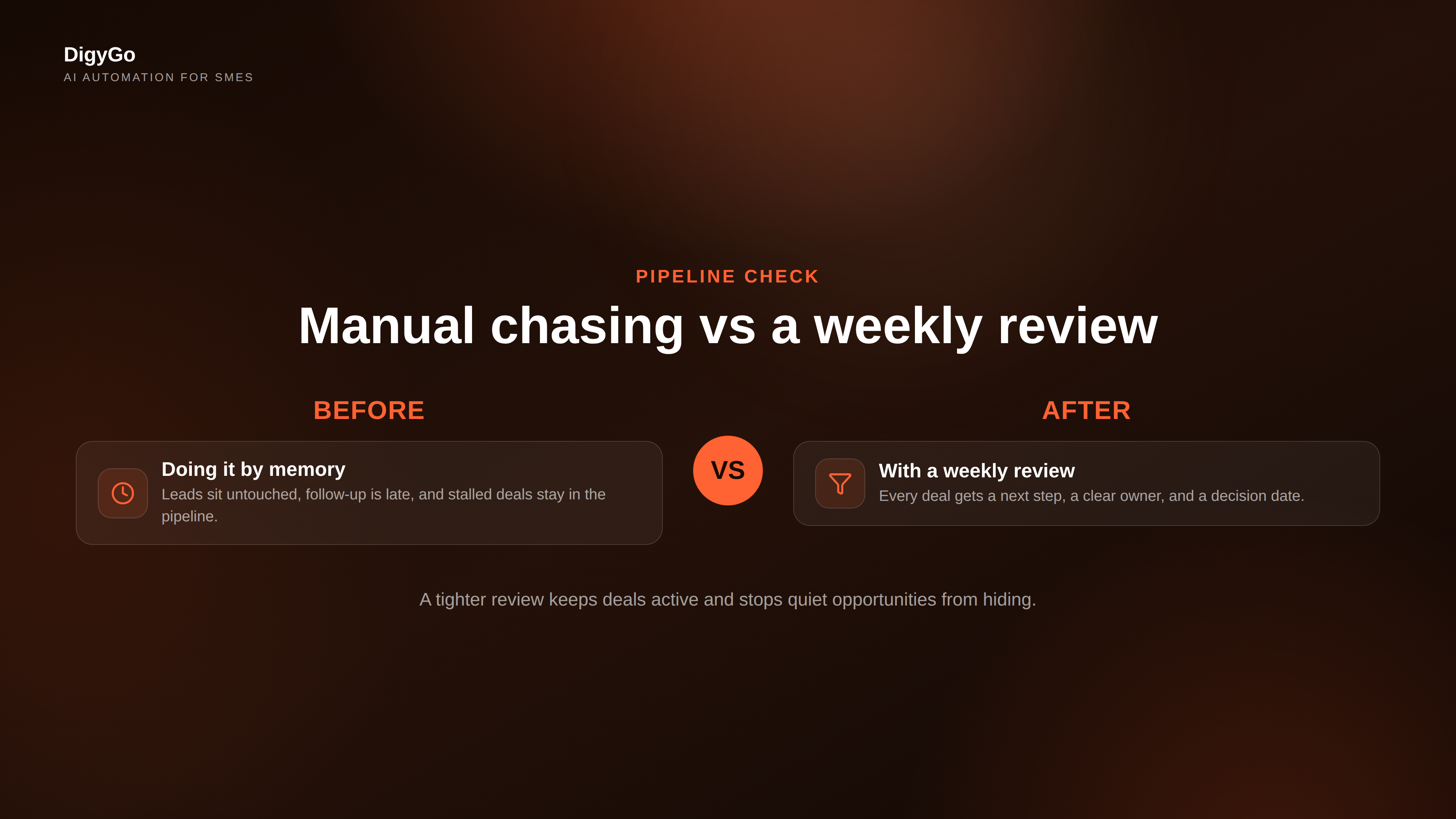
Start with the top of the funnel
The best pipeline reviews begin with the newest and most active opportunities. That is where speed matters most. A fresh lead that is waiting for a reply is often more valuable than a large deal that has gone quiet for two weeks.
- Check response time. See which leads still need a first reply.
- Check qualification. Make sure the lead fits the target customer.
- Check ownership. Every deal should have one clear owner.
- Check next step. No next step means no real movement.
This is where many teams discover a simple truth. A crowded pipeline is not always a healthy pipeline. A smaller pipeline with active, qualified opportunities is usually easier to close.
Use a weekly rhythm that the team will follow
The review should be short enough to repeat every week. Thirty to forty-five minutes is usually enough for most SMEs. If the meeting becomes a long discussion, the team will avoid it. If it becomes too shallow, nothing changes.
- Review new leads. Look at recent enquiries and assign follow-up.
- Review stalled deals. Ask what is blocking the next step.
- Review proposal deals. Confirm who is deciding and when.
- Review lost deals. Learn whether the issue was timing, price, or fit.
That rhythm helps the team separate active pipeline from wishful thinking. It also gives managers a cleaner view of where the sales process is breaking down.

Common mistakes that make pipeline reviews useless
Many teams hold pipeline meetings but still close poorly. The problem is usually not the meeting. It is the way the meeting is run.
- Counting too many stages. Too many columns hide the real blockers.
- Chasing every lead equally. Not every enquiry deserves the same effort.
- Reviewing only revenue value. A large deal with no action is not progress.
- Ignoring follow-up gaps. Deals do not move when nobody owns the next touch.
When a team avoids these mistakes, the pipeline becomes a decision tool instead of a reporting task.
Simple rules that keep the pipeline moving
SME founders do not need a complicated sales dashboard to improve close rates. They need a few rules that everyone follows every week.
These rules make it easier to see where the real work is happening. They also stop the team from confusing busy activity with genuine progress.
FAQ
How often should SMEs review the sales pipeline?
Weekly is the sweet spot for most SMEs. It is frequent enough to catch issues early and light enough to keep the team engaged.
Who should lead the review?
Usually the founder, sales head, or the person who owns revenue. The important part is consistency. The same person should keep the rhythm and the standards.
What should be removed from the pipeline?
Anything that is clearly unqualified, inactive, or missing a next step. A clean pipeline gives better focus than a large one filled with dead opportunities.