Growth systems do not fail because teams stop working. They fail when numbers drift, follow-up slips, and no one notices soon enough. A weekly KPI review loop gives SME founders a simple habit for catching those small leaks before they become expensive problems.
A practical guide for SME founders on using a weekly KPI review loop to catch drift early, assign clear ownership, and keep growth systems compounding.
Why a weekly review matters more than a monthly report
Monthly reporting often arrives too late to fix the issue. By the time the dashboard is reviewed, the campaign is already spent, the lead response delay has already hurt conversion, or the retention gap has already widened. A weekly KPI review is short enough to act on and frequent enough to keep growth systems honest.
- It spots drift early. Small changes in response time, conversion, or repeat orders show up before they become visible in revenue.
- It creates accountability. Every owner knows which metric they are responsible for and when it will be reviewed.
- It improves decisions. You can stop guessing and start changing the one process that actually moved the number.
The 4-step KPI review loop
The best review meetings are not long. They are structured. If your team can answer four questions every week, you will usually know what to fix and who should fix it.
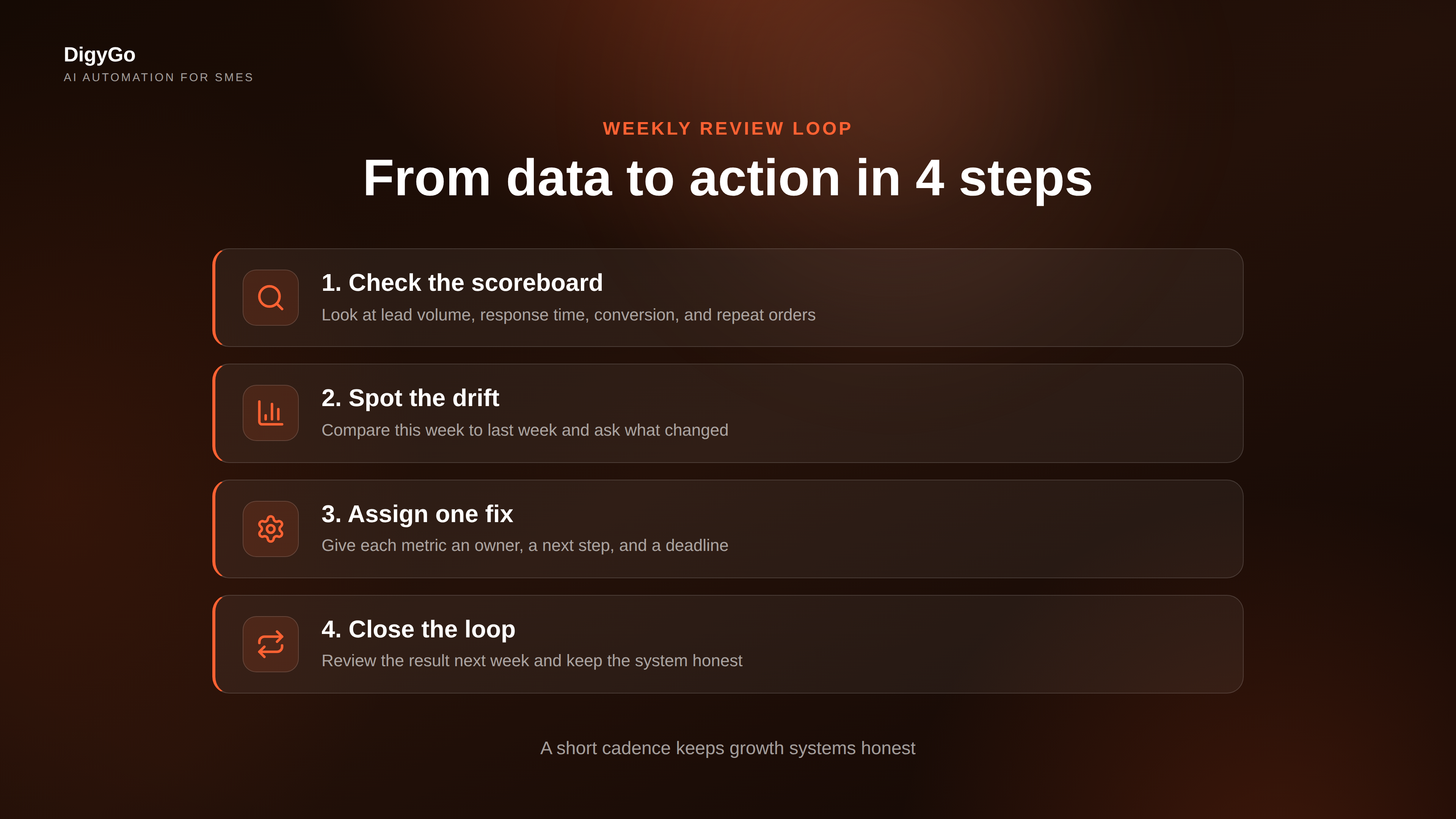
1. Pick the few numbers that matter
Do not review every metric in the business. Choose the ones that show whether growth is healthy: lead volume, lead response time, qualified lead rate, booked calls, close rate, repeat purchases, or churn. The point is not to have a bigger dashboard. The point is to know what changed.
2. Compare this week to last week
A useful review is a comparison, not a presentation. Ask what improved, what dropped, and whether the change is real or just noise. If the number moved, trace it to the process behind it. For example, slower replies may explain a lower booked-call rate, while a higher refund count may point to poor qualification.
3. Assign one action per owner
Every metric should lead to an owner and a next step. If the lead response time slipped, the owner fixes the handoff. If repeat orders slowed, the owner checks follow-up timing or offer cadence. A review meeting without a decision becomes a status update with better branding.
4. Close the loop next week
The value of the review is not just noticing the issue. It is coming back seven days later to see whether the fix worked. That is how a KPI meeting becomes a growth system instead of a reporting ritual.
What to review if you want compounding growth
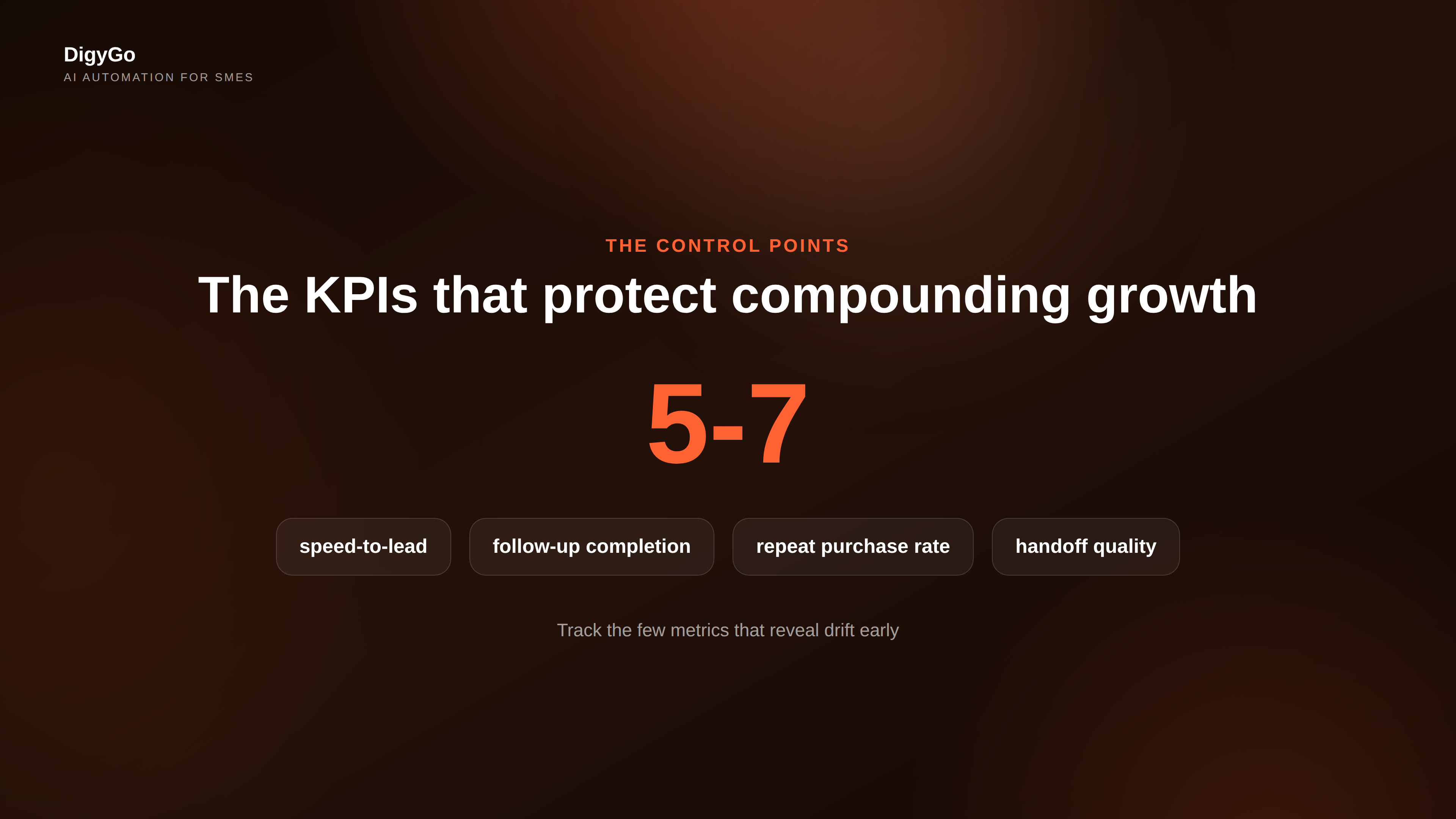
Many SMEs chase new leads when the real gain is inside the current system. If you want growth that compounds, review the parts that most often leak value:
Focus areas: speed-to-lead, follow-up completion, conversion by source, repeat purchase rate, and handoff quality between marketing, sales, and delivery.
How to keep the review meeting from becoming noise
Most KPI meetings fail for one reason: the team brings data but not decisions. To keep the loop useful, keep it short and repeat the same agenda every week.
- Open with the scoreboard.
- Highlight the biggest positive and negative movement.
- Ask what caused the change.
- Assign one fix, one owner, and one deadline.
- Review the result next week.
This rhythm works because it builds a habit around action. Over time, the team stops treating KPIs as a compliance exercise and starts using them to improve the actual operating system.
When founders should intervene directly
A founder does not need to attend every operational discussion, but weekly KPI reviews are one place where leadership attention matters. Step in when a metric keeps moving in the wrong direction, when ownership is unclear, or when the team is solving symptoms instead of the cause. A growth system only compounds when someone protects the standard.
The real job of a KPI review is not to admire the numbers. It is to make sure the numbers still describe a healthy business.
FAQ
How long should a weekly KPI review take?
For most SME teams, 20 to 30 minutes is enough if the dashboard is prepared in advance and the meeting focuses on decisions rather than presentation.
How many KPIs should we track?
Usually five to seven is enough. If the team cannot remember them without looking, there are probably too many.
What if the numbers are flat?
Flat numbers are still useful. They tell you where the system is stable and where the next test should happen. The point is not constant movement. The point is understanding what the business is doing and why.
Talk to DigyGo about building a weekly KPI review system for your team