Most SME growth stalls do not come from a single big failure. They come from small handoff gaps, delayed follow-ups, and missed ownership inside the week. A weekly handoff audit turns those loose ends into a repeatable system, so growth keeps moving even when the team is busy.
A practical weekly audit for SMEs that keeps ownership, follow-up, and retention from slipping through the cracks as the business grows.
Why handoffs break growth
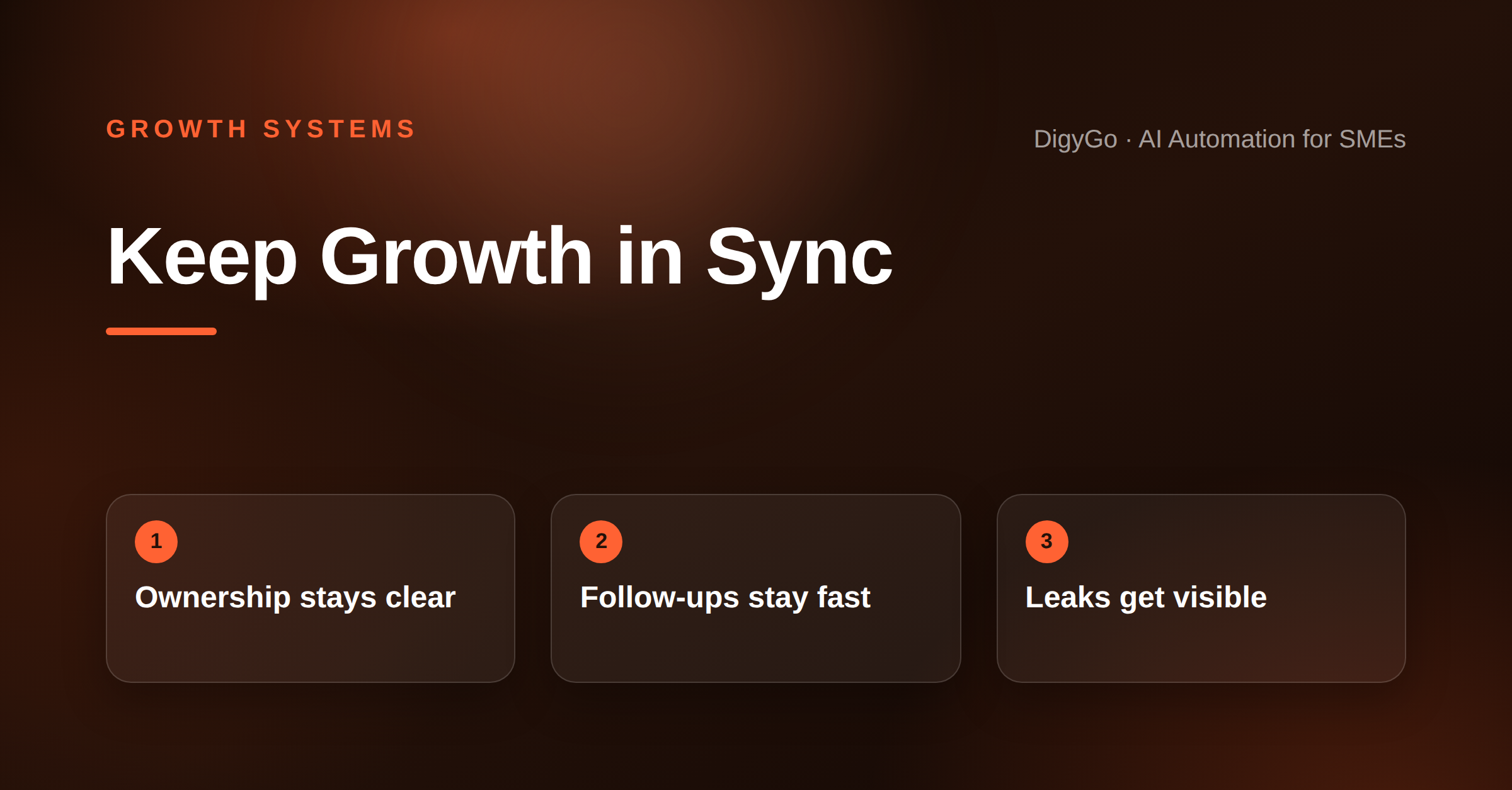
Growth systems usually fail at the seam between teams. Marketing hands off a lead, sales waits too long, operations misses context, and retention never gets the full picture. None of these moments look dramatic on their own, but together they create leak after leak.
That is why a weekly audit matters. It is not a reporting ritual for the sake of reporting. It is a simple way to check whether every lead, follow-up, and customer task has a clear owner, a deadline, and a next step.
What a weekly audit checks
A strong weekly handoff audit only needs a few checks, but they must be consistent. The goal is to find friction before it compounds into lost revenue.
- Lead ownership: Every new enquiry has one clear owner.
- Response speed: Hot leads are contacted inside the same day.
- Follow-up status: No prospect sits in silence after the first reply.
- Retention signals: Customer issues and renewals are visible early.
- Escalation path: Blockers move quickly to the right person.
When these five items are reviewed every week, the team stops guessing where the leak is. Instead, they can see whether the problem is lead handling, customer service, or internal ownership.
Manual vs audited flow
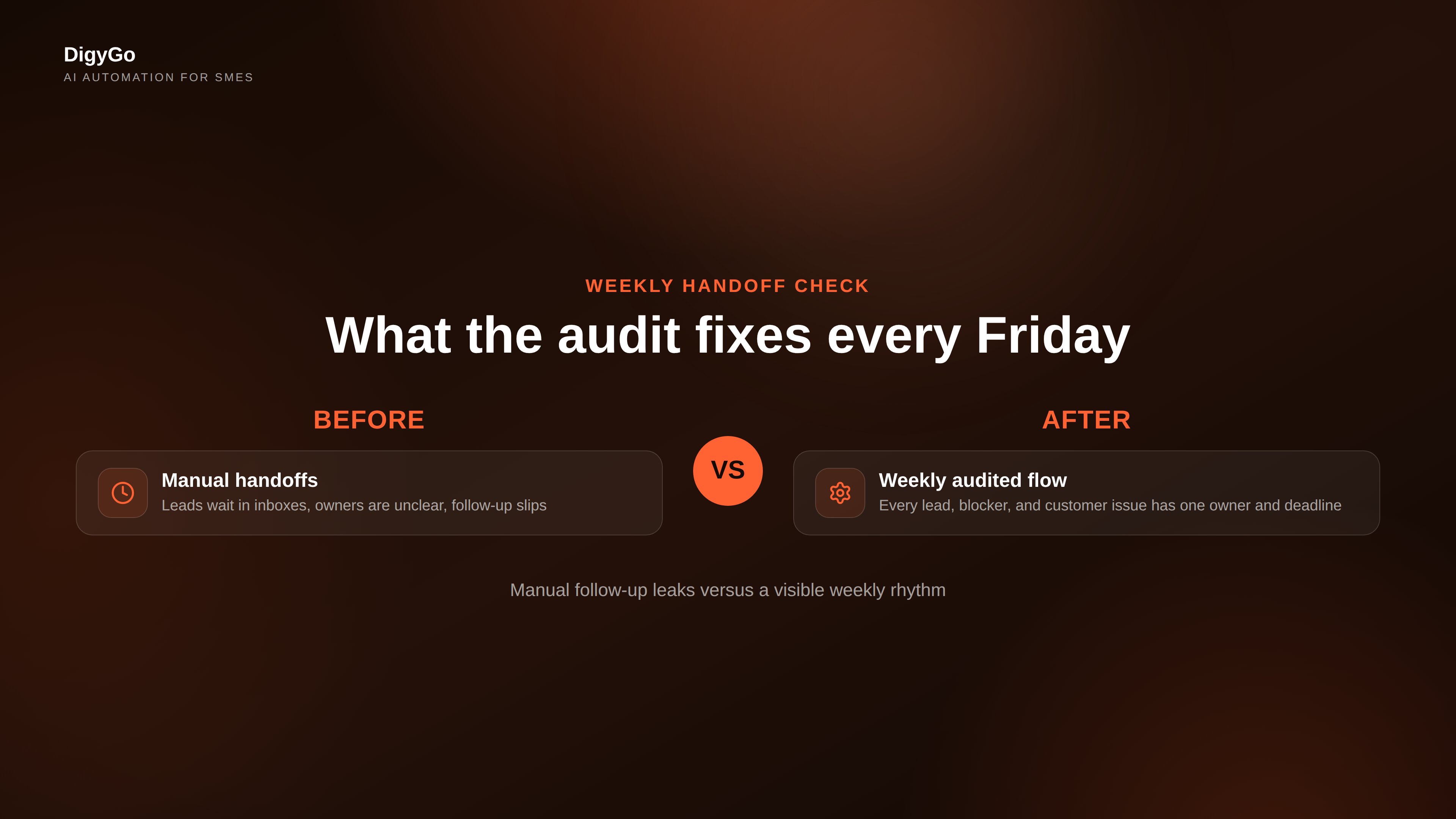
This is where the difference becomes obvious. A manual process relies on memory, follow-up discipline, and someone noticing the gap. A weekly audit creates visibility and forces the team to close the loop.

| Manual flow | Weekly audited flow |
|---|---|
| Leads sit in inboxes without ownership | Every lead has one assigned owner |
| Follow-up depends on reminders in someone’s head | Follow-up is checked against a live list |
| Retention issues appear after churn starts | Customer risks are reviewed before they grow |
| Fixes happen only after complaints | Blockers are surfaced during the weekly review |
How to build the rhythm
Keep the rhythm simple enough that the team actually follows it. A 30-minute weekly meeting is enough for most SMEs if the agenda never changes.
- Review new leads and check ownership.
- Scan overdue follow-ups and unanswered threads.
- Look for customer churn risks or unresolved issues.
- Assign one action per blocker with a deadline.
- Close by confirming what changed since last week.
The real win is consistency. When the same checks happen every week, the business starts compounding small improvements instead of losing momentum between departments.
DigyGo view: growth systems do not need more dashboards first. They need one reliable weekly rhythm that keeps ownership, follow-up, and retention visible.
FAQs
How often should a handoff audit happen?
Weekly is the sweet spot for most SMEs. It is frequent enough to catch leaks early without becoming another heavy meeting.
Who should run the audit?
One person should own the meeting, but every team that touches the lead or customer journey should contribute. That usually means marketing, sales, and operations.
What should we track first?
Start with ownership, follow-up speed, and unresolved blockers. Those three signals expose most growth leaks quickly.