Most SME growth problems are not really growth problems. They are review problems. If sales, delivery, retention, and follow-up are not reviewed in one place every week, effort leaks out before it can compound.
A practical guide for SME founders on using a weekly scorecard to track lead flow, delivery, retention, and owner actions in one repeatable rhythm.
Why weekly scorecards work
When a business grows by memory, every team member tracks a different version of the truth. One person looks at leads, another looks at invoices, and someone else is trying to remember what slipped last Friday. A weekly scorecard fixes that by turning growth into a short, repeatable review with the same numbers every time.
The goal is not to create a complicated reporting system. The goal is to make one hour of review more useful than five hours of reactive chasing. Once that habit sticks, owners can spot bottlenecks earlier, protect good leads from going cold, and keep retention work visible instead of accidental.
The five-part scorecard
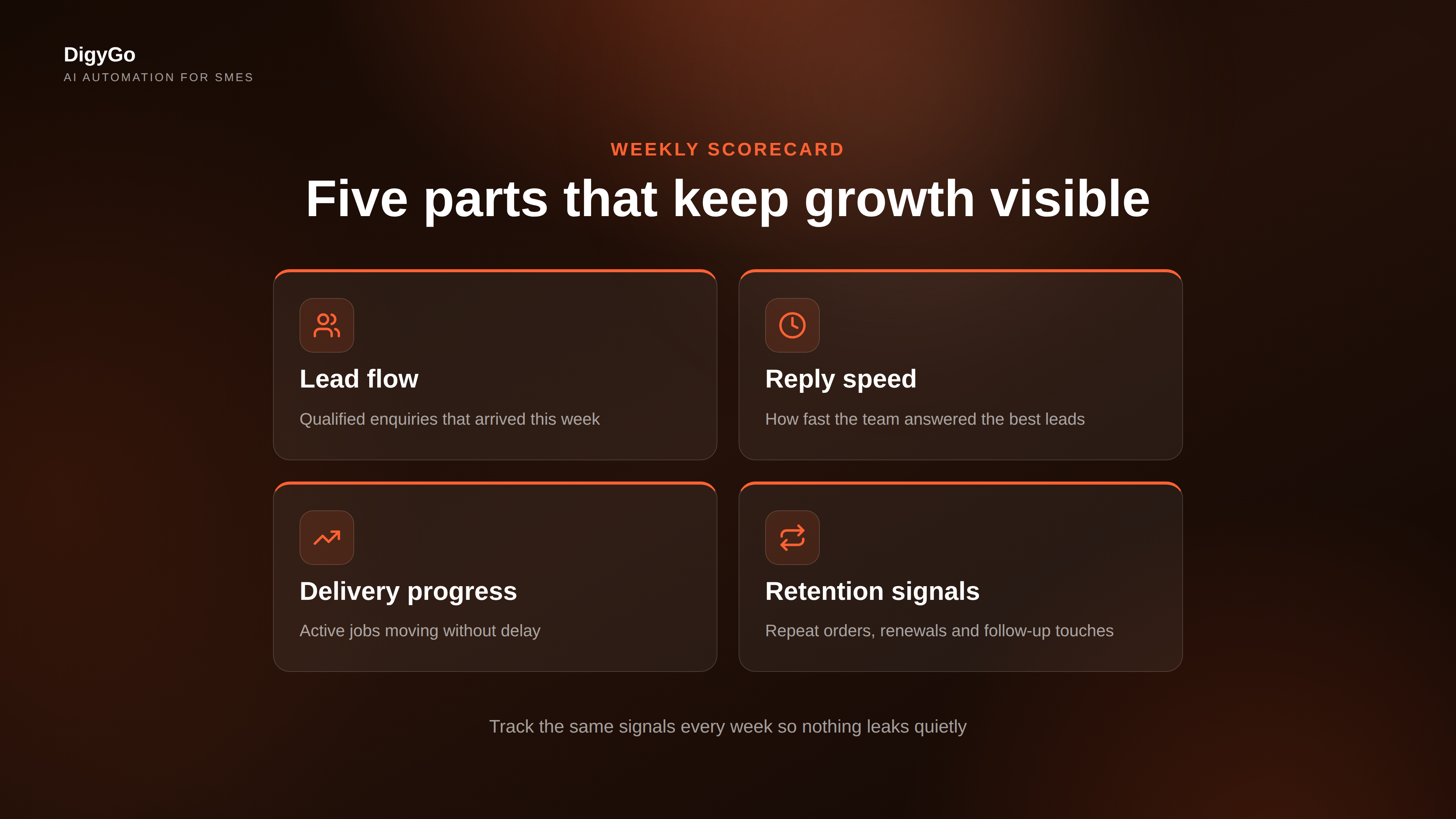
A useful weekly scorecard should track only the parts of the business that make future revenue easier. For most SMEs, that means five simple buckets:
- Lead flow — how many qualified enquiries arrived this week.
- Speed to reply — how fast the team answered the best leads.
- Delivery progress — whether active jobs moved without delay.
- Retention signals — repeat orders, renewals, and follow-up touches.
- Owner actions — the one or two fixes that remove friction next week.
These five buckets work because they connect acquisition, operations, and retention. If lead flow is healthy but follow-up is slow, the scorecard exposes it. If delivery is strong but retention is weak, the scorecard shows that too. The system becomes a feedback loop instead of a status meeting.
Keep the numbers small
Do not turn the scorecard into a dashboard museum. One number per bucket is usually enough. If a metric cannot help you decide what to do next week, it does not belong in the weekly review.

What to review each week
Review the same order every time so the meeting stays calm and predictable. Start with leads, then move to response speed, then look at delivery and retention. End with actions. This order matters because it moves the room from symptoms to decisions.
- What changed? Compare this week with the last one.
- Where did the drop happen? Find the exact handoff or stage.
- Who owns the fix? Assign one person, not a group.
- What is the deadline? Put the action on next week's review.
The best weekly systems do not ask the team to think harder. They ask the team to look at the same facts in the same order, then choose a next action. That repeatability is what makes the growth compound.
How to run the meeting without wasting time
Keep the meeting short and visible. A 30-minute slot is enough for most SMEs if the scorecard is prepared in advance. Open with the numbers, call out one win, name one problem, and end with clear ownership. If the discussion drifts into opinion, bring it back to the scorecard.
The system also works better when the output is written down. A shared note with three sections is enough: wins, risks, actions. That record stops the same issue from resurfacing every Friday as if nothing happened.
Simple rule: every weekly review should produce one decision that protects revenue and one decision that improves the next review.
FAQ
Is a weekly scorecard only for larger teams?
No. Small teams benefit even more because everyone is closer to the bottlenecks. A weekly scorecard keeps the business from relying on memory and verbal updates.
How many metrics should we track?
Start with five or fewer. If the team cannot explain the scorecard in one minute, it is too heavy for a weekly rhythm.
What is the biggest mistake SMEs make?
They track outcomes without tracking the handoffs that create those outcomes. When the lead count drops, or retention slips, the weekly review should show where the system broke.