Most SMEs do not have a growth problem. They have a review problem. Leads arrive, campaigns run, delivery gets busy, and nobody sits down each week to decide what should be repeated, fixed, or stopped. A simple weekly growth review system turns that noise into a clear operating rhythm.
A practical guide for SME founders on building a weekly growth review rhythm that reveals what to repeat, what to fix, and what to stop so growth compounds.
Why weekly reviews work
Growth feels slow when decisions are made late. A weekly review compresses the feedback loop so your team can see which channels are producing quality enquiries, which offers are converting, and where delivery is causing repeat work. That is how small wins start compounding.
For most SMEs, the goal is not more reporting. The goal is a rhythm that answers three things every seven days: what brought in revenue, what wasted time, and what should be repeated next week.
The four questions to ask
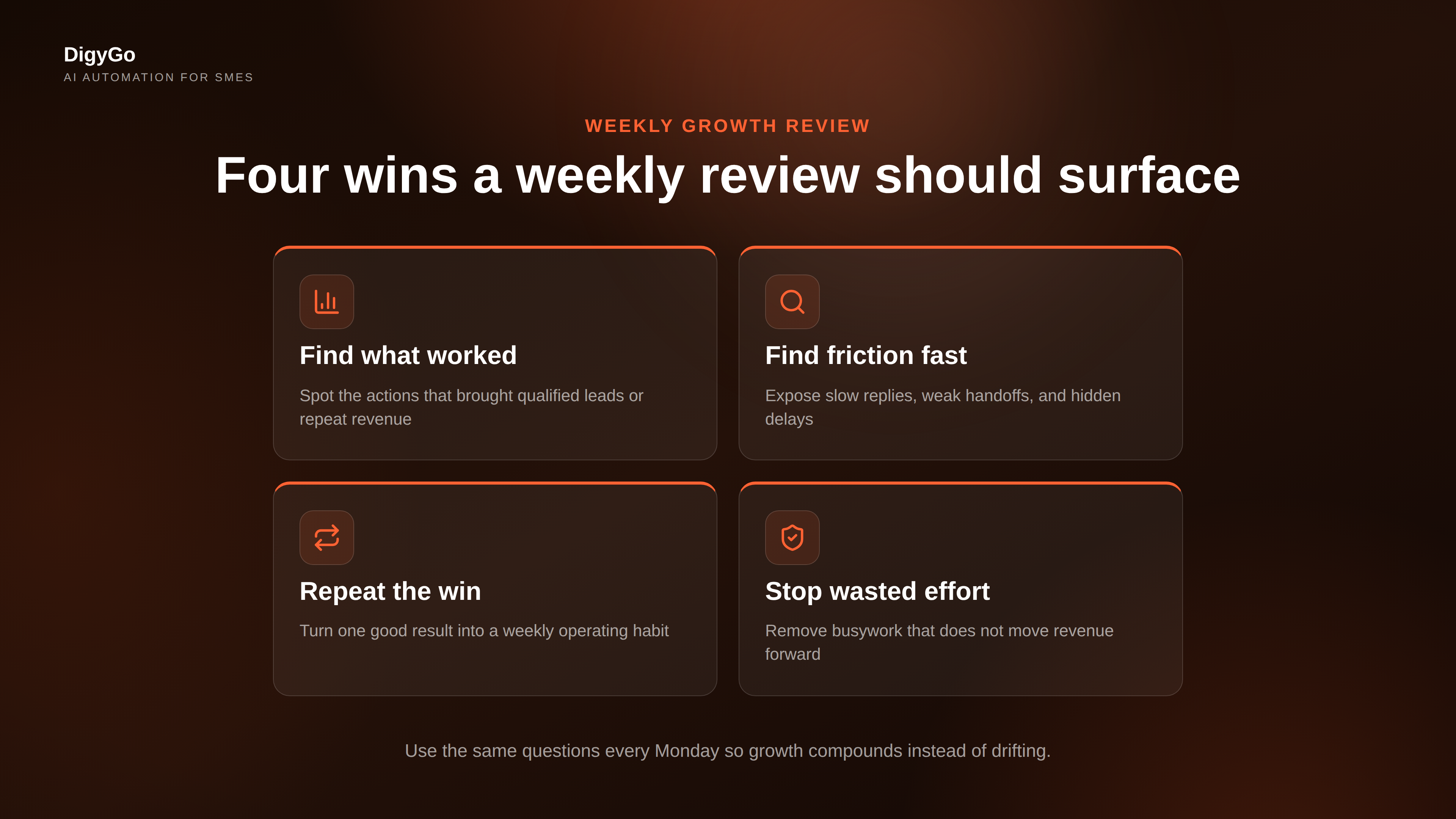
Keep the review short and consistent. The best teams use the same four questions every week so the meeting does not drift into opinions or status updates.
- What drove results? Identify the one or two actions that produced the most qualified leads, bookings, or repeat orders.
- What created friction? Look for slow responses, broken handoffs, missed follow-ups, or unclear offers.
- What should we repeat? Turn the strongest action into a system instead of a one-time win.
- What should we stop? Remove low-value work that looks busy but does not move revenue or retention.
When teams answer these questions honestly, they usually find that one channel, one message, or one handoff is doing most of the heavy lifting.
What to track every week
Do not overload the dashboard. Track only the numbers that help you make a better decision next Monday.
If one number drops, do not guess. Trace the drop back to the exact step in the process. That is what makes a growth system useful. It does not just describe performance. It tells you where to act.
Manual follow-up vs a growth system
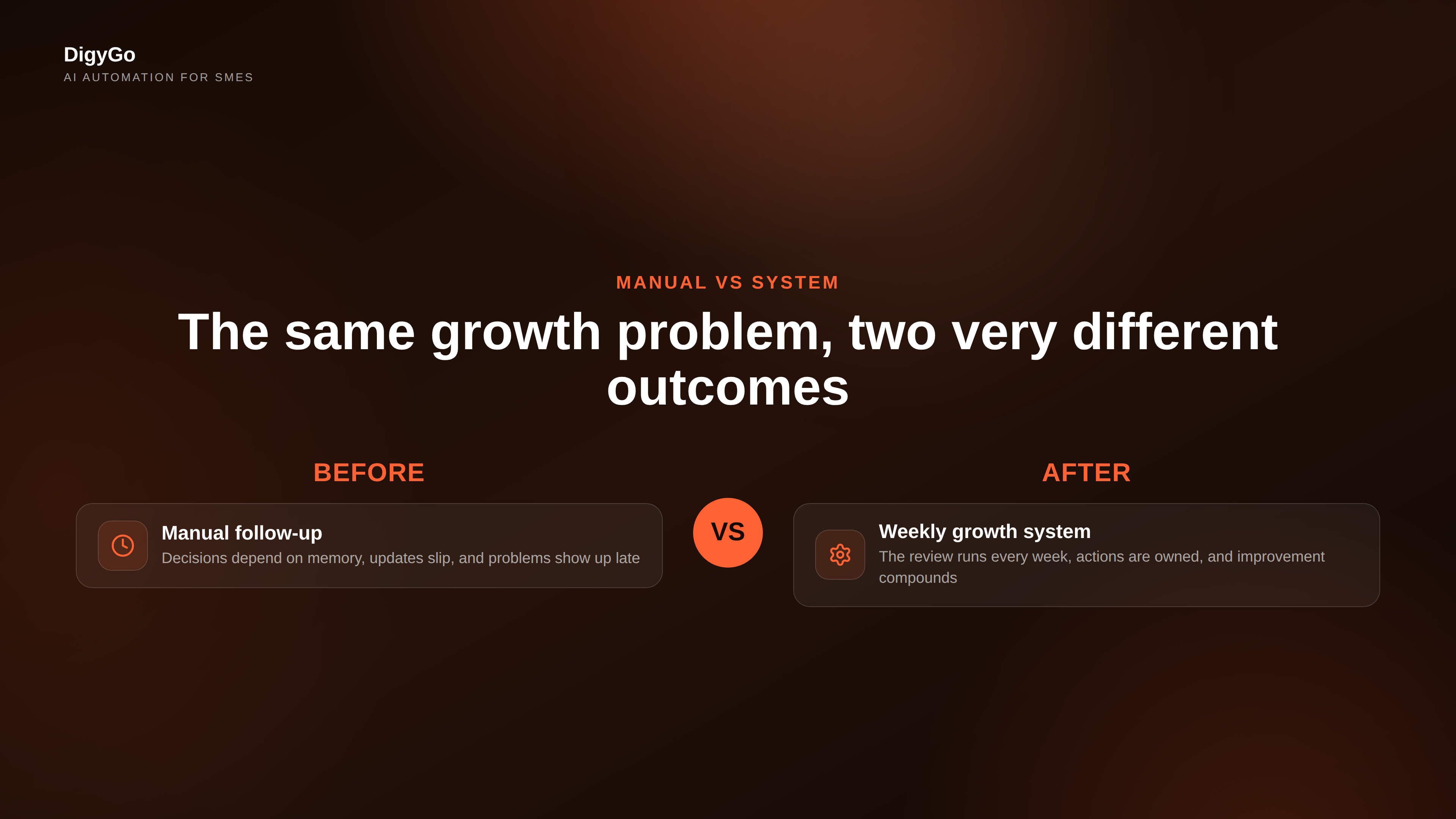
Most teams know they should follow up faster, but without a system the work depends on memory. A weekly review creates ownership, and ownership creates consistency.
| Manual approach | Growth system |
|---|---|
| Updates happen only when someone remembers | The same review runs every week |
| Leads are chased inconsistently | Ownership and follow-up are clear |
| Success is hard to repeat | Winning actions get documented and reused |
| Problems stay hidden until revenue drops | Frictions are caught early and fixed fast |
How to roll it out without making it heavy
Start small. Pick one recurring weekly meeting and attach a simple scorecard to it. Then assign one person to bring the numbers, one person to explain the wins, and one person to record the actions.
- Choose a fixed day and time.
- Use the same scorecard every week.
- Capture only three actions: repeat, fix, stop.
- Review the action list at the next meeting.
Within a month, the meeting becomes more valuable because the team can see progress instead of just hearing updates. That is the real benefit of growth systems. They make improvement visible and repeatable.
FAQ
Who should run the weekly growth review?
The person closest to operations usually runs it, but the owner or founder should stay involved enough to remove blockers quickly.
Is this only for sales teams?
No. The same rhythm works for marketing, delivery, retention, and operations because all of them affect growth.
How long should the meeting be?
Keep it tight. Thirty minutes is usually enough if the scorecard is clear and the discussion stays action-focused.
Talk to DigyGo about building a weekly growth system for your SME