Most SMEs lose deals on the same three objections, then answer them from memory every time. A simple sales objection bank changes that. It gives your team a fast, consistent way to respond to price, timing, and trust concerns without panic, discounting, or long back-and-forth.
A practical sales playbook for SMEs on turning repeated objections into a shared response bank so teams answer faster, protect margin, and close cleaner.
Why the same objections keep coming back
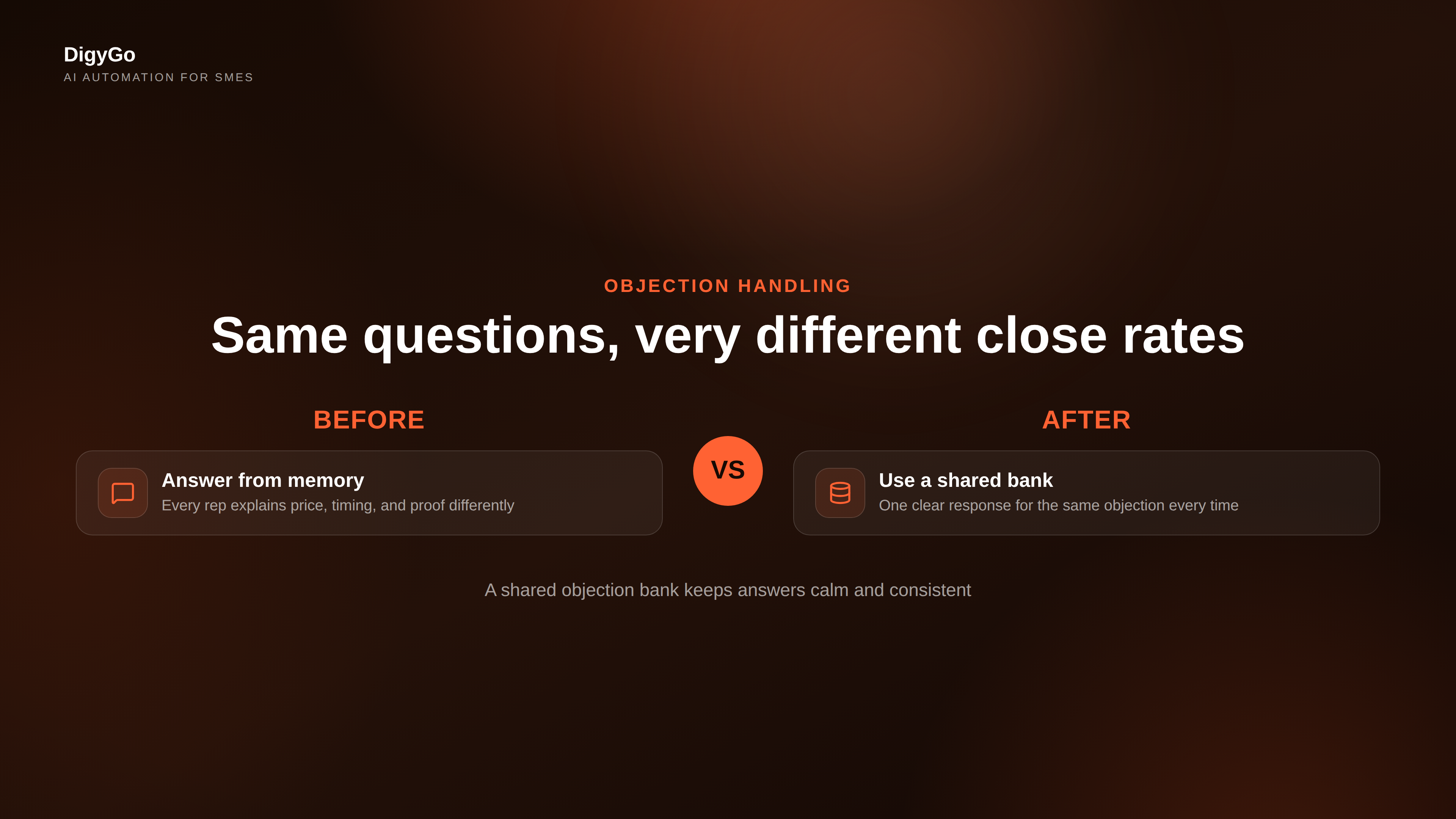
In SME sales, objections are rarely random. A buyer asks about price because value is still unclear. They ask for time because urgency is not strong enough. They ask for more proof because the offer has not yet felt safe. When your team hears the same questions repeatedly, the problem is usually the sales process, not the prospect.
That is why the best teams do not just train for "better answers." They collect the questions they hear most often and turn them into a shared objection bank. The bank becomes a practical sales asset, like a FAQ for real conversations, proposals, and follow-up messages.
How to build a sales objection bank
Start with the last 20 lost deals, stalled proposals, and awkward follow-up conversations. Pull out the exact words buyers used. Do not summarise too early. The real language matters because the objection bank should sound like the customer, not like a brochure.
- Collect the exact objection - write the wording your team actually heard.
- Tag the reason behind it - price, timing, trust, urgency, or fit.
- Write one calm response - short, direct, and focused on clarity.
- Add proof or example - a case, number, or result that supports the answer.
Keep the structure simple. One objection should fit on one card or one CRM note. If the response needs a long paragraph, it is probably too complicated for real sales calls.
How to use it during live calls and follow-up
The objection bank should not sit in a folder. It should be easy to search before a call, during a call, and while writing a follow-up message. A sales rep should be able to open it, find the likely objection, and use the right response without sounding scripted.
One useful habit is to mirror the objection before answering it. For example: "I understand why price matters. Let me show you what is included and what usually creates the result." That keeps the conversation respectful and moves it back to value instead of defensiveness.
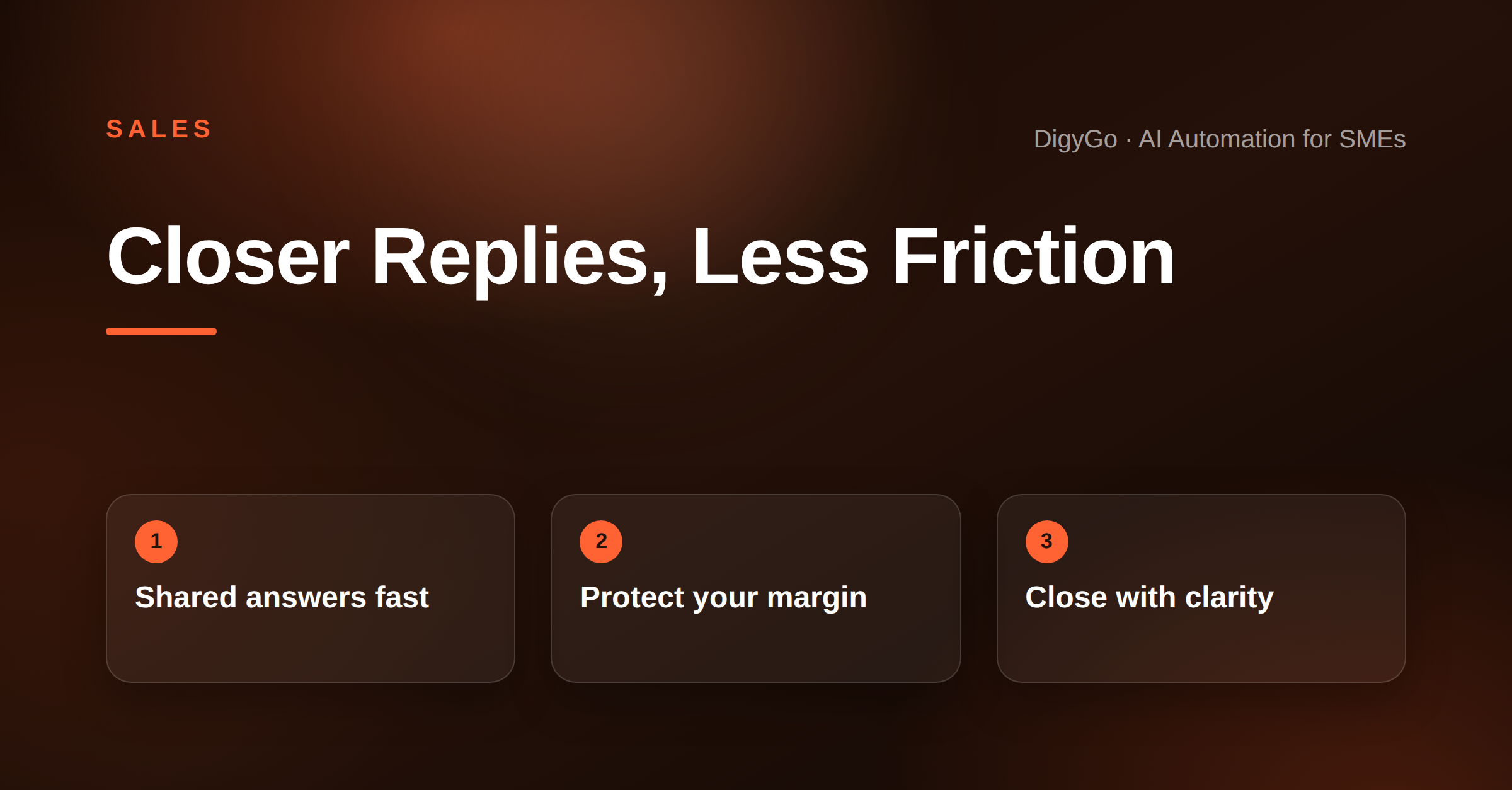
Mid-call advantage: when the rep already knows the likely objection, they can answer cleanly, protect margin, and move the buyer toward a decision instead of a discount.
What every objection card should include
Each entry in the bank should answer four questions. What did the buyer say? Why does it matter? How should we respond? What proof should we use if they ask again? That small structure keeps the bank useful for the whole team, not just one experienced closer.
| Field | Why it matters |
|---|---|
| Exact objection | Captures the real customer language |
| Objection type | Shows whether it is price, timing, trust, or fit |
| Best response | Gives the rep a calm, repeatable answer |
| Proof point | Backs up the answer with evidence |
| Next step | Moves the deal forward instead of ending the call |
Make the bank part of the team rhythm
The objection bank becomes valuable when it is updated every week. Add new objections from lost deals, support calls, proposals, and WhatsApp conversations. Review the list with sales, marketing, and delivery together. That shared review helps the team notice patterns earlier and sharpen the offer over time.
For DigyGo's SME audience, this is especially important because many deals are won or lost on trust and clarity, not just price. The more consistent the answers become, the more confidence the buyer feels. And when the buyer feels clearer, the deal usually moves faster.
FAQ
Is an objection bank the same as a script?
No. A script tells people exactly what to say. An objection bank gives them the best answer, plus proof and context, so they can respond naturally.
Should we include every objection we hear?
Start with the top five to seven objections that appear most often. Too many entries make the system harder to use.
Who should own the objection bank?
Sales should own it, but marketing and delivery should contribute. The best objections often reveal a messaging gap or a promise that needs better support.
Want help building a sales process that closes cleaner? Talk to DigyGo.