Most SMEs do not have a sales problem as much as a repeat-revenue problem. New leads feel exciting, but the real growth starts when the business turns each sale into a predictable follow-up, a useful next step, and a reason to come back.
A practical Growth Systems guide for SMEs on turning one sale into repeat orders, renewals, and referrals with a simple follow-up loop.
Why repeat revenue wins for SMEs
If every sale has to be chased from scratch, growth stays expensive and unpredictable. A repeat-revenue system changes the math. It helps you keep customers longer, reduce leakage, and create a steady base of income that supports hiring, inventory, and planning.
Growth systems work best when they reduce effort after the first sale. The goal is not more hustle. The goal is more structure.
The three systems that compound growth
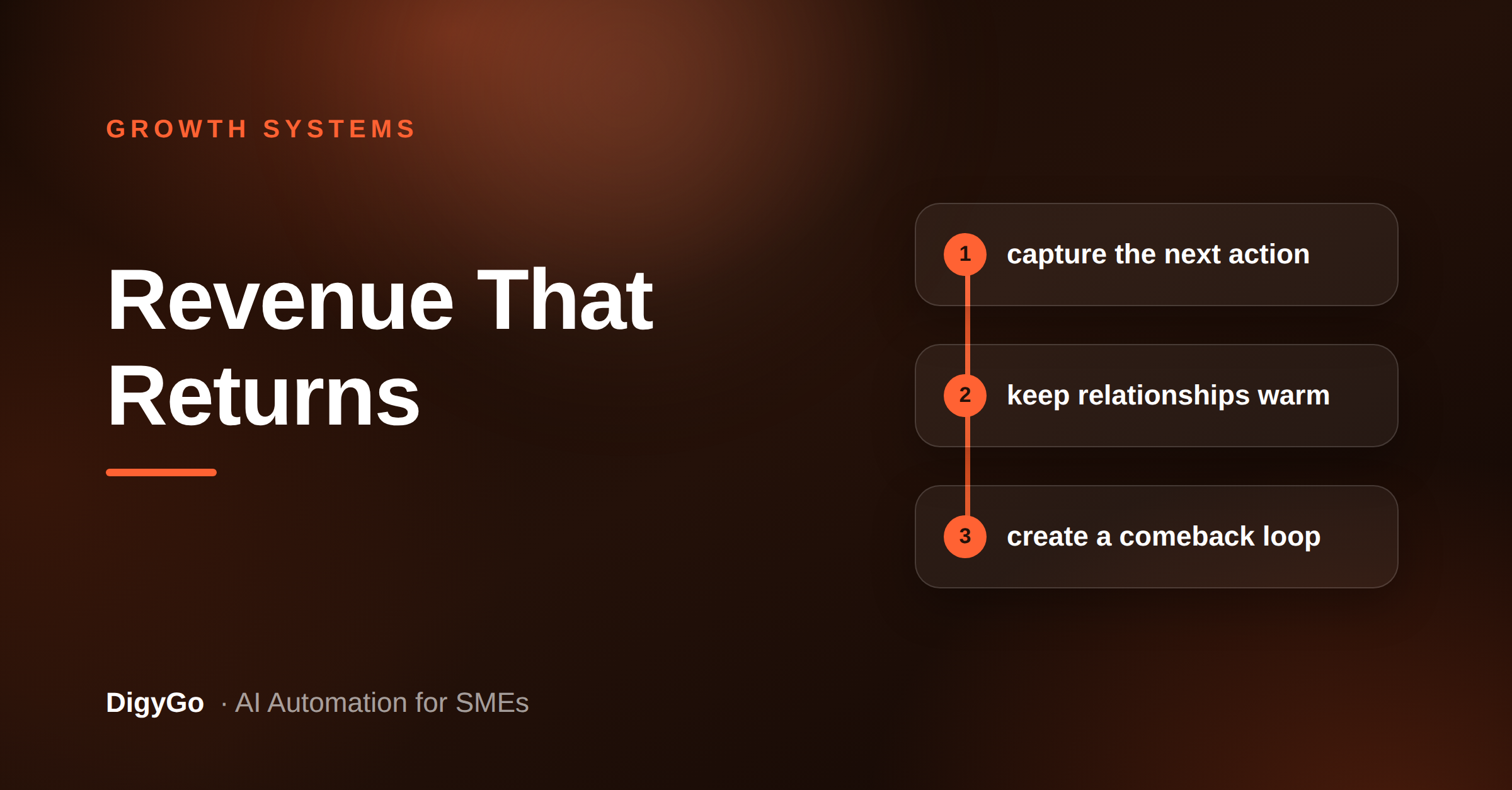
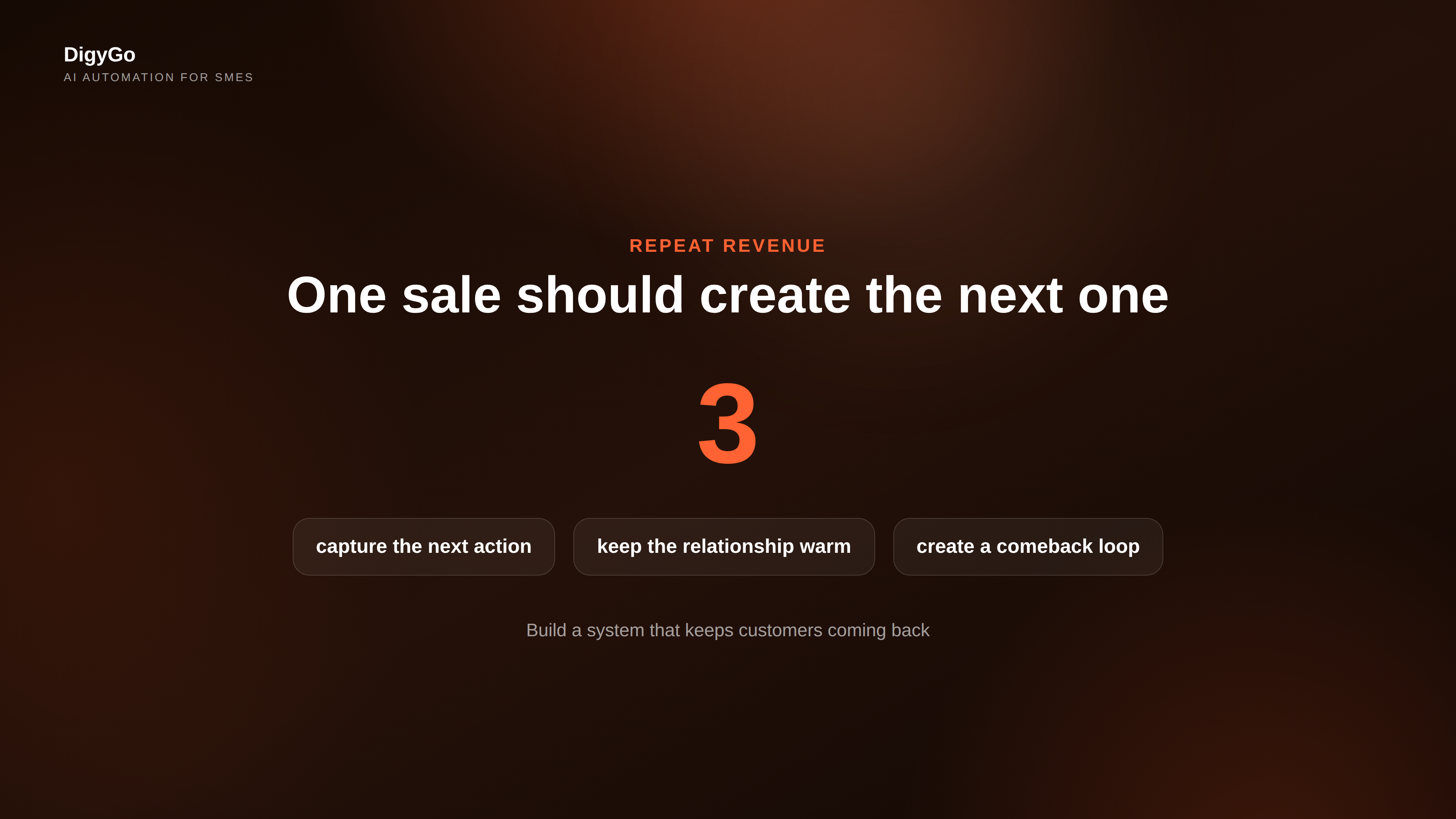
A strong growth system usually has three layers: capture, continuity, and comeback.
1. Capture the next action
Every order, enquiry, or delivery should trigger one clear next step. That might be a product education message, a usage guide, a service check-in, or a reorder reminder. When the next action is pre-planned, the business does not depend on memory.
2. Keep the relationship warm
Most customers do not leave because the product is bad. They drift because the brand goes quiet. A simple cadence of updates, follow-ups, and helpful nudges keeps the relationship active without feeling pushy. This is where retention starts.
3. Create a comeback loop
The comeback loop is the part most SMEs miss. It is the reason a past customer returns without requiring a new pitch. Reorder prompts, service renewals, anniversary messages, and referral asks all belong here. If the loop is built well, one sale can create several more.
How to start small without overbuilding
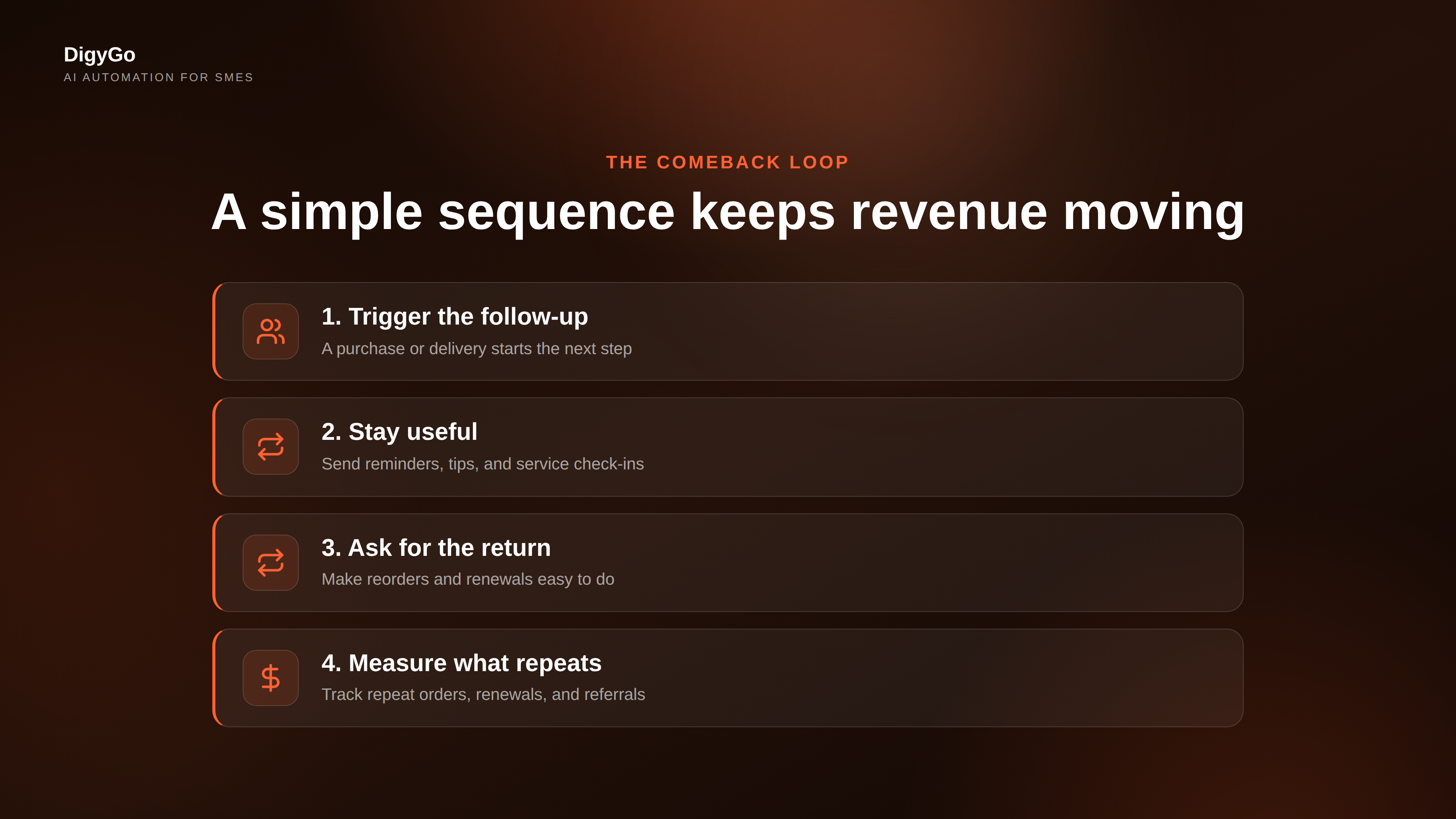
You do not need an enterprise CRM rollout to begin. Start with one customer journey and one repeat action.
- Pick one product or service: choose the offer with the highest repeat potential.
- Map one trigger: purchase, delivery, renewal, or support completion.
- Write one follow-up: send something helpful, not generic.
- Add one reminder: make the next purchase or next service easy.
- Track one result: repeat order rate, response rate, or renewal rate.
Once the first loop works, expand it to the next customer segment. The system becomes stronger as you repeat the method, not as you add complexity.
Common mistakes that break the system
Many SMEs build a follow-up process that looks busy but does not move revenue. The common mistakes are easy to spot:
- Sending the same message to every customer.
- Waiting too long after the sale.
- Focusing only on acquisition and ignoring retention.
- Not assigning ownership for follow-up.
- Measuring activity instead of repeat orders.
When the business fixes these gaps, growth becomes calmer. Teams know what happens next, customers feel remembered, and revenue becomes easier to forecast.
FAQ
What is a repeat-revenue system?
It is a set of simple, repeatable actions that help a business keep customers engaged after the first sale and create more orders over time.
Do small businesses really need systems?
Yes. Small businesses benefit even more because every repeat sale reduces the pressure to constantly chase new leads.
What should I automate first?
Start with the first follow-up after a purchase or enquiry. That one touchpoint often creates the biggest lift with the least effort.