Growth does not usually disappear in one big event. For most SMEs, it leaks out quietly through stalled renewals, slow follow-ups, forgotten handoffs, and customers who stop hearing from the team. A short monthly retention review gives you a place to spot those leaks early and fix them before they turn into lost revenue.
A practical guide for SME founders on using a short monthly retention review to spot churn risk early, assign owners, and keep revenue compounding.

Why retention needs a review rhythm
Founders often watch leads, pipeline, and new deals closely, but the post-sale side gets less attention. That is where growth gets fragile. If onboarding is slow, if customer issues stay open too long, or if nobody tracks renewal risk, the business keeps replacing revenue instead of compounding it.
A monthly retention review gives the team a simple operating rhythm: look at churn risk, check account health, review open issues, and assign follow-up actions with deadlines. The goal is not reporting for its own sake. The goal is to catch the small signals that predict bigger losses.
What to review in 30 minutes
Keep the meeting tight and focused on the few numbers that matter. Do not turn it into a long status update.
- Renewals due: which customers need attention in the next 30 days?
- Usage drops: who has gone quiet or stopped engaging?
- Support backlog: which unresolved issues could damage trust?
- Upsell opportunities: where is the customer already asking for more?
Turn findings into ownership
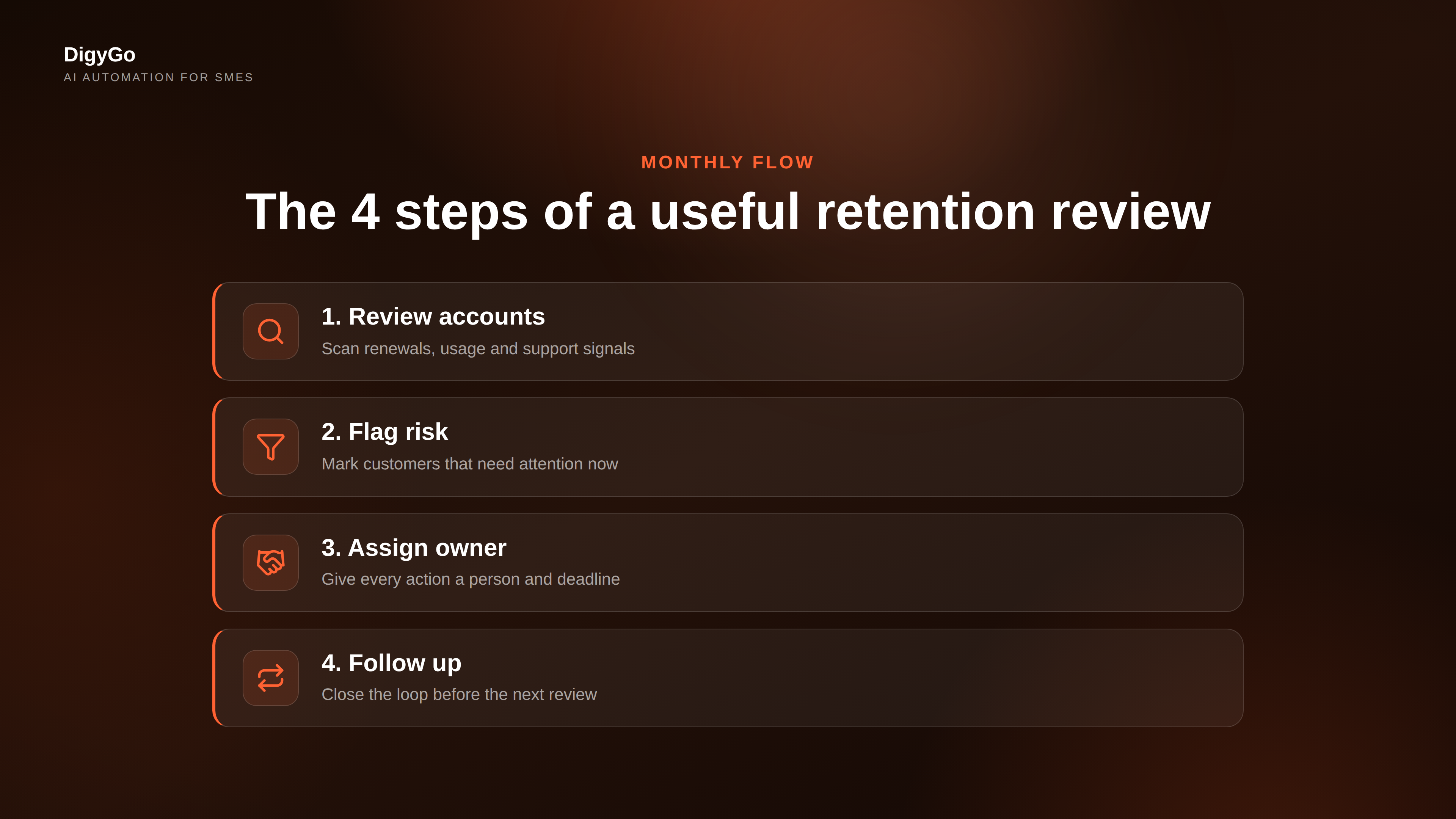
The review only matters if every risk gets an owner. One person should leave with a clear next step, whether that means a check-in call, a renewal reminder, a fix from support, or a note to the delivery team. When action is assigned in the room, customers feel the difference faster.
This is also where growth systems compound. If your sales team hands off a customer cleanly, operations keeps the promise, and account follow-up happens on time, you do not just retain revenue. You create more room for referrals, upgrades, and repeat buying.
Make the review part of the operating system
The best retention reviews are boring in the right way. Same day each month. Same agenda. Same scoreboard. Over time, the team starts to notice patterns: which service line slips, which account stage needs more care, and which process gap shows up again and again.
That is how a small monthly meeting becomes a real growth system. It protects the revenue you already earned and gives the business a steadier base to grow from.
FAQ
How long should a retention review take?
For most SMEs, 20 to 30 minutes is enough if the agenda is tight and the data is prepared before the meeting starts.
Who should attend?
Bring the person who owns customer success, the person who owns delivery or service, and one sales or account owner if renewals need support.
What is the main outcome?
Every at-risk account should leave with an owner, a follow-up action, and a deadline.
Talk to DigyGo about building growth systems that protect retention and revenue.