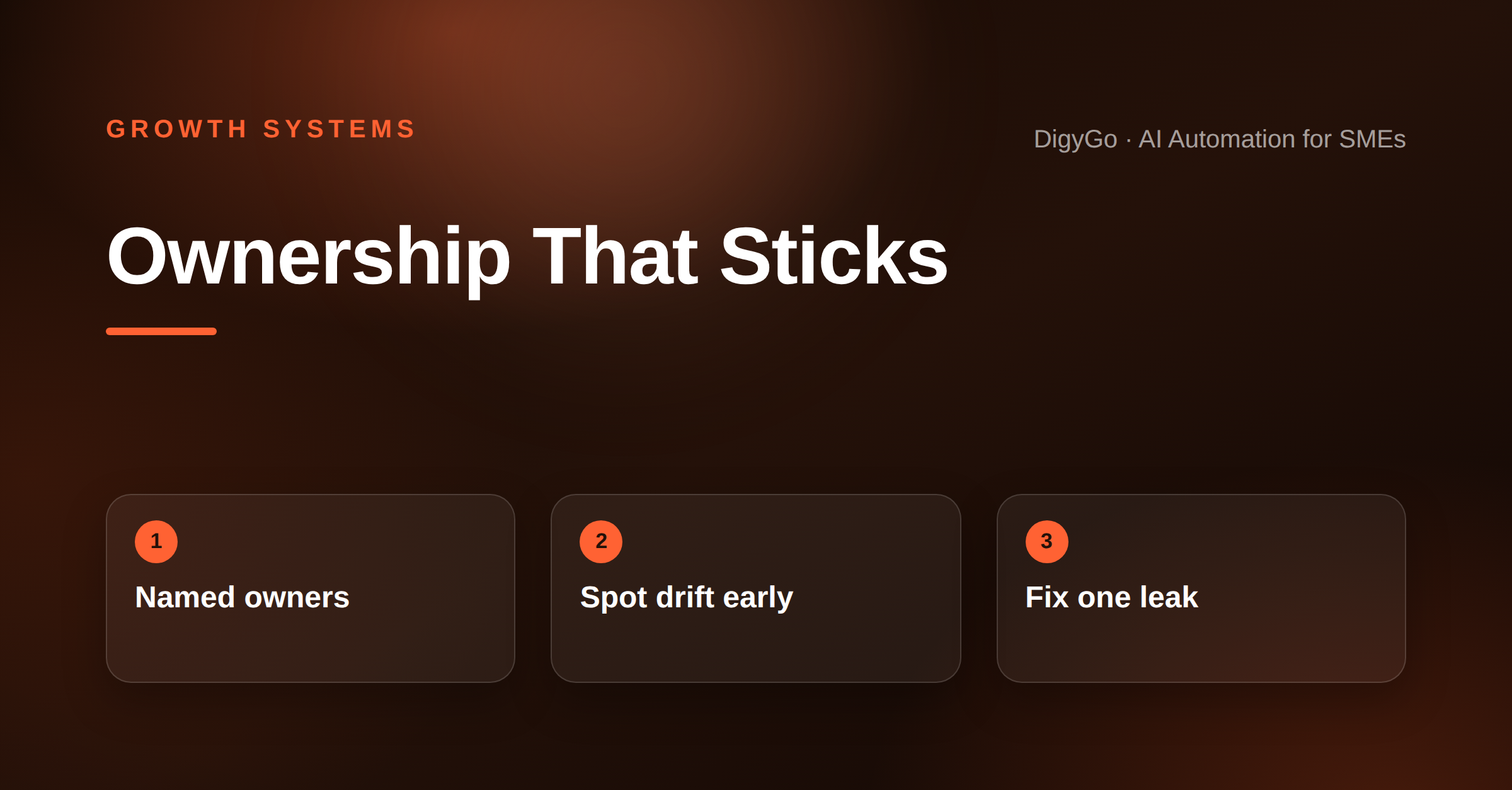
Growth systems stop compounding when ownership gets fuzzy. A monthly ownership review gives SME teams one clean moment to check what shipped, what stalled, and who owns the next move before small misses turn into recurring leaks.
A practical guide for SME founders on using a monthly ownership review to catch leaks early, keep recurring work visible, and stop growth systems from drifting.
- Review every recurring system once a month, not only when something breaks.
- Use one owner per system so follow-up does not get trapped in shared responsibility.
- Track leaks, handoffs, and overdue actions in the same review rhythm.
Why monthly ownership reviews matter
Most SME growth problems do not start as big failures. They start as tiny gaps: a lead not handed over, a renewal not checked, a delivery task left unnamed, or a report that nobody reads. When those gaps repeat, they become a pattern. A monthly review makes the pattern visible before it becomes expensive.
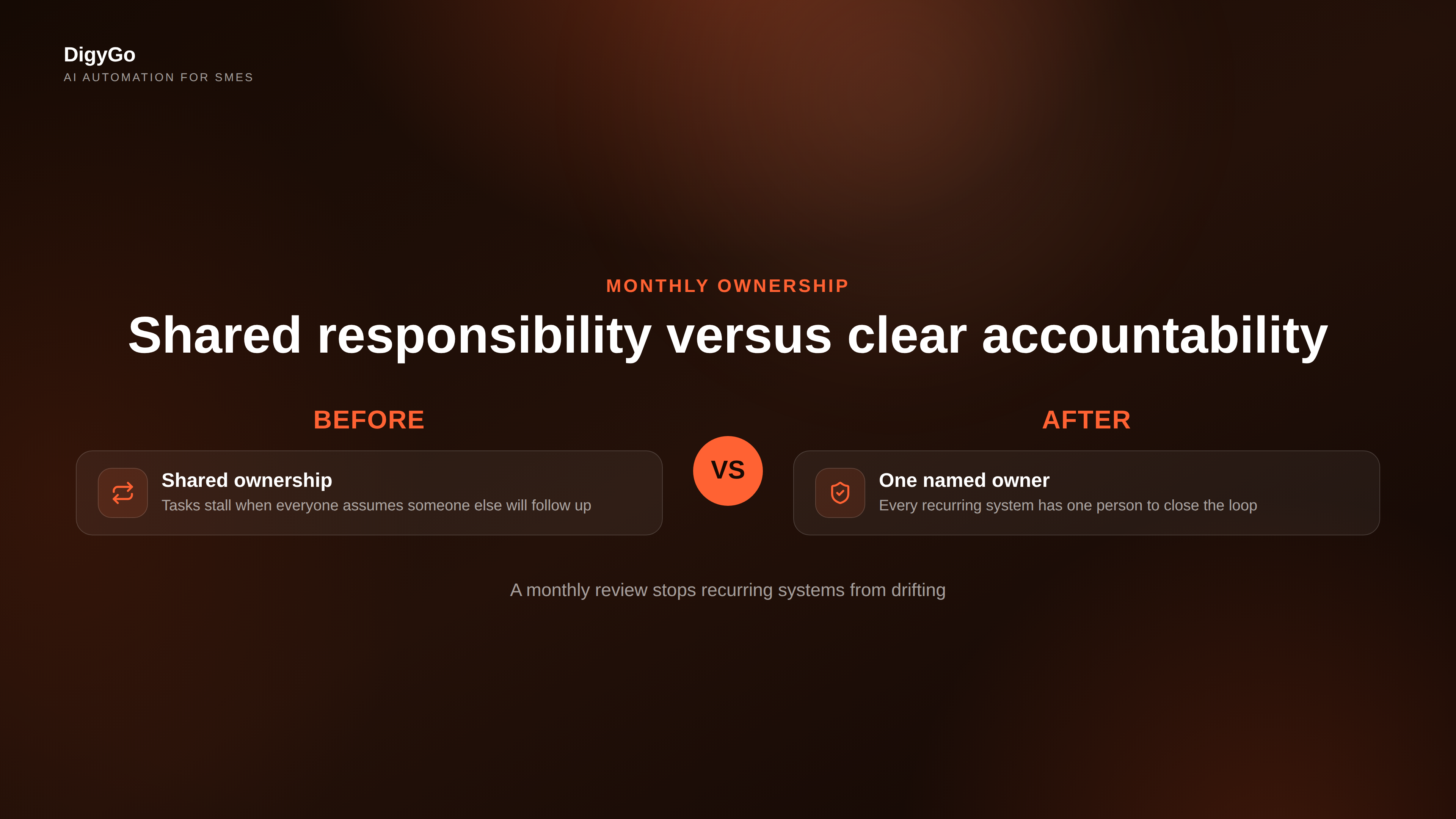
The goal is not more meetings. The goal is cleaner ownership. If one system has one accountable owner, it is easier to see what is working, what is slipping, and what needs a decision.
Start with the systems that repeat
Do not review everything at once. Focus on the systems that repeat every week or every month and directly affect revenue, retention, or delivery quality.
- Lead follow-up and qualification
- Customer onboarding and handoff
- Renewal and retention checks
- Internal delivery updates
- Weekly reporting and escalations
These are the systems that usually leak first. If they are not assigned clearly, the team ends up relying on memory, reminders, and urgency. That works for a while, then it breaks.
What to review in 20 minutes
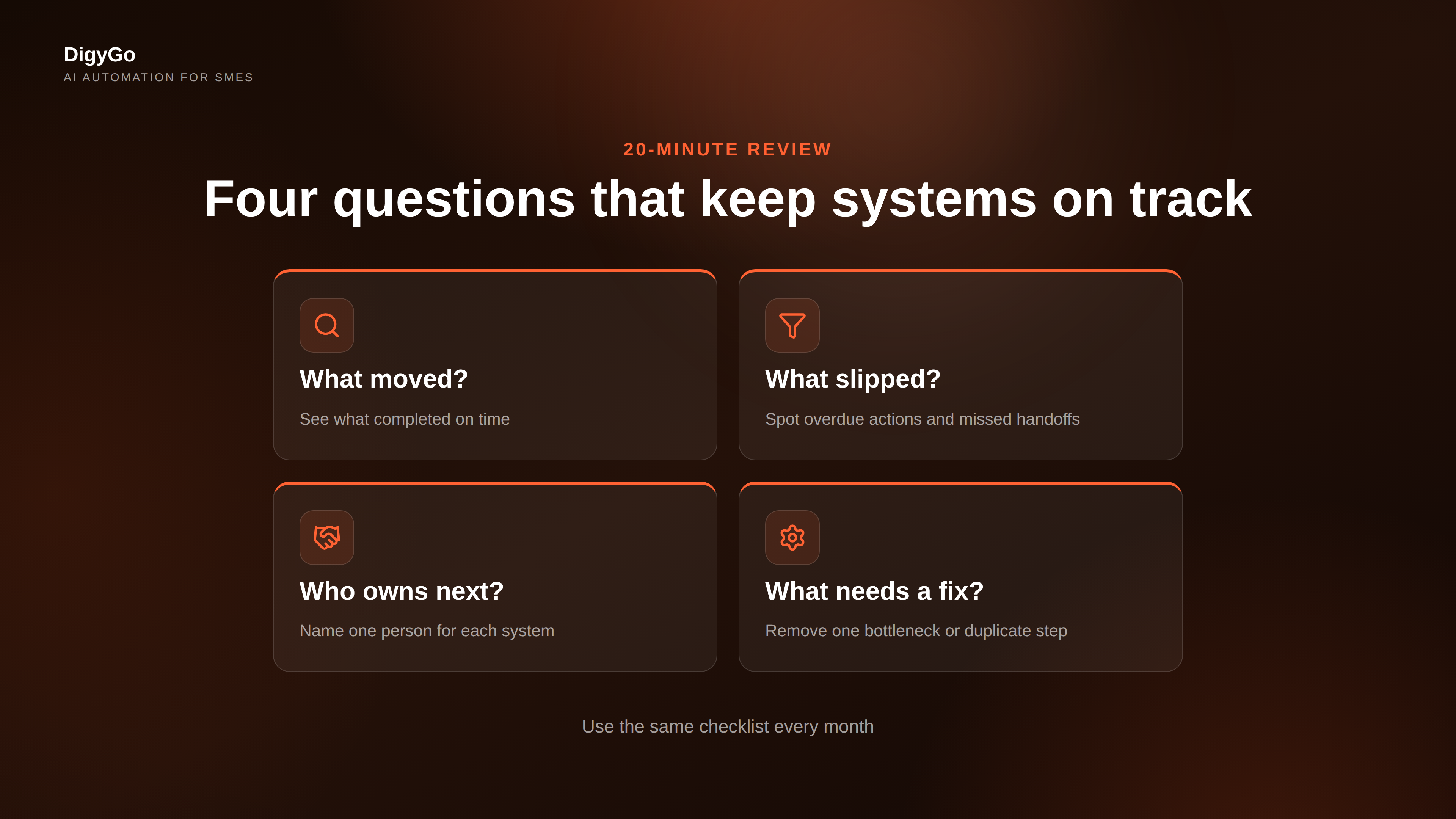
A useful monthly ownership review should stay short and practical. The point is to make decisions, not to collect more status updates.
- What moved? List the recurring actions that were completed on time.
- What slipped? Mark overdue actions, missed handoffs, and delayed responses.
- Who owns the next step? Name one person for each active system.
- What needs a fix? Remove one bottleneck, one duplicate step, or one unclear approval.
If the team cannot answer these four questions quickly, the system is probably depending on informal memory instead of a repeatable process.
Use the review to prevent drift, not just track performance
Growth systems drift when the original process is never checked again. The first owner leaves, the workload changes, a customer request gets added, or a new tool enters the stack. Soon the process still exists, but it no longer works the way it should.
That is why the review should always ask whether the process still matches reality. If the team has changed, the workflow should change too. If the bottleneck moved, the ownership map should move with it.
Simple rule: if a recurring task has been delayed twice, it needs a clearer owner or a simpler path.
Make the output visible
Every monthly review should end with a short action sheet that the team can actually use. Keep it visible in the same workspace where the work happens.
- System name
- Current owner
- Last completed date
- Open risk
- Next action and deadline
This format makes it easy to spot what needs attention without digging through notes. It also helps the next review start from facts, not from guesswork.
What SMEs gain from a tighter rhythm
When ownership reviews become routine, the business gets fewer surprises. Follow-up gets faster. Handoffs become clearer. Delivery issues surface earlier. And the team spends less time asking who was supposed to do what.
That is how growth systems compound. Not by being flashy, but by staying owned, visible, and reviewed on time.