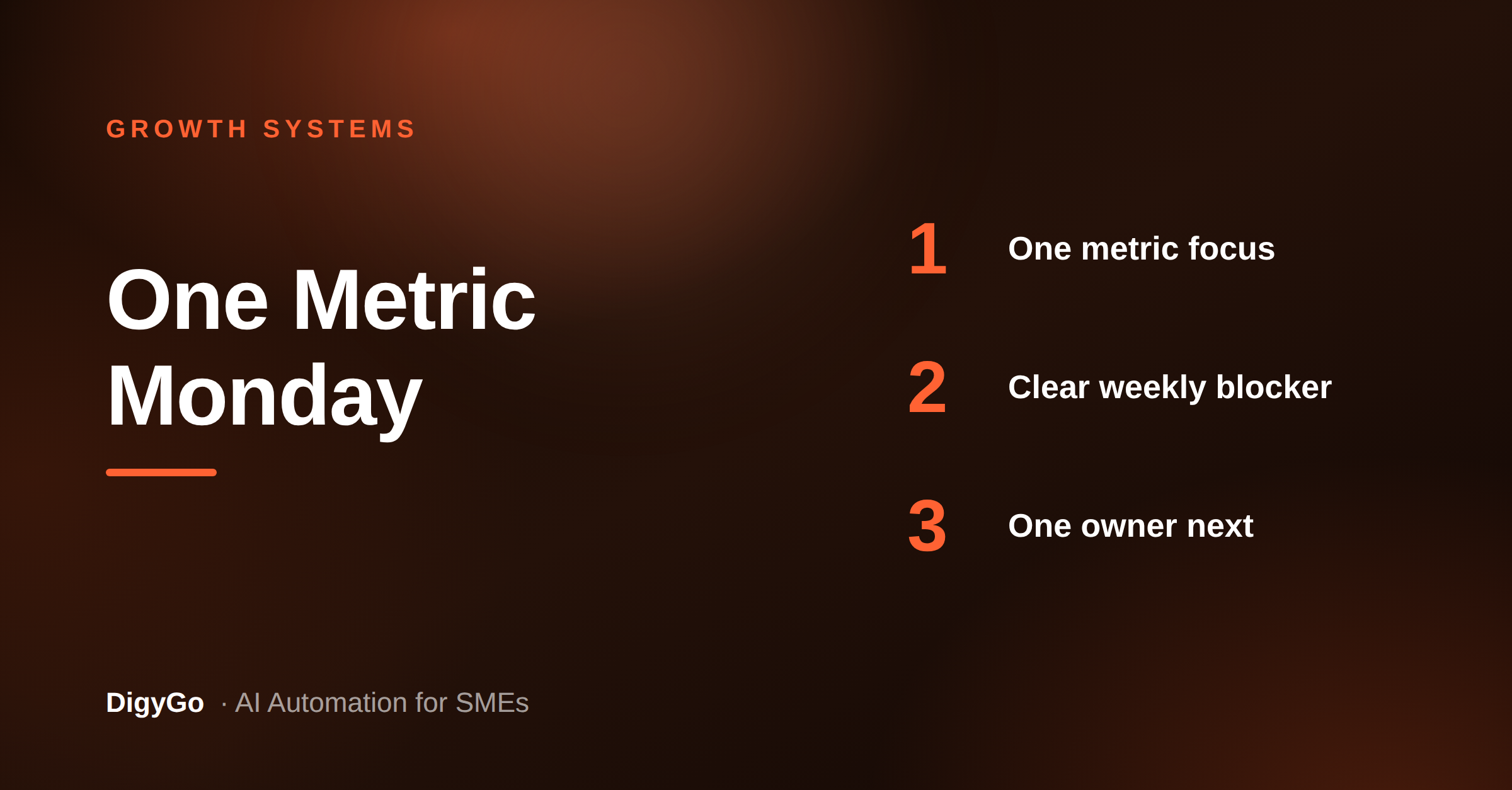
SME growth gets messy when marketing, sales, and operations are all chasing different priorities. A Monday growth standup fixes that by forcing the team to pick one metric, one blocker, and one next action before the week gets away from them.
A practical guide for SME founders on using a short Monday standup to choose one metric, clear one blocker, and assign one next action so growth stays focused all week.
Why one metric works
Most SMEs do not need more dashboards. They need a better decision rule. When the team agrees on one metric for the week, attention becomes sharper and the conversation becomes practical. Instead of debating everything, everyone knows what matters most right now.
The point is not to ignore the rest of the business. The point is to create a short window where the whole team aligns on the one number that will move the business forward fastest. That could be qualified leads, booked demos, response time, repeat orders, or collections depending on the bottleneck.
What the standup covers
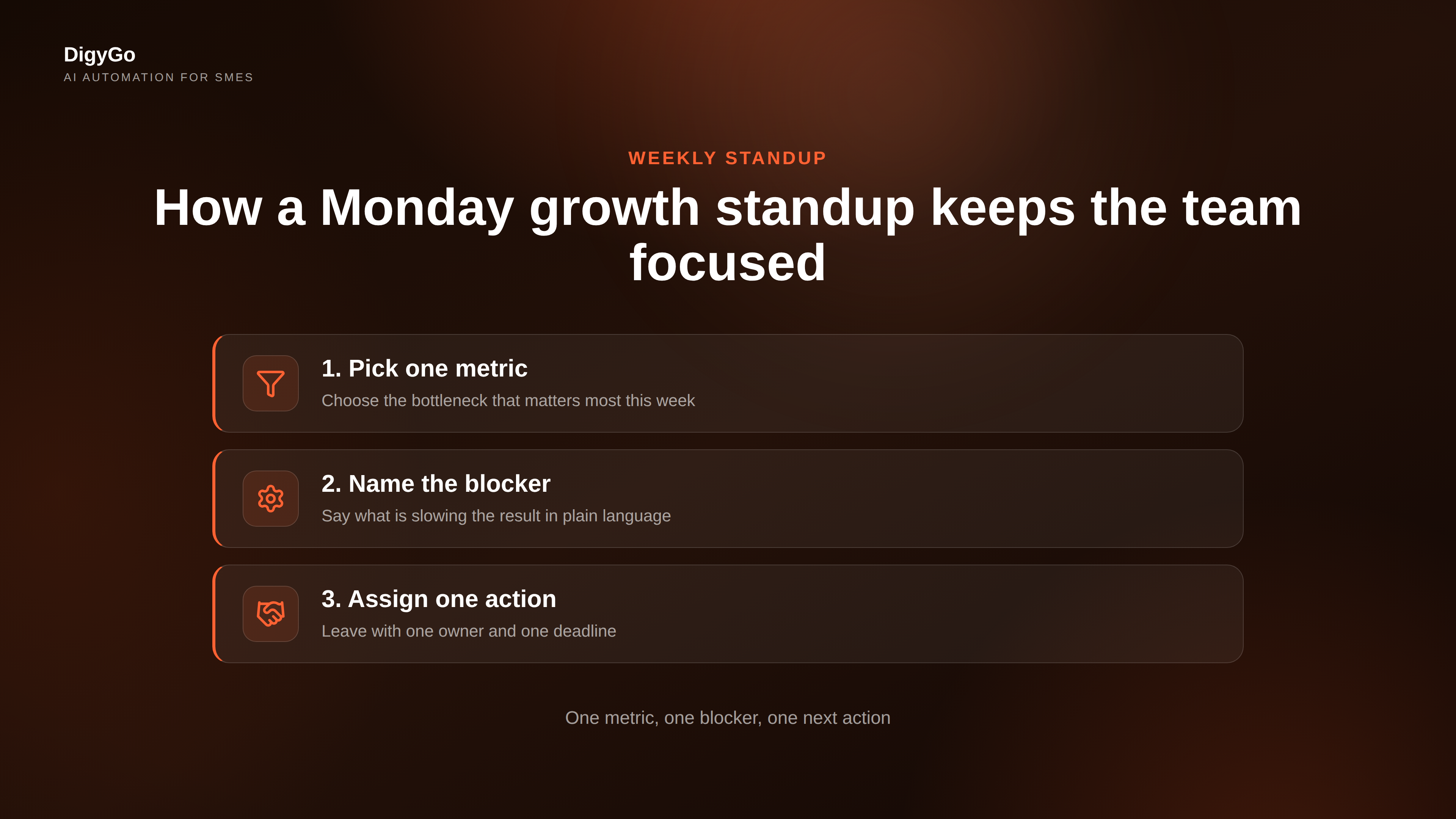
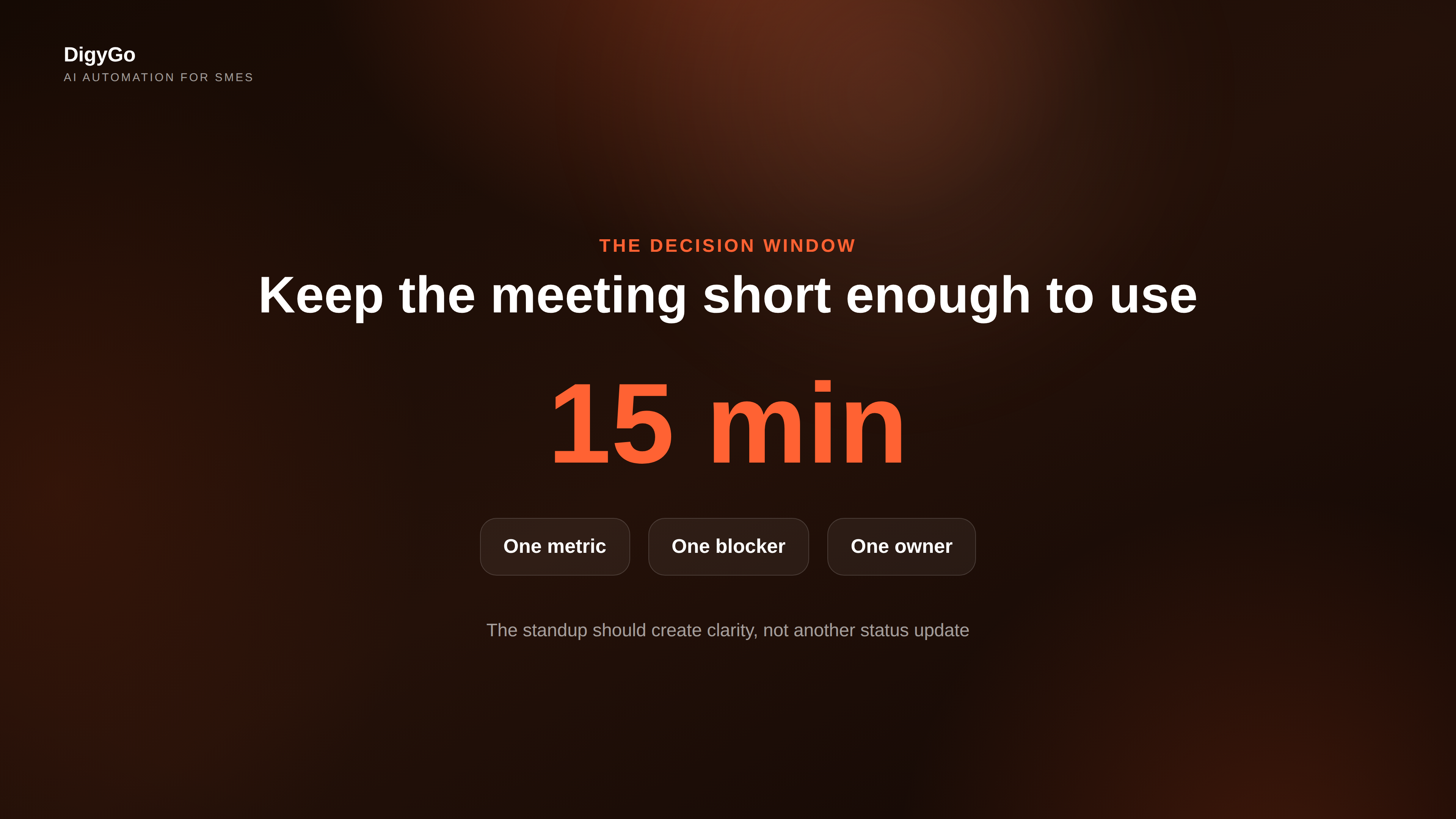
Keep the meeting short enough that it feels useful and repeatable. The best version is a 15-minute Monday check-in with three fixed questions.
- What is the one metric? Pick the number that reflects the biggest constraint this week.
- What blocked progress? Name the bottleneck that slowed the metric last week.
- What will we do next? Assign one clear action with an owner and deadline.
This keeps the standup from turning into a status meeting. Everyone leaves with a decision, not just an update.
The weekly rhythm
A simple Monday-to-Friday rhythm makes the process easy to remember. The goal is to keep the same rhythm every week until it becomes part of how the business runs.
When the rhythm is visible, the business stops depending on memory. The team knows when to focus, when to follow up, and when to reset the next action.
What to avoid
There are three common ways this process fails. The first is choosing too many metrics. The second is letting every department pick its own priority. The third is leaving the meeting without an owner.
| What goes wrong | Better approach |
|---|---|
| Five metrics compete for attention | Pick one number that reflects the bottleneck |
| Each team tracks its own priority | Agree on one business-wide focus |
| No one owns the next step | Assign one owner before the meeting ends |
If the standup becomes long or vague, the team will stop trusting it. Simplicity is what makes it work.
How to implement it
Start with one recurring Monday slot and one scorecard. Do not redesign your entire operating system on day one. Just make the next seven days clearer than the last seven.
- Choose a fixed time every Monday.
- Pick one metric tied to the current bottleneck.
- Write the blocker in plain language.
- Assign one next action with an owner.
- Review the result the following Monday.
That small habit creates better ownership, faster decisions, and less drift. Over time, the team stops reacting to every problem and starts managing growth with intent.
FAQ
Who should lead the Monday growth standup?
The person closest to execution should lead it, but the founder should stay involved enough to unblock decisions quickly.
What if the team cannot agree on one metric?
Use the biggest bottleneck as the tie-breaker. The right metric is the one most likely to change the outcome this week.
Does this replace all reporting?
No. It replaces scattered discussion with one weekly decision point. You can still keep deeper reporting for management reviews.
Talk to DigyGo about setting up a one-metric growth rhythm for your SME