Hot enquiries do not stay hot forever. If a team waits too long to reply, follow up, or assign ownership, the lead goes quiet and the opportunity becomes harder to revive. Lead expiry rules fix that by giving every enquiry a clear time limit, an owner, and a next action.
A practical guide for SMEs on adding lead expiry rules so every enquiry has a deadline, an owner, and a rescue path before it goes cold.
Key takeaways:
- Every lead needs a clock, not just a label.
- Expiry rules force action before interest cools.
- Automated reminders and reassignment keep response times tight.
Why lead expiry rules matter
Most SMEs lose leads for ordinary reasons: a missed notification, a busy sales rep, a query arriving after hours, or a handoff that never happened. The problem is not always demand. Often it is the delay between intent and response.
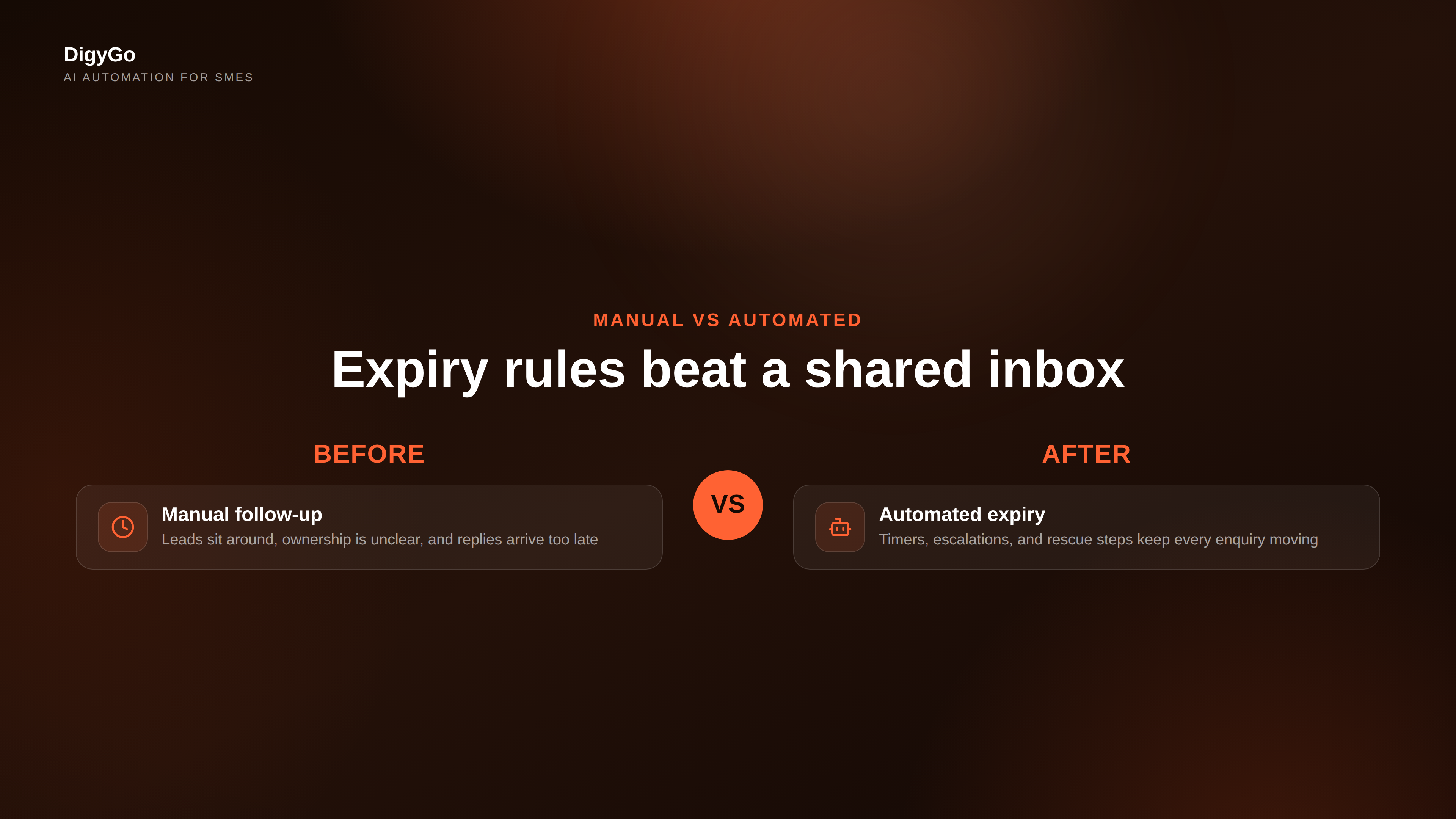
Lead expiry rules create urgency inside the process. Instead of letting enquiries sit in a shared inbox or a CRM stage forever, each lead is given a response window. If nobody acts in time, the system escalates it, reassigns it, or moves it into a rescue flow.
What a good rule looks like
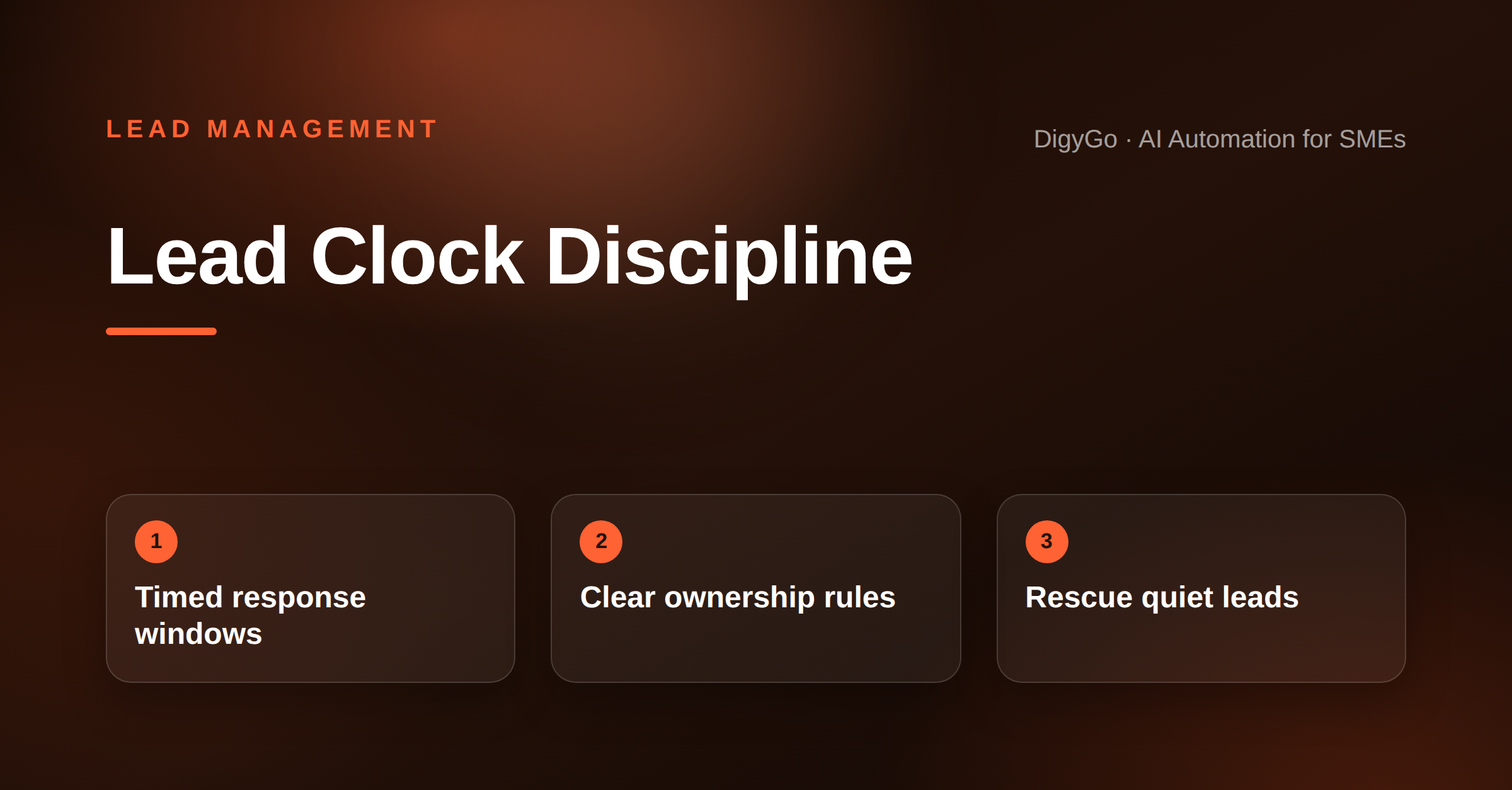
A useful expiry rule is simple enough for the team to follow and strict enough to protect the lead. It should answer three questions: how fast should the first response happen, who owns the lead if the first owner misses the window, and what happens when the lead goes silent.
For most SME teams, a practical setup looks like this:
- 0 to 5 minutes: instant acknowledgement from the system or assistant.
- 15 to 30 minutes: a human reply or a booking attempt.
- 2 to 4 hours: reassignment if the lead is still untouched.
- 24 hours: move the lead into a rescue sequence.
The point is not to chase perfect timing. The point is to stop lead ownership from becoming vague. When every stage has a deadline, the team can see what is stalled and what needs attention now.
How to build the workflow
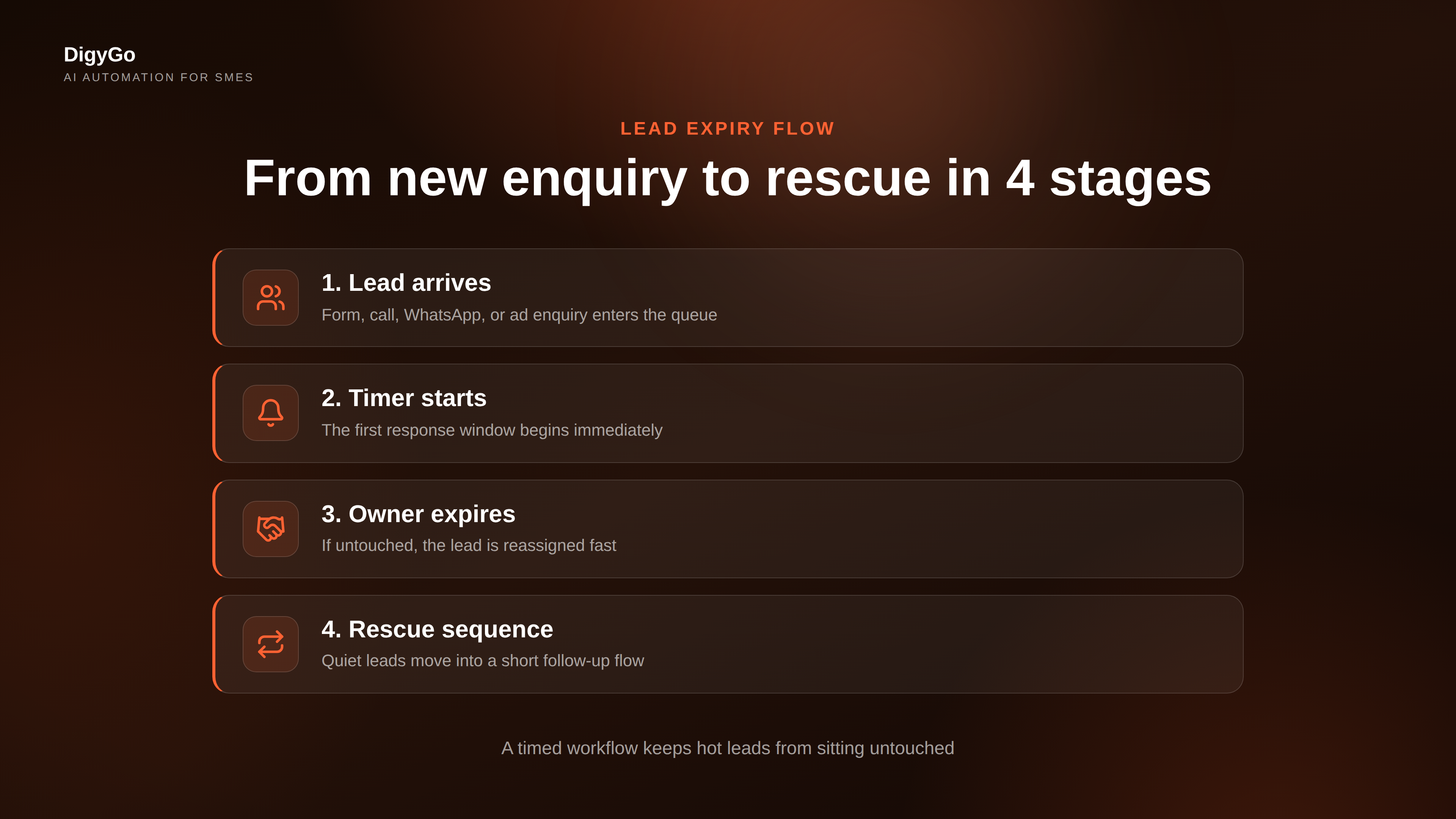
Start by defining the lead entry point. It may be a website form, a call, WhatsApp, or a direct enquiry from an ad. From there, automate the first three jobs: capture the lead, assign an owner, and start the timer.
Next, build the expiry logic around real behaviour. If the lead is new and unopened after a short window, notify the owner again. If the owner still has not acted, escalate to a manager or route the enquiry to a backup rep. If the lead has gone quiet, stop forcing the same message and switch to a short follow-up sequence that adds value.
Good expiry rules reduce guessing. The system should make it obvious which leads are fresh, which are aging, and which need rescue.
Common mistakes to avoid
The first mistake is setting the expiry window too long. If a hot lead can sit untouched for half a day, the rule is already too soft. The second mistake is creating alerts without ownership changes. A warning that nobody acts on is just noise.
The third mistake is making the process feel punitive. Expiry rules should help the team move faster, not punish them. Keep the language practical: respond, reassign, rescue, repeat. The final mistake is ignoring the after-hours gap. Many SMEs are available only during business hours, but many buyers are not. A rule that covers only office time leaves too many leads exposed.
What SMEs gain when lead expiry is automatic
When expiry rules are built into the process, response speed improves, lead ownership becomes clearer, and the sales team spends less time asking who was supposed to reply. That creates a cleaner pipeline and fewer lost opportunities hiding in plain sight.
For founders, the bigger win is confidence. You do not have to wonder whether a lead vanished because the market is weak or because the process was weak. The system tells you where the gap is, and the team can fix it.
FAQs
What is a lead expiry rule?
A lead expiry rule is a time-based workflow that marks an enquiry as overdue if nobody responds within a set window. It helps teams act before the lead cools down.
Do expiry rules replace sales reps?
No. They support reps by making sure leads are not forgotten. The system handles timing and escalation while the team handles the conversation.
What is the best expiry window for SMEs?
There is no single number for every business, but many SMEs benefit from a short first-response window, a same-day human follow-up target, and a rescue sequence by the next day.
Talk to DigyGo about setting up a lead expiry workflow that keeps hot enquiries from fading.