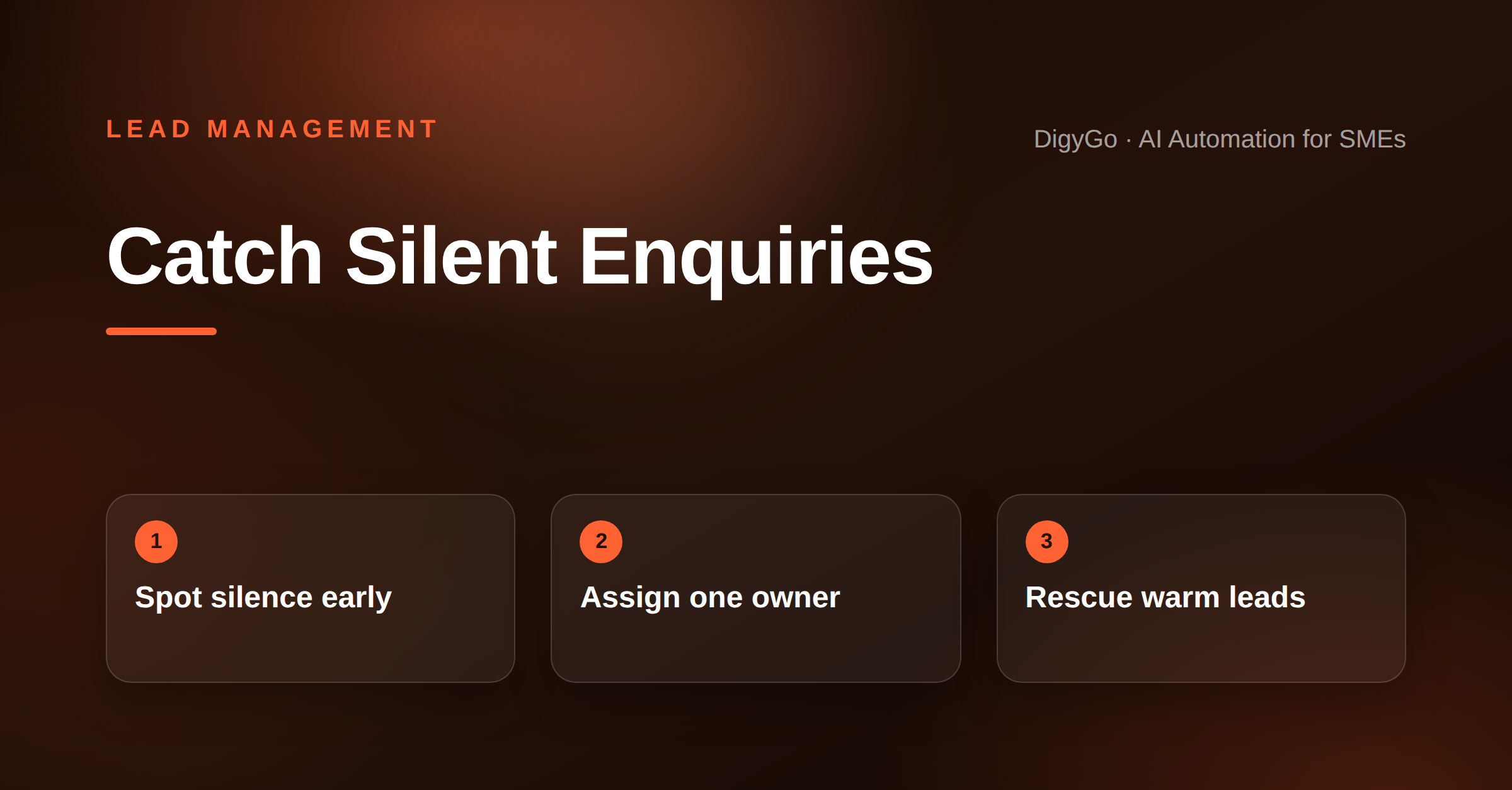
Most SMEs do not lose leads because the offer is weak. They lose them because no one notices when a lead goes quiet. A simple lead aging alert system brings those silent enquiries back into view before the chance is gone.
A practical guide for SMEs on using lead aging alerts to spot silent enquiries early, assign ownership faster, and rescue leads before they go cold.
Why silent leads are more expensive than new leads
When a lead has not been touched for a day or two, it is already telling you something. Maybe the buyer is comparing vendors. Maybe the request got buried. Maybe the prospect is still interested but needs a stronger next step. Lead aging alerts help your team spot those patterns early instead of waiting for a weekly cleanup.
The goal is not to chase every contact forever. The goal is to detect stalled intent, route it to the right owner, and send the right nudge while the conversation is still warm.
Set one aging rule for every lead source
If every channel has a different follow-up habit, the pipeline becomes hard to manage. Keep it simple. Define the age limit for each lead type and let the CRM or inbox flag anything that crosses the line.
- Fresh lead: Under 10 minutes since enquiry
- Warm lead: Same day, still awaiting reply
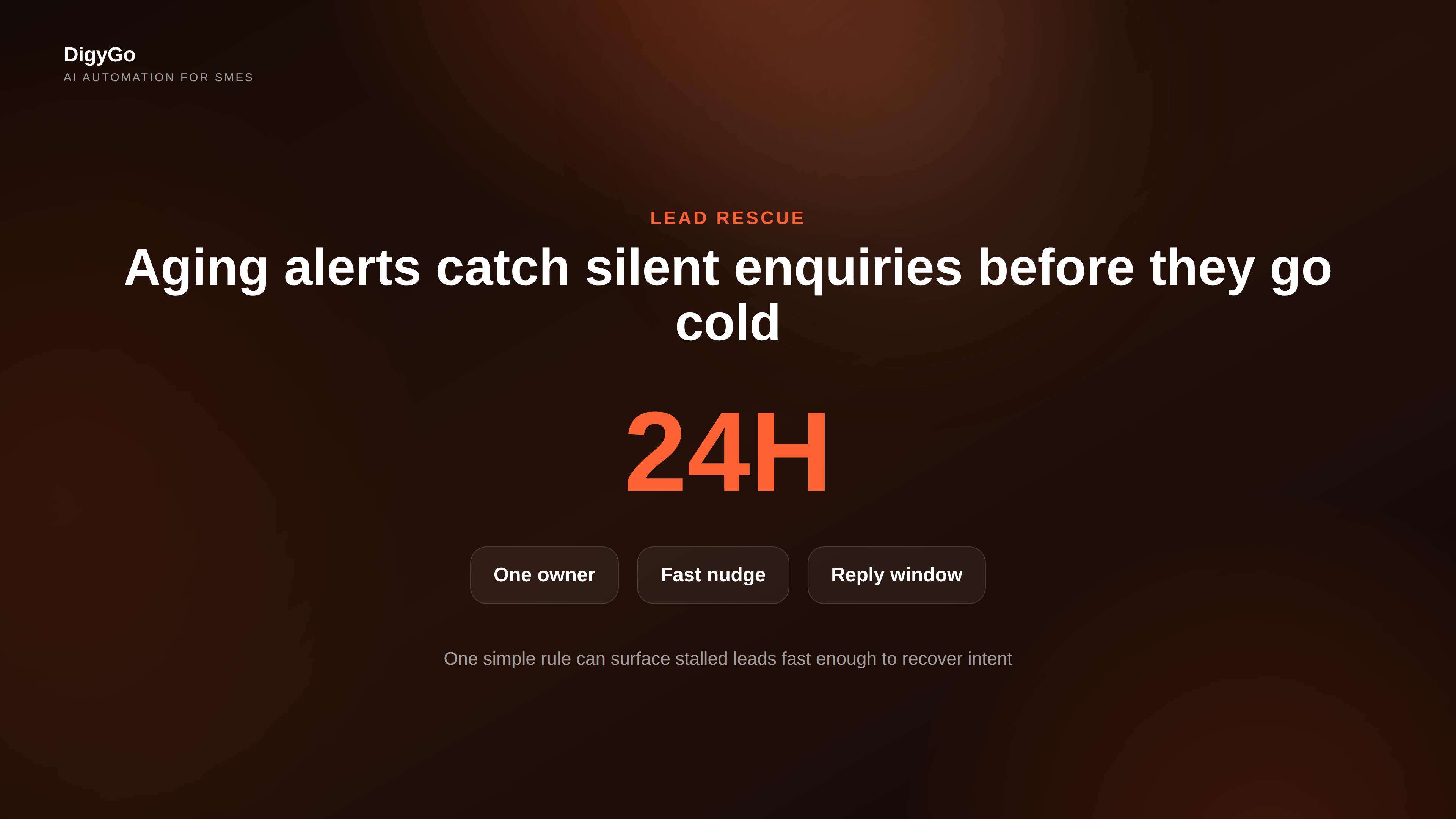
- Stale lead: No response after 24 hours
- Cold lead: No response after 72 hours
These buckets make ownership clear. Sales knows what to call. Marketing knows what to nurture. The operations team knows where follow-up is slipping.
What to do when a lead starts aging
The best rescue sequence is short and practical. First, alert the owner. Next, send a useful follow-up. Then decide whether the lead needs a call, a reminder, or a final nurture path.
- Trigger an alert when the lead crosses the age threshold.
- Assign a single owner so nobody assumes someone else replied.
- Send a short message that references the original enquiry.
- Offer one clear next step such as a callback, quote review, or booking link.
- If there is still no response, move the lead into a nurture sequence.
Manual follow-up versus aging alerts
Most teams say they are following up. In reality, they are remembering to follow up when time allows. That is where good leads disappear. Aging alerts replace memory with process.
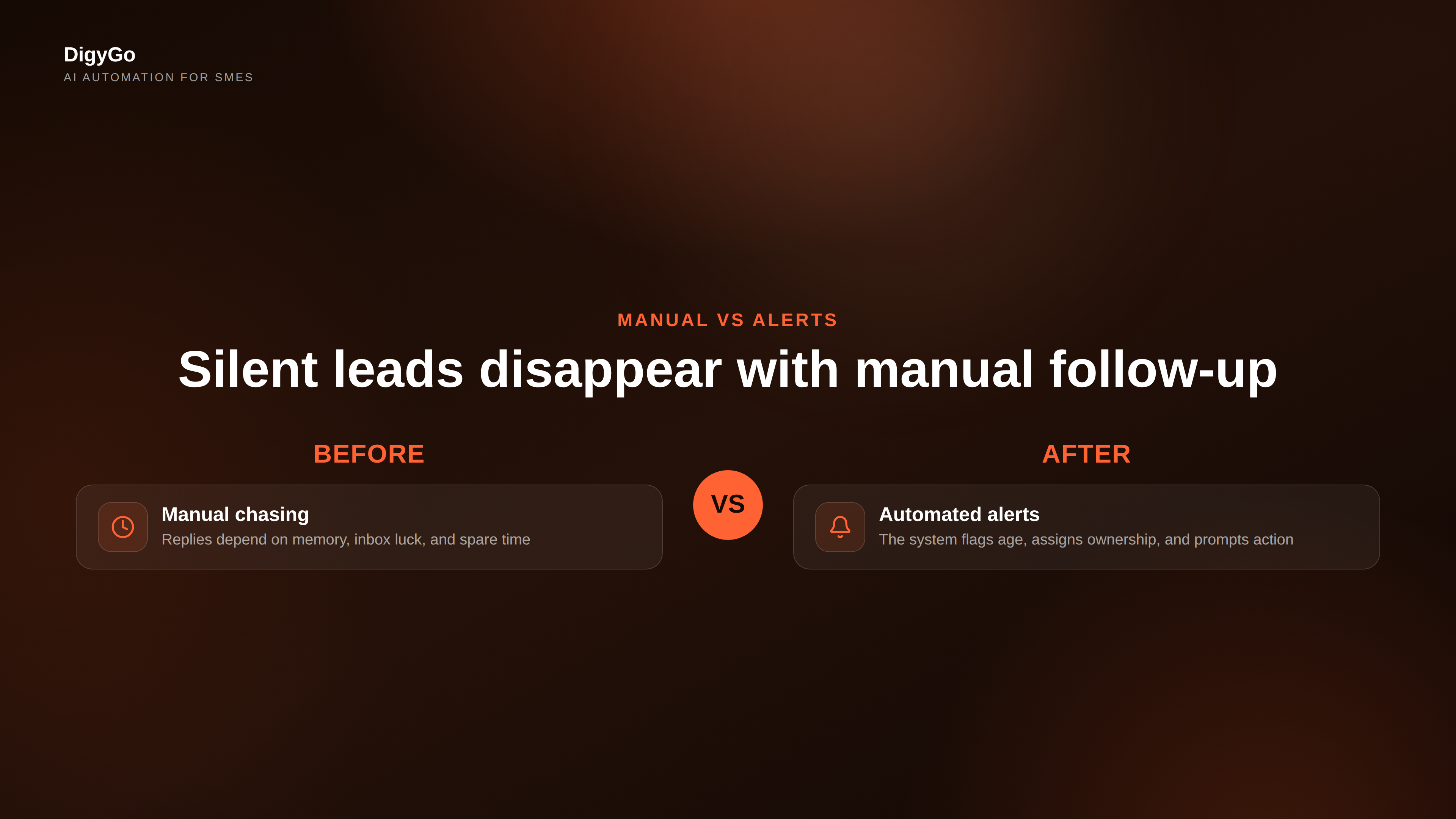
Manual follow-up
Leads sit in inboxes, reminders live in someone’s head, and the same enquiry gets touched late or twice by different people.
Automated aging alerts
The system flags the lead, assigns the owner, and nudges the team before the conversation cools down.
What to measure every week
Do not judge the system by how busy it feels. Judge it by how many silent leads get rescued and how many book a next step.
- Number of leads that crossed the aging limit
- Time taken to send the first rescue message
- Replies recovered from stale leads
- Bookings or quotes created after the alert
Once you can see those numbers, it becomes easier to improve the script, tighten ownership, and reduce leakage in the pipeline.
Make the rescue message specific
Aging alerts work best when the follow-up sounds human. Refer to the original enquiry, remove pressure, and make the next action easy.
Example: Hi, just checking in on your enquiry from yesterday. If you still need help, I can send a quick quote or a time to talk today.
That kind of message is simple, polite, and easy to answer. It gives the buyer a path forward without sounding pushy.
Put the system in place before the pipeline gets messy
Lead aging alerts are not only for large teams. They are useful the moment a business starts missing enquiries because follow-up is inconsistent. The earlier you add the rule, the less revenue leaks through the cracks.
For SMEs, the payoff is straightforward: fewer silent leads, faster response discipline, and a cleaner handoff from enquiry to conversation.
Talk to DigyGo about building a lead aging alert system for your SME