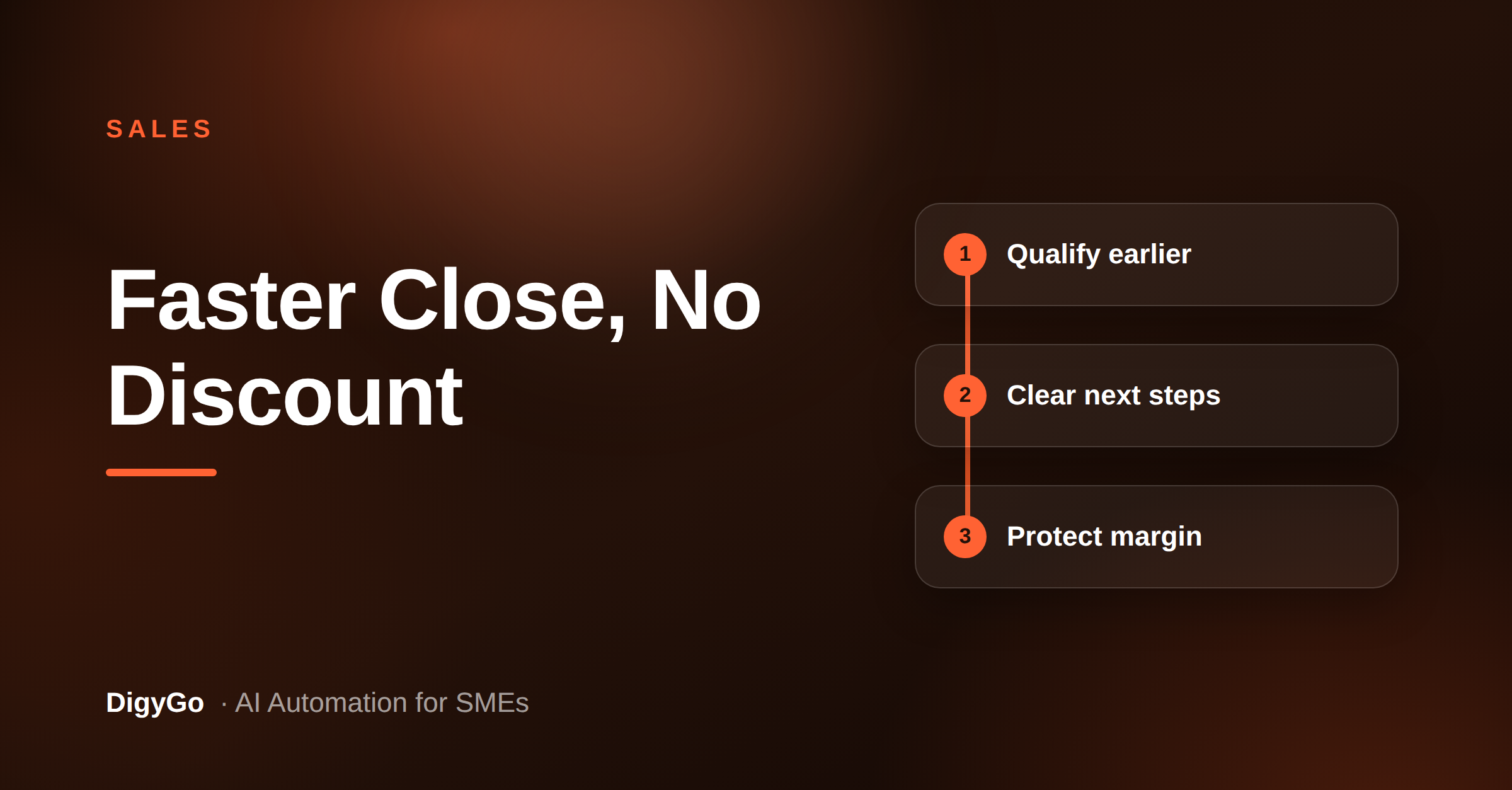
If your sales cycle keeps stretching, the fix is not always a bigger discount. In most SME sales teams, deals slow down because the buyer is unclear, the offer feels risky, or the next step is not obvious. A cleaner process shortens the cycle without giving away margin.
A practical sales playbook for SMEs on reducing friction, qualifying earlier, and shortening the path to a decision without sacrificing margin.
Why sales cycles get longer
Long sales cycles usually come from avoidable friction: too many back-and-forth calls, unclear pricing, mixed messages from different team members, and follow-up that happens only when the salesperson remembers. The buyer does not feel guided, so the deal stalls.
1. Qualify earlier so fewer bad-fit deals enter the pipeline
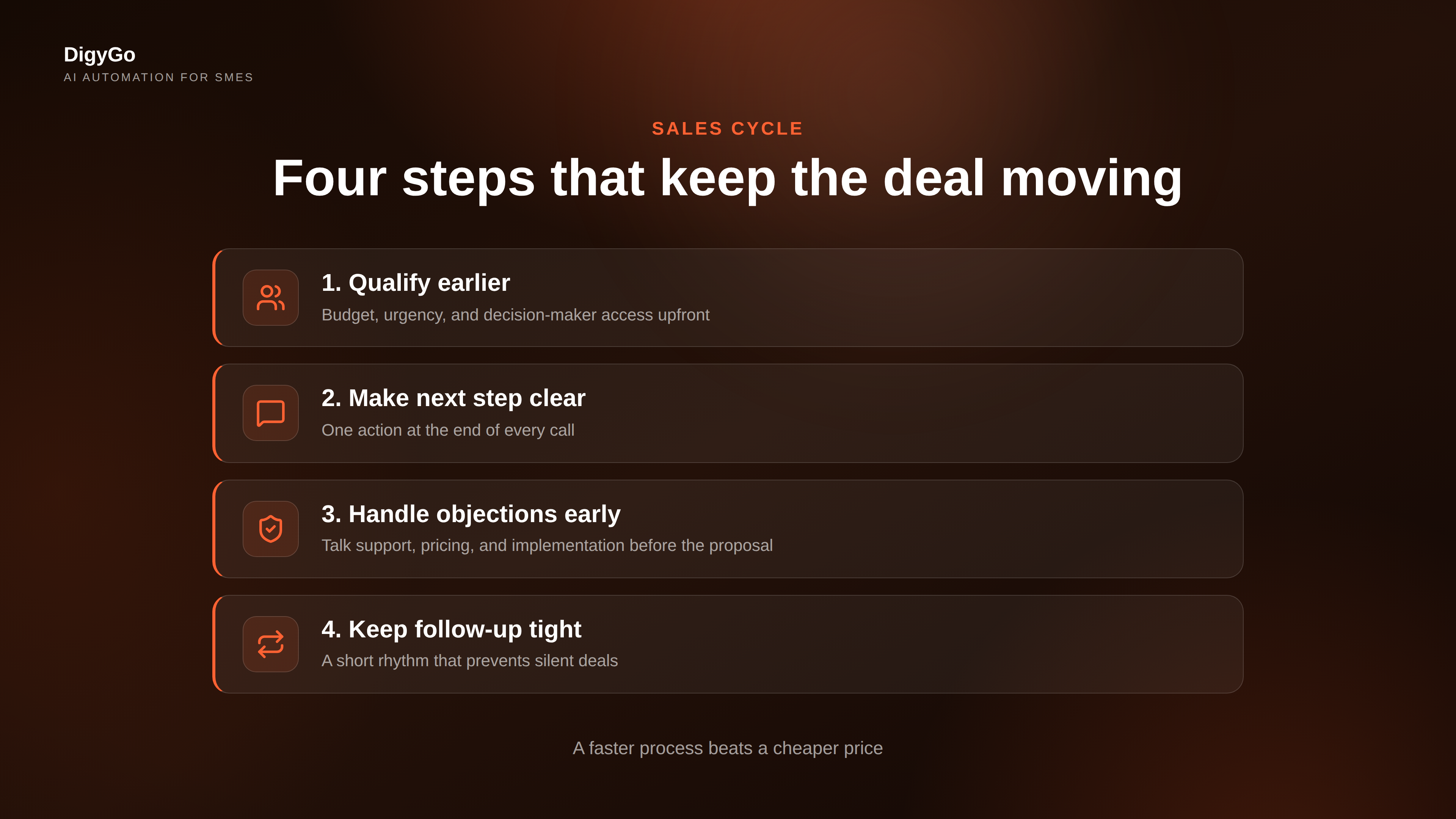
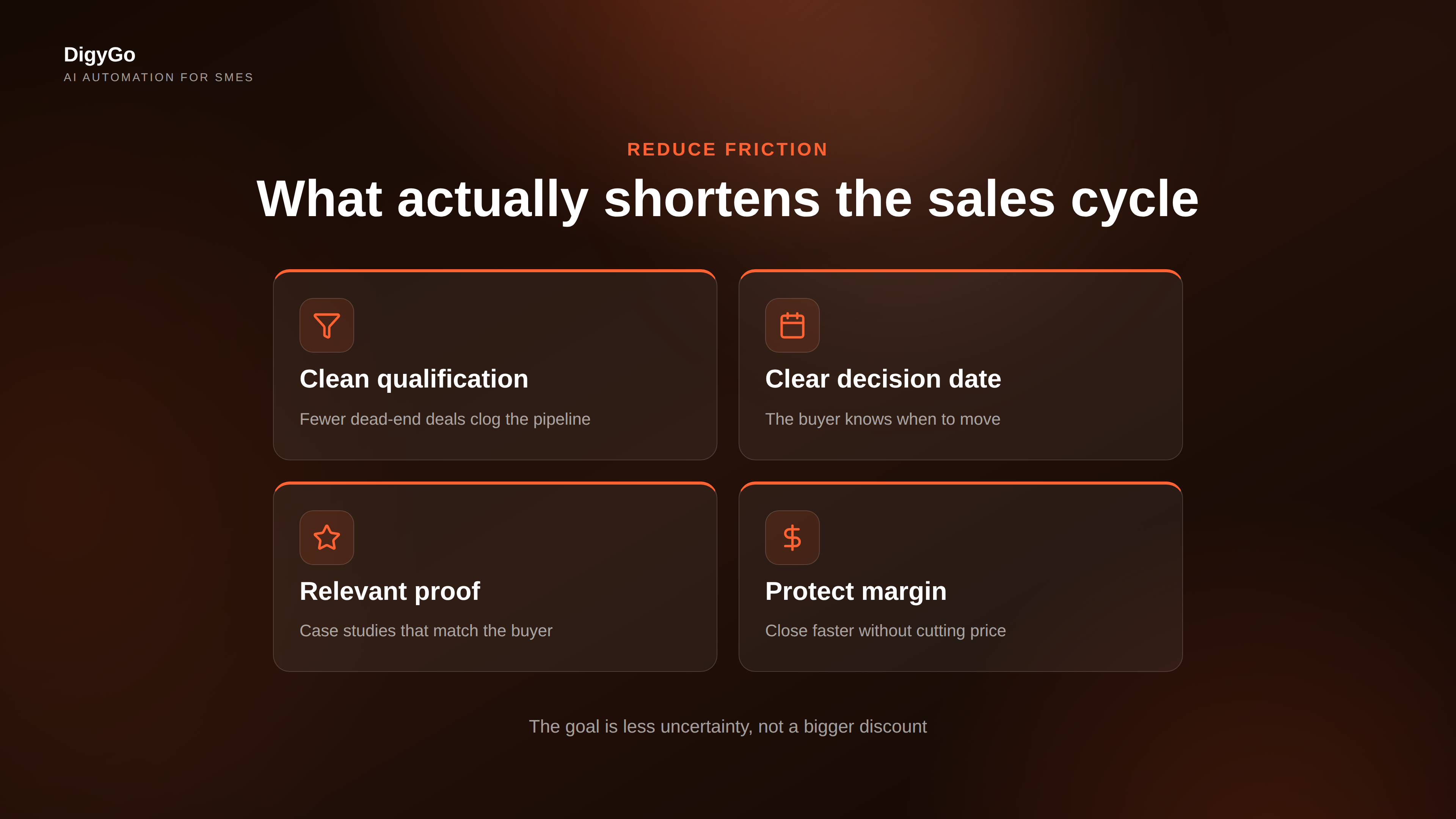
The fastest way to reduce sales cycle length is to stop chasing the wrong leads. Ask about budget, urgency, decision-maker access, and the real problem before you invest time in demos or proposals. Good qualification protects your team from months of dead-end conversations.
2. Make the next step obvious every time
Buyers move faster when the next step is simple. End every call with one clear action: a demo, a proposal review, a site visit, or a decision call. If the prospect has to think about what happens next, momentum drops.
- Confirm the decision date before the call ends.
- Send the summary immediately after the meeting.
- Use one CTA per stage, not three.
3. Remove objections before they become delays
Most objections are not surprises. They are early signals that need to be addressed in the right order. Talk through implementation, support, pricing structure, and expected outcomes before the proposal lands. That way, the proposal feels like a decision document, not the start of a new debate.
4. Use proof that matches the buyer's situation
Generic testimonials do little to speed up closing. Use proof that mirrors the buyer's industry, team size, or use case. A relevant case study reduces perceived risk, which is often more effective than a discount.
A simple 5-day follow-up rhythm
A short follow-up rhythm helps keep active deals moving without feeling pushy:
- Day 0: Send recap and action items.
- Day 1: Share one proof point.
- Day 3: Answer a likely objection.
- Day 5: Reconfirm the next decision step.
This structure keeps the conversation alive and reduces the chance that the buyer silently drifts away.
What SMEs should measure
Do not track only closed deals. Track the moments that shorten the cycle: first response time, qualification-to-proposal time, proposal-to-decision time, and the number of deals that move forward after the first follow-up. Those numbers tell you where the delay actually lives.
When you improve the process, you usually shorten the cycle faster than any discount can. That means better margin, cleaner forecasting, and less pressure on the team.
Need help tightening your sales process and closing faster without discounting? Contact DigyGo.