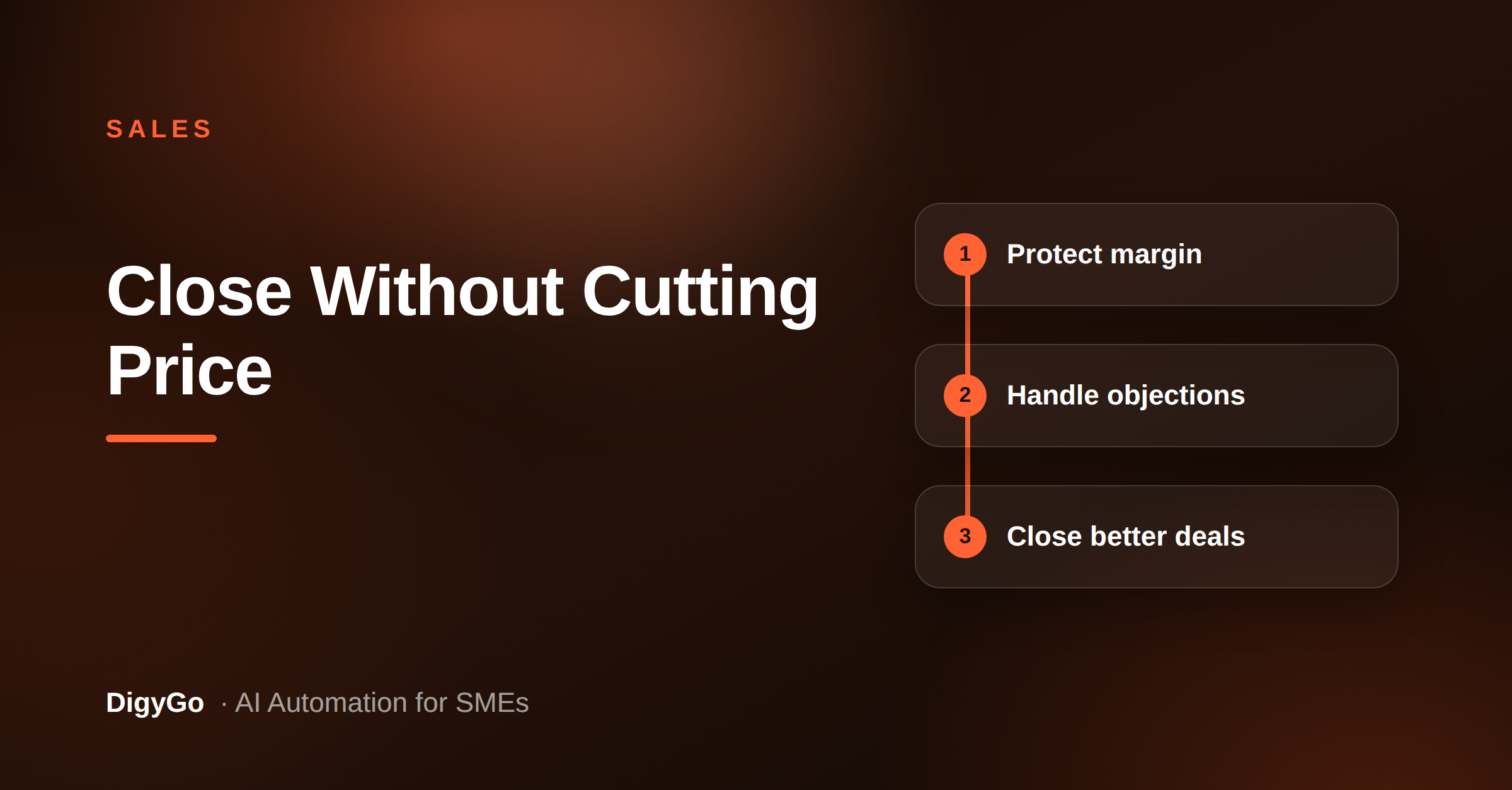
Price objections do not always mean your offer is too expensive. Most of the time, they mean the buyer is not yet clear on value, timing, risk, or fit. For SMEs, the fastest way to close more deals is not to discount earlier. It is to answer the real objection before it stalls the conversation.
A practical sales guide for SME founders on handling price objections with better questions, clearer value, and stronger qualification before any discount is offered.
Why price objections show up
A buyer usually says “too expensive” when one of four things is happening. They do not understand the outcome, they are comparing you to a cheaper alternative, they are unsure about implementation, or they simply do not see enough urgency. If you treat every objection as a pricing problem, you train the market to negotiate instead of buy.
What to say instead of discounting
The goal is to keep the conversation moving without sounding defensive. Ask a simple follow-up question that reveals the real blocker. Then respond to that blocker with a specific proof point, a scope clarification, or a smaller starting package if the fit is real but the timing is not.
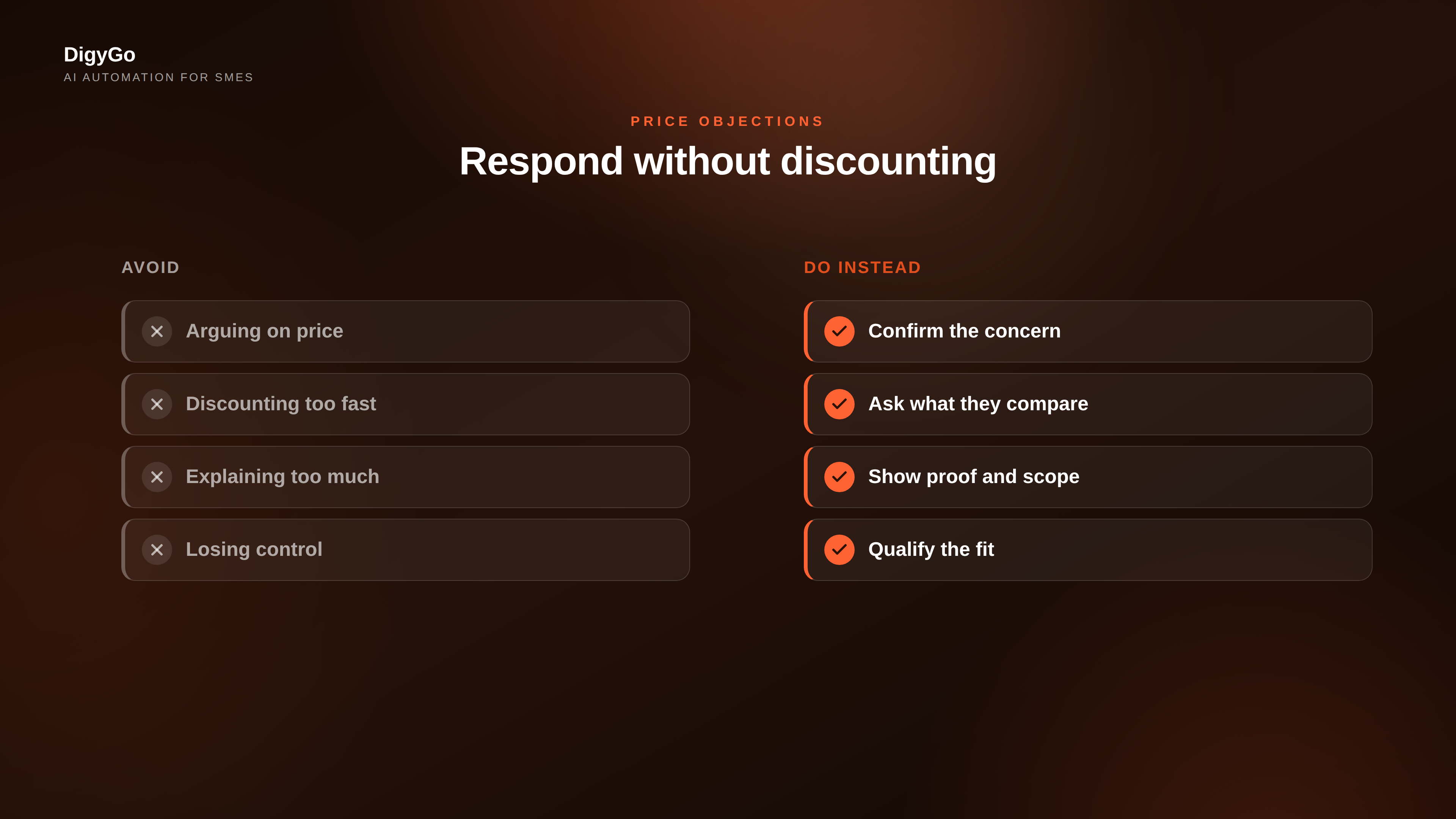
Use this sequence in sales calls
- Confirm the concern instead of arguing with it.
- Ask what they are comparing you against.
- Reframe the decision around outcome and risk.
- Show proof, process, or a lower-friction entry point.
The four objections behind “too expensive”
When a prospect pushes back on price, use the objection to qualify the deal more accurately. If their budget is genuinely too small for the outcome they want, the right answer may be to disqualify politely. If the issue is trust or clarity, the right answer is to make the value obvious.
| Objection type | What it really means | Best response |
|---|---|---|
| Budget | The price is above current comfort | Clarify scope or offer a smaller entry package |
| Value | The outcome is not vivid enough | Show proof, case studies, and expected result |
| Risk | They fear a bad implementation | Explain process, timeline, and support |
| Fit | They are not the right buyer | Qualify early and move on if needed |
How to reduce discount pressure before it starts
The best sales calls do not begin with price. They begin with a clear offer, visible proof, and a confident explanation of who the offer is for. If prospects understand the result and trust the process, they ask better questions and negotiate less.
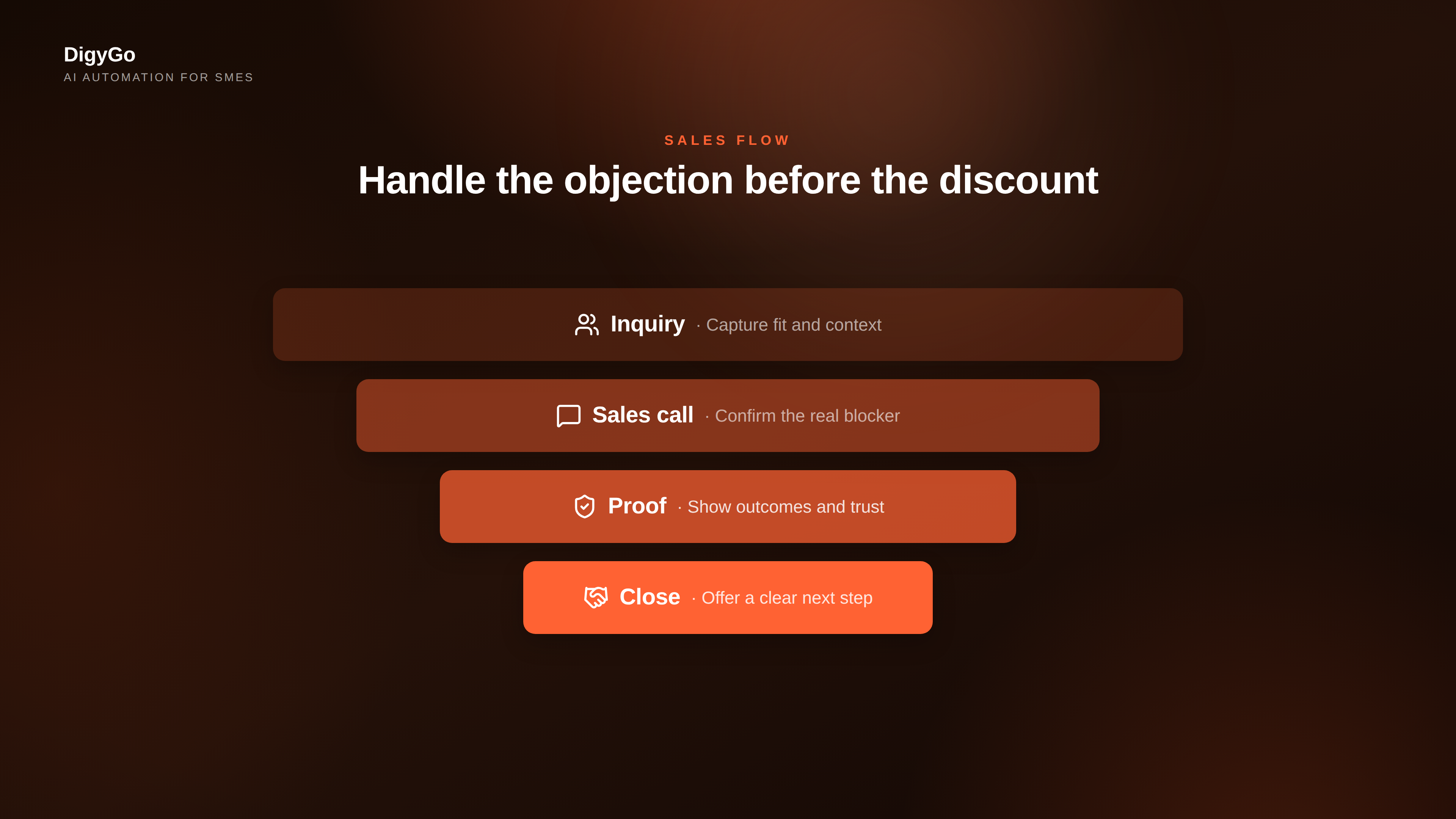
A stronger pre-sale setup
- State the outcome in plain language.
- Show proof before you quote.
- Qualify budget and timing early.
- Offer one clear next step.
A simple rule for SME founders
If a buyer only wants the cheapest option, discounting may win the deal and lose the margin. If a buyer wants the right outcome, your job is to make the value obvious enough that price becomes one part of the decision, not the entire decision.
Talk to DigyGo about building a sales process that closes better-fit deals