A growth system does not fail all at once. It usually stalls quietly: leads slow down, delivery slips, retention gets less attention, and nobody spots the leak soon enough. A short weekly review rhythm fixes that by forcing the team to look at the same numbers, the same bottlenecks, and the same next actions every week.
A practical guide for SME founders on using a short weekly review rhythm to catch bottlenecks early, assign ownership, and keep growth systems compounding.
What a growth review rhythm actually does
A good growth review is not a status meeting. It is a repeatable operating habit that answers three questions: what moved, what stalled, and what needs an owner before next week. For SMEs, that is the difference between random effort and compounding improvement.
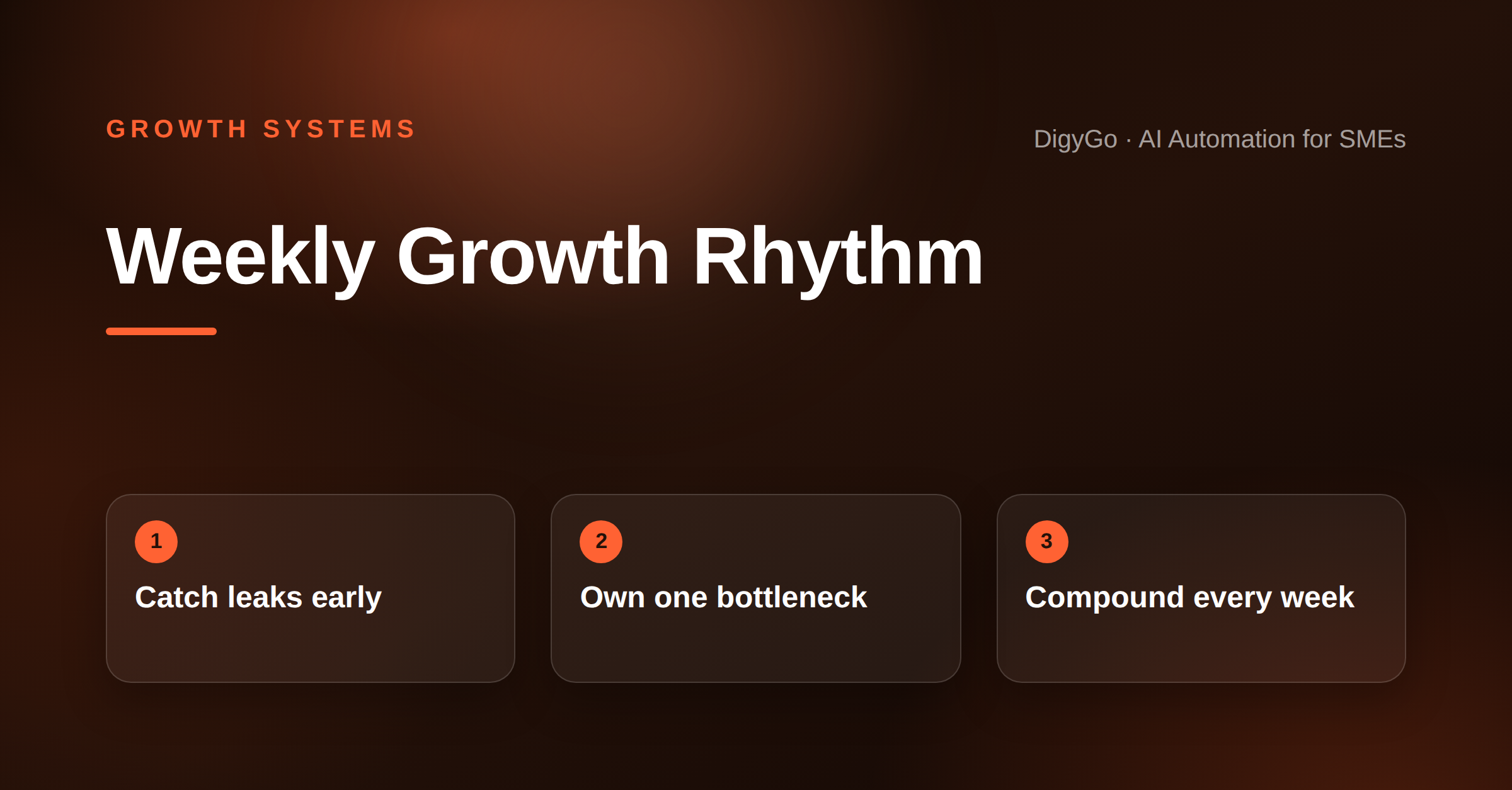
- Track the same core numbers every week.
- Assign one owner per bottleneck.
- Close the loop before the next review.
Weekly growth reviews catch leaks early
Most growth leaks are small at first. One missed follow-up pattern, one delayed onboarding step, one repeat support issue, or one weak conversion point can look harmless in isolation. When those signals are reviewed weekly, they stop hiding inside monthly totals.
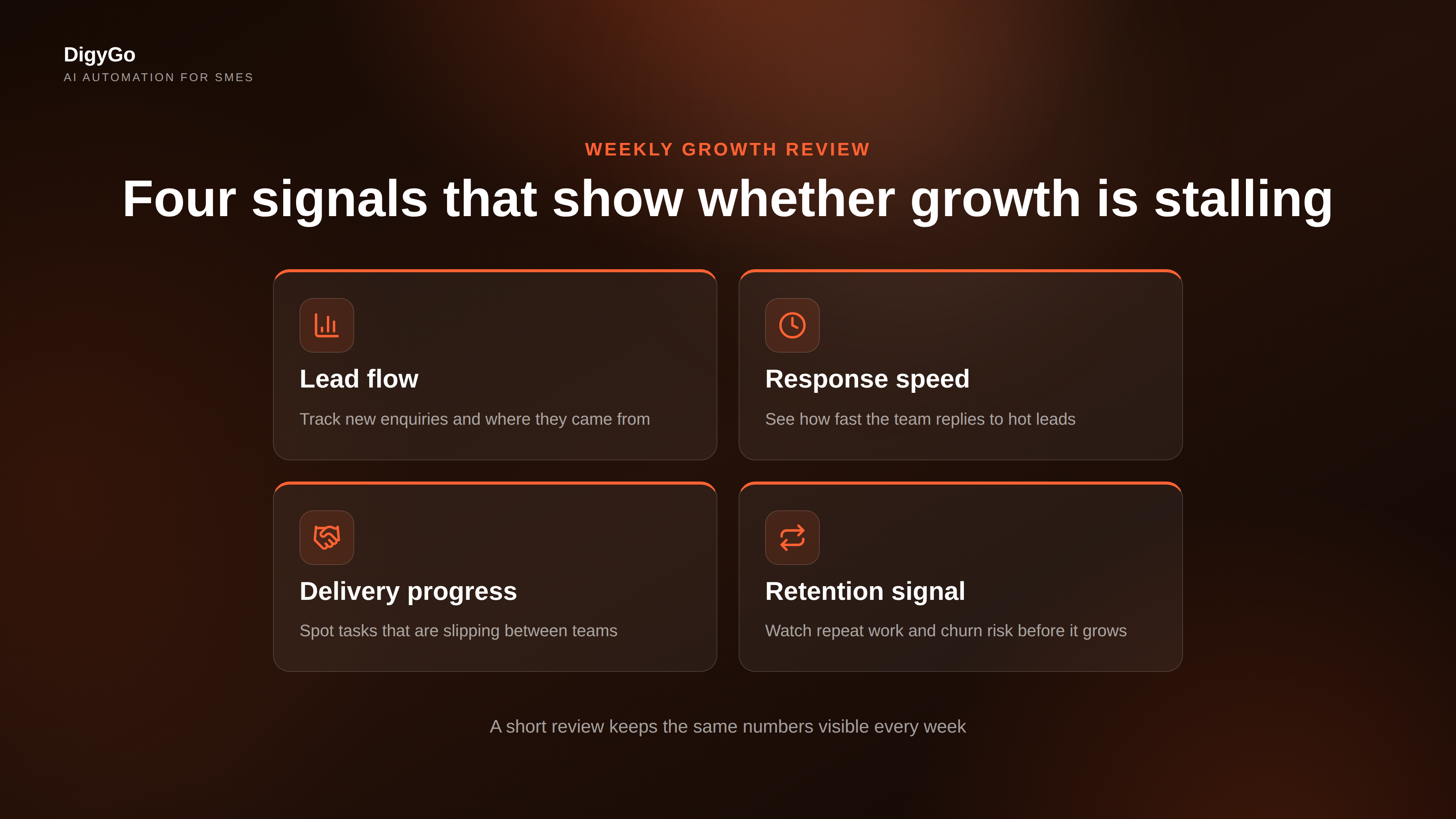
That is why the best review rhythm is short and specific. Keep it focused on the handful of metrics that show whether your system is healthy: new enquiries, response speed, conversion rate, delivery progress, repeat business, and open blockers.
Use the same lens every time
When your team changes the agenda every week, the review turns into a conversation. When the agenda stays the same, it becomes a system. Consistency is what lets you compare this week against last week without guessing.
How to run the review without wasting time
Keep the meeting simple. Open with numbers, then move to exceptions, then finish with actions. If a topic needs a deeper discussion, park it and create a separate follow-up. The review itself should stay lightweight so people keep using it.

- Review the scorecard. Compare this week to last week and look for movement, not opinions.
- Spot the bottleneck. Pick the one issue that will unlock the most progress if fixed first.
- Assign the owner. Give one person one action, with a clear deadline.
- Check next week. Confirm whether the action was completed and whether the number moved.
Make growth compound instead of resetting every Monday
The real win is not the meeting itself. It is the operating memory it creates. When the same issues get reviewed, owned, and closed every week, your team learns how the business actually works. That is how growth systems become predictable.
For SME founders, this is especially useful because it protects attention. You do not need a bigger team to grow more consistently. You need a cleaner rhythm that exposes problems early and turns follow-through into habit.
FAQ
How long should a weekly growth review take?
Thirty minutes is usually enough if you keep the agenda fixed and limit the discussion to core metrics and blockers.
Who should attend?
Only the people who can update the numbers or own the actions. Smaller is better, as long as decisions can be made quickly.
What should we review first?
Start with the metrics that directly show whether the system is compounding: lead flow, response speed, delivery progress, retention signals, and open blockers.
If you want DigyGo to help design a review rhythm for your SME, start the conversation here.