Most SMEs do not need more ideas. They need a tighter weekly operations review that turns small fixes into compounding gains across leads, delivery, and retention.
A practical guide for SMEs on using a weekly operations review to spot recurring leaks, assign ownership, and compound small fixes into steadier growth.
Why a weekly ops review works
When growth is busy, teams often fix the loudest problem instead of the one that keeps repeating. A weekly review creates a simple habit: spot the leak, assign the owner, and close the loop before the same issue costs you again.
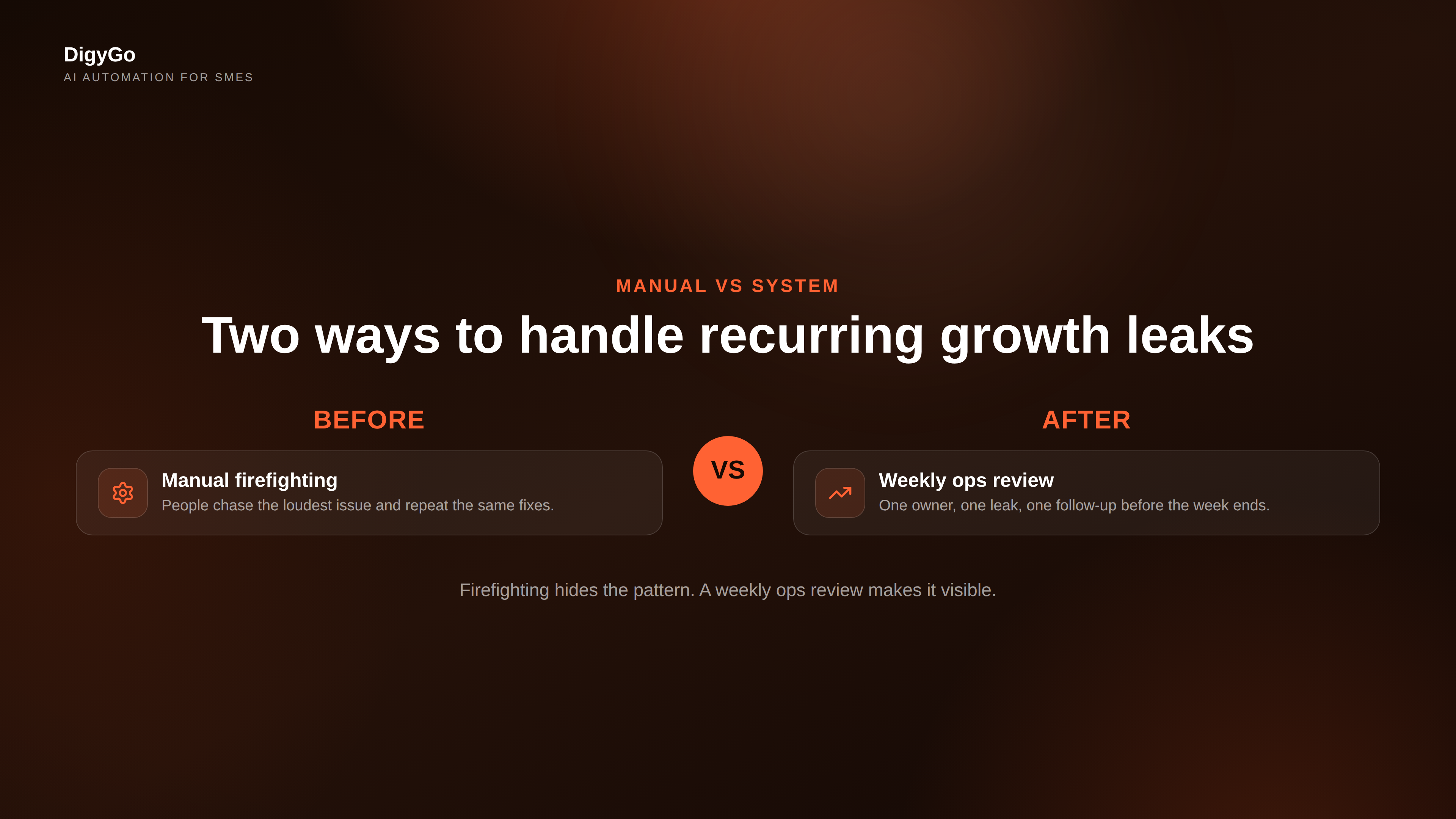
The point is not more meetings. The point is cleaner decisions. If you look at the same three areas every week, you start seeing patterns in lead quality, handoff delays, missed follow-ups, and retention risks.
- One review, one rhythm: same day, same agenda, same owner.
- Small fixes compound: a 10-minute win repeated weekly becomes a system.
- Less firefighting: the team reacts earlier, not later.
What to review every week
Keep the review short and specific. You want signals, not a status dump.
1. Lead flow
Look at where enquiries came from, which source produced the best-fit leads, and where response times slipped. If you are generating activity but not quality, the issue is usually upstream in targeting or messaging.
2. Delivery and handoffs
Check whether work moved cleanly between sales, operations, and delivery. Most compounding problems start with one missed handoff that nobody tracked.
3. Retention and repeat work
Review renewals, repeat purchases, and customer complaints. Retention is often the cheapest growth lever, but only if someone owns the follow-through.
How to build the rhythm
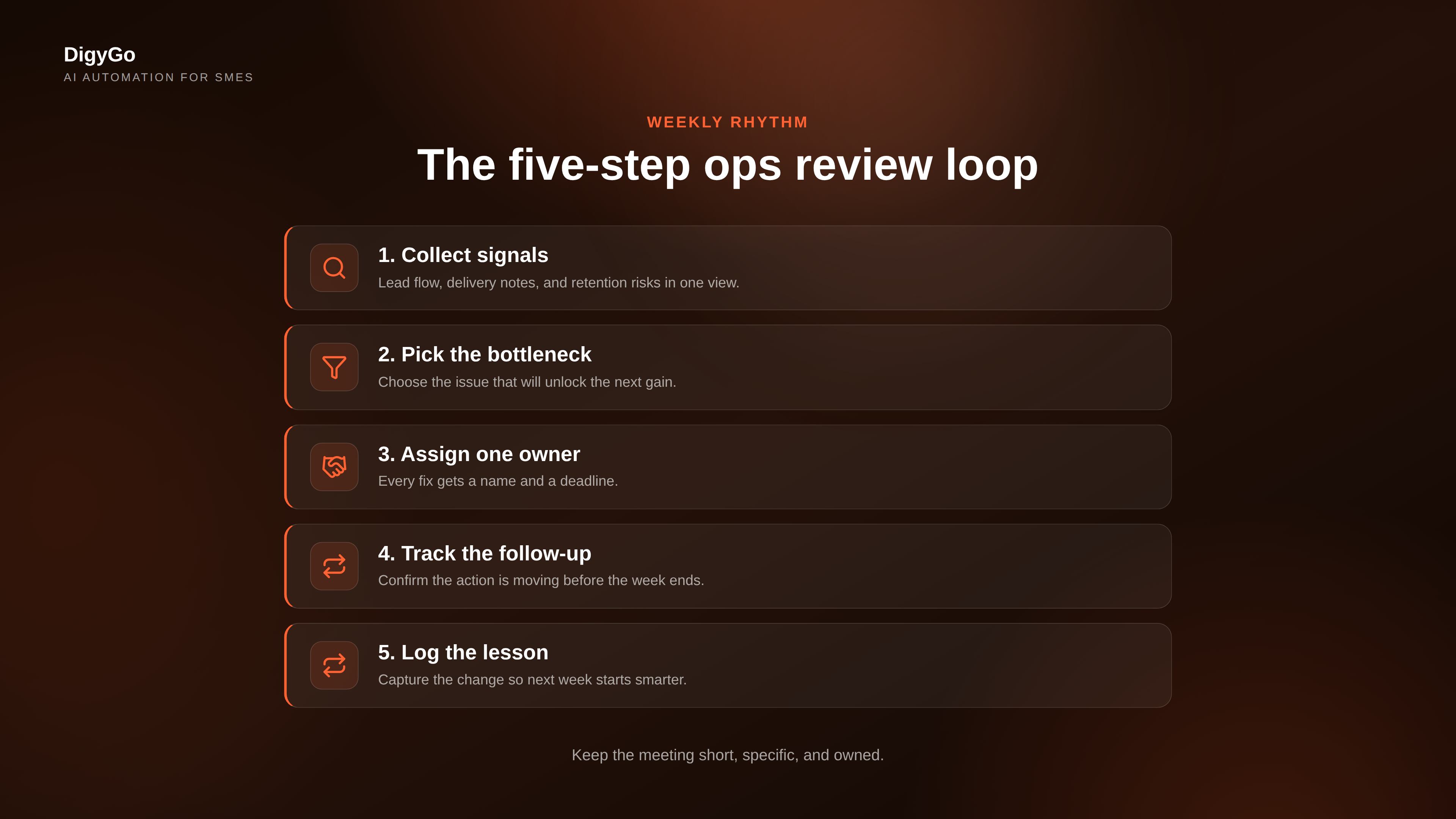
Use the same five-step loop every week so the habit becomes automatic.
- Collect the signals: pull lead, delivery, and retention notes into one place.
- Pick the bottleneck: choose the issue that will unlock the next gain.
- Assign one owner: every action needs a name and a deadline.
- Track the follow-up: confirm the task is moving before the week ends.
- Log the lesson: note what changed so the system improves next week.
A simple scorecard works better than a long dashboard. If you cannot explain the problem in one line, the review is already too heavy.
Practical rule: if a fix cannot be owned, measured, and checked next week, it is not ready for the ops review.
Common mistakes to avoid
The biggest mistake is using the review as a reporting meeting. Reporting tells you what happened. A growth system review decides what changes next.
- Do not review everything.
- Do not leave actions without owners.
- Do not wait for a monthly problem to become a quarterly one.
- Do not let the same issue stay open for two meetings in a row.
When the review is tight, teams move faster with less stress. The process becomes easier to trust because everyone knows what gets checked and what gets fixed.
FAQ
How long should a weekly ops review take?
For most SMEs, 20 to 30 minutes is enough if the agenda is disciplined and the owner list is clear.
Who should attend?
Only the people who can see the problem, own the fix, or unblock the next step. Keep the room small.
What should we measure?
Track the few numbers that show whether the business is moving: lead quality, response time, handoff speed, repeat business, and open blockers.
Talk to DigyGo about building a growth rhythm that compounds.