Most SMEs invest heavily in lead generation and sales conversion but treat the period after delivery as a passive wait for the next enquiry. Real growth happens between the first delivery and the repeat order — and that gap needs its own system. Here is how to build a customer success system that protects retention, drives referrals, and turns one-time clients into long-term revenue.
A practical Growth Systems guide for SME founders on building a customer success system that protects retention, drives referrals, and turns one-time clients into long-term revenue without adding headcount or complex software.
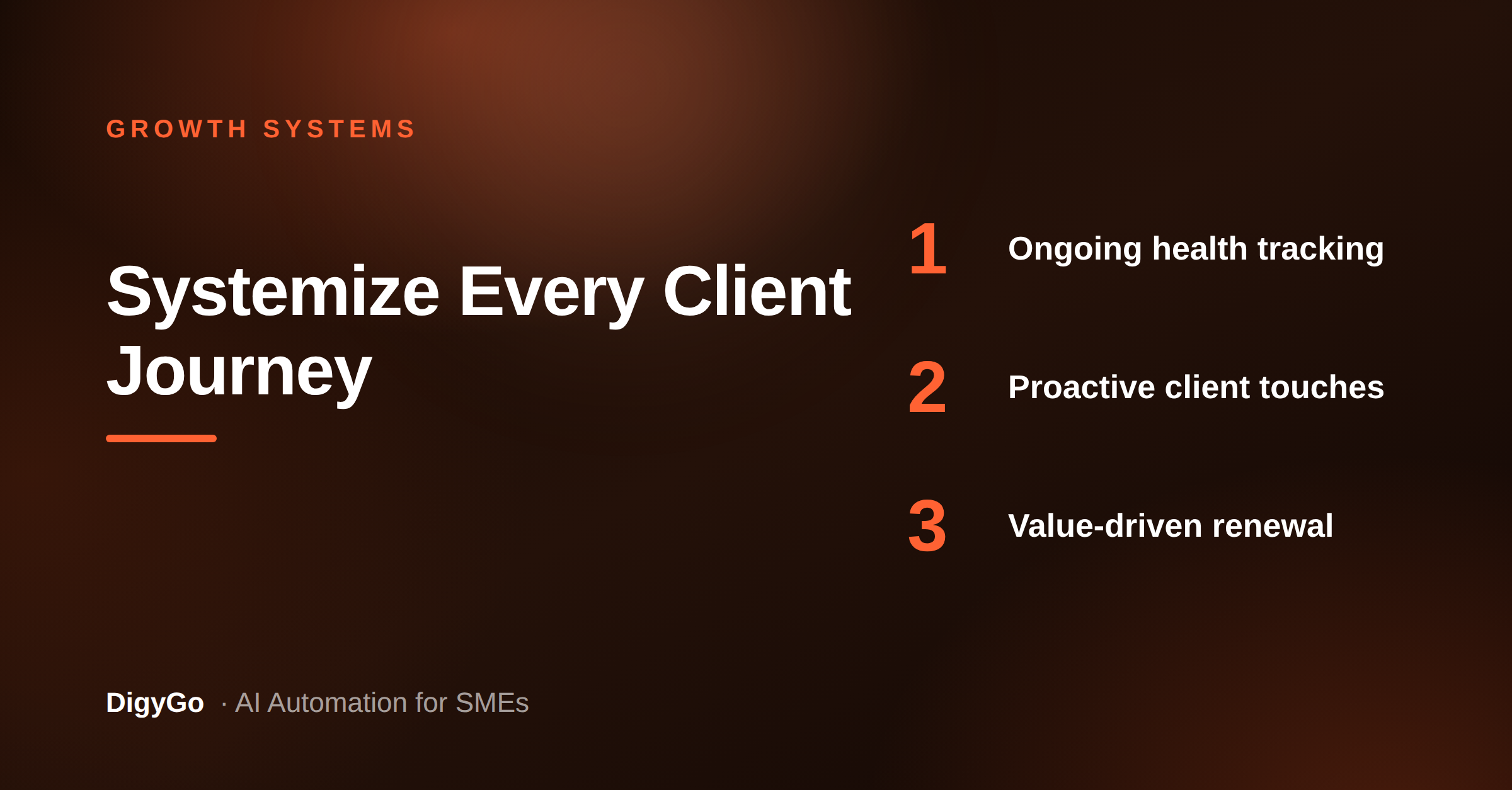
- A customer success system fills the gap between onboarding and renewal with proactive health checks, milestone tracking, and scheduled value reviews
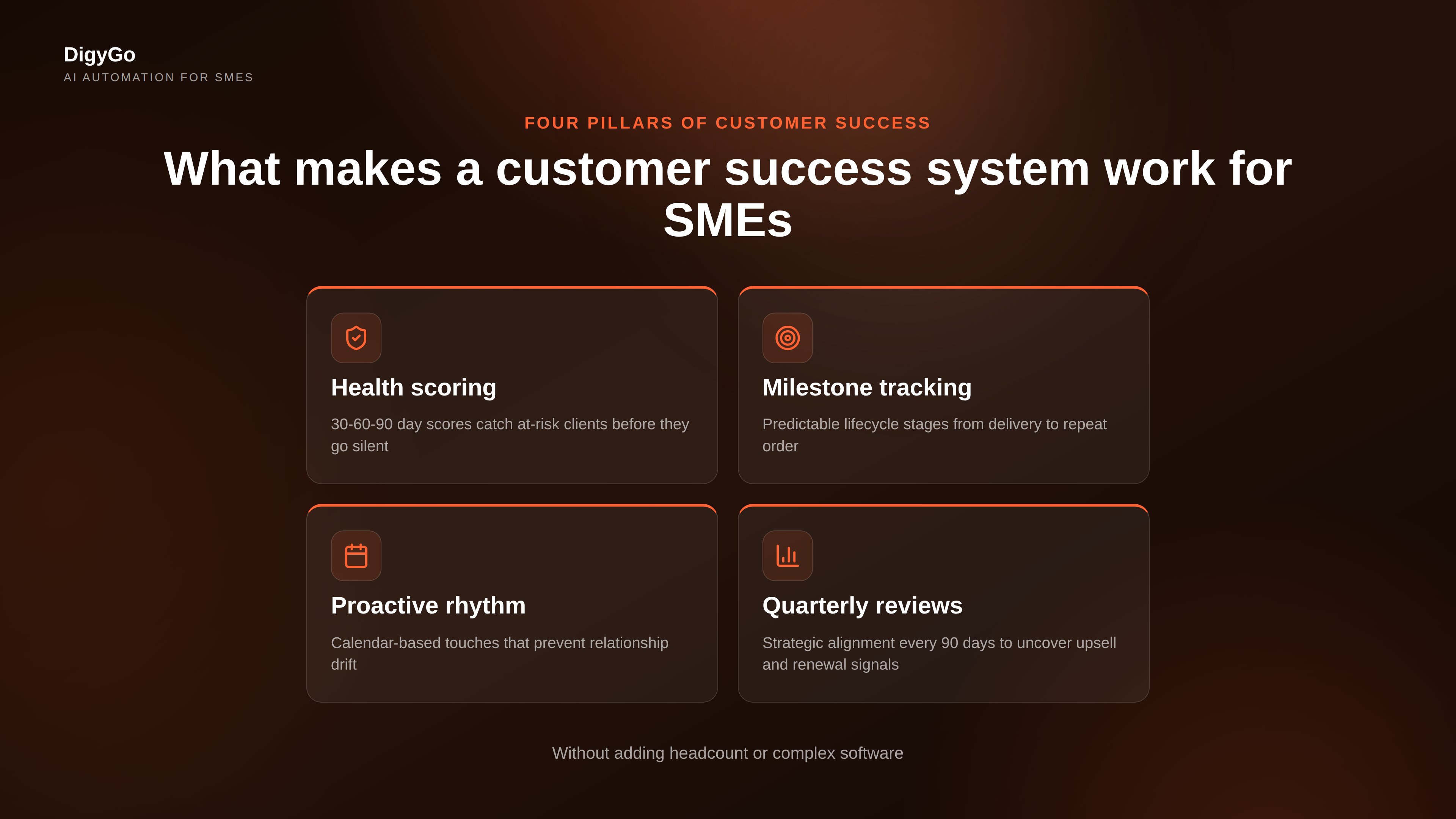
- Four core components — health scoring, milestone tracking, proactive communication rhythm, and quarterly success reviews — turn client relationships from reactive to repeatable
- Even a simple spreadsheet-based system with a weekly 15-minute review catches most at-risk clients before they churn
Why Customer Success Matters More for SMEs Than for Enterprises
Enterprise companies dedicate entire departments to customer success. SMEs do not have that luxury. But they also cannot afford to lose clients simply because nobody checked in between delivery and the next billing cycle.
When an SME loses a client after the first job, the real cost is not just the lost revenue. It is the marketing spend wasted to acquire that client, the time invested in onboarding, and the compounding revenue from repeat orders and referrals that will never arrive. A customer success system turns each client into a predictable revenue stream rather than a one-off transaction.
The goal is not to add overhead. It is to build a lightweight, repeatable rhythm that fits into existing weekly operations without requiring a dedicated team.
The Four Components of an SME Customer Success System
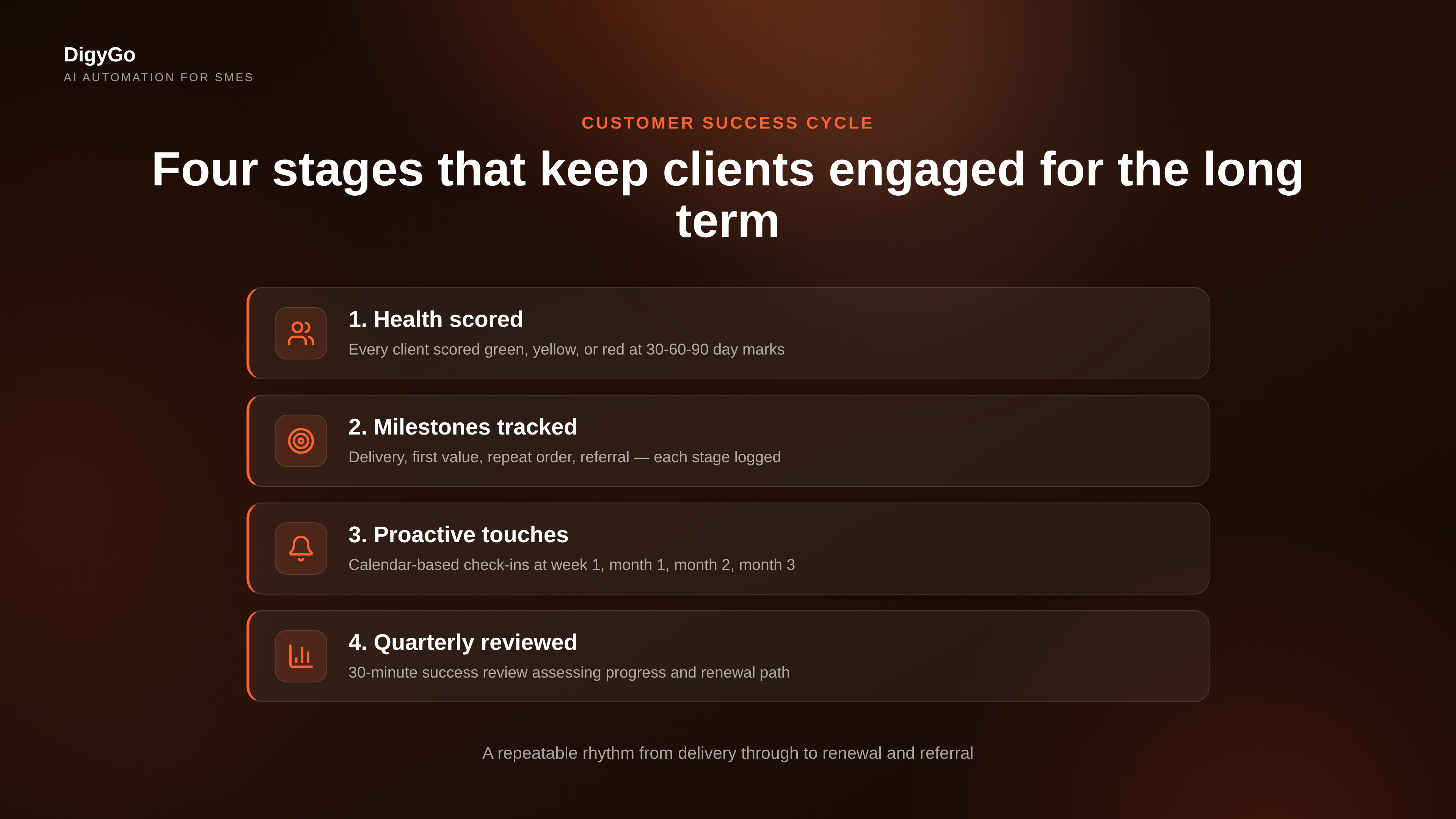
1. Health Scoring at 30-60-90 Days
Every new client should be scored on three dimensions at the 30-day, 60-day, and 90-day marks after delivery:
- Engagement: Are they using the service or product as intended? Are they responsive to follow-up?
- Value realization: Have they acknowledged a specific outcome or benefit from the work?
- Satisfaction signal: Any complaints, delays, or uncommunicated dissatisfaction?
A simple green/yellow/red score at each checkpoint surfaces at-risk clients before they go silent. A yellow score triggers a proactive call. A red score escalates to the founder or project manager within 24 hours.
2. Milestone Tracking Per Client Lifecycle
Each client passes through predictable milestones: delivery complete, first value acknowledged, first repeat order, referral issued. Tracking these milestones for every client reveals two things: which stage most clients drop off, and which clients are on track to become long-term revenue.
When a client hits the "first value acknowledged" milestone, it is the signal to schedule the first check-in call. When they reach "repeat order," it is time to ask for a referral. Mapping these milestones removes the guesswork from follow-up timing.
3. Proactive Communication Rhythm
Instead of waiting for the client to call with a problem, set a calendar-based rhythm:
- Week 1 post-delivery: Check-in to confirm satisfaction and address any immediate concerns
- Month 1: Outcome review — what has the client achieved with the work delivered?
- Month 2: Value-added touch — share a relevant insight, industry update, or tip tied to their business
- Month 3: Success review — assess the relationship, discuss upcoming needs, and set the stage for renewal
Each touchpoint has a purpose and stops after the goal is met. This prevents both silence and over-communication.
4. Quarterly Success Reviews
Every three months, run a 30-minute success review for each active client. The agenda is fixed:
- What the client has achieved since the last review
- Any unresolved concerns or friction points
- Upcoming needs or opportunities to serve further
- Renewal or repeat engagement path
These reviews serve two purposes. They protect the relationship by showing proactive attention. And they surface upsell or renewal signals that would otherwise stay buried in day-to-day work. Founders who run quarterly reviews report significantly higher retention rates because the relationship never drifts into silence.
Building It Without Adding Headcount
The most common objection is time. Here is how to fit a customer success system into existing operations:
- Use a shared spreadsheet or simple CRM list with columns for each client, their health score, last touch date, and next action
- Dedicate 15 minutes of the weekly growth review to scanning client health and flagging at-risk accounts
- Automate the communication rhythm with simple calendar reminders or a lightweight task system
- Train one team member to own the success rhythm — even if it is only 2-3 hours per week
Over time, the system pays for itself. A single retained client who would have churned covers many hours of system maintenance. A single referral from a happy client brings in revenue that took no acquisition spend to generate.
Measuring Whether Your Customer Success System Is Working
Track three metrics to know if the system is delivering:
- Repeat order rate: What share of first-time clients place a second order within six months?
- Referral rate: How many clients actively refer new business in a quarter?
- Silent churn rate: How many clients go quiet and never re-engage without any expressed dissatisfaction?
If repeat order rate is below 30% and silent churn is above 20%, the success system is either not running or not reaching the right clients. Tighten the health scoring triggers and increase the proactive touch frequency for the highest-value accounts.
FAQ
How is customer success different from customer support?
Support is reactive — the client has a problem and reaches out. Success is proactive — you check in before there is a problem, track whether the client is getting value, and guide the relationship toward renewal and referral. Both matter, but success prevents many support tickets from ever arising.
Do SMEs really need a customer success system with fewer than 50 clients?
Yes. The system matters more when the client count is small because losing even two or three clients in a quarter has an outsized impact on revenue. A lightweight system takes a few hours per month and protects a significant share of income.
How do I know which clients need proactive attention?
Focus on three groups: new clients in their first 90 days (highest churn risk), high-value clients above a revenue threshold, and any client whose health score turns yellow or red. Everyone else can follow the standard quarterly rhythm.
Can a customer success system work without a CRM?
Absolutely. A spreadsheet with client names, health scores, last touch dates, and next actions is enough for most SMEs. The system is the rhythm and the checkpoints, not the software. A CRM makes it easier to scale but a spreadsheet works fine for the first year.
How often should health scores be updated?
Update every 30 days for the first 90 days of a new client relationship, then switch to quarterly for established clients. If a client turns yellow, check weekly until they return to green or the situation escalates.
Set up a customer success system for your SME →