Every sales call uncovers the same objections: "We have tried this before," "It is too expensive for us," "We are not ready yet," "We need to think about it." Most SMEs treat these as closing problems — something to handle once a lead is already on the phone. But what if every objection your sales team hears is actually a content brief for your next demand-generation piece?
A practical marketing guide for SMEs on turning every repeated sales objection into a blog post, proof block, FAQ entry, or social thread that pre-answers buyer doubts and shortens the path to a conversation.
Why Objections Belong in Marketing, Not Just Sales
When a prospect says "We are not ready," that is not a rejection. It is a signal that your marketing has not yet made the case for now being the right time to act. When a prospect says "It is too expensive," your messaging has not clarified the return they are paying for. And when they say "We tried something similar and it did not work," the previous experience was not reframed into your different approach.
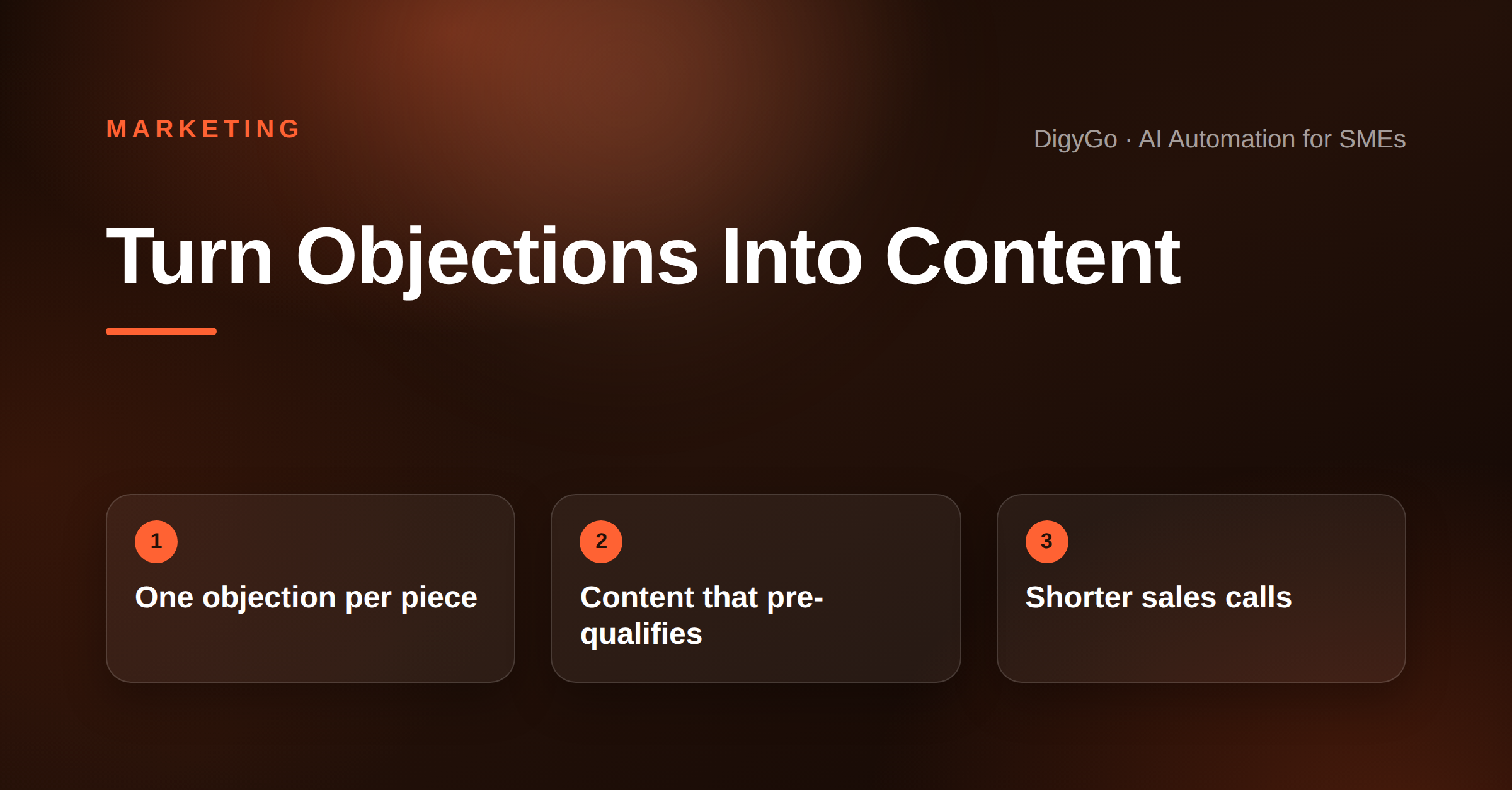
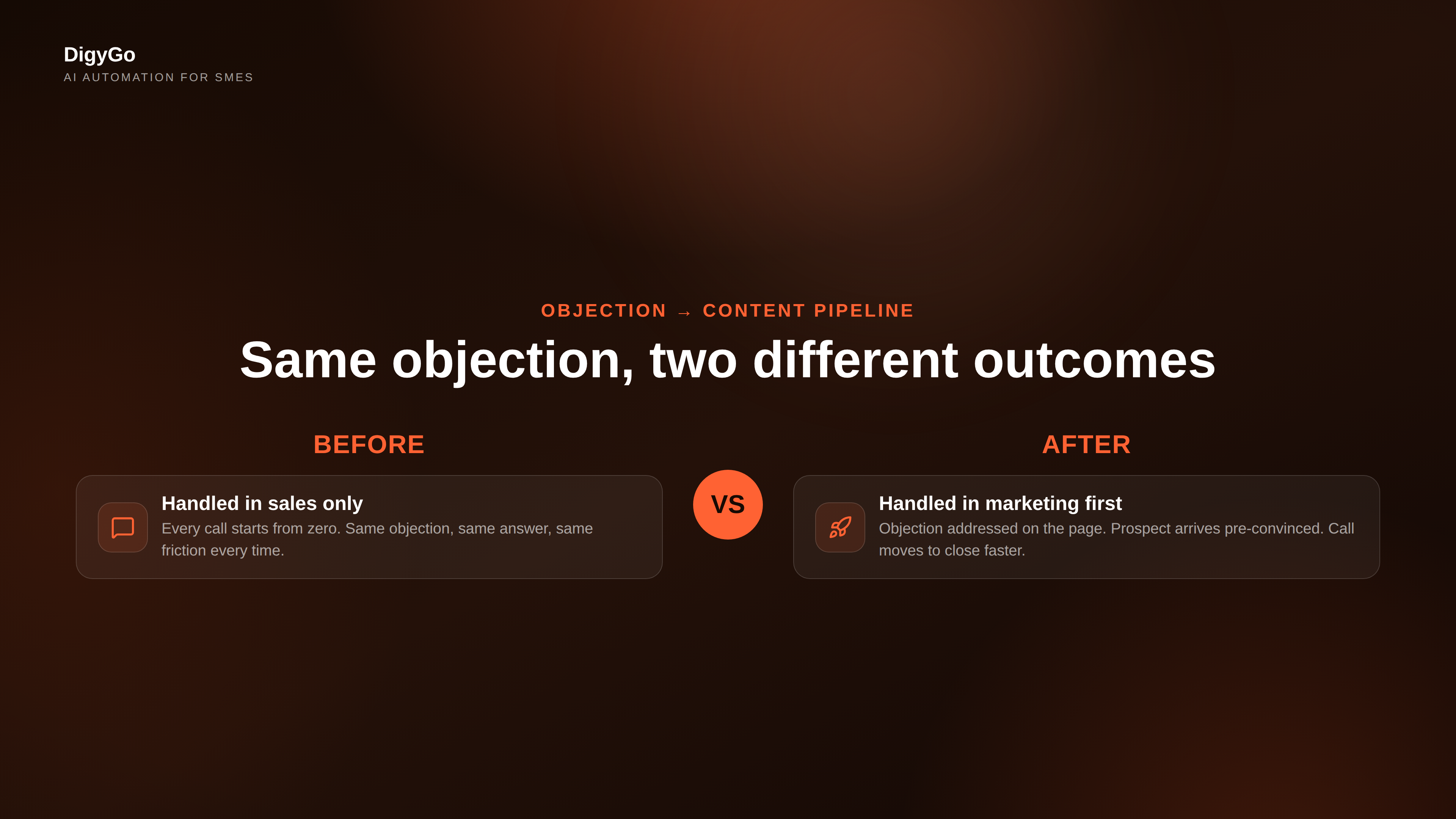
The most efficient way to shorten a sales cycle is to answer the biggest objection before the first call happens. That is a marketing job, not a sales one.
Build Your Objection-to-Content Pipeline
The fastest way to start is to collect every objection your sales and follow-up team hears over two weeks. You do not need a CRM report or a complicated dashboard — just a shared list or a running note. Each objection becomes the seed for four types of marketing content.
1. The Objection-Targeting Blog Post
Take the single most common objection in your business — for example, "We are a small team and do not have time to manage another tool." Write a 600-word post that opens with that exact concern, then walks through how your approach is designed for teams of exactly that size. The title answers the worry directly: "Our Offer Is Built for Teams That Do Not Have Time for Another Tool."
This kind of post converts better than a generic feature overview because the reader feels understood before they have even filled out a form.
2. The Objection-Crushing Proof Block
Some objections respond better to proof than to explanation. If the objection is "We tried automation before and it did not work," a case study of a similar business that had the same failed experience and then succeeded with your approach is worth more than any product description. Place these proof blocks where they matter most — on your service pages, in follow-up messages, and as a social media post that can be re-shared.
3. The Objection-Preempting FAQ
Every SME business has a set of questions that come up in every first conversation. Put them on your website as a searchable FAQ. A question like "How long does it take to see results?" can be answered upfront with a specific timeline and example, so the sales call starts with trust rather than scepticism.
4. The Objection-Flipping Social Post
A single objection can drive a week of social content. Take "We are too busy to set this up." Post on Monday about why busy teams are the ones who benefit most from automation. On Wednesday, share a two-minute walkthrough of the setup time. On Friday, post a testimonial from a "too busy" client who made the switch. Three posts, one objection, zero new research.
Why This Works Better Than Generic Content
Most SME marketing content is built around the product: what it does, how it works, why it is better. That is seller-focused. Objection-driven content is buyer-focused — it answers the exact doubt the buyer is holding, right when they are searching for reassurance.
For SMEs with limited content bandwidth, objection-driven marketing is the most efficient use of writing time. Every piece of content has a clear job: remove one hesitation. When a post, a proof block, or an FAQ does its job well, the next discovery call starts two steps ahead of where it would have been.
How to Identify the Objections Worth Writing About
Not every objection deserves a content piece. Focus on the ones that appear in at least three out of ten sales conversations. These are the recurring friction points that slow down your pipeline week after week.
To surface them, run a simple audit:
- Listen to three discovery calls — note every objection, even the soft ones ("We will come back", "Send me more information").
- Ask your team — the people handling enquiries every day know exactly what stops buyers from moving forward. They are your best content research team.
- Review lost deals — if you track why deals close or die, look for patterns in the losses. Two or three objections will account for most of them.
- Scan competitor pages — if a competitor is addressing an objection you are not, that is a gap worth closing in your own content.

Making Objection Content Part of Your Weekly Marketing Rhythm
The objection-to-content pipeline works best when it is not a special project but a regular practice. Add a ten-minute slot to your weekly marketing review: pick one objection your team heard most that week, and decide which format it fits — blog post, proof block, FAQ entry, or social thread. By Friday of the same week, the content should be live.
Over a quarter, that rhythm produces twelve pieces of content that each solves a real buyer doubt — twelve entry points for a prospect who is searching for the reassurance your sales team currently delivers one call at a time.
FAQ
Does writing about objections make my offer look weak?
No. Addressing a concern directly signals confidence — you know the objection, you have an answer, and you are not afraid to put it in front of prospects. Buyers trust businesses that acknowledge doubts and respond to them.
How many objections should I cover per piece of content?
One. Each blog post, FAQ entry, or social post should address a single objection. Stacking multiple concerns into one piece dilutes the message and confuses the reader. If an objection has multiple dimensions, write a short series.
What if the same objection keeps coming up but I cannot write about it publicly?
Some objections are about specific pricing, contract terms, or competitor names that are not suitable for public content. In those cases, create a one-pager or a follow-up sequence that sales can share privately. The content is still written — it just lives in the sales flow rather than on the website.
How do I measure whether objection content works?
Track two things: the number of first calls where the objection does not come up, and the length of discovery calls for leads who visited the objection-targeting page. Both are leading indicators that your content is doing the pre-work.
Can I repurpose objection content for ads?
Yes. Objection-addressing headlines often outperform feature-based headlines in ad platforms because they match the search intent of someone who is still deciding. An ad that says "Worried automation will not work for your small team?" can be the top of a funnel that leads to a blog post, then a case study, then a call.
"The most efficient way to shorten a sales cycle is to answer the biggest objection before the first call happens."
Start This Week
You do not need a content calendar or a marketing team to start. Open a note, write down the three objections your team heard most this week, and pick one. Write a short post, update a proof block, or add an FAQ entry. One objection tackled on your website today means one less objection to handle on the next sales call.
See how DigyGo helps SMEs turn every enquiry into a structured follow-up system