Most SMEs spend heavily on ads trying to reach new people. But the fastest way to earn trust is to show someone like them who already chose you and got a great result. A customer story marketing system turns real proof — testimonials, case studies, review excerpts — into a repeatable channel that generates more enquiries than another round of ads ever will.
A practical guide for SME founders on building a customer story system that collects real proof, formats it for every channel, and generates more enquiries without increasing ad spend.
Why Stories Convert Better Than Ads
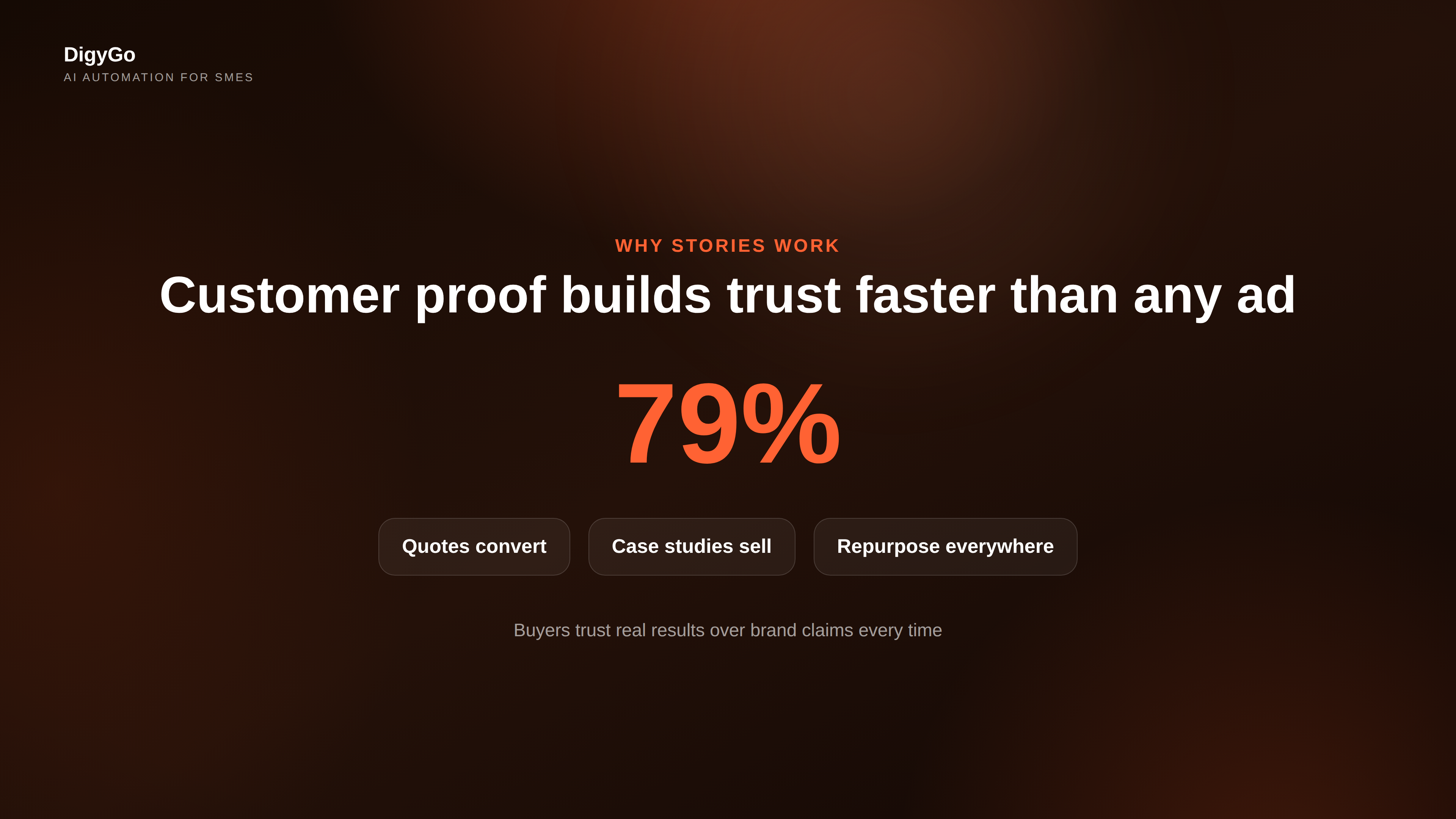
When a prospect lands on your website or sees your ad, their first question is always the same: "Can I trust this business?" Your answer is competing with dozens of other claims. A customer story skips straight past the doubt because it is not you talking — it is a real buyer who had the same problem and found a solution with you.
For SMEs, every story you collect is an asset that keeps working. A single testimonial can appear on your homepage, in a service page proof block, in a follow-up email, and in a WhatsApp conversation with a lead who is still deciding. The same proof serves multiple channels without any extra effort.
Before you can use stories, you need a system to collect, format, and distribute them. The rest of this guide walks through each stage.
- They answer "Can I trust you?" with real evidence, not your own claims.
- The same story can serve your website, follow-up, ads, and sales conversations.
- No ad spend needed — the proof is already in your existing customer base.
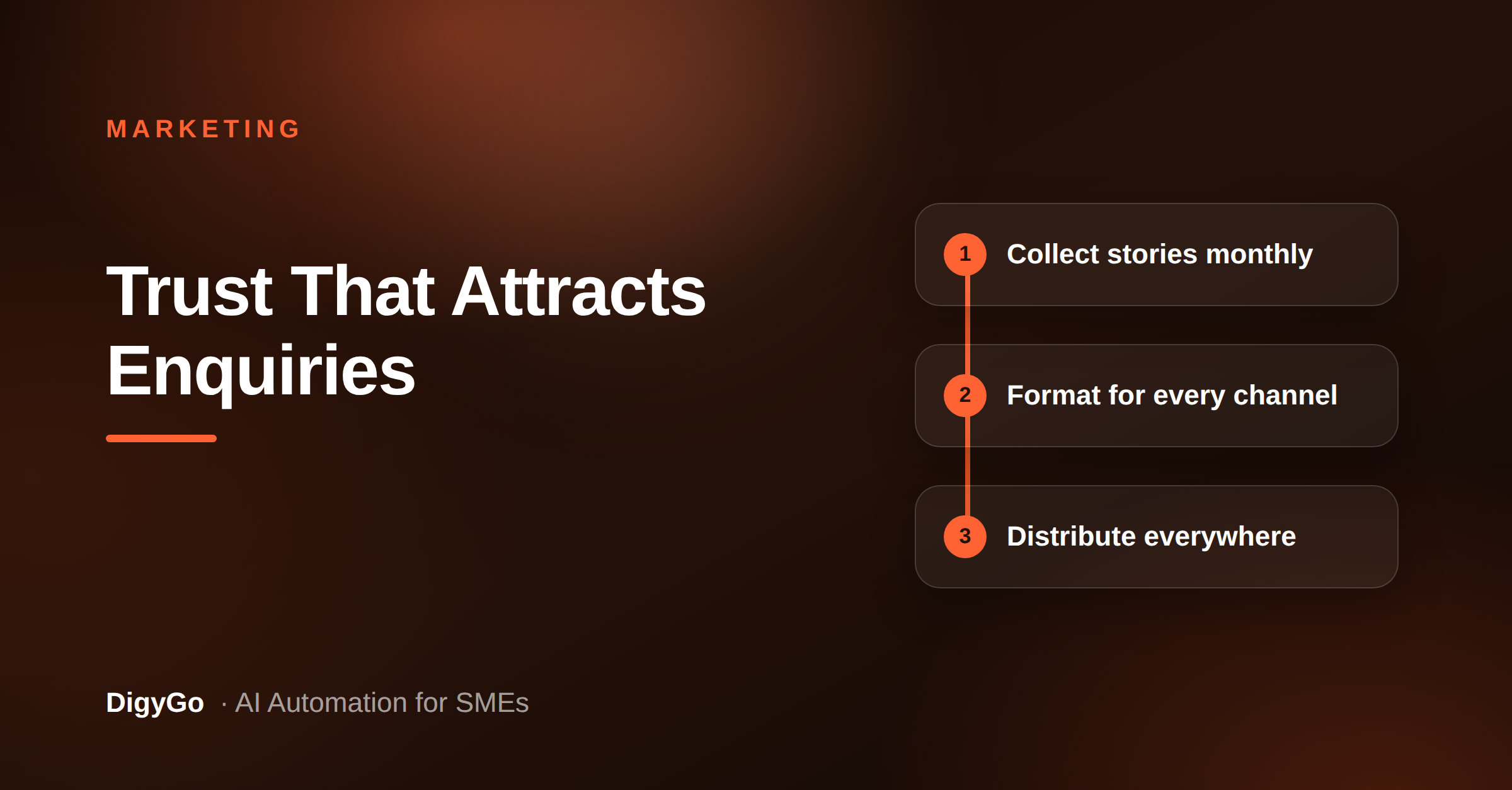
Step 1: Collect Stories on a Regular Cadence
The biggest mistake SMEs make is asking for a testimonial once and then forgetting about it. A one-time ask produces a few good lines, but the pipeline dries up fast. You need a regular collection rhythm so stories keep flowing as you deliver more work.
Ask at the right moment
The best time to capture a story is right after a customer experiences a clear win. That could be immediately after a successful project delivery, after they hit a milestone using your service, or when they pay a repeat invoice without hesitation. The emotion is fresh, and the details are sharp.
Set a calendar reminder to review completed work every two weeks. For each customer who had a good outcome, send a short message — a WhatsApp text, an email, or a quick call — asking one simple question: "What was the biggest result you saw from working with us?" That single question captures the core of the story without making the customer write a full case study.
Use a simple collection template
Instead of asking for an open-ended testimonial, guide the customer with three short prompts:
- What problem were you trying to solve when you first reached out?
- What was the biggest result or change you noticed after working with us?
- What would you tell another business owner who is considering the same decision?
These three answers give you everything you need — the setup, the result, and the social proof — without overwhelming the customer. Most people reply in under two minutes.
Store everything in one place
Keep a simple document or spreadsheet with each story: customer name (with permission), industry, the problem, the result, the quote, and the date collected. When you need proof for a specific offer or audience, you can find the right story in seconds instead of digging through old messages.
Step 2: Format Every Story for Multiple Uses
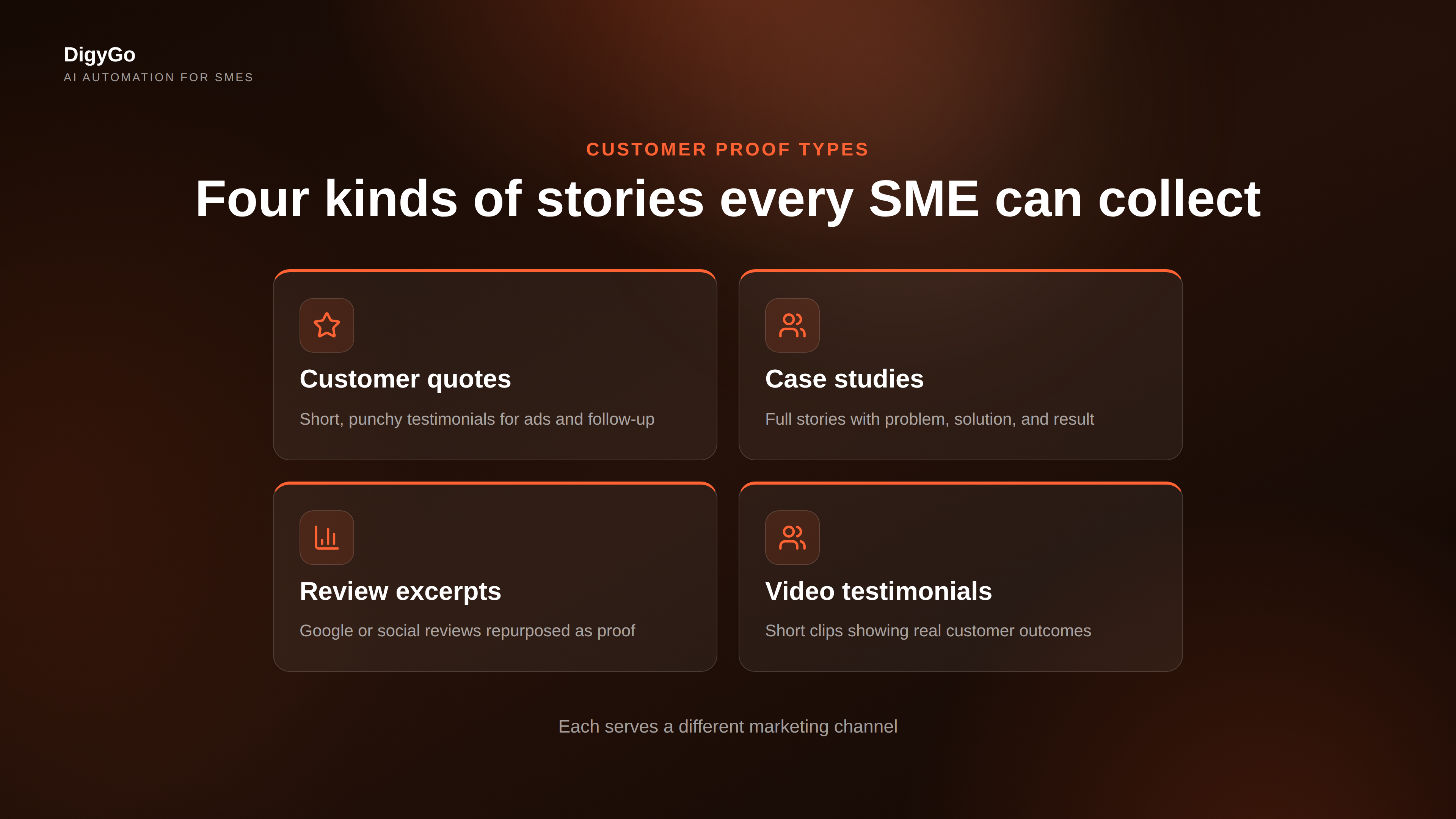
A single customer story can work in many formats. The goal is to prepare each piece of proof so it slots into any channel without rework.
One quote, three lengths
For every strong customer story, prepare three versions:
- Short (one sentence): "We got 40% more enquiries in the first month after working with DigyGo." — use this in ads, social posts, and follow-up messages.
- Medium (two to three sentences): The same quote with the context and result — use this on your service page proof blocks and landing pages.
- Full (short case study): The problem, the process, and the measurable result in 150-200 words — use this as a blog post, a PDF download, or a detailed sales leave-behind.
Once you have these versions, the same story becomes usable in five different channels without rewriting it from scratch each time.
- One sentence — LinkedIn posts, Google ads, WhatsApp follow-up, email signatures
- Two to three sentences — Service pages, landing pages, brochure pages, proposal decks
- Full case study — Blog posts, newsletter features, downloadable PDFs, sales presentations
Step 3: Distribute Stories Across Every Touchpoint
Once you have formatted stories, the next step is making sure they appear wherever a prospect looks. A customer story buried in a folder is not generating enquiries. It needs to surface at every stage of the buyer journey.
On your website
Place at least one story on every important page. The homepage should feature a rotating testimonial or a results summary. Each service page should include a proof block with a relevant customer quote — not a generic one, but one that matches the service being described. A testimonials page is useful, but the real conversion happens when proof sits next to the offer itself.
In your follow-up sequence
When a lead goes quiet after receiving a quote or a proposal, a customer story can reopen the conversation. Send a short message: "One of our recent customers had a similar situation — here is what they achieved." Attach the medium version of the story. This is not a pushy follow-up; it is evidence that the outcome is real.
On social media and ads
Post one customer story per week on LinkedIn or your main business channel. Use the short version as the headline and the medium version as the body. For paid ads, a results quote in the ad copy consistently outperforms feature-based messaging because it answers the trust question before the click.
In sales conversations
Train your team to reference a relevant customer story during every discovery call and proposal meeting. The story does the heavy lifting of proving value while the salesperson focuses on understanding the prospect's specific needs. A well-placed story shortens the decision cycle because the prospect sees themselves in the result.
Step 4: Measure Which Stories Drive Enquiries
Not every story will resonate equally. Track which stories appear on which pages or in which messages, and note which ones generate replies, clicks, or bookings. Over three months, you will see clear patterns: stories from one industry convert higher than others, or stories with a specific measurable result outperform general praise.
Use this data to double down on what works. Collect more stories from the industries or use cases that generate the best response. Pause the stories that do not move the needle. Over time, your library of proof becomes a targeted marketing asset that generates enquiries without any increase in ad spend.
Frequently Asked Questions
How many customer stories do I need to start?
Five strong stories with measurable results are enough to cover your main offers and audience segments. Focus on quality — a story with a specific number or outcome is worth more than ten vague testimonials.
What if my customers are not comfortable being named publicly?
Ask for permission to use their story with a first name and industry only. Many customers are happy to share their experience when you explain it helps other businesses like theirs. If they still prefer anonymity, use "a customer in the [industry] sector" phrasing.
How often should I collect new stories?
Aim for one new story per month if you deliver work regularly. Two per month is better. Set a recurring calendar reminder and make it part of your project completion checklist.
Can I use stories from customers who churned?
Yes, if the story is about the positive results they achieved while working with you. A churned customer who saw real outcomes before leaving can still provide powerful proof for prospects evaluating the same decision.
Should I put customer stories on every page?
Not every page, but every page that asks for a decision — service pages, landing pages, quote or proposal pages — should include at least one relevant story. Pages that exist only for information (like an about page) do not need them as urgently.
Start Building Your Customer Story System Today
A customer story marketing system does not require a budget, a tool, or a content team. It requires a simple collection rhythm, a format template, and a distribution habit. Most SMEs already have great stories sitting in their customer history — they just need to surface them and put them to work.
Start this week: pick your best recent customer outcome, write the short and medium versions, and place them on your main service page and in your next follow-up message. That single action will generate more trust — and more enquiries — than most ad campaigns.
Want help building a customer story marketing system? Talk to our team at DigyGo →