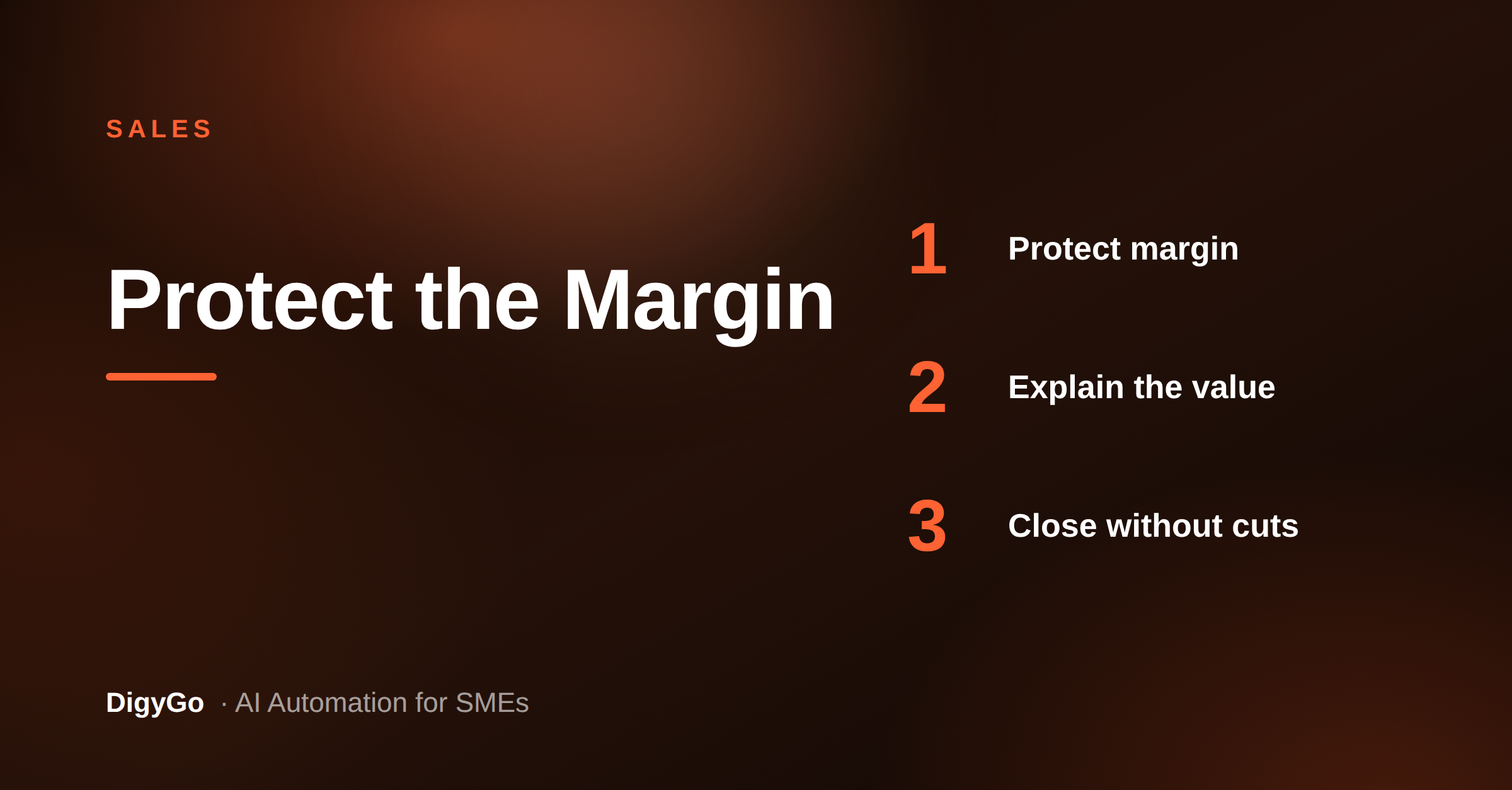
If every tough conversation ends in a discount, your sales team is training buyers to wait. The better move is to position the offer so the prospect understands value, scope, and next steps before price becomes the only thing left to discuss.
A practical sales playbook for SME founders on framing offers better, handling price objections, and closing more of the right deals without cutting price.
- Lead with the business outcome, not the price sheet.
- Qualify before you quote so weak-fit leads do not dominate the pipeline.
- Use comparisons, proof, and process clarity to reduce price pressure.
Why discounting feels easier than defending value
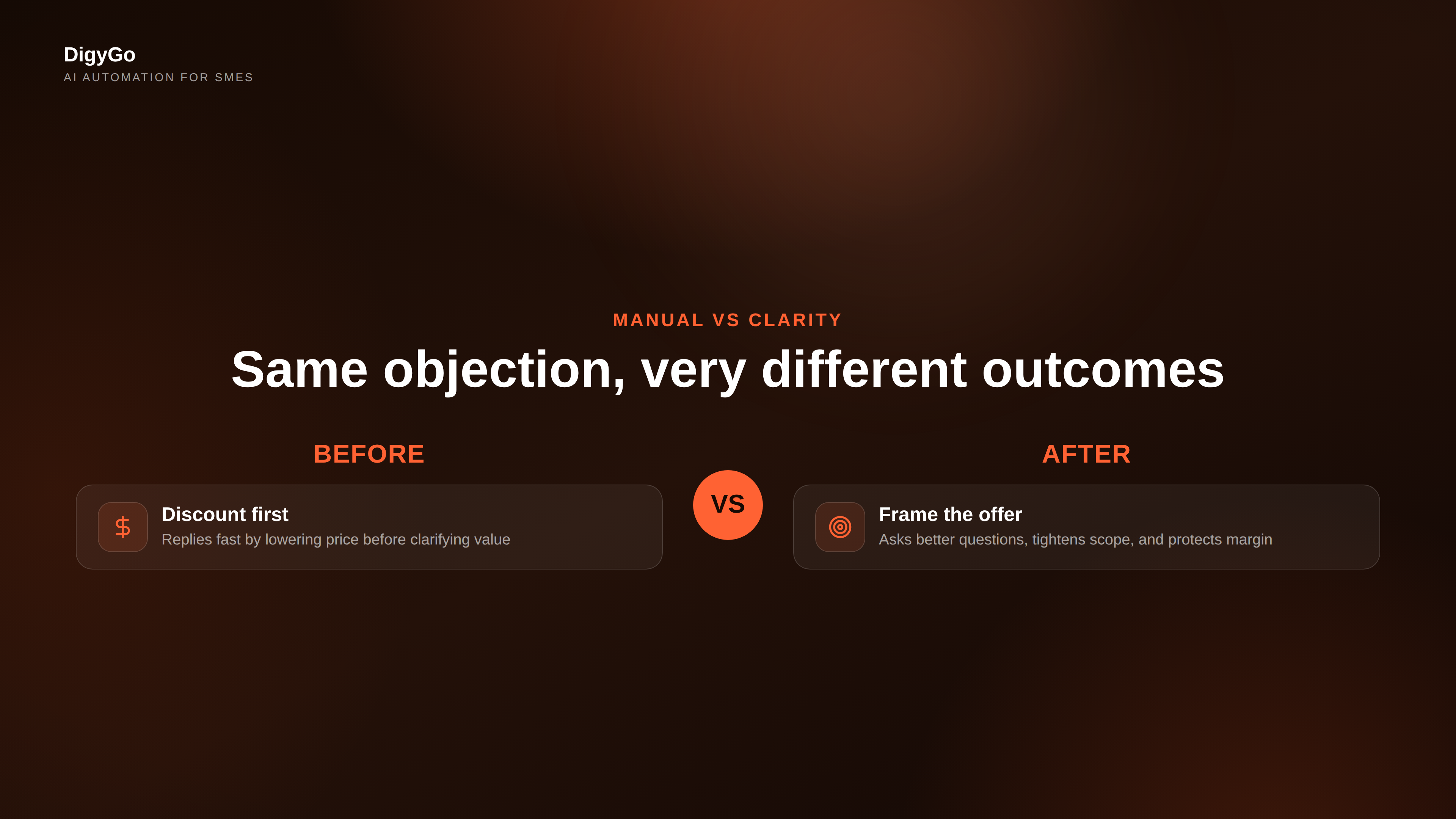
For many SMEs, discounting is a shortcut. It keeps the conversation moving, it feels customer-friendly, and it avoids a difficult objection. But every time price is reduced without changing scope or commitment, the deal gets smaller before it has even closed.
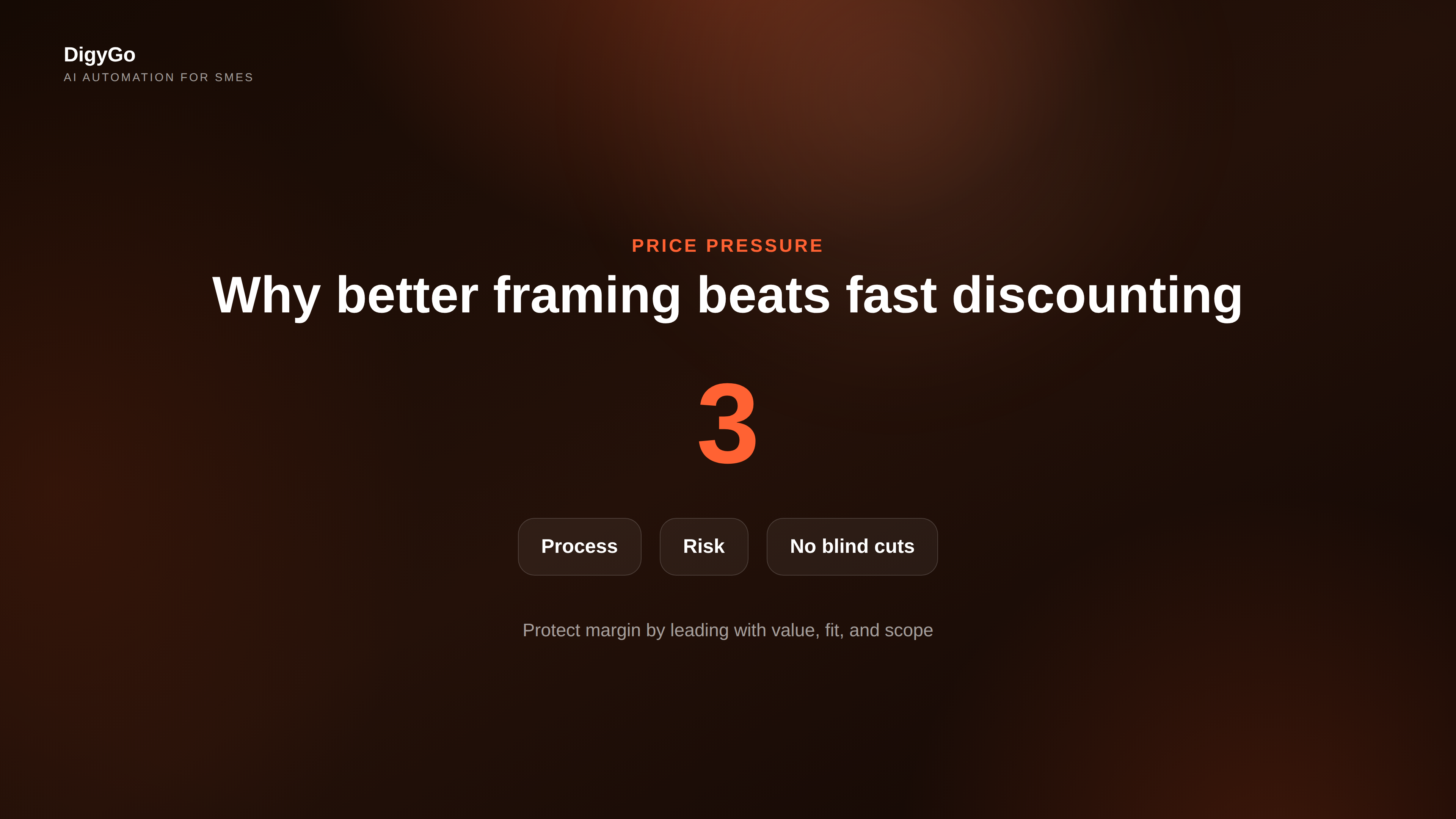
The real issue is rarely price alone. It is usually one of three things: the buyer does not fully understand the result, the offer is not specific enough, or the seller has not qualified fit early enough.
Start with a stronger sales conversation
Before you send a quote, make the buyer answer a few practical questions: what problem are they trying to solve, what is the cost of delay, who approves the budget, and what happens if they do nothing. Those answers tell you whether the deal is worth pursuing and help you frame the offer around impact instead of cost.
This also gives you a natural way to present your pricing. You are no longer defending a number in isolation. You are connecting that number to turnaround time, risk reduction, conversion lift, or saved staff hours.
Use three anchors in every deal
- Outcome anchor: what the buyer gets if the project works.
- Process anchor: what makes your delivery easier to trust.
- Risk anchor: what the buyer loses by delaying or choosing the wrong fit.
Make the offer easier to say yes to
A confusing offer increases price friction. A clear offer reduces it. Keep the proposal focused on one problem, one primary result, and one path forward. When you split the work into too many vague deliverables, buyers compare only the total number. When you tighten scope, they compare outcomes.
That is why better sales teams package the offer with a clear starting point, a defined delivery window, and visible next steps. Buyers do not just want a price. They want confidence that the process will not waste time.
What to say when price comes up
Do not answer the objection by dropping the number immediately. First, ask what part feels expensive. Then separate budget, scope, and urgency. Sometimes the objection is really about payment timing. Sometimes the buyer needs proof. Sometimes they are comparing you to a narrower offer that does less work.
Helpful phrases include: “If we keep the outcome the same, what part of the scope would you like to remove?” and “Compared with what alternative?” Those questions keep the conversation honest and protect your margin.
A simple rule for SME sales teams
If the prospect has not understood the value, do not reduce the price. Improve the explanation. If the prospect has not qualified as a fit, do not chase harder. Reframe the offer or move on. The businesses that close more deals are usually the ones that qualify better and explain better, not the ones that discount fastest.
Bottom line: better sales framing protects margin, filters weaker leads, and makes the right buyers more confident to move forward.
FAQ
When should an SME offer a discount?
Only when the discount is tied to a real trade-off, such as reduced scope, faster payment, or a narrower delivery package. A discount without a change in commitment usually weakens future negotiations.
What if the buyer insists that price is the problem?
Ask what they are comparing you to and which part of the proposal feels expensive. That usually reveals whether the issue is value, scope, timing, or trust.
How can smaller teams defend value better?
Use short case examples, clearer deliverables, and a simple explanation of the business result. You do not need a long pitch. You need a sharper one.