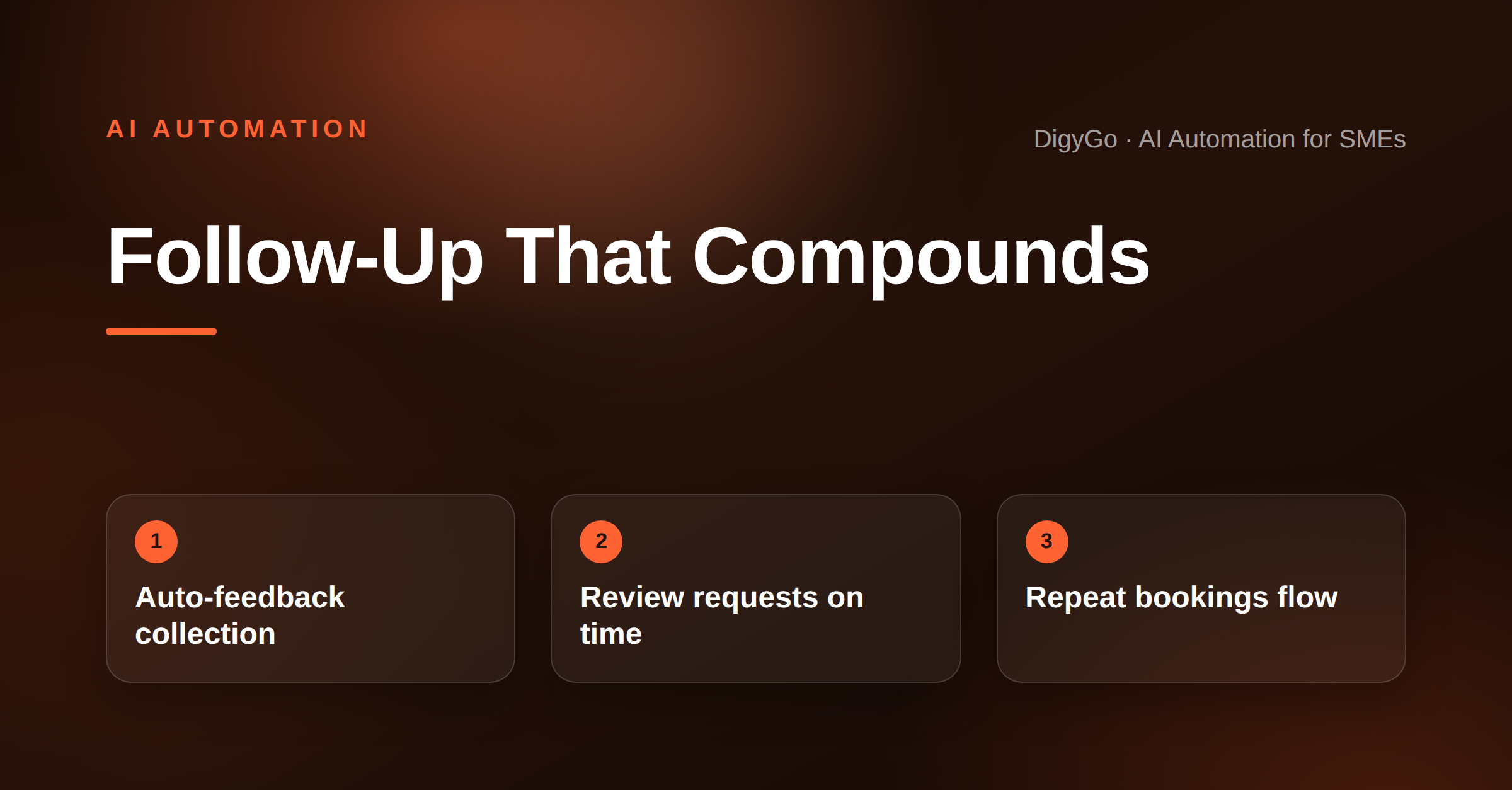
Most SMEs do good work. The problem is what happens after the work is done — the follow-up that collects feedback, asks for a review, and reminds the customer to come back. Without a system, this step gets skipped on busy days, and the business loses the compound effect of happy customers who refer and return. AI automation can run this entire post-service cycle without adding manual work.
An AI-powered post-service follow-up system can automatically confirm completion, collect feedback, request Google reviews, and trigger repeat bookings — turning every completed job into a growth opportunity without adding manual work.
Why post-service follow-up is the most overlooked growth lever
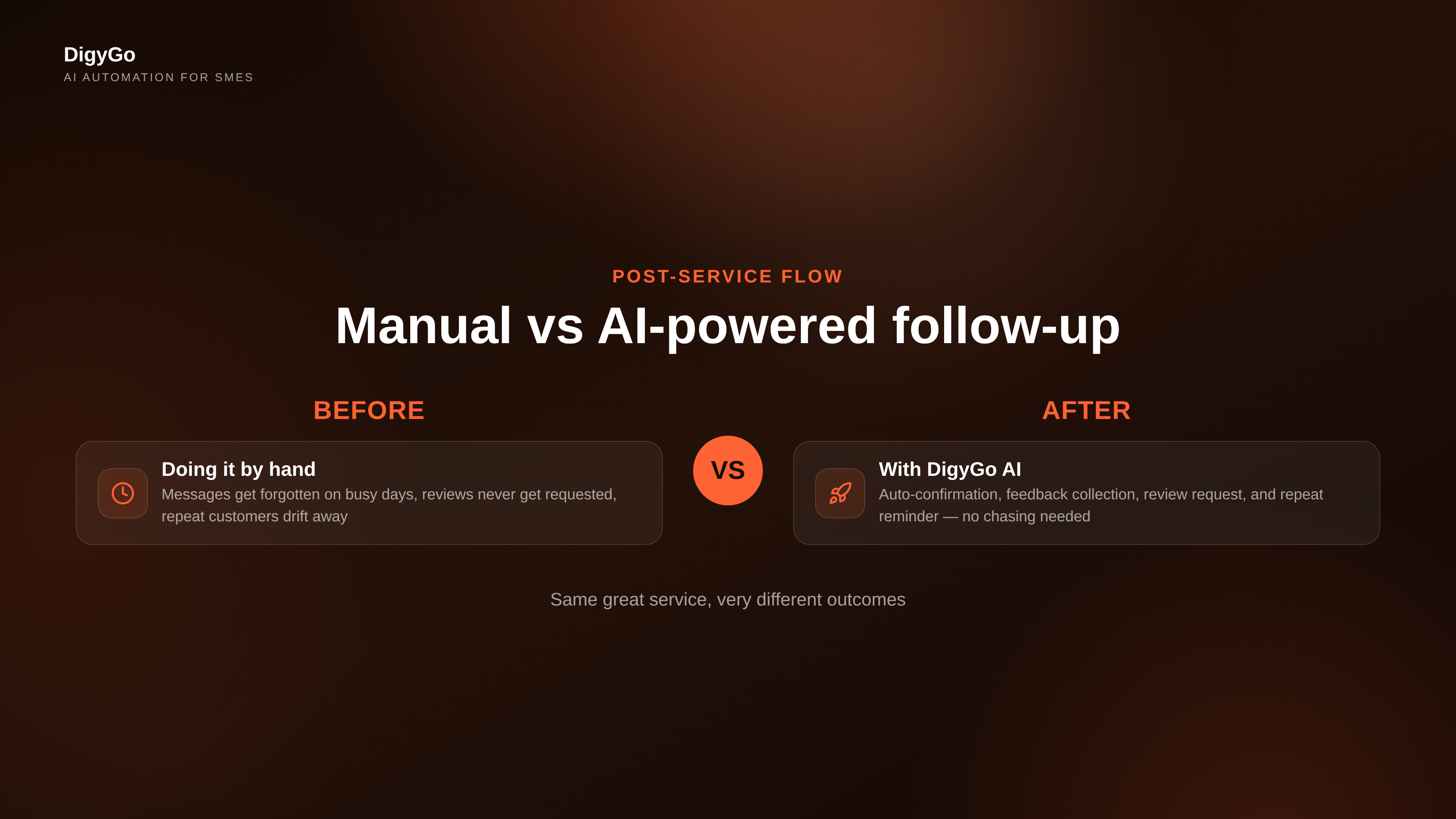
A customer who just received your service is at their highest trust point. The job is done, the payment is made, and they are satisfied — yet most SMEs never send a follow-up at this moment. The result is a missed opportunity for feedback, a missed Google review, and a customer who drifts away until they need you again, months later.
The challenge is not intent — it is capacity. When teams are busy delivering the next job, there is no bandwidth for a structured post-service check. AI automation fills this gap by running the entire follow-up cycle: from "thank you" through feedback collection to review request — all triggered automatically when a job is marked complete.
What an AI post-service flow looks like
An AI-powered post-service follow-up system works from a single trigger: the job completion signal. Once the service is marked done — in your CRM, WhatsApp thread, or booking tool — the AI picks up the flow and executes a timed sequence of actions without any human nudging.
Step 1: Completion confirmation
The first message goes out immediately after the job closes. It thanks the customer, confirms what was completed, and sets the stage for the next steps. This message costs nothing but builds goodwill and keeps your brand front-of-mind.
Step 2: Feedback collection
24-48 hours later, the AI sends a feedback request — a short survey of 2-3 questions. This is where you catch issues before they become negative public reviews. If feedback is positive, the AI routes the customer to the review stage. If it is neutral or negative, the AI escalates to a human team member for personal follow-up before any public review request goes out.
Step 3: Review request
For satisfied customers, the AI sends a review request with a direct link to your Google Business Profile or other review platform. Timing matters here — too early and the customer has not experienced the value; too late and the enthusiasm fades. The 48-72 hour mark after completion is the sweet spot.
Step 4: Repeat booking trigger
For services with a natural return cycle (oil change, pest control, quarterly audit, salon visit), the AI schedules a future reminder at the optimal interval. This transforms a one-time transaction into a recurring revenue stream without requiring the customer to remember to book again.
Four concrete benefits for SMEs
An automated post-service follow-up system delivers measurable returns across multiple dimensions of the business.
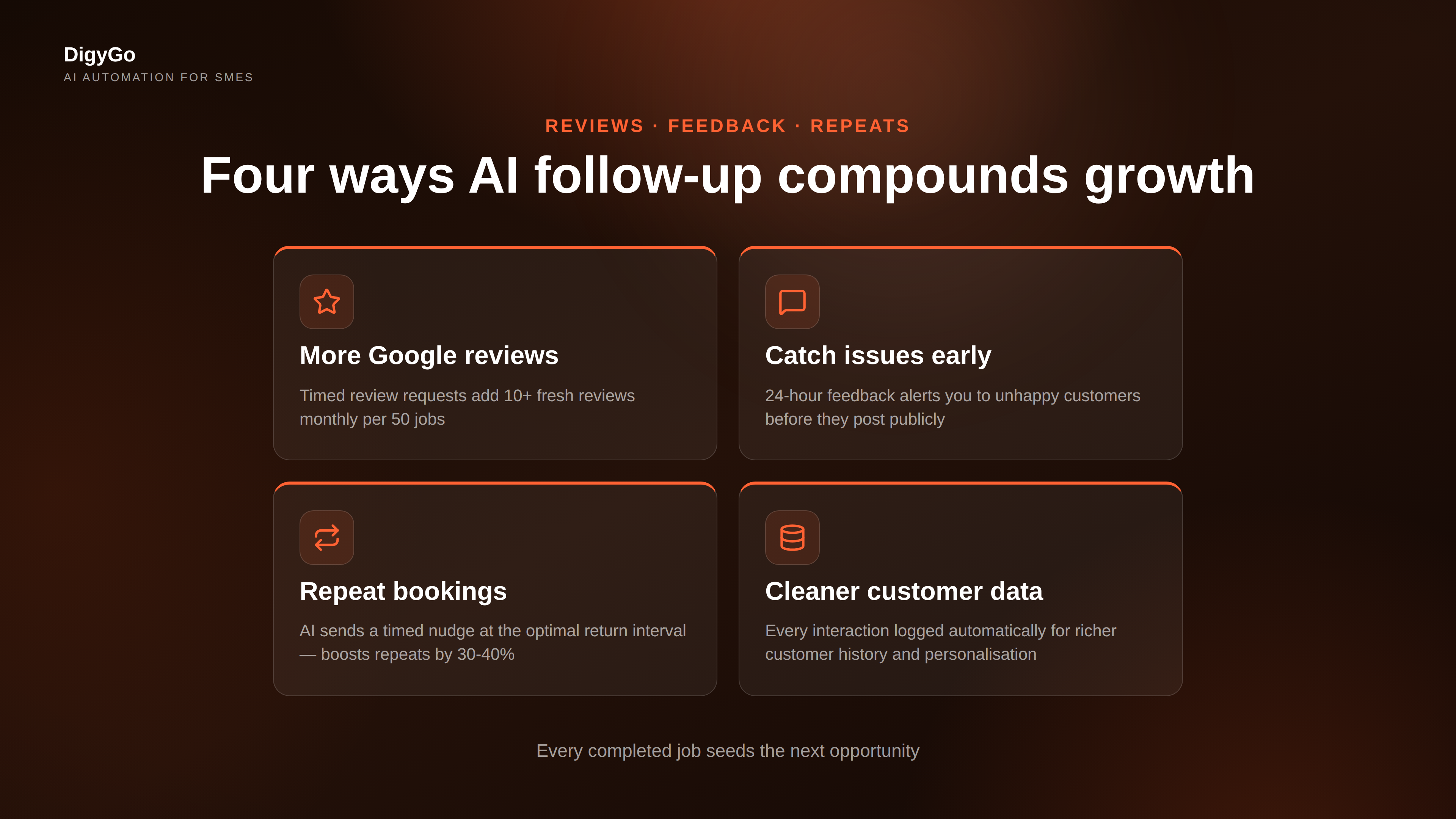
1. More Google reviews without asking manually
The AI sends the review request at the right moment — not too pushy, not too late. For a business doing 50 jobs a month, even a 20% conversion rate on review requests adds 10 fresh reviews monthly. Over a year, that is 120 reviews that directly improve local SEO and social proof.
2. Early detection of unhappy customers
Feedback collected 24 hours after service catches issues while they are still fresh. A quick human follow-up on a 3-out-of-5 rating can turn a potentially negative review into a saved relationship — and a customer who feels heard often becomes the most loyal.
3. Repeat bookings without reminder calls
The AI reminder for the next service interval removes the burden from both the customer and your team. Instead of manually calling every past customer to check if they need service again, the system sends a timed, polite nudge at the right interval. For service businesses, this alone can increase repeat booking rates by 30-40%.
4. Cleaner customer data and history
Every interaction in the post-service flow — confirmation sent, feedback received, review link clicked — is logged automatically. Over time, this builds a complete customer history that helps your team personalize future conversations and spot trends in satisfaction, repeat timing, and churn risk.
How to set this up without a development team
Building an AI post-service follow-up system does not require custom code or a dedicated engineering team. The core ingredients are:
- A trigger source: Your CRM, booking tool, or WhatsApp thread that can signal when a job is completed. Even a simple spreadsheet update or a tagged message works as the starting point.
- An AI workflow layer: A lightweight automation tool (like DigyGo's operations platform) that listens for the trigger and executes the follow-up sequence — sending messages, collecting responses, and routing by feedback score.
- Message templates: Pre-written confirmation, feedback, review, and reminder messages that the AI sends at each stage. Keep them short, personalised with the customer's name and service details, and branded in your tone.
- A feedback routing rule: A simple condition — if rating is 4 or above, send review request. If 3 or below, notify a human on WhatsApp for personal follow-up before proceeding.
The entire setup can be configured in a day and starts working immediately on the next completed job. There is no long implementation, no customer training, and no new tool for your team to learn — the AI runs in the background while your team focuses on service delivery.
Common concerns about automating customer touchpoints
SME founders sometimes worry that automated follow-up will feel impersonal or spammy. The opposite is true when done right. A well-timed, relevant message that thanks the customer and asks for genuine feedback strengthens the relationship — it shows you care enough to check in. The key is keeping the messages short, human in tone, and triggered by real service events, not arbitrary schedules.
Another concern is that a negative review request could damage the business's online reputation. This is why the feedback collection step comes before the review request — it acts as a gate. Only customers who report a positive experience receive the review link. The unhappy ones get a human conversation first, which often resolves the issue before any public review is written.
From one-time service to recurring relationships
The most valuable shift an SME can make is moving from transaction-based to relationship-based revenue. An automated post-service follow-up system is the engine that drives this transition. It ensures that every completed job seeds a future opportunity, protects your online reputation, and compounds customer trust over time without adding a single minute of extra work to your team's day.
For SME founders in Coimbatore and across Tamil Nadu who already do great work, the missing piece is not better service — it is the systematic follow-up that turns satisfied customers into visible, recurring revenue. AI automation makes this follow-up automatic, affordable, and immediately effective.
FAQ
How much time does an AI post-service follow-up system save per week?
For a business completing 10-15 jobs per week, the system saves 2-4 hours that would otherwise go to manual follow-up calls, messages, and reminder scheduling. The team reclaims this time for delivery and new business.
Does this work for service businesses without a CRM?
Yes. The trigger can be as simple as a WhatsApp message with a keyword, a form submission, or a tag in your chat tool. No CRM is required for the basic flow.
Will customers find automated follow-up annoying?
Not if the messages are short, helpful, and event-triggered. Customers appreciate a timely thank-you and an easy way to leave feedback. The key is sending at most 2-3 messages over 7 days, with clear opt-out at every step.
How does the AI handle negative feedback?
Negative feedback is routed to a human team member automatically. The AI does not send a review request to an unhappy customer. Instead, it alerts your team on WhatsApp or email so they can resolve the issue personally before any public review is written.
What is the best timing for review requests?
48-72 hours after service completion. The customer has had enough time to experience the outcome but the positive impression is still fresh. This window consistently produces the highest conversion rates on review requests.