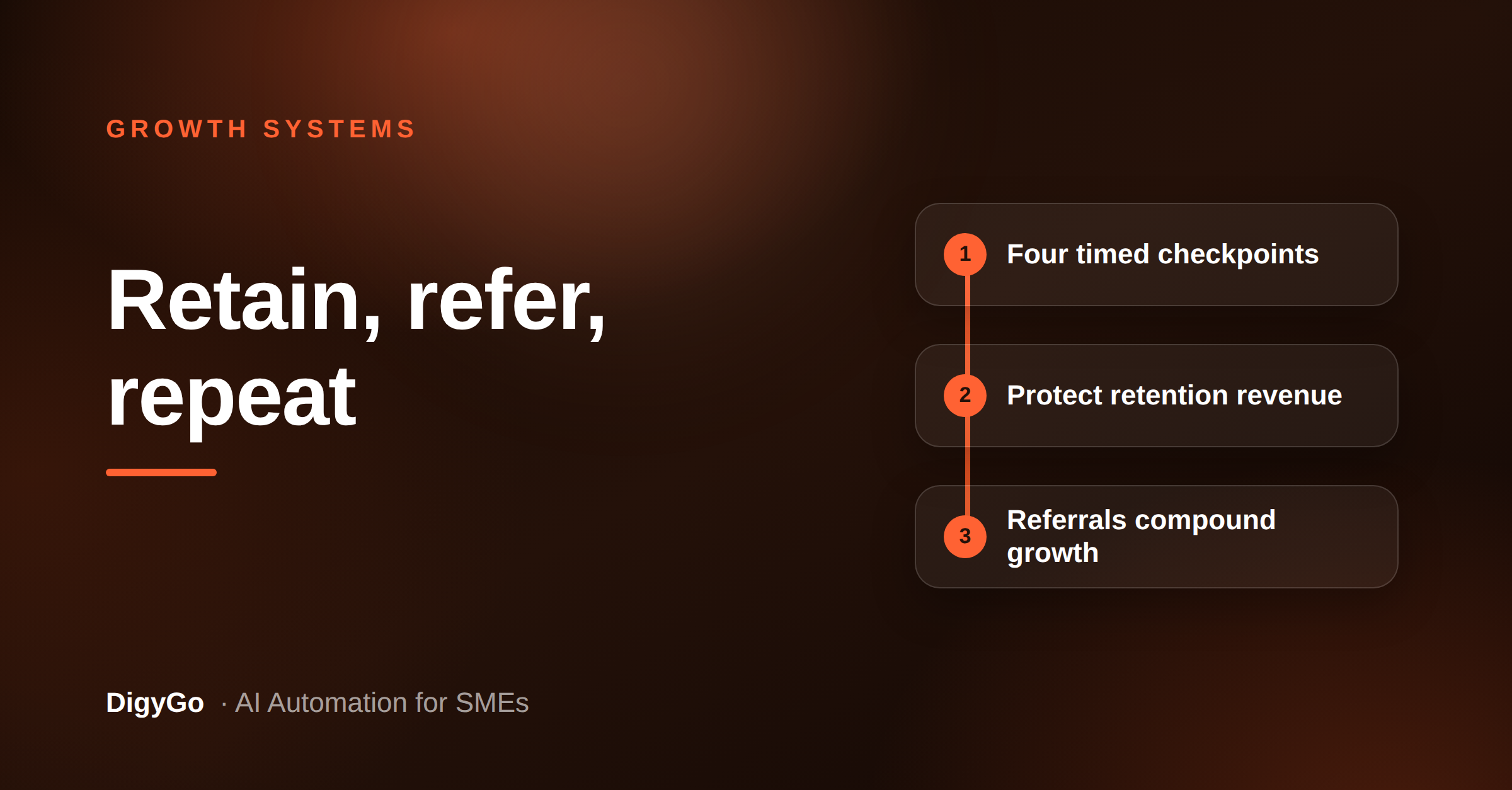
Most SMEs pour energy into winning new clients and then go quiet after the delivery. The handover happens, the invoice is sent, and the relationship drifts until the client needs something again. By then, any chance of a referral, a testimonial, or a repeat order has cooled off. A post-delivery follow-up system changes that. It turns the period after a completed job into a structured retention and growth engine.
A practical Growth Systems guide for SME founders on building a four-touchpoint post-delivery follow-up system that protects retention, generates referrals, and compounds growth without adding extra daily work.
For a small or mid-size business, the post-delivery phase is the cheapest growth channel available. The client is already happy with the result. Trust is high. The only missing piece is a system that keeps the relationship warm, captures feedback, and makes it easy for the client to say yes again or send someone your way.
Why the Post-Delivery Gap Hurts Growth
When a job ends and no one follows up, the business loses three things at once:
- Retention drift. A client who does not hear from you after the invoice has no reason to think of you first when they need the same service again.
- Referral friction. Happy clients rarely refer unprompted. They need a clear, low-effort moment to make an introduction.
- Feedback silence. You never learn what went well or what almost went wrong, so the same small issues repeat on every engagement.
The fix is not more effort. It is a short, timed system that runs after every delivery, at the same cadence, every time.
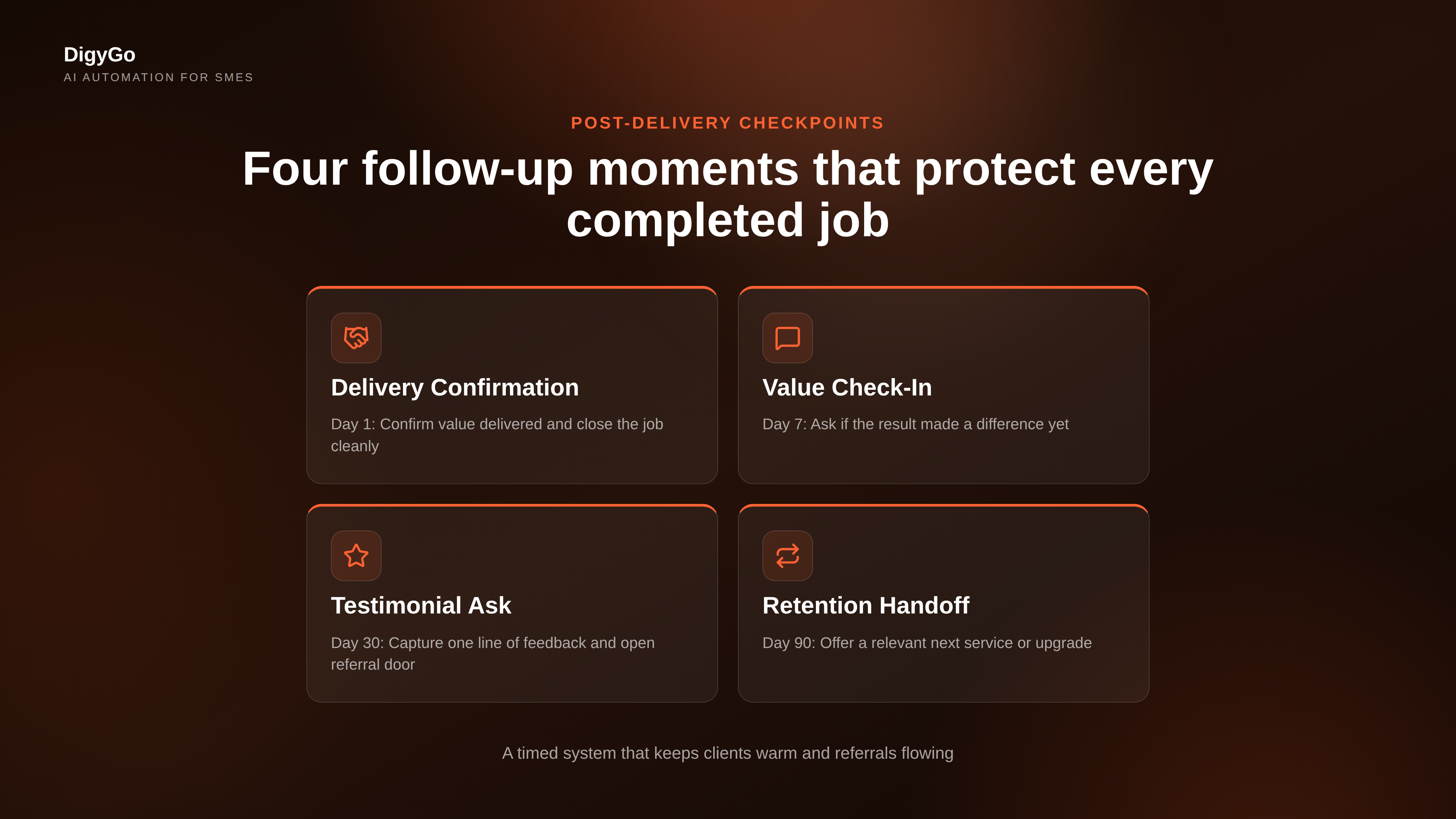
The Four Post-Delivery Checkpoints
Deliver, thank, review, refer. Four touchpoints, spaced over 90 days, that turn a completed project into a lasting client relationship.
1. Delivery Confirmation (Day 1)
The moment you hand over the finished work, send a short confirmation that lists what was delivered, the timeline that was met, and one thing you hope the client is happy with. This is not a pitch. It is a close: you are confirming that the job is complete and the value was delivered. A one-minute note or message stops the did we really finish?
vagueness and gives the client a natural point to agree or push back.
2. Value-Capture Check-In (Day 7)
Seven days after delivery, ask a single question: Has the result we delivered made a difference so far?
This check-in serves two purposes. First, it prompts the client to reflect on the value they received, which strengthens their own sense of a good decision. Second, it surfaces any gaps early. A client who says it is okay but we expected X
is still salvageable. A client who is never asked is simply gone.
3. Testimonial and Referral Ask (Day 30)
At the 30-day mark, the client has had enough time to experience the result. This is the best moment to ask for a short testimonial. Do not ask for a long review. Ask: What was the one thing that made the biggest difference?
That one line is more powerful than a paragraph. Then ask: Do you know a fellow business owner who could use this?
If they say yes, make the introduction effortless: offer to draft a short message the client can forward.
4. Retention Handoff (Day 90)
Ninety days after delivery, the client should hear from you again with a clear next offer. Not a generic how are things
but a specific, timely suggestion: a repeat of the same service, an upgrade, a maintenance package, or a complementary offering. By this point the trust is established and the client knows the quality of your work. A direct, relevant invitation converts at a much higher rate than a cold email.
Making the System Repeatable Without Adding Work
The four checkpoints do not need a CRM expert or a marketing team. Any SME can run this system with three simple tools:
- A shared calendar or task list with reminders set for day 1, day 7, day 30, and day 90 after every delivery.
- Three message templates saved in a notes app or a quick-reply tool. Each template has a short intro, the key question, and a space for the client name.
- One tracking sheet that logs the delivery date, the date each follow-up was sent, the client response, and any referral introduced.
The templates are the key to speed. With three pre-written messages, the entire follow-up loop takes less than ten minutes per client spread across three months. The return on that time is measurable: retained clients, repeat bookings, and referrals that cost nothing to acquire.
What to Track to Know the System Is Working
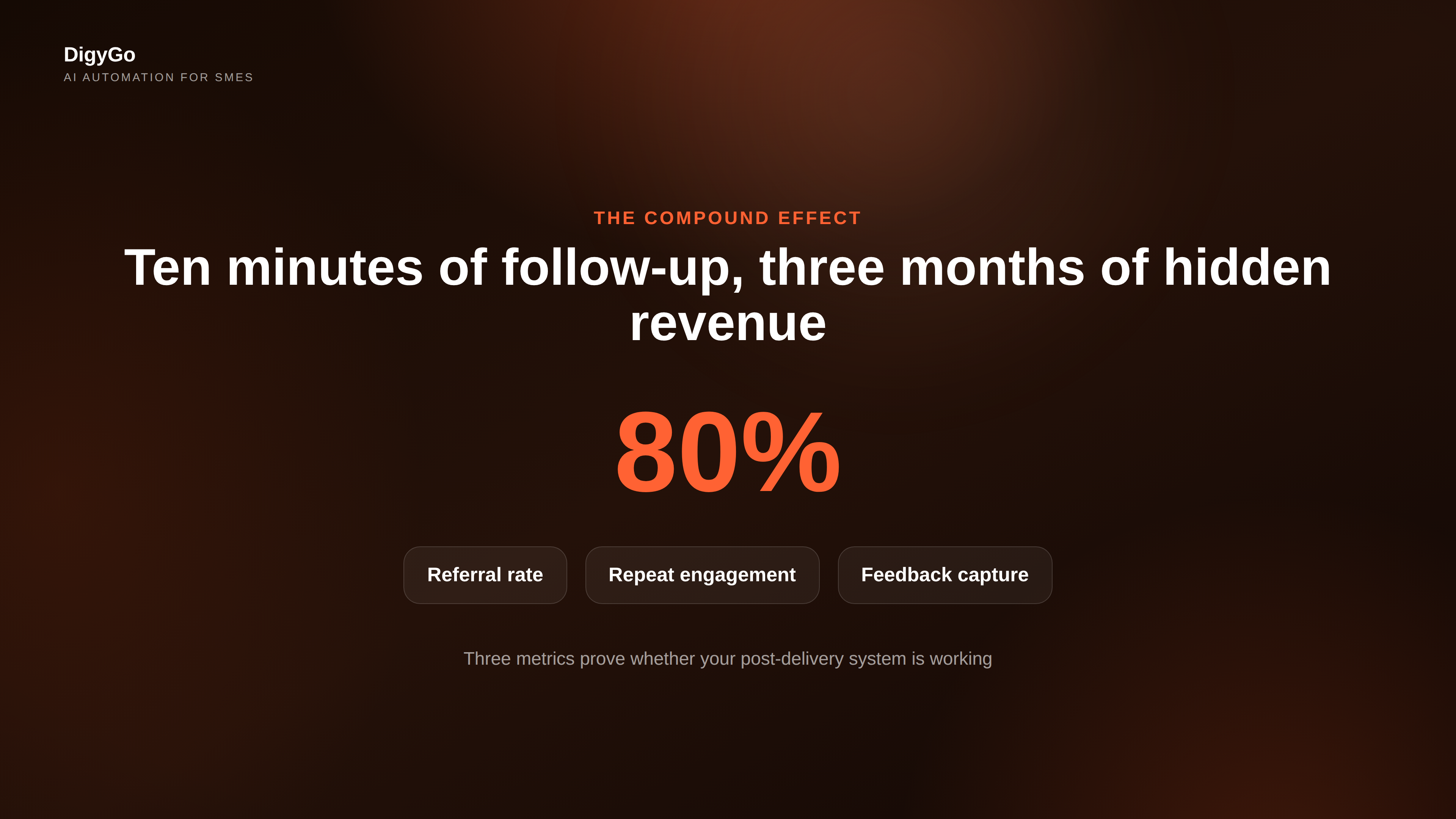
A post-delivery system only compounds growth if you measure the right signals. Three metrics are enough:
Track these once a month. If the referral rate dips below one per ten completed jobs, tighten the day-30 ask. If repeat engagement drops, revisit the day-90 offer. The system itself is not complicated, but the discipline of measuring it is what compounds improvement over quarters.
Why This Belongs in Your Growth System
Growth systems are supposed to compound. A post-delivery follow-up loop compounds in three ways:
- It protects revenue already earned. A retained client generates more lifetime value than any new acquisition.
- It generates new revenue without new spend. A referral from a happy client costs nothing and closes at a higher rate than any other source.
- It creates data. Every feedback response, every referral introduction, and every repeat booking tells you what is working and what needs adjustment.
Most SMEs treat the delivery as the finish line. It is not. The delivery is the midpoint. The real compound growth starts after the job is done.
FAQ
How long should each post-delivery message be?
Two or three sentences. A short message that respects the client's time is more likely to get a response than a long email. One question, one clear ask, friendly tone.
Can these checkpoints be automated?
Partially. You can automate the calendar reminders and the message templates with a simple tool or CRM workflow. But the actual messages should feel personal. A quick personalized note from the project manager always outperforms a generic automation blast.
What if a client does not respond to the day-7 check-in?
Do not chase. If the client is busy or happy, silence is fine. Move on to the day-30 ask. If they have an issue, they will raise it when they are ready. Pushing too hard after one silence can damage the relationship.
Is this system suitable for one-person SMEs?
Yes. A solo operator can run the entire loop in under a minute per client per touchpoint. Three calendar reminders and three saved messages are all you need.
When should I stop sending post-delivery check-ins?
After the day-90 handoff, reduce the cadence to one check-in per quarter unless the client books another service. If the client has not responded to three consecutive check-ins and has not rebooked, move them to a passive nurture list and stop active follow-up.