Most SMEs focus on the first reply — the fastest response, the cleanest handoff, the shortest SLA. But what happens to the lead that does not book on day one? That is where automated nurture sequences turn a missed opportunity into a future customer.
A practical guide for SMEs on using automated three-message nurture sequences to keep warm leads engaged, build trust over time, and convert more enquiries without extra manual work.
Speed-to-lead wins the hot ones. Nurture wins the rest — and in most SME businesses, the rest is the majority. A lead that did not convert on first contact is not dead; it is simply not ready. An automated nurture sequence keeps your business in front of that lead with useful, low-pressure touches until the timing is right.
- Nurture sequences recover leads that are not ready to buy today
- Three-message flows work better than long drip campaigns for SMEs
- Value-first content (tips, proof, case studies) outperforms reminders
- Automation ensures every lead gets nurtured — not just the ones you remember
Why nurture matters for SME lead management
A typical SME lead flow looks like this: a prospect fills a form, calls, or sends a WhatsApp message. The team responds fast — maybe within minutes. The prospect says "I'll think about it" or "send me the details" and goes silent. The team moves on to the next enquiry. That lead joins a long list of uncontacted names that nobody follows up with again.
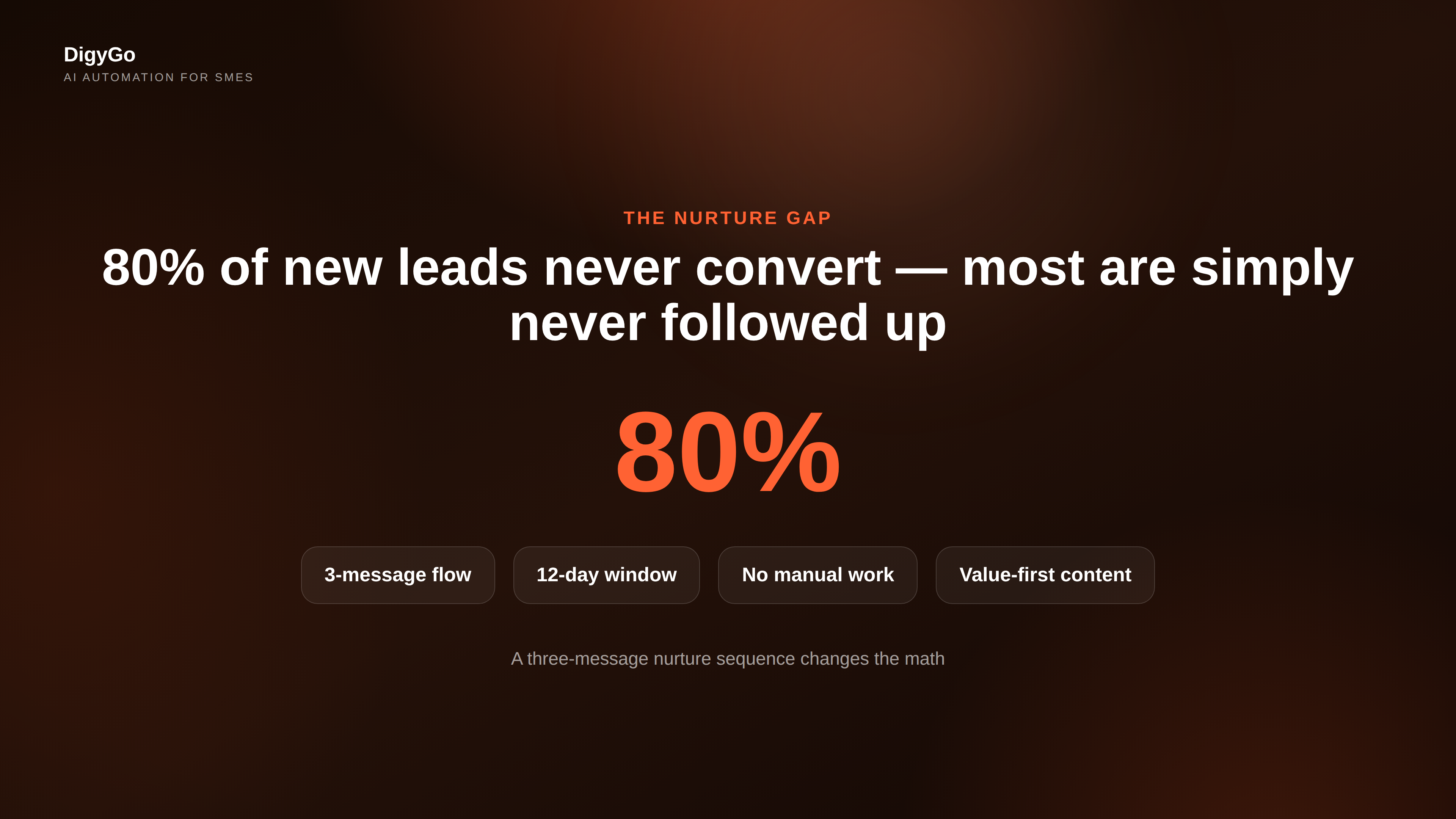
According to research from MarketingSherpa, 80% of new leads never convert into a sale — and many of those leads are simply not followed up with consistently. Automated nurture sequences change this by scheduling a series of touches that keep the conversation alive without requiring manual effort.
For SMEs, the goal of a nurture sequence is not to sell harder. It is to stay useful — so when the prospect is ready to act, your business is the one they remember.
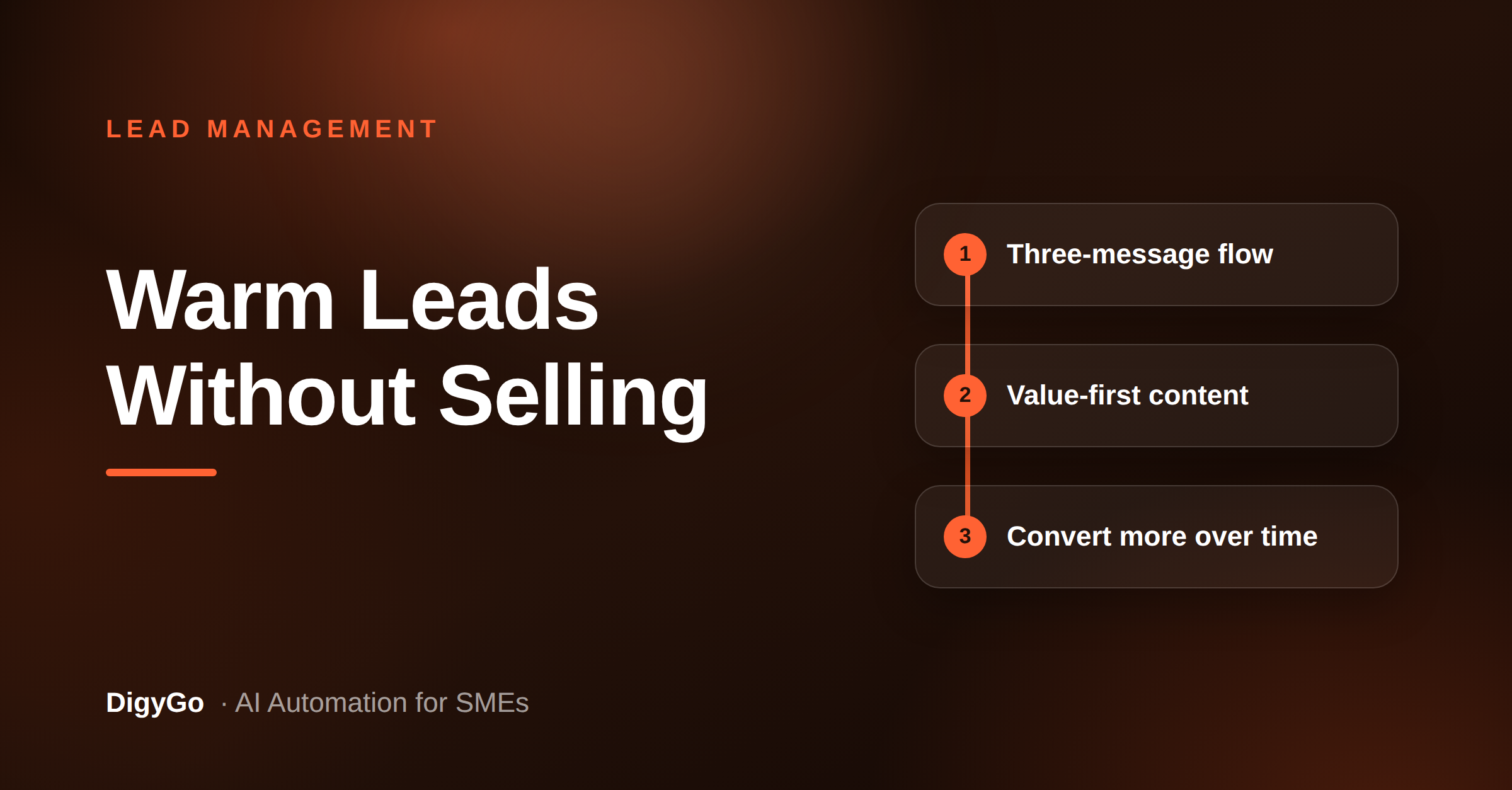
The three-message nurture flow
Long drip campaigns with 12 emails over six weeks are overkill for most SME buyers. A shorter, tighter sequence works better because it respects the prospect's attention and matches the faster decision cycles of SME purchases. Three messages, spaced a few days apart, is enough to test interest without becoming noise.
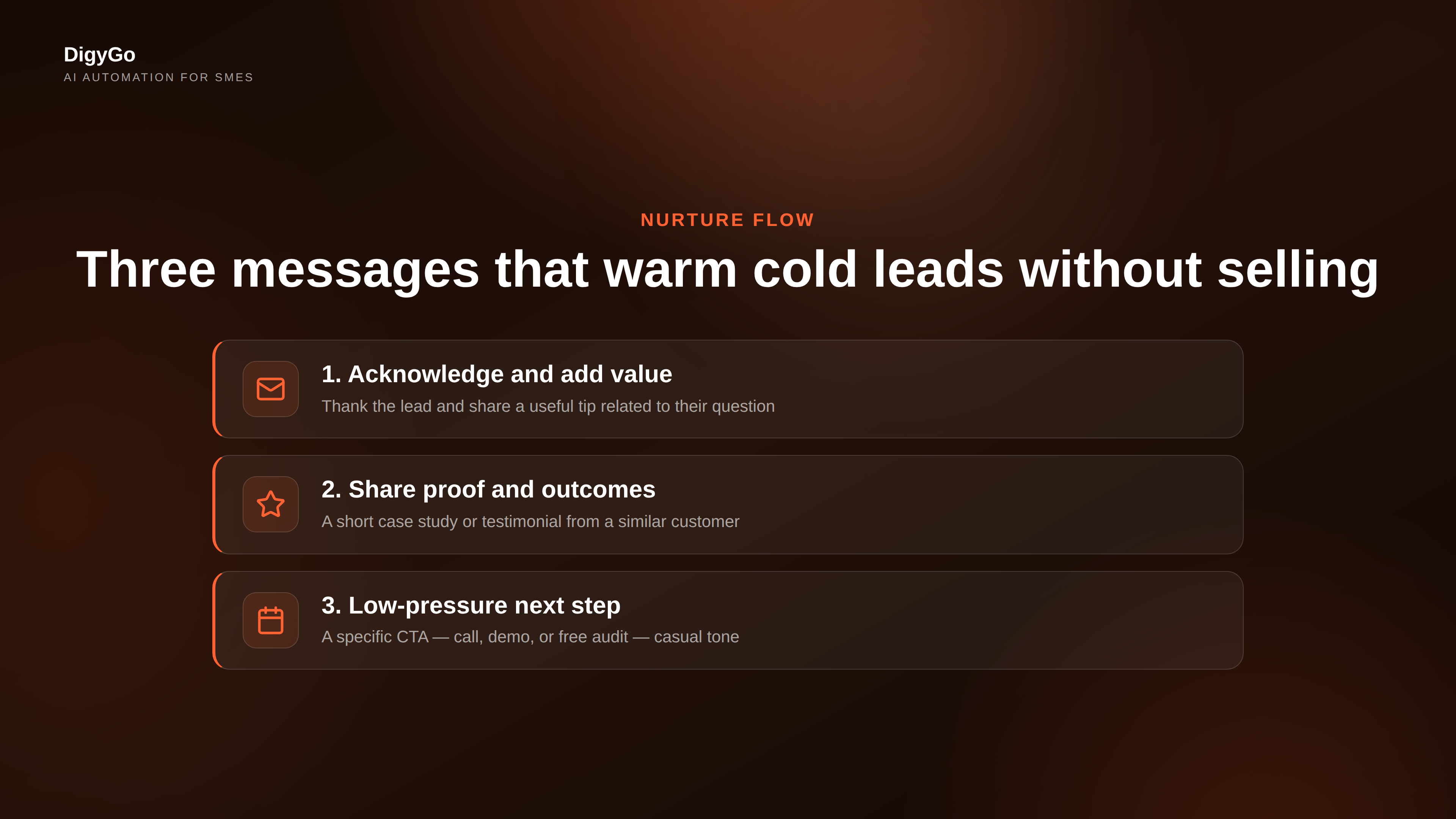
Message 1: Acknowledge and add value
Send the same day or the next morning. Thank the lead for their enquiry, confirm what they asked about, and share something genuinely useful — a relevant tip, a short guide, or an answer to a common question. This message is not a sales pitch. It is proof that you listened and that you know your stuff.
Message 2: Share proof and outcomes
Three to five days later. Share a short case study, a testimonial, or a specific outcome from a similar customer. Keep it concrete: "A client in your industry reduced response time by 60% with this approach." Proof builds credibility without pressure. The lead gets to see that your solution works without you asking for anything.
Message 3: Open a low-pressure next step
Seven to ten days after message 2. This is the softest ask in the sequence. Offer something specific: a 10-minute call to answer questions, a live demo, or a free audit of their current setup. Make the CTA clear but the tone casual. If the lead engages, move them back to the active pipeline. If they do not, add them to a longer-term quarterly touch cycle.
What content works in a nurture sequence
The best nurture messages do not sound like marketing. They sound like a helpful person sharing something relevant. For SMEs, the most effective content types are:
- Tips and how-tos — Short practical advice related to the lead's original question. For example, if a lead asked about automation, send a one-paragraph tip on setting up an auto-reply.
- Customer outcomes — A short story about how another SME solved a similar problem. Keep it specific: the problem, the approach, the measurable result.
- Proof points — A stat, a before-and-after comparison, or a social proof snippet. Numbers make proof stick.
- Invitations — A link to a relevant blog post, a short video walkthrough, or an invite to a free resource. This is the only place a link belongs.
Do not send company news, product updates, or general announcements in a nurture sequence. Those belong in a newsletter. A nurture sequence is built around the lead's specific interest, not your publishing calendar.
Why automation makes nurture reliable
The biggest reason nurture fails in SMEs is not strategy — it is consistency. A founder intends to follow up with last week's leads but gets pulled into operations. A salesperson means to send a case study but forgets by Friday. Automation removes the dependency on memory.
A simple automation rule looks like this:
- Lead status becomes "warm — not ready" → trigger nurture sequence
- Day 1: send value message (auto)
- Day 5: send proof message (auto)
- Day 12: send low-pressure CTA (auto)
- If lead replies at any point → pause sequence, notify sales
- If no reply after full sequence → move to quarterly touch cycle
Tools like DigyGo can run this entire flow on WhatsApp and email without a single manual action. The team only gets involved when a lead responds — and then the response is fast because the nurture kept the lead warm.
When to stop nurturing
Not every lead should stay in a nurture sequence forever. Set a clear stop rule:
- Engaged leads move to active pipeline — the sequence worked
- Unengaged leads after two full sequences move to a quarterly check-in list — one touch every three months, nothing more
- Hard bounce or unsubscribe — remove immediately and do not re-add
A nurture sequence that never ends becomes noise. A nurture sequence that respects boundaries builds trust even from leads that never convert.
Frequently asked questions
How long should a nurture sequence be for an SME?
Three messages over 12 to 14 days is the sweet spot for most SME purchases. Longer sequences work for high-ticket services; shorter for low-commitment offers.
Should nurture be on WhatsApp or email?
Use the channel the lead originally contacted you on. If they messaged on WhatsApp, nurture on WhatsApp. If they filled a web form, email works. Channel consistency improves response rates.
Can I automate nurture without a CRM?
Yes. Many SME tools — including DigyGo — let you set up automated follow-up sequences directly on WhatsApp and email without needing a full CRM. The trigger can be a simple label or status update.
What if the lead replies mid-sequence?
Pause the automation immediately and notify the sales team. A reply means the lead is warm — treat it as a fresh enquiry and move to active follow-up.
How do I measure if nurture is working?
Track two numbers: reply rate (percentage of nurtured leads that respond) and conversion rate (percentage of nurtured leads that book or buy). If reply rates are below 10%, try different content. If reply rates are high but conversions are low, check the handoff from nurture to sales.