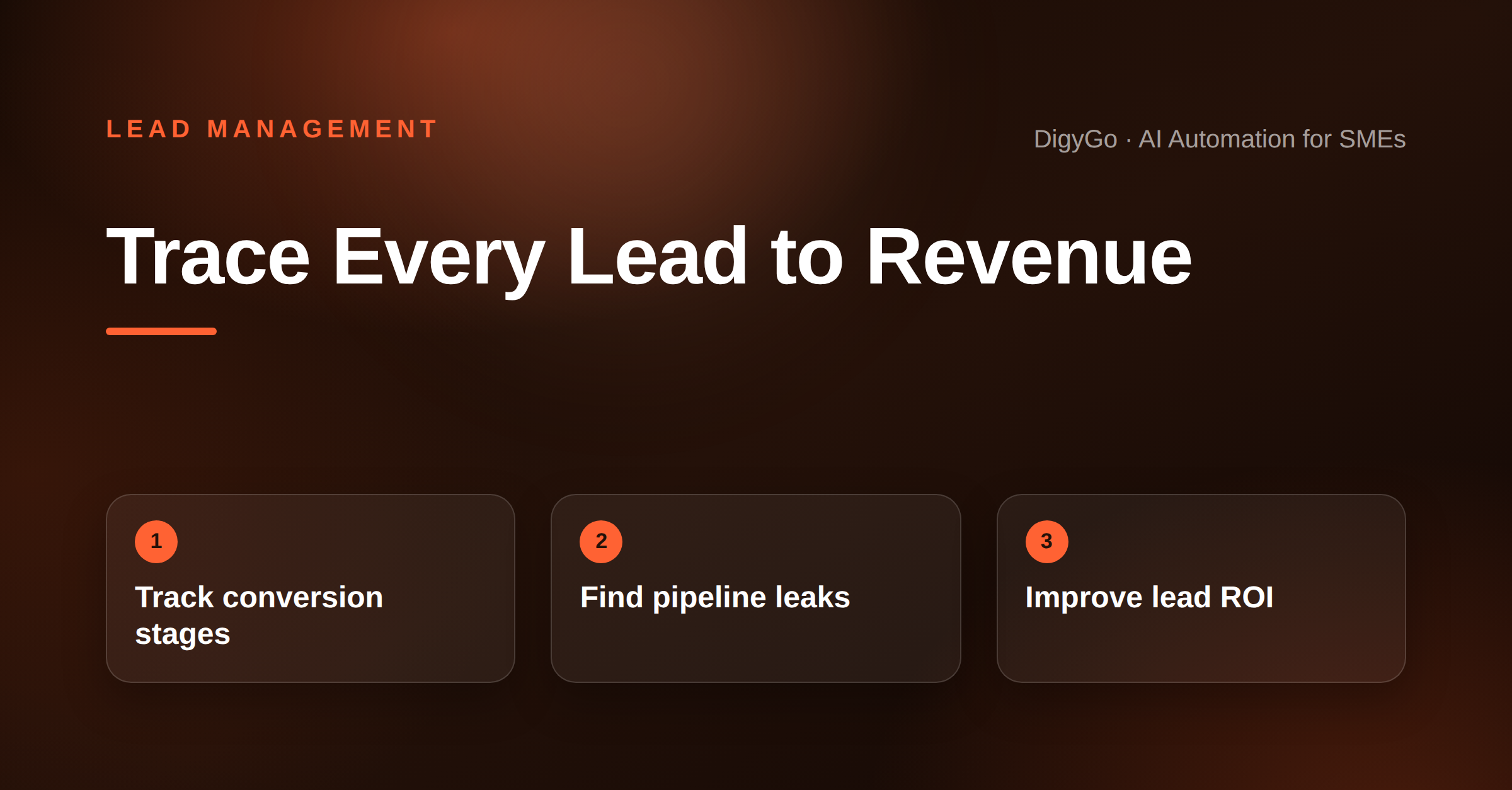
Most SMEs know how many enquiries come in each week. Very few know what happens to them after the first reply — how many turn into a phone call, a site visit, a quote, and finally a paid job. That gap between "enquiry received" and "revenue booked" is where most leads quietly leak away. Lead conversion tracking gives you a way to see each stage, measure the drop-off, and fix the bottlenecks before they become lost revenue.
A practical guide for SMEs on tracking every lead from first enquiry to booked job — identifying where prospects drop off and fixing the biggest leaks in the conversion funnel.
- Most SMEs lose 60–70% of leads between first contact and booking without realising it
- Tracking each conversion stage — reply, qualification, quote, visit, booking — reveals exactly where your pipeline leaks
- A simple weekly conversion review is enough to spot trends and make targeted fixes
- Attribution by source lets you spend your marketing budget on channels that actually deliver booked jobs, not just enquiries
Why "Enquiry Count" Is a Misleading Metric
It is tempting to measure marketing success by how many leads come in. More enquiries feels like progress. But an enquiry is only the start of the chain — if it never converts to a booked job, it is just noise.
Consider a typical SME funnel:
| Stage | Count (example) | Drop-off |
|---|---|---|
| Enquiries received | 100 | — |
| Received a reply | 85 | 15% lost (no reply sent) |
| Qualified (real need + budget) | 55 | 35% unqualified |
| Quote sent | 40 | 27% qualified but not quoted |
| Site visit or call completed | 25 | 38% quoted but no follow-through |
| Job booked | 12 | 52% visited but didn't book |
Out of 100 enquiries, only 12 became revenue. The biggest drop-off happened between quote and booking — more than half the people who got a quote never progressed. Without tracking each stage, you would know the overall conversion rate (12%) but not where the money is being left on the table.
The Stages Worth Tracking
Lead conversion tracking does not need to be complicated. For an SME, these six stages capture the critical decision points:
- Enquiry received — the lead reaches you (call, form, WhatsApp, walk-in)
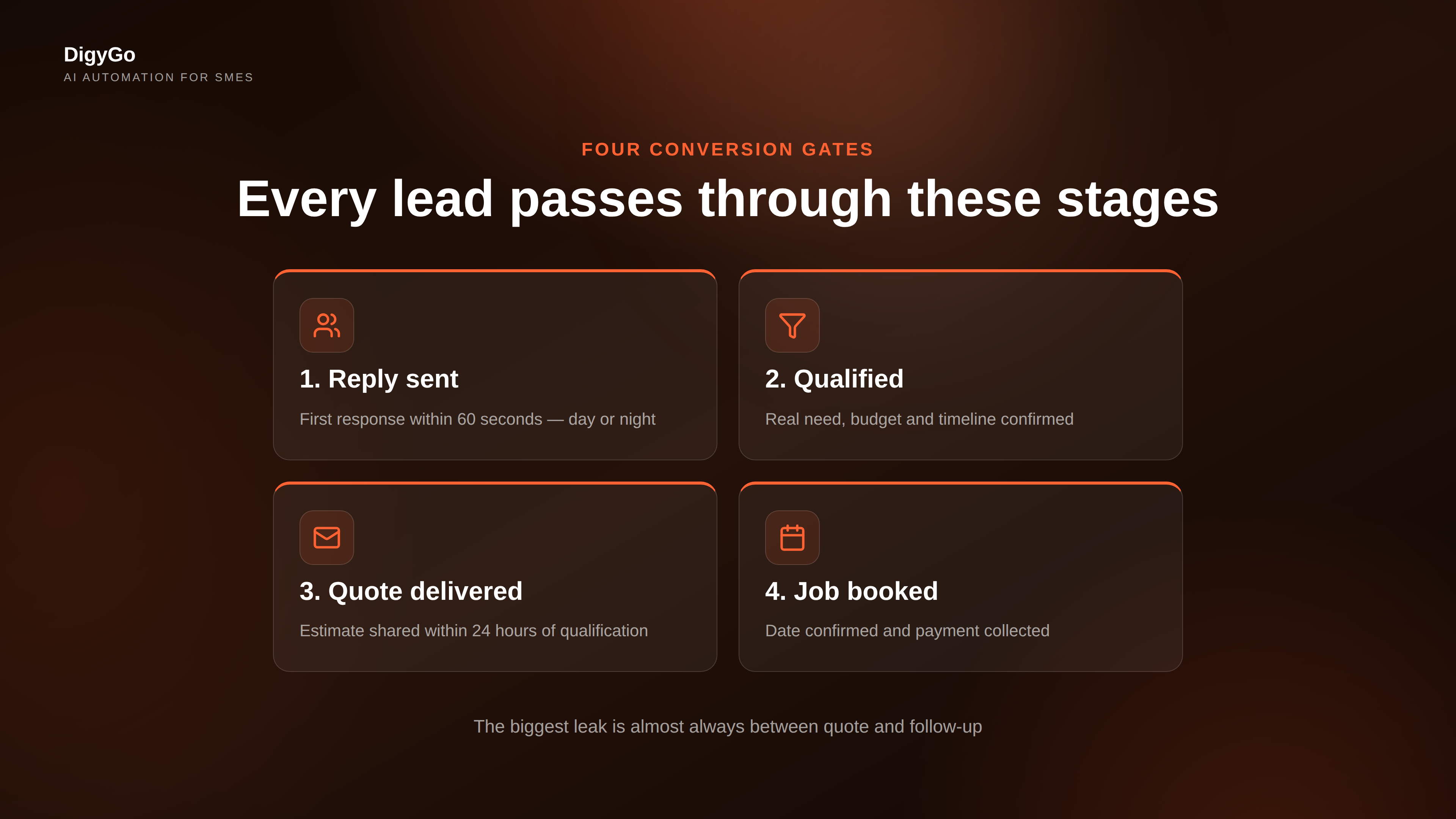
- First reply sent — someone acknowledged the enquiry
- Qualified — you confirmed they have a real need, budget, and timeline
- Quote delivered — a proposal or estimate was shared
- Follow-up completed — a real conversation happened (site visit, call, meeting)
- Job booked — payment collected or date confirmed
Tracking is as simple as updating a row in your CRM or even a spreadsheet each time a lead moves to the next stage. What matters is consistency — doing it for every lead, not just the ones that close.
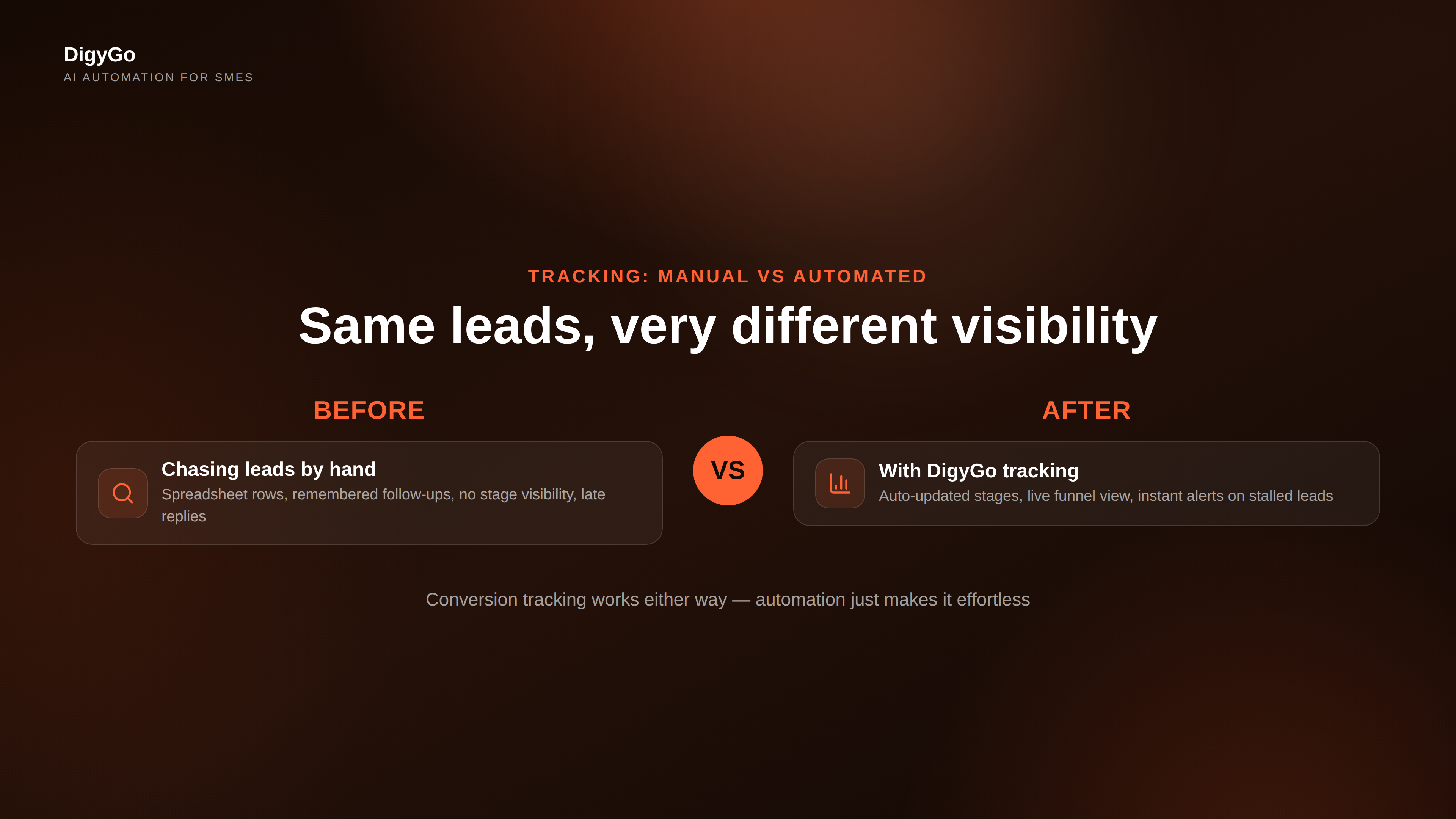
Image 1: Manual vs Automated Conversion Tracking
Where Leads Actually Leak (and What to Do About It)
From working with dozens of SMEs across Coimbatore, Erode, and Tirupur, we have seen the same drop-off patterns repeat. Here are the three most common leakage points and the fix for each:
1. Enquiry → First reply (15–30% loss)
Leads arrive after hours or during a busy workday, and nobody replies until the next morning — or the day after. By then the prospect has called three competitors. Fix: automate the first reply with a simple AI bot or a response template that goes out within 60 seconds, day or night.
2. Qualified → Quote sent (20–30% loss)
Qualified leads sit in a notebook or a WhatsApp chat because nobody drafted the quote yet. The prospect loses interest or finds another vendor. Fix: create quote templates for your most common services and send one within 24 hours of qualification — even a rough estimate is better than silence.
3. Quote sent → Follow-up completed (30–50% loss)
This is the biggest leak in most SME funnels. A quote goes out, nobody follows up, and the lead quietly goes cold. Fix: schedule three follow-up touches over seven days after the quote — a check-in message, a call, and a final reminder. Most SMEs who do this regularly see follow-up rates double.
Image 2: The Four Conversion Gates Every Lead Passes Through
Attribution: Which Sources Deliver Bookings, Not Just Enquiries
Once you track conversion end-to-end, you can answer the question that matters most for your marketing budget: which source actually delivers booked jobs, not just form fills or calls?
A typical pattern we see:
- Google Ads — produces the most enquiries, but many are price-shoppers who never book. Conversion-to-booking rate: 5–8%.
- Referrals — fewer enquiries, but almost every one books. Conversion-to-booking rate: 30–50%.
- Website organic — steady volume with a 10–15% booking rate from those that get a quote.
- WhatsApp / Instagram — high initial engagement, low qualification rate. Conversion-to-booking rate: 3–5%.
Without conversion tracking, you would likely spend more on Google Ads (because it sends the most enquiries) and neglect referrals (because it sends fewer). But referrals convert at 5–10× the rate. Tracking tells you where to invest next.
How to Start Conversion Tracking Tomorrow (No New Software Needed)
You can begin this week with nothing more than a spreadsheet and 15 minutes per week:
- List every lead from the past 30 days in a row
- Add six columns — one for each stage (reply sent, qualified, quoted, followed up, booked)
- Mark the latest stage each lead reached
- Count the drop-off between each pair of stages
- Pick the biggest gap and make one change to close it
Do this once a week. In four weeks, you will have enough data to see which bottleneck is costing you the most revenue — and a clear target to fix first.
FAQ
What is lead conversion tracking?
Lead conversion tracking is the practice of measuring what happens to each lead after they first contact your business — whether they received a reply, got a quote, accepted the quote, or booked a job. It reveals where leads drop off so you can fix the biggest leaks.
How is lead conversion tracking different from a CRM?
A CRM stores lead data. Conversion tracking adds the layer of stage transitions — not just where a lead is now, but how it moved through the funnel and where it stalled. Many CRMs can do this, but the key is actually using it consistently.
How many stages should a small business track?
Start with 4–5 stages: enquiry received, first reply sent, quote delivered, job booked. Add qualification and follow-up once the basic tracking is routine. Too many stages at the start make it harder to stick with.
What is a good conversion rate from enquiry to booking for an SME?
Most service SMEs see 10–20% of enquiries become bookings. Referral-based businesses can hit 40–50%. If yours is below 10%, the quickest win is usually fixing the quote-to-follow-up stage, which is the biggest single leak in most funnels.
Do I need automation to do conversion tracking?
No. A spreadsheet works fine for the first few months. Automation helps once you are tracking 50+ leads per month — tools like DigyGo can auto-update stages from WhatsApp, calls, and form submissions so you don't need to update it by hand.
Stop Guessing, Start Tracking
Every SME has a conversion funnel — the only question is whether you are measuring it or ignoring it. The businesses that track their lead stages end up fixing leaks faster, spending their marketing budget on what works, and booking more jobs from the same number of enquiries.
If you are ready to move beyond a shared inbox and start tracking every lead from first message to booked job, talk to the DigyGo team — we build lead management workflows that do the tracking for you.