You had a good conversation. The prospect seemed interested. You sent the quote. And then — silence. No reply to your follow-up WhatsApp, no response to the email. The deal is not dead exactly, but it is not alive either. For most SME founders, this is the single most common sales frustration. The quote goes out and the energy drains out of the deal.
Most SME deals do not die on price — they stall because the quote arrived without a clear decision context. Learn how to structure quote delivery so buyers respond instead of going silent.
- Most deals do not die on price — they stall because the quote arrived without a clear decision context.
- Buyers go quiet when the quote does not answer the unspoken questions about value, risk, and next steps.
- A structured quote delivery — with context, a choice, and a defined next action — changes the outcome more than any price adjustment ever could.
Why quotes go silent
Picture a typical SME sales flow. A lead calls, asks about your service. You spend twenty minutes explaining what you do, how you work, and roughly what it costs. They sound positive. You say, "Let me send you a detailed quote." They agree. You draft the quote on a notepad or a WhatsApp message — scope, price, a rough timeline — and send it over.
Then nothing happens.
You wait a day. You send a polite check-in. Another day passes. You send another message. Eventually, you stop following up because it feels like you are chasing.
The problem is not that your price was too high. The problem is that the quote landed in the buyer's inbox without answering three questions they are probably thinking but not saying:
- What exactly am I agreeing to? — The scope feels vague once they read it in black and white.
- Will this actually solve my problem? — They had a good feeling from the call, but now they are second-guessing.
- What happens next? — The quote is a document, not a decision. Without a clear next step, the buyer puts it aside to "think about" — and thinking about means forgetting.
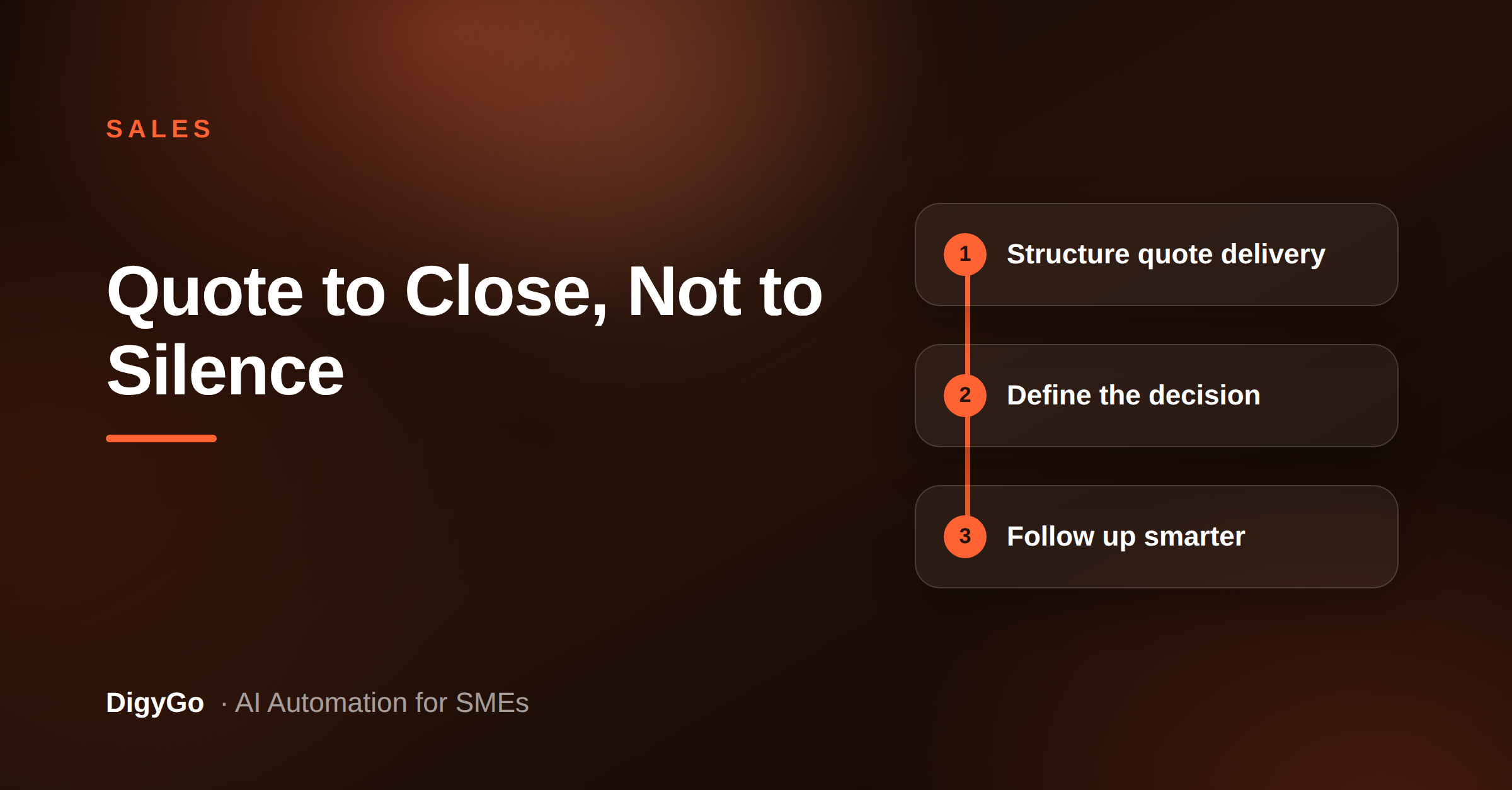
Structure your quote delivery
The fix is not to change the numbers on your quote. It is to change how the quote arrives and what it carries with it. Here is a simple three-part structure that turns a quote from a document into a decision tool.
1. Lead with context
Before the price, remind the buyer of the problem you discussed. A single sentence at the top of the quote makes the document feel personal and specific:
"As we discussed, your team needs faster follow-up on WhatsApp enquiries so you stop losing leads during busy hours. This quote covers the setup and the first month."
When the buyer reads this, they are not looking at a generic price list. They are looking at a solution to a problem they already told you about. That context keeps the conversation anchored in value, not cost.
2. Offer a choice
The hardest question for a solo decision-maker is a binary yes-or-no to a full proposal. It feels too big. Instead of one quote, offer two options:
- The recommended scope — what you discussed, priced fairly.
- A lighter entry option — a smaller version that addresses the core need at a lower commitment.
When the buyer sees two choices, their brain shifts from "should I buy or not?" to "which one fits better?" That is an easier decision to make, and it removes the paralysis that causes silence.
3. Define the decision
End the quote with a clear, low-friction next step. Instead of "Let me know what you think," write:
"If Option A works for you, reply 'Yes' and I will send the onboarding checklist today. If you prefer Option B, I can adjust the scope and send an updated timeline. Would either work for you?"
This is not pushy. It is clear. The buyer knows exactly what to do next, and the action feels small enough to take immediately.
The first 48 hours matter most
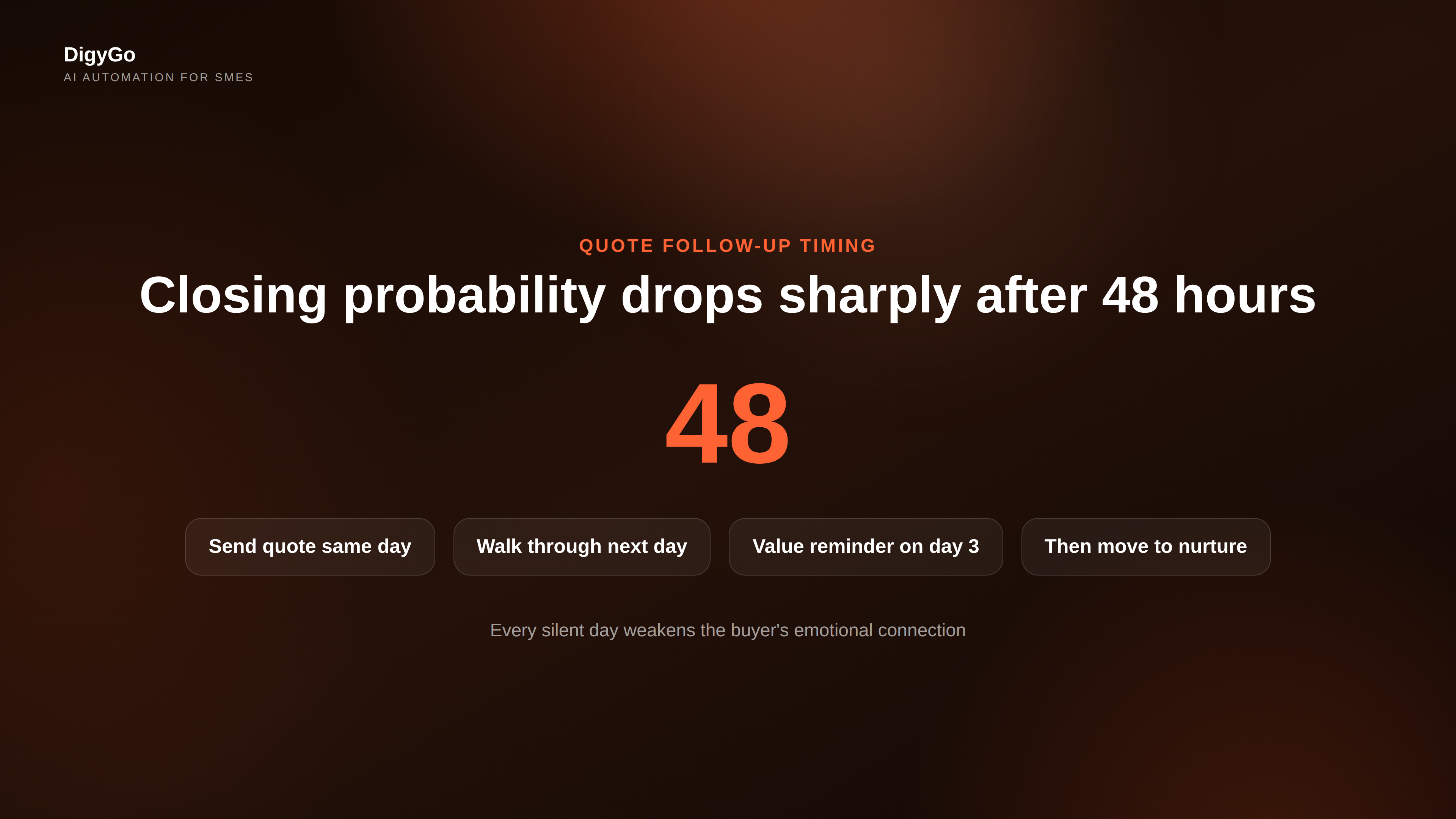
Data from hundreds of SME sales conversations shows that the probability of closing a quoted deal drops sharply after 48 hours of silence. Every day that passes without a response, the buyer's emotional connection to the conversation weakens. They forget the positive feeling from your call. They start comparing your quote to three other options they found online.
This is why the 48-hour window after sending a quote is the most critical follow-up period. Do not send the quote and wait. Send the quote with a scheduled follow-up — ideally within 24 hours — that is not a generic "just checking in" message.
A better follow-up sounds like this:
"Hey [Name], I sent the quote yesterday. A few clients tell me the two options can be confusing — happy to walk through which one fits your situation better. Got 10 minutes tomorrow morning?"
This reframes the follow-up from a reminder to an offer of help. It gives the buyer a reason to respond even if they are still undecided.
The real reason buyers go silent
After working with dozens of SME founders on their sales process, I have noticed a pattern. When a deal goes silent after the quote, the founder's first instinct is to blame the price. "Maybe I was too expensive." They lower the price and reach out again.
Nine times out of ten, price was not the issue. The real issue was one of three things:
- Uncertainty about value. The buyer liked you personally but was not completely convinced the service would deliver the outcome they need. They are not shopping for a cheaper alternative — they are waiting for certainty.
- Decision paralysis. The buyer is a solo founder or a busy professional. Making a yes-no decision on a significant expense feels heavy. It is easier to postpone than to decide.
- Lack of urgency. The problem you solve is not painful enough today. Your quote sits in their inbox because fixing the issue is a "someday" priority, not a "today" one.
Each of these causes requires a different response. Price is almost never the answer. If you respond to every silence with a discount, you train buyers to wait for the discount. Instead, diagnose the real reason, then offer the right kind of follow-up.
Build a quote follow-up pipeline
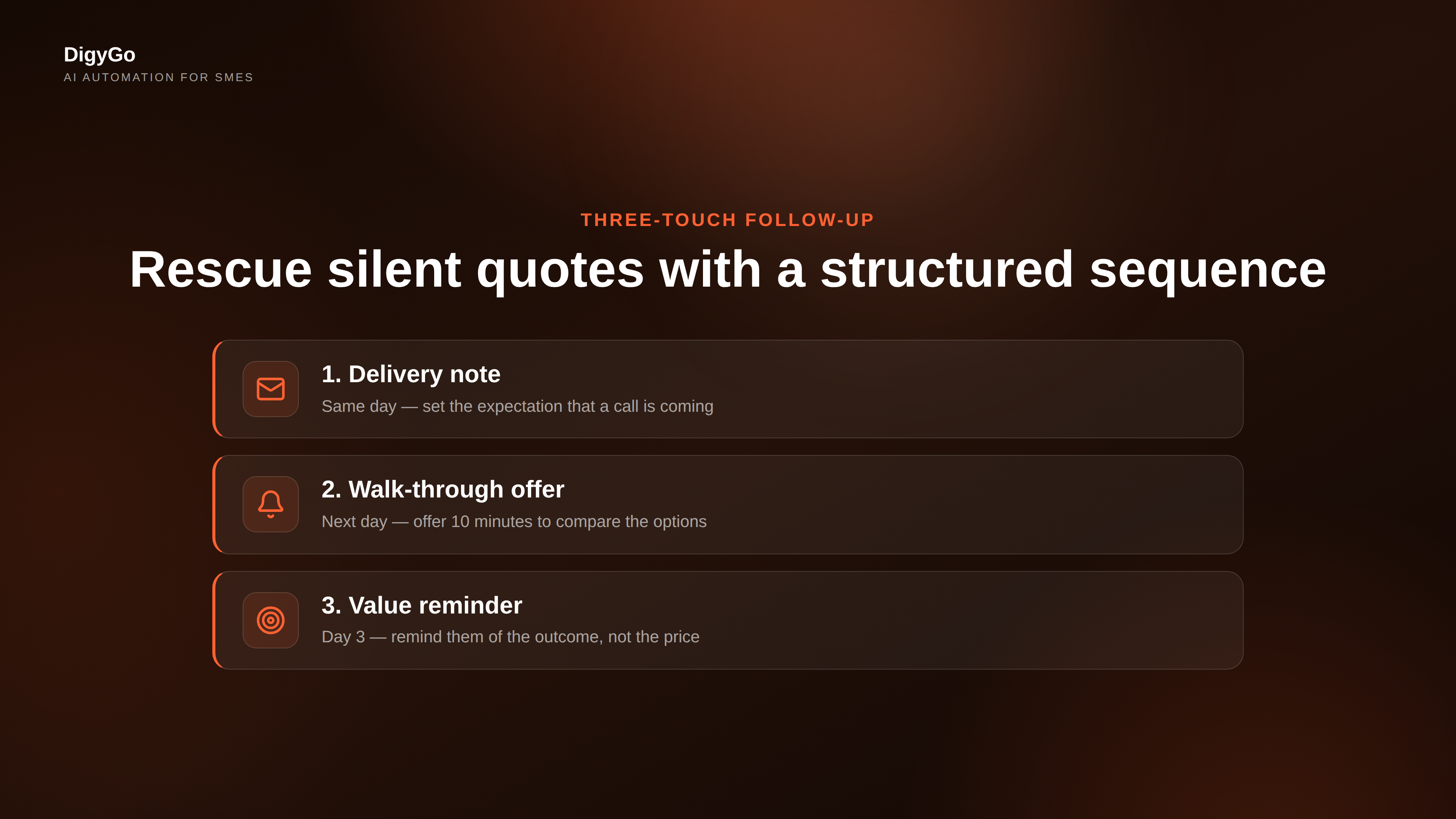
The most effective SME sales teams treat a sent quote not as the end of the conversation but as the first step of a follow-up pipeline. Here is a simple three-touch sequence that works:
Touch 1: Same day — the delivery note
When you send the quote, include a one-line note in the same message: "I will call you tomorrow to walk through the options — no pressure, just to make sure I have captured everything correctly." This sets the expectation that a follow-up is coming, so it does not feel like a surprise.
Touch 2: Next day — the walk-through offer
Call or message within 24 hours. Do not ask "Did you get my quote?" Instead, say: "I realised the quote has two options and it might not be obvious which one fits best. Would 10 minutes tomorrow help?"
Touch 3: Day 3 — the value reminder
If they are still silent, send one short message that reminds them of the outcome they wanted, not the price they saw: "The lead response system we discussed would save your team about six hours of manual follow-up every week. Still interested in exploring it?"
After this, leave the ball in their court. Push harder and you risk damaging the relationship. A final message that says "No pressure — whenever you are ready, I am here" keeps the door open without making you look desperate.
When to kill the deal
Not every silent quote deserves a rescue effort. Some deals should be killed, not nursed. If the buyer has not responded after three thoughtful follow-ups spread over a week, the probability of closing is low — and continuing to chase costs you dignity and time.
Here is a simple rule: after three genuine follow-ups (not the same message repeated), move the deal to a nurture list. Send a quarterly check-in or a relevant piece of content. If they come back, great. If not, you have freed your mental energy for deals that want to move forward.
The best sales teams do not win by chasing harder. They win by sending better quotes, following up smarter, and knowing when to move on.
Frequently asked questions
What if the buyer says "the price is too high" after the quote?
Do not drop the price immediately. Ask: "Compared to what?" Often the buyer has no other quote — they are simply reacting to the number in isolation. Walk them through the value again and offer the lighter option if you have one.
Should I send the quote on WhatsApp or email?
Use the channel the buyer prefers. If your entire conversation was on WhatsApp, send it there. The buyer should not have to switch platforms to see your quote.
How do I handle a buyer who asks for a discount before seeing the quote?
Say: "Let me send the quote first. If the price does not match the value you are expecting, we can talk about options." This lets you control the narrative instead of negotiating against yourself before the buyer has seen the offer.
Is it okay to follow up more than three times?
Only if the buyer has given you a reason to — for example, "I am interested but busy this week, check in next month." Otherwise, three touches is the limit. More than that shifts from helpful to annoying.
What is the best time to send a quote?
Send it within a few hours of the conversation, while the buyer's memory of the call is fresh. A quote that arrives the next morning feels slower and less urgent than one that arrives the same evening.
Want to fix your quote-to-close gap? Talk to our team →