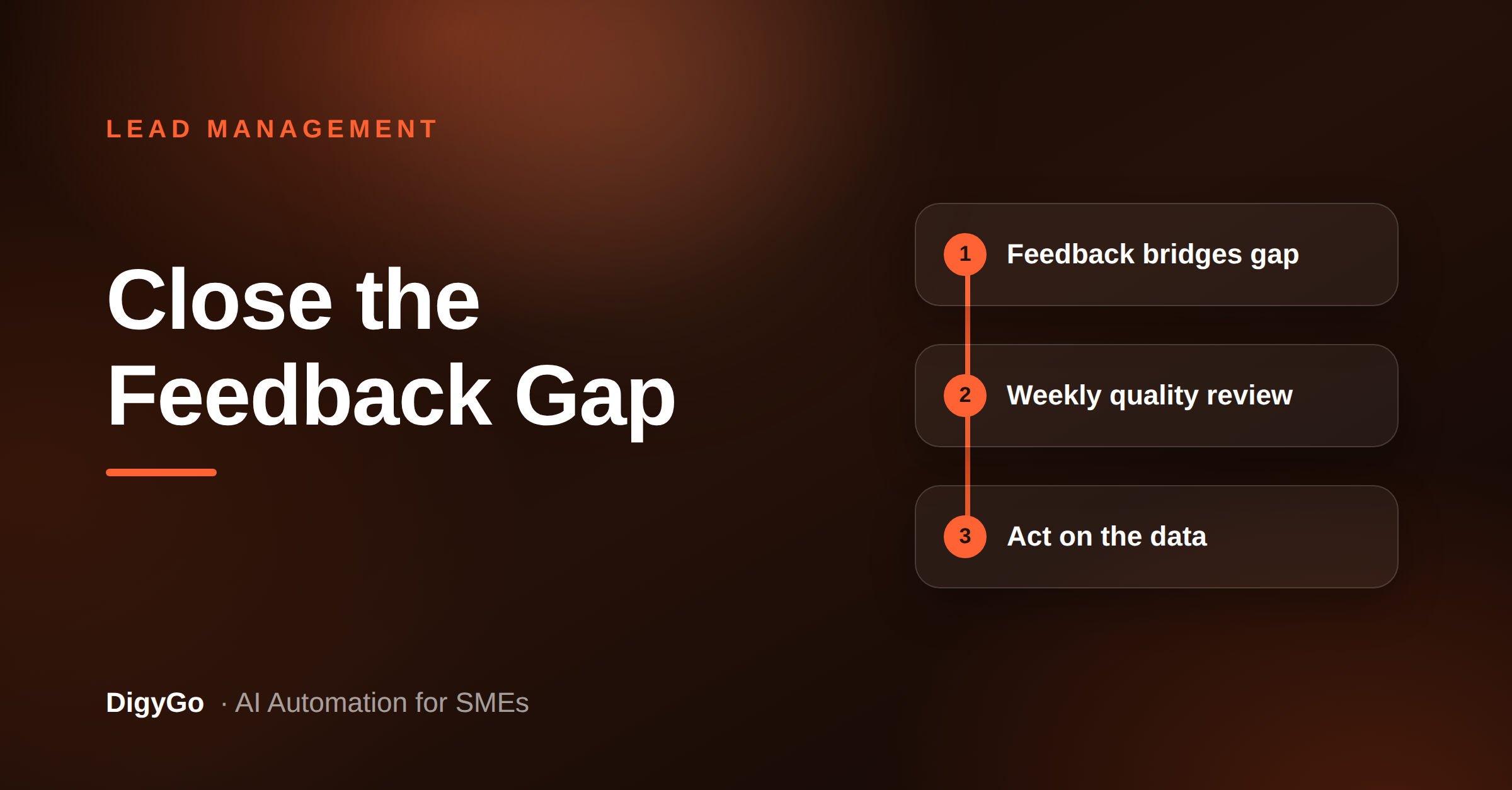
Most SMEs treat lead generation and lead conversion as two separate jobs. Marketing sends enquiries to sales, sales works them, and the result lands in a spreadsheet — if it lands anywhere at all. The gap between those two worlds is where lead quality quietly decays, and the fix is not a bigger pipeline. It is a structured feedback loop that connects what marketing delivers to what sales actually closes.
A practical guide for SMEs on building a structured lead feedback loop between marketing and sales so every source, message, and profile improves over time — no complex CRM required.
- A lead feedback loop tells marketing which sources, messages, and profiles actually convert — not just which ones generate volume.
- Without structured feedback, marketing optimises for enquiries; sales suffers through poor-fit leads, and the gap widens over time.
- A simple weekly exchange of five data points is enough to start improving lead quality without complex CRM configuration.
Why the gap between marketing and sales hurts lead quality
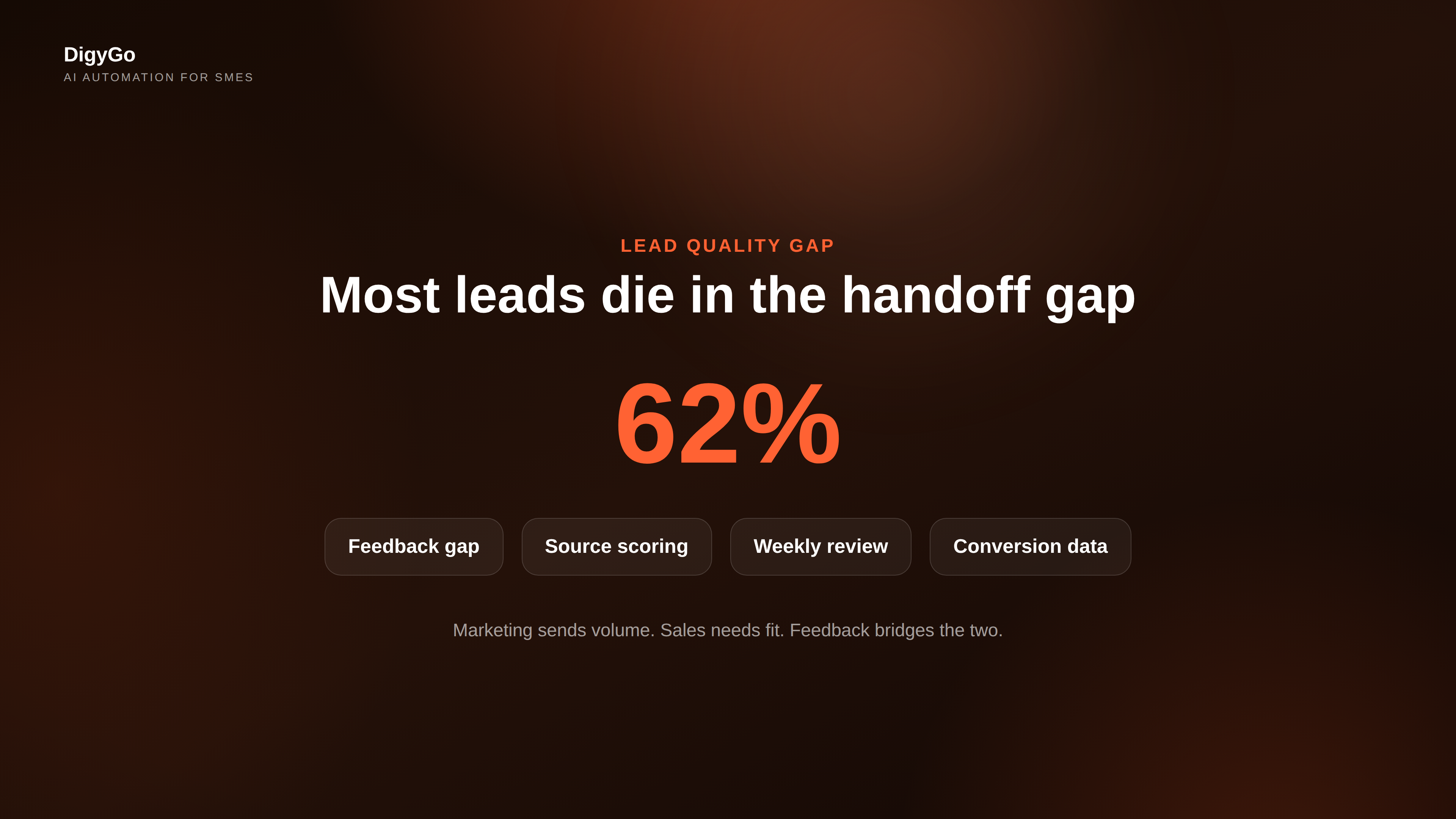
When marketing measures only enquiry volume and sales measures only close rate, neither side sees the full picture. Marketing runs more ads or posts more content because that drives enquiry numbers up. Sales complains that the enquiries are not serious, not ready, or not the right fit. Both are right from their own vantage point, and the disconnect costs the business in two ways: marketing spends on channels that generate noise, and sales wastes time on leads that should never have been handed over.
The root cause is not bad intentions. It is the absence of a systematic feedback loop that tells marketing what actually happened to each lead after handoff — which ones moved forward, which stalled, and why.
What a lead feedback loop looks like for an SME
A lead feedback loop is a simple recurring exchange where sales sends marketing five pieces of information about every lead that reaches a human conversation:
- Disposition — was it qualified, unqualified, not reached, or duplicate?
- Source — which channel brought it (website form, WhatsApp, Google, referral, call)?
- Fit score — on a simple 1–3 scale, how well did the lead match the ideal customer profile?
- Follow-up outcome — call booked, quote sent, proposal stale, closed, or lost?
- Notes — one line on what made the lead worth (or not worth) pursuing.
These five fields are collected after every sales interaction or, failing that, in a weekly batch. The key is consistency, not volume. A feedback loop with 80 % coverage on qualified leads is far more useful than a perfect system that nobody uses.
Image 1: The lead quality gap
Three shifts that make the loop work
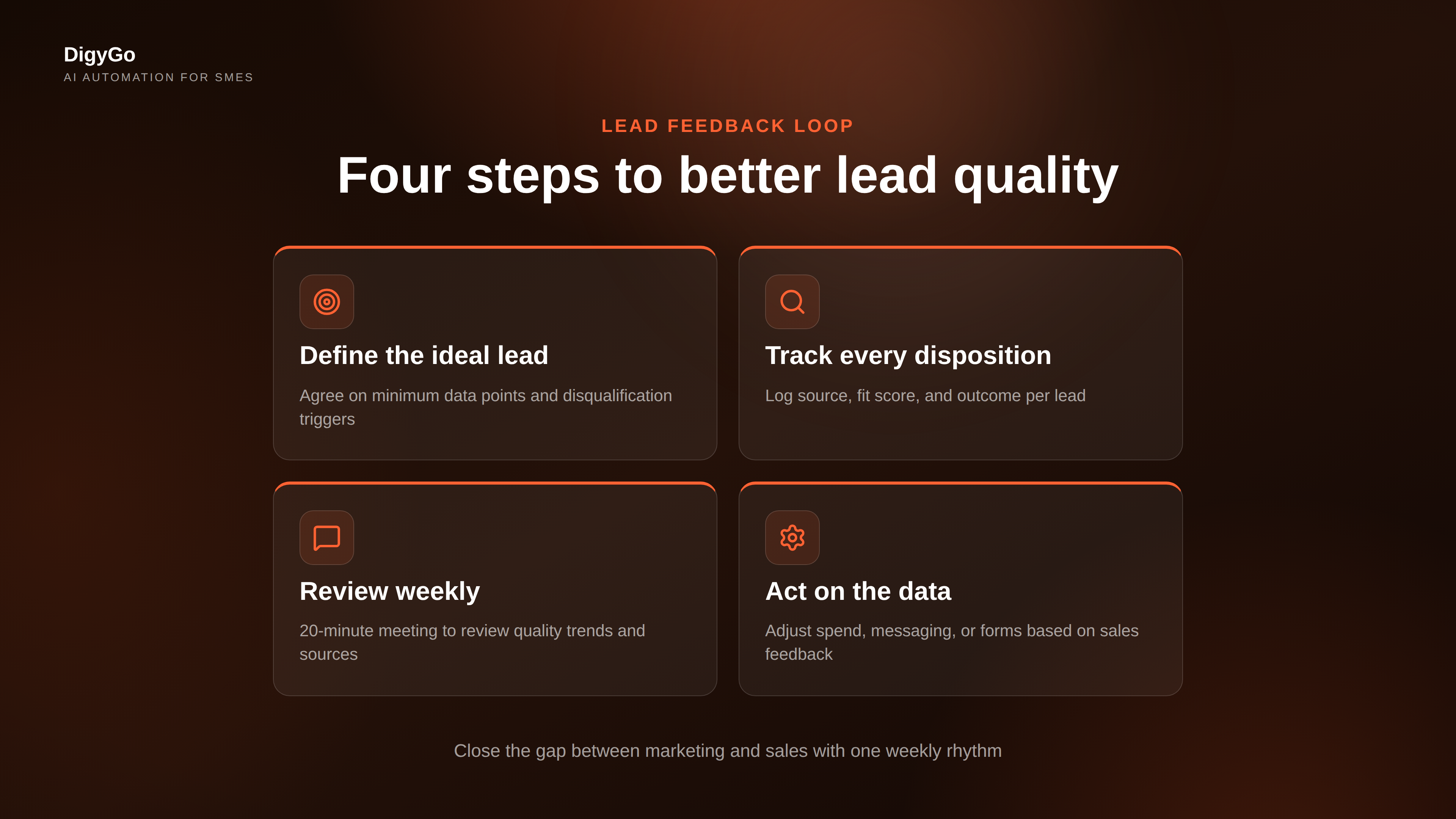
1. Define what a good lead looks like — together
Marketing and sales need a shared definition of a qualified lead before feedback can be useful. Without it, sales marks leads as poor because they lacked a budget number, while marketing never asked for it. A simple two-page lead definition document — listing the minimum data points, the ideal profile signals, and the disqualification triggers — gives both teams the same yardstick.
2. Use a lightweight tracker, not a CRM project
SME teams often skip feedback loops because they believe they need a full CRM workflow, automation rules, and a dashboard. They do not. A shared spreadsheet with five columns, one row per lead, and a 15-minute weekly review between the marketing lead and the sales lead achieves the same result with zero implementation overhead. The important thing is that the conversation happens, not the tool it happens in.
3. Close the loop with action
Feedback without action is venting. When sales reports that leads from a particular source consistently score low on fit, marketing should reduce spend on that channel or change the messaging. When leads from a specific ad set arrive with high intent but incomplete contact details, marketing should adjust the form fields. Every weekly review should produce at least one change to the lead generation process — that is how the loop improves quality instead of just measuring decline.
What a weekly feedback review looks like
A 20-minute weekly meeting between the person running marketing and the person running sales is enough to keep the loop healthy. The agenda is simple:
- Review the last week's leads: how many were qualified, how many stalled, how many closed.
- Pick one source with declining quality and decide what to change.
- Pick one source with improving quality and decide how to increase its volume.
- Note any lead that surprised the team — either better or worse than expected — and identify what signal could have predicted that outcome earlier.
This rhythm takes less time than the average status meeting and produces a measurable improvement in lead quality within four to six weeks.
Image 2: Building the feedback loop
Measuring the improvement
Once the loop is running, track three numbers to confirm it is working:
- Lead qualification rate — the percentage of leads that sales marks as qualified. This should rise as marketing learns which sources and messages produce better-fit enquiries.
- Stalled-to-closed ratio — the proportion of qualified leads that eventually close. This improves when feedback helps sales focus on the leads most likely to move forward.
- Source efficiency — cost per qualified lead per channel. This is the real measure of whether marketing spend is improving.
Most SMEs see a visible shift in the first two numbers after six to eight weeks of consistent weekly reviews.
Want to build a feedback loop that connects your marketing and sales teams without adding complexity? Talk to the DigyGo team — we help SMEs run lean, automated lead systems.